La Casa de las Fuentes (Casa dos Repuxos)
Esta gran villa fue una maravilla de la ingeniería y el arte romano, con un elaborado jardín con cientos de chorros de agua.
La historia completa se desbloquea en el tour
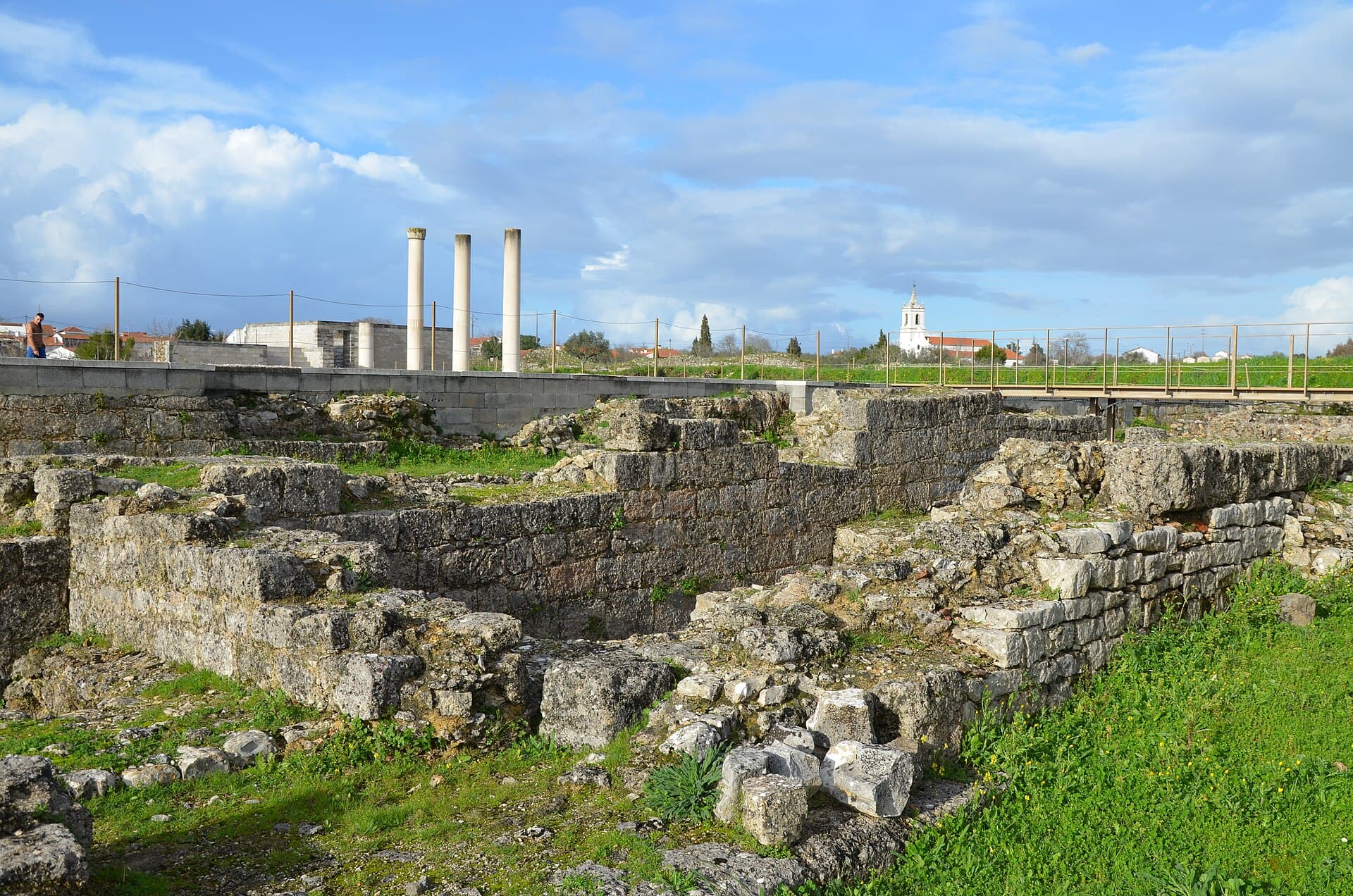 Carole Raddato from FRANKFURT, Germany / CC BY-SA 2.0, via Wikimedia Commons
Tour de audio autoguiado de Conímbriga — ruta GPS a pie, reproducción offline, narración en 32 idiomas.
“Pasea por los ecos de la vida romana, donde los mosaicos cuentan historias olvidadas.”
No las postales. Las historias que ni los locales conocen — al oído, justo donde ocurrieron.
Esta gran villa fue una maravilla de la ingeniería y el arte romano, con un elaborado jardín con cientos de chorros de agua.
El anfiteatro de Conímbriga, una importante estructura pública, permaneció sin descubrir durante siglos.
Las impresionantes murallas defensivas de Conímbriga se construyeron a toda prisa, con un origen sorprendente para algunos de sus materiales.
Descubre todos los secretos de Conímbriga
Cada dirección, cada revelación al completo — a tu oído, justo donde ocurrió.
Eliges tus paradas. Caminas. La voz te revela lo que los demás ignoran.
![Conímbriga — boats docked near seaside promenade]](/_next/image?url=https%3A%2F%2Fxkitrzghrapdsyyvojzr.supabase.co%2Fstorage%2Fv1%2Fobject%2Fpublic%2Flume-images%2Fcities%2Fconimbriga-gallery-1.jpg&w=1920&q=75)

Tu tour de audioguía por Conímbriga te espera — elige tus lugares, tu idioma y empieza al llegar.
ComprarLume incluye una guía de realidad aumentada. Levanta el móvil y su cámara muestra la calle que tienes delante, con una flecha luminosa sobre la imagen real que siempre apunta a tu próxima parada — sin mapas que descifrar, sin giros equivocados. Como todo en Lume, funciona completamente sin conexión.
Conímbriga, uno de los sitios arqueológicos romanos más importantes de Portugal, ofrece un viaje fascinante al pasado. Ubicadas a solo 16 kilómetros al suroeste de Coimbra, estas extensas ruinas proporcionan una vívida impresión de la vida urbana romana. El sitio, clasificado como Monumento Nacional en 1910, es célebre por sus estructuras notablemente bien conservadas, particularmente sus intrincados suelos de mosaico.
Al pisar los antiguos caminos de piedra, los visitantes pueden explorar los restos de grandes villas, baños públicos y una formidable muralla defensiva. El museo que acompaña al sitio, inaugurado en 1962, alberga una diversa colección de artefactos desenterrados durante las excavaciones en curso, ofreciendo un contexto esencial a las ruinas. Conímbriga no fue la ciudad romana más grande de Portugal, pero se considera la mejor conservada, y los arqueólogos estiman que solo se ha excavado aproximadamente el 10 por ciento de la ciudad.
## De Asentamiento de la Edad del Hierro a Metrópolis Romana La historia de Conímbriga comienza mucho antes de la llegada de los romanos. El sitio fue originalmente un asentamiento de la Edad del Hierro, habitado por el pueblo indígena Conii ya en el siglo IX a.C. Se cree que el nombre mismo, Conímbriga, deriva de 'conim', un término indígena para 'eminencia rocosa', y 'briga', un sufijo celta que significa 'ciudadela'.
La presencia romana en la zona comenzó alrededor del 139 a.C., tras las campañas de Décimo Junio Bruto. Bajo la ocupación romana, Conímbriga se transformó en una ciudad próspera, estratégicamente ubicada en la carretera principal que conectaba Olisipo (la actual Lisboa) con Bracara Augusta (Braga). Su apogeo llegó durante los siglos I y II d.C. Durante el reinado del emperador Vespasiano (69-79 d.C.), Conímbriga fue elevada al estatus de municipium, lo que llevó a un nuevo desarrollo urbano, incluida la construcción de un foro, anfiteatro y baños termales.
## Declive y Redescubrimiento La prosperidad de Conímbriga comenzó a decaer con el declive del Imperio Romano. A finales del siglo IV, se construyó apresuradamente una monumental muralla defensiva para protegerse contra las tribus invasoras. Sin embargo, esto resultó insuficiente, y en el 468 d.C., la ciudad fue atacada y capturada por las fuerzas suevas germánicas. Muchos ciudadanos huyeron a la cercana Aeminium (Coimbra), y Conímbriga fue finalmente abandonada.
Las ruinas de Conímbriga se conocían desde el siglo XVI, pero las excavaciones arqueológicas formales solo comenzaron en 1873, instigadas por el Instituto de Coimbra. Las excavaciones sistemáticas cobraron impulso en 1929, lo que llevó al estado a adquirir la mayor parte de la tierra en 1930. A mediados del siglo XX se realizaron importantes trabajos de reconstrucción y consolidación de las ruinas, particularmente los mosaicos. Hoy en día, la investigación arqueológica continúa, revelando constantemente nuevas perspectivas sobre esta antigua ciudad romana.
Una visita a Conímbriga ofrece una visión completa de la vida romana. Comience en el Museo Monográfico, que proporciona una visión histórica esencial y exhibe artefactos como monedas, cerámica, estatuas e incluso herramientas quirúrgicas. Desde allí, siga el circuito autoguiado a través de las ruinas.
Los puntos clave incluyen la impresionante muralla defensiva, una construcción del siglo III que divide la ciudad. Explore las elaboradas villas romanas, particularmente la Casa dos Repuxos, o Casa de las Fuentes, famosa por sus intrincados mosaicos que representan estaciones, escenas de caza y temas mitológicos, ubicados alrededor de un jardín central con su infraestructura hidráulica original. Otra residencia notable es la Casa de Cantaber, una de las casas más grandes descubiertas en el imperio romano occidental, que cuenta con su propio complejo de baños y un sofisticado sistema de calefacción. Los visitantes también pueden observar los restos de baños públicos con sus conductos de calefacción, un foro y un acueducto. Los mosaicos de todo el sitio están excepcionalmente bien conservados, mostrando diseños detallados y coloridos.
Las épocas ideales para visitar Conímbriga son la primavera (de marzo a mayo) y el otoño (de septiembre a principios de noviembre). Durante estas estaciones, el clima es cálido pero no excesivamente caluroso, lo que lo hace cómodo para explorar el sitio al aire libre. Visitar a última hora de la tarde, especialmente en verano, puede ofrecer una experiencia más atmosférica a medida que las multitudes disminuyen y la luz baja realza los colores de los mosaicos. Los veranos pueden ser muy calurosos, con temperaturas que a menudo alcanzan los 30-35°C (86-95°F), por lo que se recomiendan las visitas a primera hora de la mañana si se viaja entre junio y septiembre. El invierno es más fresco y tranquilo, y el sitio permanece abierto todo el año.
Conímbriga se encuentra a unos 16 kilómetros al suroeste de Coimbra. La forma más fácil de llegar al sitio es en coche, con aparcamiento gratuito disponible. Desde Coimbra, los autobuses directos de Transdev operan dos veces al día los días laborables (9:30 AM y 12:30 PM) y una vez los fines de semana (12:30 PM), con un único autobús de regreso. El trayecto en autobús dura aproximadamente 45 minutos. Los taxis o servicios de transporte compartido desde Coimbra también son una opción.
El sitio y el museo suelen estar abiertos todos los días de 10 AM a 7 PM, con la última entrada alrededor de las 5:15 PM, aunque los horarios pueden variar según la temporada. Cierran el 1 de enero, el Domingo de Pascua, el 1 de mayo y el 25 de diciembre; el museo también cierra los lunes. Las entradas para adultos cuestan 4,50 €, y los niños menores de 12 años entran gratis. Los residentes de Portugal pueden visitar gratis, y la entrada es gratuita para todos los domingos y festivos después de las 2 PM. Planifique de 2 a 3 horas para explorar tanto las ruinas como el museo a un ritmo relajado. Use zapatos resistentes ya que los caminos pueden ser irregulares. Es aconsejable llevar agua y protector solar, especialmente durante los meses más cálidos.
Conímbriga en coreano, en chino o en hebreo — y 29 idiomas más, cada parada narrada por una voz nativa. La mayor variedad de idiomas de cualquier audioguía autoguiada.
Disponible en: