Consuegra Castle
The castle you observe today, with its formidable walls, does not entirely reflect its original form.
Full story unlocks in the tour
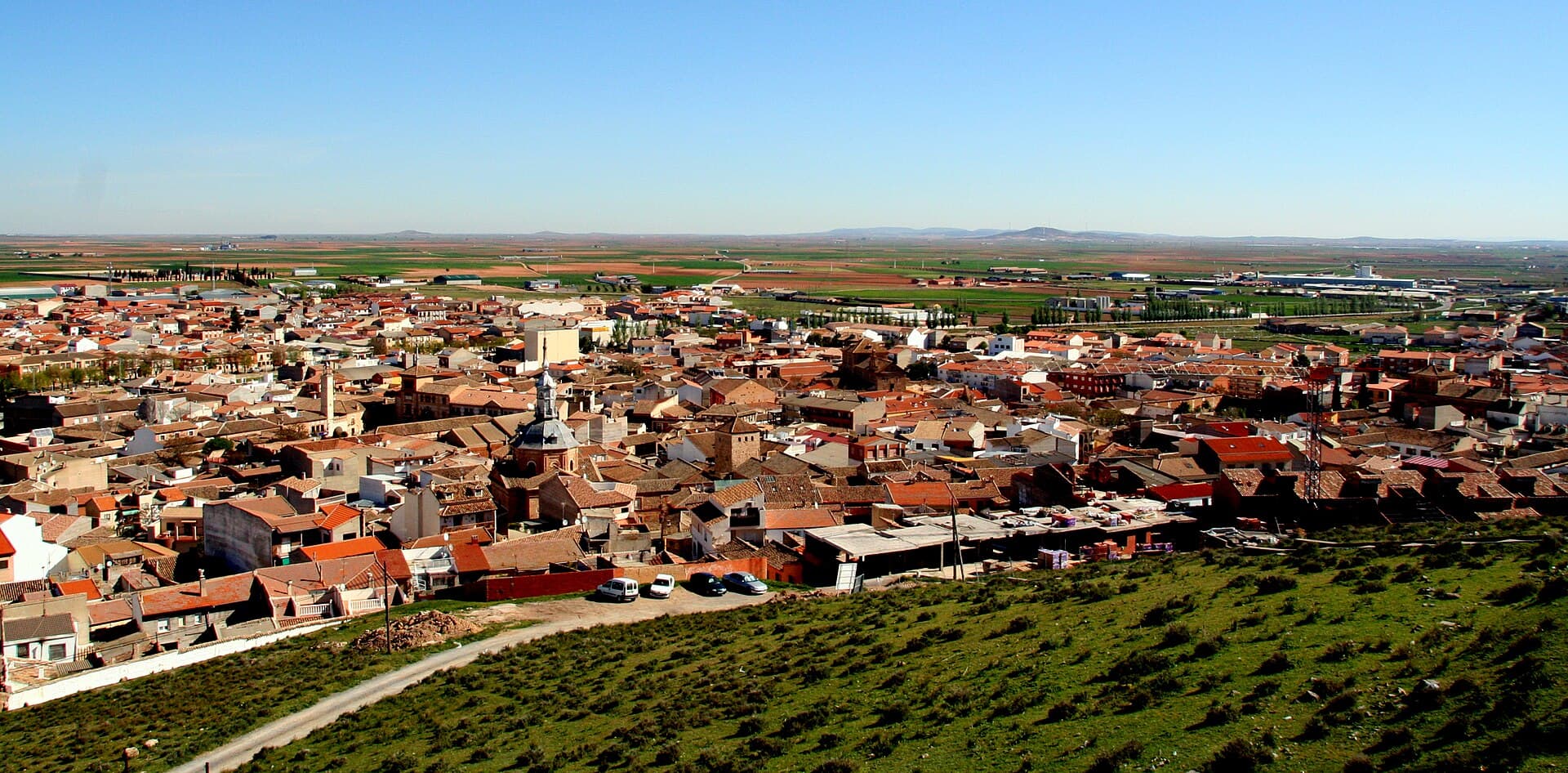 manuel m. v. from Valdemoro, Spain / cc by 2.0, via Wikimedia Commons
Self-guided audio walking tour of Consuegra — GPS route, offline playback, story-driven narration in 32 languages.
“Where giants stood, and history's winds still turn.”
Not the postcards. The stories even locals don't know — whispered in your ear, right where they happened.
The castle you observe today, with its formidable walls, does not entirely reflect its original form.
The distinctive windmills of Consuegra, famously connected to Don Quixote, share a surprising link with an ancient conflict.
The town's name, 'Consuegra,' carries a unique and perhaps unexpected meaning in Spanish.
Discover every secret of Consuegra
Every address, every reveal in full — in your ear, right where it happened.
You pick your stops. You walk. The voice reveals what the others miss.


Your self-guided audio tour of Consuegra is ready — pick your landmarks, choose your language, and start the moment you arrive.
BuyLume has a built-in augmented-reality guide. Hold your phone up and its camera shows the street ahead of you, with a glowing arrow laid over the real view that always points to your next stop — no map to puzzle over, no wrong turns. Like everything in Lume, it works fully offline.
Consuegra, a town in the province of Toledo within the Castilla-La Mancha region of Spain, is instantly recognizable for its distinctive windmills and a medieval castle that crown the Cerro Calderico ridge. This landscape, brought to life in Miguel de Cervantes' Don Quixote, draws visitors seeking a glimpse into a bygone era and the literary imagination it inspired. The twelve whitewashed windmills, each with its own name, stand as sentinels against the expansive La Mancha plains, evoking the famous scene where Don Quixote famously mistook them for colossal figures.
Beyond its literary renown, Consuegra offers a rich story of the past, from its Roman origins as Consabura to its strategic importance during the Moorish rule and the Christian Reconquista. The town's enduring agricultural character, with its vineyards and cereal fields, still shapes the surrounding landscape. A visit here is an immersion in both tangible history and the enduring power of a classic tale, inviting exploration of its ancient fortress, its unique milling heritage, and the tranquil pace of a traditional Spanish town.
The origins of Consuegra stretch back to pre-Roman times, with evidence of a Celtiberian settlement on Cerro Calderico. The arrival of the Romans marked a significant transformation, establishing the town as Consabura in the 1st century BC. This Roman settlement was strategically important due to its location near the Amarguillo River and featured typical Roman infrastructure, including baths, defensive walls, an aqueduct, and a circus.
During the Muslim period, a castle was constructed on Calderico Hill, which would become a crucial military asset in regional power struggles. The castle changed hands multiple times between Moors and Christians during the Reconquista. In 1085, King Alfonso VI of Castile conquered Toledo, and Consuegra gained vital importance as a border key. A pivotal moment in Consuegra's history occurred on August 15, 1097, when a significant battle took place between Alfonso VI's forces and the Almoravid army led by Yusuf ibn Tasufin. This battle resulted in a defeat for the Castilian-Leonese army and the death of Diego Rodríguez, the son of the legendary El Cid. Despite the Christian loss, the Almoravids could not take the castle, retreating after an eight-day siege.
In 1183, King Alfonso VIII granted Consuegra Castle to the Knights Hospitaller (Order of Saint John of Jerusalem), who further expanded and reinforced it, transforming it into a formidable defensive stronghold and a headquarters for their military order. The windmills, for which Consuegra is now famous, were constructed much later, between the 16th and 19th centuries, to grind wheat, a testament to the region's agricultural focus. The castle, however, suffered significant damage during the Peninsular War in 1813 when French troops destroyed parts of it. Restoration efforts began in 1962, and the castle, along with the windmills, was declared a cultural historic site in 2006.
The windmills of Consuegra achieved international renown through Miguel de Cervantes' Don Quixote of La Mancha. Although Cervantes did not explicitly name Consuegra, the landscape and local tradition have firmly linked these particular windmills to Don Quixote's famous encounter, where he charges at them, mistaking them for colossal figures. Today, twelve of the original thirteen windmills remain, each bearing a name from Cervantes' novel, further cementing their literary connection.
The primary attractions in Consuegra are concentrated on Cerro Calderico. Here, twelve restored windmills stand in a line, many of which are named after characters from Don Quixote. One of the most notable is Molino Rucio, which still contains its original milling mechanism and occasionally demonstrates traditional wheat grinding. Another, Molino Bolero, houses the local tourist office and a small exhibition about the windmills and the region. From this elevated position, visitors can enjoy expansive panoramic views of the La Mancha plains and the town below.
Adjacent to the windmills is Consuegra Castle, also known as Castillo de La Muela. This 10th-century fortress, significantly modified by the Knights Hospitaller, offers a glimpse into medieval military architecture. Visitors can explore its towers, ramparts, and restored rooms, which provide further insight into its strategic importance throughout history. While most windmills are observed from the exterior, several are open to the public, some housing souvenir shops or museums. In the town center, the Renaissance-style Town Hall and the Plaza de España, surrounded by houses with wooden balconies, offer a charming area to explore.
The most pleasant times to visit Consuegra are during April, May, September, and October. During these months, temperatures are comfortable, ranging from mildly cool to warm, typically between 9°C and 29°C (49-72°F), with moderate rainfall. The spring months offer clear skies and blooming fields, while autumn brings pleasant weather and warm colors to the landscape. Summers (late June to late August) are hot, with average highs around 32°C (90°F), making early mornings or late afternoons preferable for visits. Winters are very cold and partly cloudy.
Consuegra is approximately a 45-minute drive from Toledo and about 90 minutes to two hours from Madrid. The most convenient way to reach the town and the hilltop attractions is by car, with free parking available near the windmills. While public bus routes exist from nearby cities like Madrid and Toledo, timetables can be limited, and buses do not take you directly to the windmills on the hill. Consider an overnight stay to experience the illuminated castle and windmills at night and enjoy the town's quieter atmosphere after day visitors depart.
Tickets for the castle and select windmills can be purchased at the monuments themselves or through the local tourist office, often including access to the municipal museum. Comfortable footwear is recommended for exploring the hilltop. If visiting during the Consuegra Medieval festival in August or the Saffron Rose Festival in October, be aware that access roads to the windmills may be restricted, and it's advisable to check with the Tourist Office for schedules and to purchase tickets in advance for events.
Consuegra in Korean, in Chinese or in Hebrew — and 29 more languages, every stop narrated by a native voice. The widest language range of any self-guided audio tour.
Available in: