The patron saint of Bolivia, the Virgin of Copacabana, is housed in a grand basilica, but her original image is rarely seen outside its special chapel.
EEJCC / CC BY-SA 4.0, via Wikimedia CommonsCopacabana
“Where Andean spirituality meets the shimmering expanse of Lake Titicaca.”
Copacabana, as no one tells it.
Not the postcards. The stories even locals don't know — whispered in your ear, right where they happened.
This ancient stone structure bears a name that suggests a grim Incan past, but its true purpose predates the Inca Empire entirely.
The famous Copacabana Beach in Rio de Janeiro, Brazil, shares its name with this quiet Bolivian town, but the connection runs deeper than coincidence.
Discover every secret of Copacabana
Every address, every reveal in full — in your ear, right where it happened.
You pick your stops. You walk. The voice reveals what the others miss.
How long do you have in Copacabana?
No tours available yet. Check back soon — we're preparing them.
The story of Copacabana
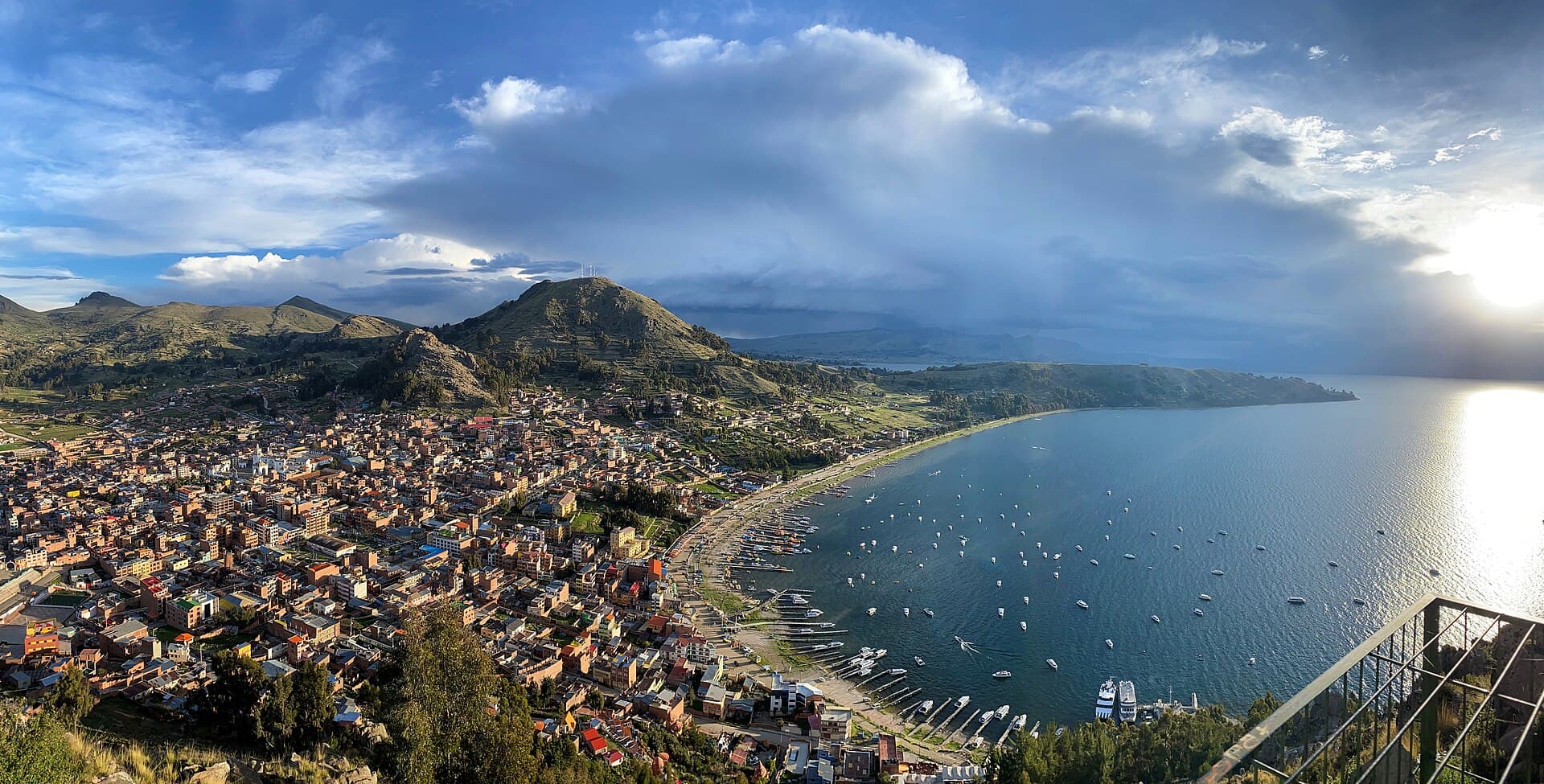
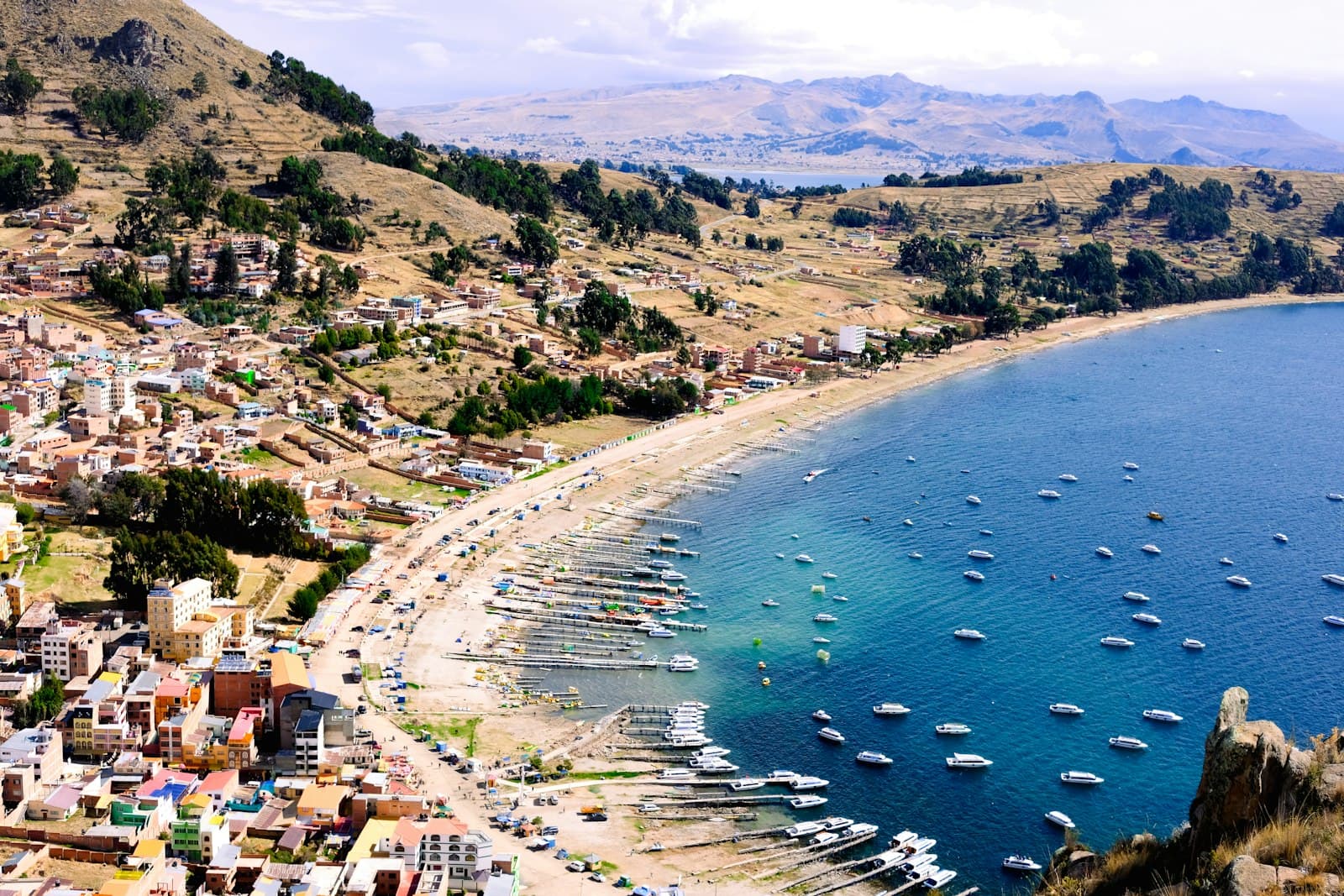
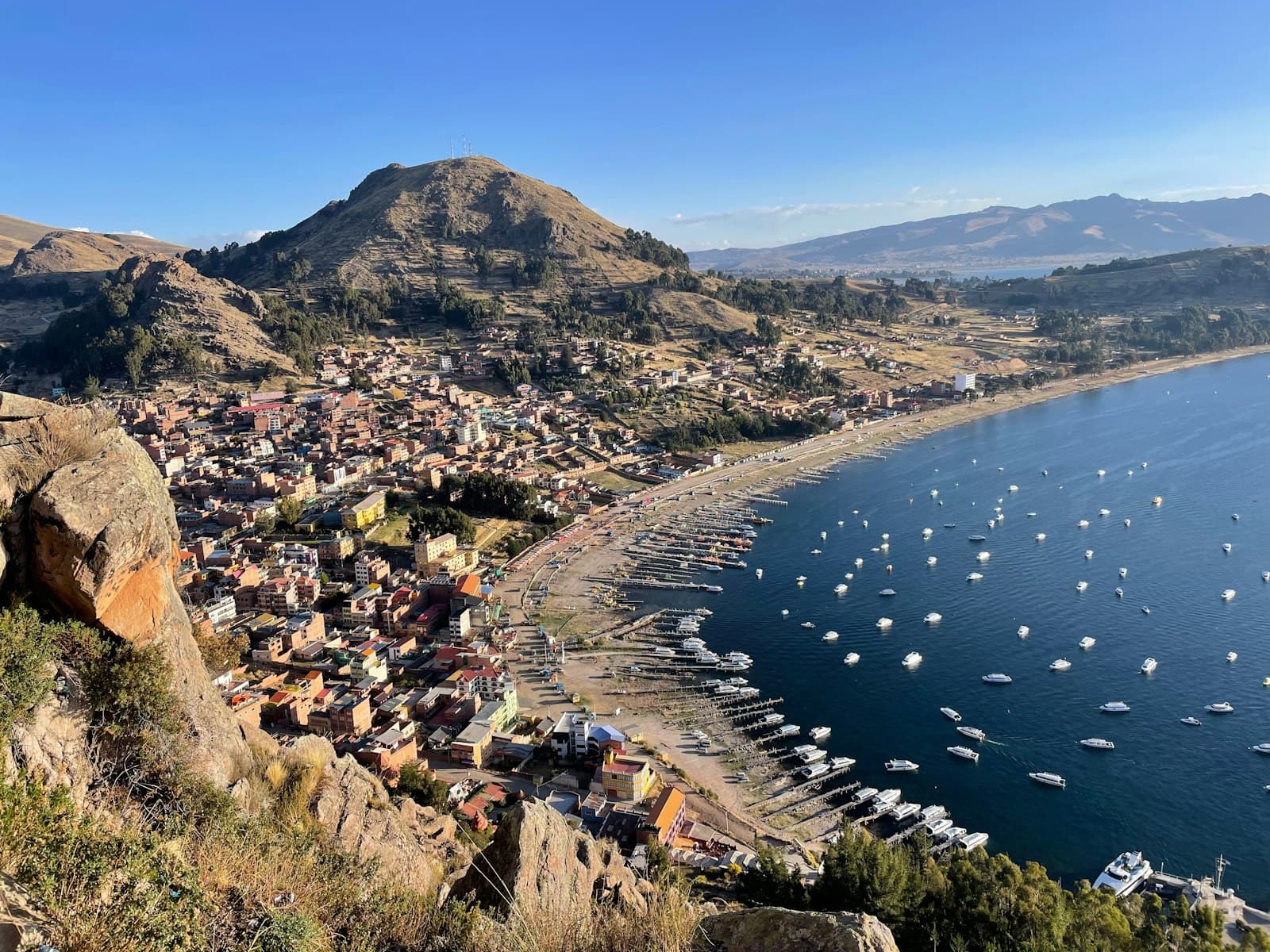
Copacabana, Bolivia, rests on the southern shore of Lake Titicaca, the world's highest navigable lake, at an altitude of 3,841 meters (12,602 feet). It serves as a significant pilgrimage site and a passage to the sacred Isla del Sol. The town itself unfolds at a relaxed pace, a melding of indigenous Aymara culture and Spanish colonial influences.
The town's name, Copacabana, some believe derives from the Aymara phrase kota kahuana, meaning 'view of the lake.' Others link it to Kotakawana, an Andean fertility god. Whatever its origins, Copacabana offers visitors a distinctive experience where spiritual devotion, ancient history, and the natural beauty of Lake Titicaca converge.
From Ancient Shrines to Colonial Influence
The area surrounding Copacabana holds profound historical and spiritual significance, long preceding the arrival of the Spanish. It was an outpost of Inca occupation, considered central to the ancient shrine and oracle on Isla de Titicaca, which the Incas adopted from the Aymara people. Smaller shrines within Copacabana itself hosted ceremonies of both the Incas and the original inhabitants.
With the arrival of the Spanish in the mid-16th century, the Andean cosmovision began to transform. Dominican friars established missions in Copacabana, later replaced by non-monastic priests and eventually entrusted to the Augustinians in 1589.
A pivotal moment in Copacabana's history occurred around 1576 when an indigenous sculptor, Francisco Tito Yupanqui, carved an image of the Blessed Virgin Mary. Despite initial rejections due to his perceived lack of skill, he persevered, traveling to Potosí to refine his craft. The resulting statue, depicting Mary as an Inca princess, was placed in an adobe shrine around 1583. Miracles were soon attributed to the image, and its renown spread, making it one of the oldest Marian shrines in the Americas.
Construction of the grand Basilica of Our Lady of Copacabana began in 1668 and was completed by 1805, built on a site formerly known as the Temple of the Sun. The basilica, with its white walls and Moorish domes, became a major pilgrimage center. During the Great Indigenous Uprising of 1781, while the church was desecrated, the chapel housing the Virgin remained untouched. In 1825, with Bolivia's independence, the Virgin of Copacabana was declared the patron saint of the new nation. Today, Copacabana continues to be a site of lively indigenous celebrations that blend Catholic devotion with Andean roots, particularly on February 2nd and August 6th, the feast days of the Virgin.
The heart of Copacabana is the Basilica of Our Lady of Copacabana, a 17th-century Roman Catholic shrine dedicated to Bolivia's patron saint. Its white walls and Moorish domes rise prominently in Plaza 2 de Febrero. Inside, the revered wooden statue of the Virgin of Copacabana, carved in 1576, is adorned with gold leaf.
For expansive views of Lake Titicaca and the town, ascend Cerro Calvario. This hill features the 14 Stations of the Cross, a pilgrimage path for many. The hike takes about 30-45 minutes, and at the summit (around 4,040 meters or 13,254 feet), you can witness the sun dipping below the horizon.
Another significant site is Horca del Inca, a pre-Incan astronomical observatory built by the Chiripa culture around the 14th century BC. This trilithic stone structure, despite some damage from the Spanish, offers insights into ancient Andean astronomy and views of the lake.
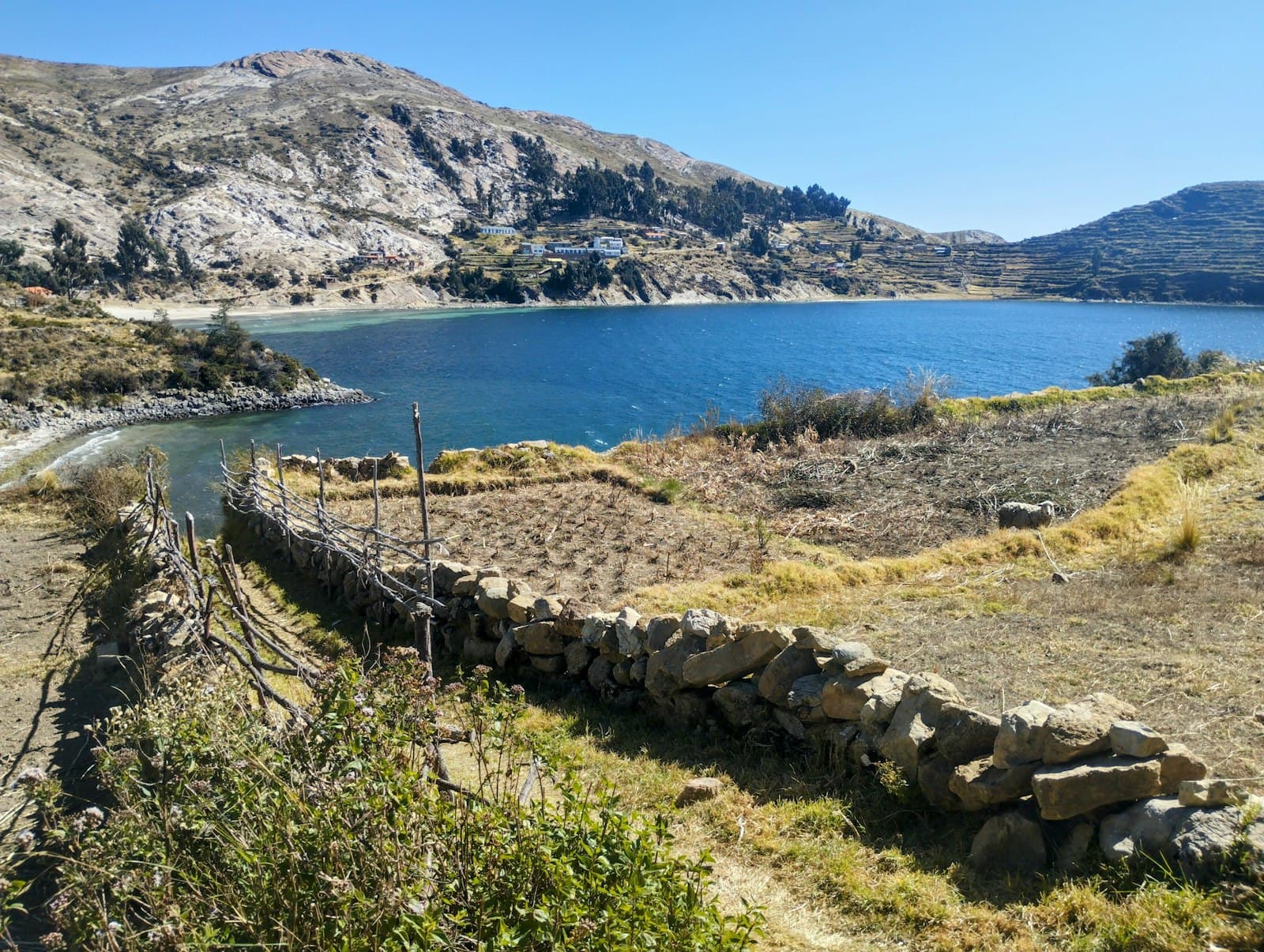
From Copacabana, Isla del Sol is a popular boat trip. According to Inca mythology, this sacred island is the birthplace of the sun god Inti and the first Inca ruler, Manco Cápac. The island features Inca ruins and walking paths connecting its villages.
The ideal time to visit Copacabana is during the dry season, which stretches from May to October. During these months, the skies are generally clear, and the climate is mild, with daytime temperatures averaging 15–20°C (59–68°F). Nights can be cold, sometimes dropping below freezing, especially in June and July, so warm clothing is essential. This period is perfect for boat trips on Lake Titicaca and exploring the town's cultural sites.
Copacabana is situated at a high altitude of 3,841 meters (12,602 feet) above sea level. Visitors arriving from lower elevations should allow time to adjust to prevent altitude sickness by drinking plenty of water and avoiding strenuous activity on the first day.
The nearest major airport is El Alto International Airport (LPB) in La Paz, approximately 3-4 hours away by bus or private transfer. Buses also connect Copacabana to Puno, Peru (about 3 hours), and Cusco, Peru (about 15 hours). The bus terminal in Copacabana is near Plaza Sucre.
The local currency is the Bolivian boliviano (BOB). While some hotels and restaurants accept credit cards, cash is necessary for smaller purchases, market stalls, and boat rides. ATMs are available in town for boliviano withdrawals.
- What is the altitude of Copacabana, Bolivia?
- Copacabana is located at an altitude of 3,841 meters (12,602 feet) above sea level.
- Is Copacabana, Bolivia, related to Copacabana Beach in Rio de Janeiro?
- Yes, the famous Copacabana Beach in Rio de Janeiro, Brazil, was named after this Bolivian town, specifically after the Virgin of Copacabana.
- What is the best way to get to Copacabana, Bolivia?
- The most common way to reach Copacabana is by bus from La Paz (Bolivia) or Puno (Peru). The closest airport is El Alto International Airport (LPB) in La Paz.
- What are the main attractions in Copacabana?
- Key attractions include the Basilica of Our Lady of Copacabana, hiking Cerro Calvario for lake views, exploring the pre-Incan Horca del Inca, and taking a boat trip to Isla del Sol.
- When is the dry season in Copacabana?
- The dry season in Copacabana runs from May to October, offering clear skies and mild daytime temperatures, though nights can be cold.
- What is the car blessing ceremony in Copacabana?
- The car blessing ceremony is a distinctive tradition where locals bring their vehicles to the plaza outside the basilica to be blessed by a priest with holy water, often accompanied by festive decorations and offerings.