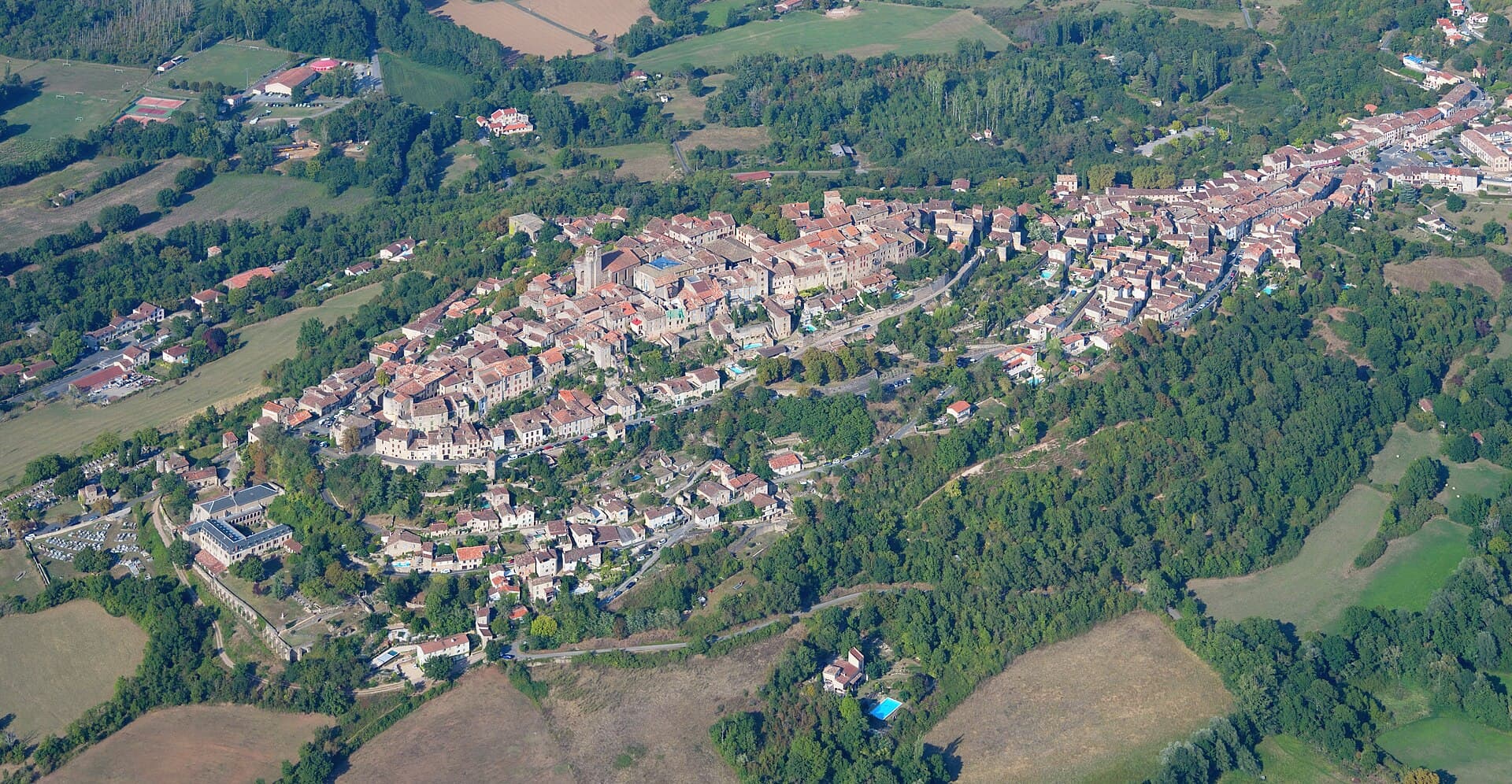
Cordes-sur-Ciel, FranceCarsten Steger / CC BY-SA 4.0, via Wikimedia Commons
FR

Cordes-sur-Ciel

Where medieval stone touches the sky.

The secrets of Cordes-sur-Ciel

Cordes-sur-Ciel, as no one tells it.

Not the postcards. The stories even locals don't know — whispered in your ear, right where they happened.

3 secrets below. Many more wait inside the tour.
The Grand Rue Raimond VII

Along the main thoroughfare, some of the most impressive Gothic houses bear silent witness to the town's past prosperity. But look closely at the Maison du Grand Fauconnier.

Full story unlocks in the tour
The central market hall

Beneath the 14th-century market hall, a seemingly ordinary well plunges deep into the earth.

Full story unlocks in the tour
The name 'Cordes-sur-Ciel'

The village's poetic name, meaning 'Cordes in the sky,' wasn't its original designation.

Full story unlocks in the tour
The full tour

Discover every secret of Cordes-sur-Ciel

Every address, every reveal in full — in your ear, right where it happened.

Get the key to Cordes-sur-Ciel

You pick your stops. You walk. The voice reveals what the others miss.

Choose your time

How long do you have in Cordes-sur-Ciel?

No tours available yet. Check back soon — we're preparing them.

About Cordes-sur-Ciel

The story of Cordes-sur-Ciel

Cordes-sur-Ciel, often called the 'village above the clouds,' is a medieval marvel in the Tarn department of Occitanie, France. This fortified town, founded in 1222, rises dramatically from the Puech de Mordagne ridge, offering expansive views over the Cérou Valley. Its steep, cobbled lanes and Gothic architecture create an atmosphere that feels suspended in time, particularly when morning mists envelop the valley below, giving the impression that the village floats among the clouds.

Recognized as one of 'Les Plus Beaux Villages de France' (France's Most Beautiful Villages) since 2021, Cordes-sur-Ciel has long captivated artists, writers, and pilgrims alike. Albert Camus, who resided here in the 1950s, was so enchanted that he famously declared, "The traveler who, from the terrace of Cordes, looks at the summer night knows that he does not need to go further and that, if he wants, the beauty here, day after day, will take him away from all solitude." The village invites exploration on foot, rewarding those who ascend its winding streets with architectural treasures and panoramic vistas.

Cordes-sur-Ciel is not merely a relic of the past; it is a living village where artists and artisans continue to draw inspiration from its unique setting. Workshops showcasing potters, painters, and jewelers line the ancient streets, contributing to its cultural scene. Visitors can delve into its history, admire its exquisitely preserved Gothic houses, and immerse themselves in the artistry that defines this extraordinary hilltop community.

History

## A Bastide Forged in Conflict Cordes-sur-Ciel was established in 1222 by Raymond VII, the Count of Toulouse, in the turbulent aftermath of the Albigensian Crusade. This period saw intense religious conflict as the Catholic Church sought to suppress Catharism, a Christian movement prevalent in southern France. While Raymond VII himself was not a Cathar, he tolerated their practices, and Cordes was conceived as a fortified 'new town' (a bastide) to offer refuge and a fresh start to populations displaced by the conflict, particularly those from the village of Saint-Marcel, which had been destroyed.

## Golden Age of Gothic Splendor From the late 13th to the early 14th century, Cordes-sur-Ciel experienced a period of significant prosperity, fueled by trade in wool, cloth, silk, and leather. This wealth is vividly reflected in the village's remarkable Gothic architecture. Grand houses, such as the Maison du Grand Fauconnier, Maison du Grand Ecuyer, and Maison du Grand Veneur, were constructed by noble families and affluent merchants, showcasing intricate sculpted facades and pointed arches. These structures are considered some of the finest examples of civil Gothic architecture in southern France.

## Decline and Artistic Renaissance The Black Death in 1348 severely impacted Cordes, decimating a quarter of its population. Further decline followed with the Hundred Years' War and, later, the construction of the Canal du Midi in the late 17th century, which rerouted trade and led to the town's economic collapse. However, Cordes-sur-Ciel saw a revival in the late 19th century with the textile and embroidery industry, and a significant artistic renaissance in the mid-20th century. Artists like Yves Brayer and writers such as Albert Camus were drawn to its beauty, establishing an artistic community and the Cordes Academy of Art. This artistic legacy continues today, with numerous workshops and galleries contributing to the village's enduring character.

What to see

Wander through the medieval old town, navigating its steep, cobbled streets to discover a wealth of Gothic architecture. Admire the sculpted facades of the Maison du Grand Fauconnier, Maison du Grand Ecuyer, and Maison du Grand Veneur, notable for their detailed carvings. Visit the 14th-century Halle de Cordes-sur-Ciel, the historic market hall, and observe the deep well beneath it. The Église Saint-Michel, a 13th-century church with later alterations, features an organ that once resided in Notre-Dame de Paris.

Explore the various viewpoints throughout the village, which offer panoramic vistas of the Cérou Valley. The Maison Prunet, on Place de la Bride, provides a particularly striking panorama. For art enthusiasts, the Museum of Modern and Contemporary Art showcases diverse works, while the Sugar and Chocolate Art Museum by Yves Thuriès offers a unique artistic experience. Do not miss the Porte de l'Horloge (Clock Gate) and the Porte du Vainqueur (Victor's Gate), both significant elements of the town's medieval fortifications.

Beyond the architecture, delve into the artisan workshops and galleries that populate the village, featuring potters, painters, and jewelry makers. For a different perspective, consider the EnQuête(s) free app for a self-guided tour with interactive content.

When to visit

The ideal times to visit Cordes-sur-Ciel are spring and autumn. During these seasons, the weather is pleasant, and there are fewer tourists, increasing the likelihood of witnessing the village enveloped by clouds. May, June, September, and October generally offer favorable weather with comfortable temperatures. While summer (mid-June to mid-September) brings warm weather and festivals, including medieval events, it also sees a higher volume of visitors. July is typically the sunniest month.

Practical

Cordes-sur-Ciel is best explored on foot due to its steep, cobbled streets. While the historic center is compact and can be seen in 2-3 hours, allowing half a day provides time to explore museums and craft workshops. The village is approximately 25 km from Albi, making a combined visit highly recommended. The most convenient way to reach Cordes-sur-Ciel is by car, with scenic routes from nearby cities like Carcassonne (1 hour 15 minutes drive). Paid parking is available at Les Tuileries, La Bouteillerie, or Saint-Crucifix, with free parking on Saturday mornings for market day. A tram operates during summer months to transport visitors from the lower village to the upper town. The local Office de Tourisme du Pays Cordais au Pays de Vaour is located at 42 Grand Rue Raimond VII for visitor information.

Good to know
What does 'Cordes-sur-Ciel' mean?
'Cordes-sur-Ciel' translates to 'Cordes in the sky,' a name reflecting its dramatic hilltop location, often appearing to float above morning mists.
When was Cordes-sur-Ciel founded?
Cordes-sur-Ciel was founded in 1222 by Raymond VII, the Count of Toulouse.
What kind of architecture can be seen in Cordes-sur-Ciel?
The village is renowned for its well-preserved 13th and 14th-century Gothic architecture, including numerous elaborately sculpted houses.
Are there any museums in Cordes-sur-Ciel?
Yes, Cordes-sur-Ciel features a Museum of Modern and Contemporary Art and the Sugar and Chocolate Art Museum by Yves Thuriès.
Is Cordes-sur-Ciel accessible by public transport?
While possible to reach by train to Vindrac-Alayrac, driving is generally recommended for convenience and to explore the surrounding region.
What local products are Cordes-sur-Ciel known for?
Cordes-sur-Ciel is known for its artisan crafts, including pottery, paintings, and jewelry, as well as local delicacies like *les croquants de Cordes* biscuits.
Cordes-sur-Ciel
From€9.00
No booking · activate anytime · 12h to walk it
Get the key to Cordes-sur-Ciel