Legend holds that a king, after sacking Rome, met his end in Cosenza. His burial involved an extraordinary feat of engineering and a secret that endures to this day.
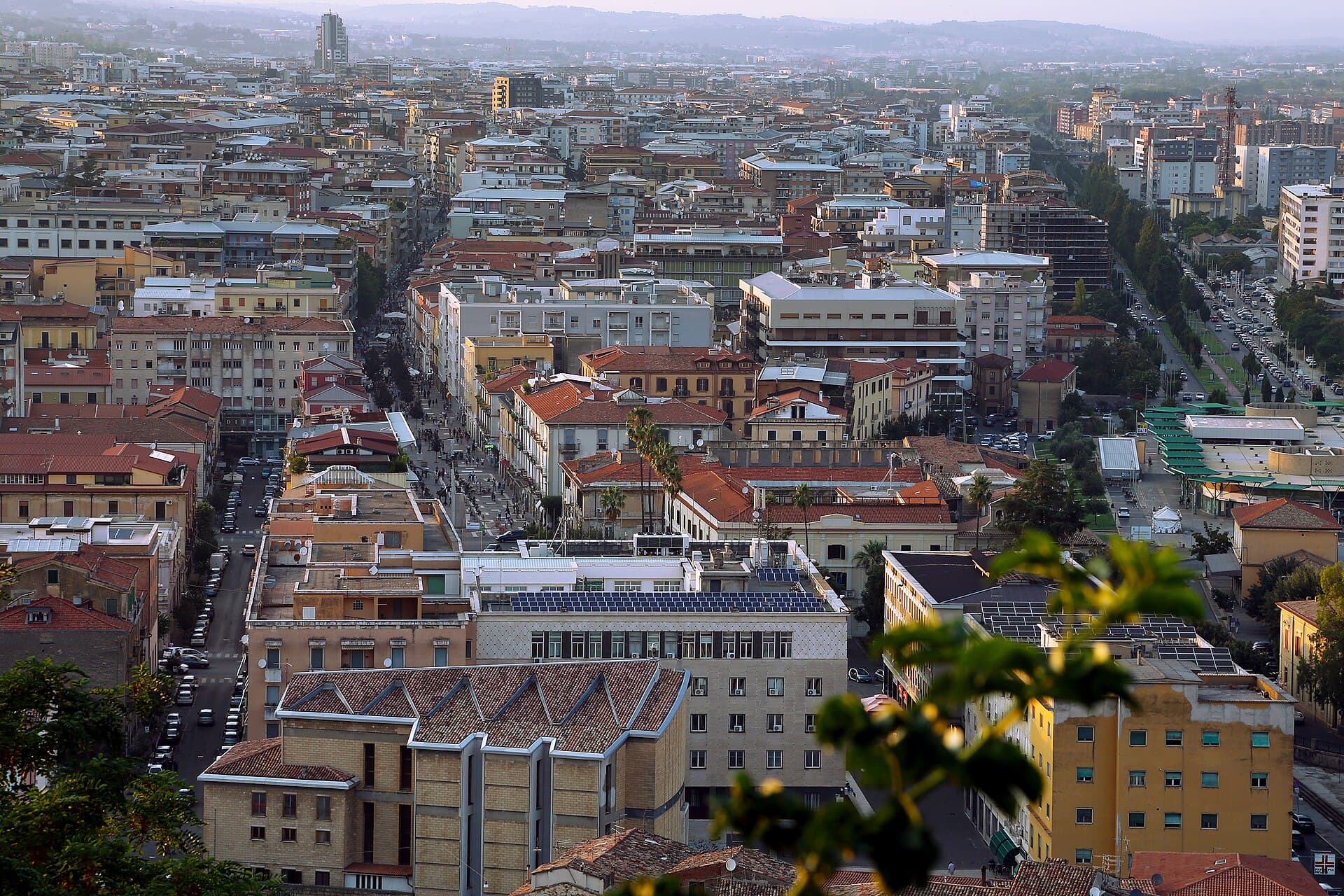
Ric64 Rinaldo Panucci / CC BY-SA 4.0, via Wikimedia CommonsCosenza
“Where ancient whispers meet modern art, Cosenza invites you to uncover its layered soul.”
Cosenza, as no one tells it.
Not the postcards. The stories even locals don't know — whispered in your ear, right where they happened.
Walk along Cosenza's main pedestrian thoroughfare, and you might find yourself amidst sculptures of global renown, transforming a casual stroll into an unexpected gallery experience.
Wandering the narrow lanes of Cosenza Vecchia, you might notice a particular, yet endearing, detail that speaks volumes about daily life and tradition.
Discover every secret of Cosenza
Every address, every reveal in full — in your ear, right where it happened.
You pick your stops. You walk. The voice reveals what the others miss.
How long do you have in Cosenza?
No tours available yet. Check back soon — we're preparing them.
The story of Cosenza
Cosenza, a city in southern Italy's Calabria region, rests at the confluence of the Crati and Busento rivers. Long recognized as the 'Athens of Calabria' due to its enduring tradition of philosophy, literature, and fine arts, Cosenza presents a compelling blend of ancient history and contemporary life. Its historic center, Cosenza Vecchia, forms a labyrinth of steep, narrow streets and venerable palaces, while the modern city offers elegant shopping avenues and a lively university atmosphere.
Often passed over by those heading to Calabria's coasts, Cosenza offers a profound journey through millennia of history, dynamic art, and natural splendor. The city serves as a central point for exploring Calabria's varied landscapes, with both the Sila National Park and the Tyrrhenian coast within easy reach. Whether you are a history enthusiast, an art lover, or an explorer seeking authentic Italian experiences, Cosenza provides a unique and memorable visit.
Cosenza's history extends back to the 4th century BC, when it was established as Consentia, the capital of the Bruttii, an ancient Italic tribe. This tribe successfully resisted Greek colonization before the city was eventually taken by the Romans in 204 BC, becoming an important stop on the Via Popilia.
One of the most captivating legends of Cosenza dates to 410 AD, when Alaric, King of the Visigoths, died here after sacking Rome. According to tradition, he was interred with his fabled treasure in the bed of the Busento River, whose waters were temporarily diverted for the burial. This enduring mystery continues to add an aura of intrigue to the city.
Over subsequent centuries, Cosenza was occupied by various powers, including the Byzantines, Saracens, Normans, Angevins, and Spanish, each leaving their imprint on the city's architecture and culture. In the mid-11th century, it became a feudal dukedom under the Normans. Emperor Frederick II of Hohenstaufen showed particular interest in Cosenza, fostering construction and economic activities and organizing an important annual fair.
The 16th century saw the founding of the Accademia Cosentina, one of the oldest academies of philosophical and literary studies in Italy and Europe, solidifying Cosenza's reputation as a cultural hub and earning it the moniker 'Athens of Calabria'. The city also played a role in the Italian Risorgimento, witnessing uprisings and the execution of the Bandiera brothers in 1844. Despite being damaged by earthquakes and Allied bombings during World War II, Cosenza has undergone revitalization, with its historic center and cultural institutions being restored.
Begin your exploration in Cosenza's historic center, known as Cosenza Vecchia, a maze of narrow streets and ancient buildings. A prominent landmark is the Cosenza Cathedral, a Romanesque-Gothic structure consecrated in 1222 in the presence of Emperor Frederick II. It contains the mausoleums of Heinrich VII of Germany and Isabella of Aragon.
The Castello Normanno-Svevo (Norman-Swabian Castle) sits atop Pancrazio Hill, offering expansive views of the city and the Crati Valley. Originally constructed by the Saracens, it was later expanded by the Normans and Frederick II.
In the modern part of the city, stroll along Corso Mazzini, a pedestrian street transformed into the Museo all'Aperto Bilotti (MAB). This open-air museum features sculptures by renowned artists such as Salvador Dalí and Giorgio de Chirico.
Other notable sites include the National Gallery in Palazzo Arnone, which displays a collection of paintings from the 16th century to the modern era, with a focus on Southern Italian artists. The Museo dei Brettii e degli Enotri, housed in the monumental complex of S. Agostino, exhibits artifacts from Calabria's ancient civilizations. For a green escape, visit Villa Vecchia, a public garden with venerable trees, fountains, and sculptures.
The most pleasant times to visit Cosenza are during the spring (April to June) and autumn (September to October). During these shoulder seasons, the weather is mild and agreeable, ideal for exploring the city's historical sites without the intense summer heat. Autumn also brings beautiful foliage to the surrounding mountains and the harvest of local mushrooms and chestnuts. Summers (July and August) can be quite warm, with temperatures often exceeding 30°C (86°F), though evenings are generally cooler. Winters (December to February) are mild but can be cool and occasionally rainy.
Reaching Cosenza is straightforward. The closest major airport is Lamezia Terme International Airport (SUF), approximately 70 kilometers south of the city. From the airport, you can rent a car, take a direct bus, or use the train. Cosenza is also well-connected by train, though it requires a detour from the main coastal railway line. High-speed trains run from Rome and Naples to Paola, from where frequent regional trains connect to Cosenza's main railway station (Vaglio Lise).
Once in Cosenza, the modern city center and Corso Mazzini are flat and easy to navigate on foot. To reach the historic center and the castle, you can ascend the historic staircases or use local AMACO city buses. Taxis are also available. Cosenza serves as a suitable base for exploring the region, with the Sila National Park and Tyrrhenian beaches about 30 minutes away by car.
- What is Cosenza known for?
- Cosenza is known as the 'Athens of Calabria' for its cultural and intellectual tradition, its historic center, the legend of Alaric's treasure, and its open-air museum on Corso Mazzini.
- Is Cosenza a walkable city?
- The modern city center and Corso Mazzini are flat and very pedestrian-friendly. The historic center, Cosenza Vecchia, involves steep, narrow streets and staircases, but is also enjoyable to explore on foot.
- What local dishes should I try in Cosenza?
- Be sure to sample local products from the Sila mountains, such as Caciocavallo Silano DOP cheese and cured meats like Capocollo and Soppressata. Try traditional dishes like 'Lagane e Ceci' (pasta with chickpeas) and 'patate mpacchiuse' (sticky potatoes).
- Are there beaches near Cosenza?
- While Cosenza is an inland city, the Tyrrhenian coast is about a 30-minute drive away, with seaside towns like Paola, San Lucido, and Fiumefreddo Bruzio offering shores and cliffs.
- What natural parks are close to Cosenza?
- The majestic Sila National Park is a short drive to the east, offering dense pine forests, lakes, and opportunities for hiking and mountain biking. The Pollino National Park is also to the north.
- Is Cosenza a good base for exploring Calabria?
- Yes, Cosenza's strategic inland location makes it an excellent base for day trips to both the Sila mountains and the Tyrrhenian coast, offering a diverse range of experiences within a short drive.