Ópera de Arame (Drahtoper)
Dieses ikonische Theater, das zart und transparent erscheint, erhob sich mit erstaunlicher Geschwindigkeit aus der Erde.
Die ganze Geschichte wird in der Tour freigeschaltet
 Vitor Hirota / CC BY-SA 2.0, via Wikimedia Commons
Selbstgeführte Audio-Walking-Tour durch Curitiba — GPS-Route, Offline-Wiedergabe, erzählerische Narration in 32 Sprachen.
“Curitiba: Wo urbane Ingenieurskunst ein unverwechselbares brasilianisches Erlebnis kultiviert.”
Nicht die Postkarten. Die Geschichten, die selbst Einheimische nicht kennen – dir ins Ohr geflüstert, genau dort, wo sie geschahen.
Dieses ikonische Theater, das zart und transparent erscheint, erhob sich mit erstaunlicher Geschwindigkeit aus der Erde.
Curitiba hat ein öffentliches Verkehrssystem entwickelt, das die urbane Mobilität weltweit neu gestaltet hat.
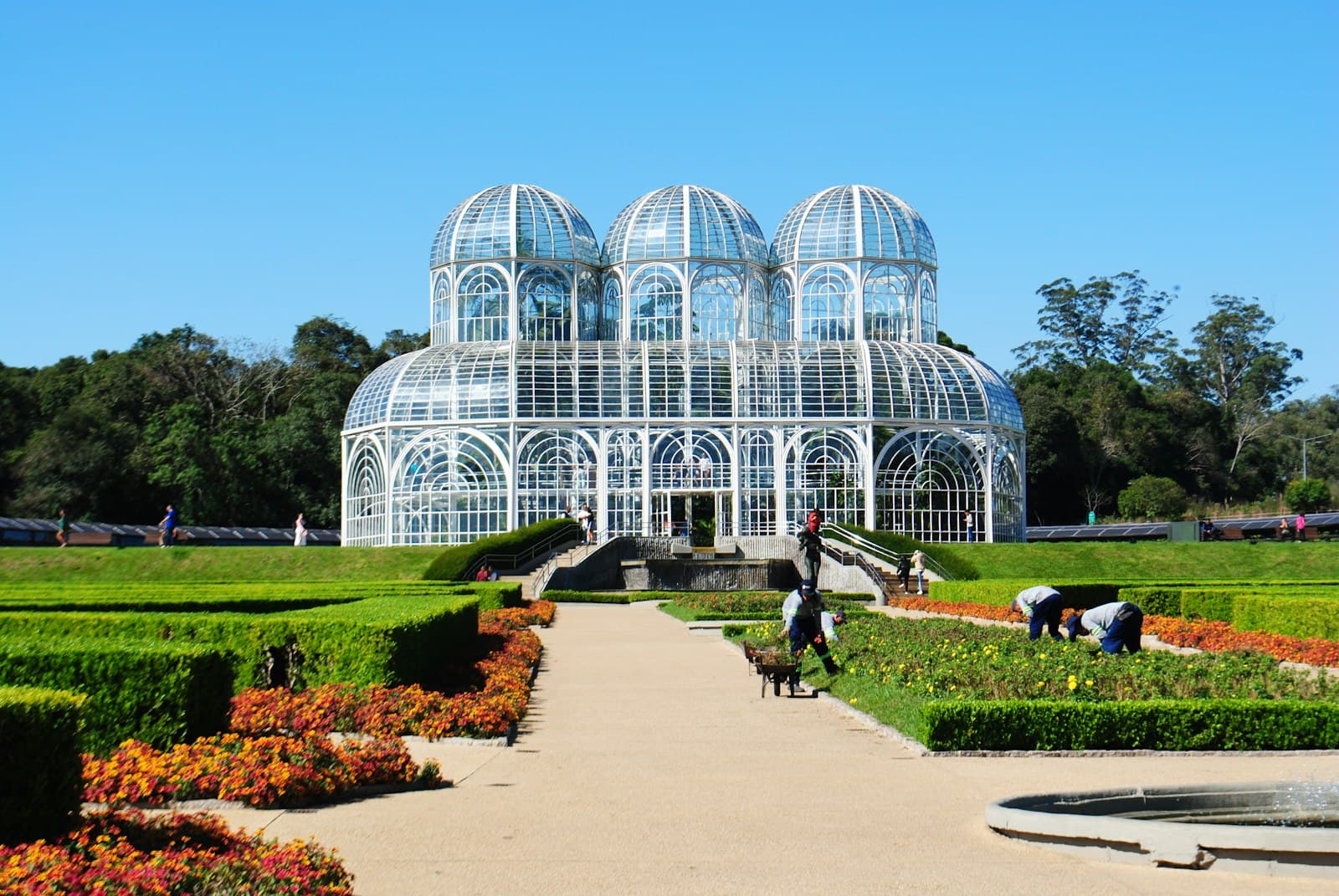
Der beliebte botanische Garten der Stadt, ein prägendes Symbol Curitibas, hat eine überraschende Vergangenheit.
Entdecke jedes Geheimnis von Curitiba
Jede Adresse, jede Enthüllung vollständig – in deinem Ohr, genau dort, wo es geschah.
Du wählst deine Stationen. Du gehst. Die Stimme enthüllt, was andere übersehen.


Deine selbstgeführte Audio-Tour durch Curitiba ist bereit – wähle deine Sehenswürdigkeiten, deine Sprache und starte, sobald du ankommst.
KaufenLume enthält einen integrierten Augmented-Reality-Guide. Halten Sie Ihr Handy hoch: Die Kamera zeigt die Straße vor Ihnen, mit einem leuchtenden Pfeil über dem echten Bild, der immer auf Ihren nächsten Stopp zeigt — keine Karte zum Rätseln, keine falschen Abzweigungen. Wie alles bei Lume funktioniert es komplett offline.
Curitiba, die Hauptstadt von Paraná im Süden Brasiliens, gilt als städtisches Erfolgsmodell und wird häufig als "Modellstadt" oder "ökologische Hauptstadt" Brasiliens bezeichnet. Die Stadt liegt auf einem Plateau in etwa 930 Metern Höhe über dem Meeresspiegel und genießt ein gemäßigtes Klima, eine erfrischende Abwechslung zur tropischen Wärme, die anderswo in Brasilien herrscht. Ihr unverwechselbarer Charakter ist eine Mischung aus durchdachter Stadtplanung, einem tiefen Engagement für Nachhaltigkeit und einer reichen Vielfalt europäischer Einflüsse.
Neben ihrem Ruf für innovative öffentliche Verkehrsmittel und zahlreiche Grünflächen bietet Curitiba ein vielfältiges kulturelles Erlebnis. Besucher können eine historische Innenstadt mit neoklassizistischer und Jugendstilarchitektur erkunden, Viertel entdecken, die von deutschen, italienischen, polnischen und japanischen Siedlern geprägt wurden, und eine lebendige Kunstszene genießen. Die Stadt dient als ausgezeichneter Ausgangspunkt für die Erkundung der umliegenden Naturschönheiten, von monumentalen Sandsteinformationen bis hin zu Küstenregenwäldern.
Curitibas Ursprünge reichen bis in ein Goldgräberlager des 17. Jahrhunderts zurück, das 1654 gegründet wurde. Offiziell wurde es 1693 zur Stadt erhoben und erhielt zunächst den Namen Nossa Senhora da Luz dos Pinhais, was "Unsere Liebe Frau vom Licht im Kiefernwald" bedeutet und auf die zahlreichen Araukarien-Kiefern hinweist. Der Name wurde 1721 zu Curitiba verkürzt. Über einen Großteil seiner frühen Geschichte konzentrierte sich die Wirtschaft auf den Mineralabbau und die Subsistenzlandwirtschaft. Die Verarbeitung von Mate-Tee und Holzprodukten sowie seine strategische Lage als Rastplatz für Viehhirten, die Vieh zwischen den südlichen Weiden und den nördlichen Märkten transportierten, brachten jedoch anhaltendes Wachstum.
1854 wurde Curitiba zur Hauptstadt des neu gegründeten Bundesstaates Paraná ernannt, ein entscheidender Moment, der eine bedeutende städtische Entwicklung anstieß. Im späten 19. und frühen 20. Jahrhundert kamen Wellen europäischer Einwanderer, darunter viele Deutsche, Italiener, Polen und Ukrainer, später auch japanische und nahöstliche Siedler, die die Kultur, Architektur und Küche der Stadt unauslöschlich prägten. Dieser Zustrom verschiedener Gemeinschaften trug zur einzigartigen Identität Curitibas bei, einer Mischung aus brasilianischen und europäischen Einflüssen.
Mitte des 20. Jahrhunderts kam es zu einem rapiden Bevölkerungswachstum, das die Stadtväter veranlasste, proaktiv städtische Herausforderungen anzugehen. In den 1960er Jahren entwickelte ein Team der Bundesuniversität Paraná unter der Leitung des Architekten und späteren Bürgermeisters Jaime Lerner den Curitiba Masterplan. Dieser visionäre Plan, der 1968 verabschiedet wurde, konzentrierte sich auf integrierte Landnutzung und Verkehr, fußgängerfreundliche Straßen und den Erhalt von Grünflächen. Lerners Führung, insbesondere während seiner Amtszeiten als Bürgermeister ab 1971, war entscheidend für die Umsetzung dieser Innovationen, einschließlich des wegweisenden Bus-Rapid-Transit (BRT)-Systems im Jahr 1974. Diese Bemühungen verwandelten Curitiba in ein weltweit anerkanntes Modell für nachhaltige Stadtplanung und brachten der Stadt 2010 den Global Sustainable City Award ein.
Curitiba bietet eine Reihe von Attraktionen, die seine einzigartige Mischung aus Natur und Innovation widerspiegeln. Der Jardim Botânico ist wohl das bekannteste Wahrzeichen der Stadt mit einem eleganten Gewächshaus aus Glas und Metall, inspiriert vom Londoner Kristallpalast, umgeben von Gärten im französischen Stil und einheimischen Pflanzenpfaden. Für Kunstliebhaber präsentiert das Oscar Niemeyer Museum (MON), das wegen seines markanten Anbaus oft "Auge-Museum" genannt wird, zeitgenössische Kunst und ist eine bedeutende kulturelle Institution im Süden Brasiliens.
Die Ópera de Arame (Drahtoper) ist ein beeindruckendes Freilichttheater aus Stahlrohren und transparenten Paneelen, das in einem ehemaligen Steinbruch liegt und von einem künstlichen See umgeben ist. In der Nähe bietet der Parque Tanguá malerische Wasserfälle, einen See und einen weiten Aussichtspunkt. Um das vielfältige Erbe Curitibas zu erleben, besuchen Sie den Bosque do Papa João Paulo II, einen Park, der die polnische Einwanderung mit traditionellen Blockhäusern ehrt, oder den Bosque Alemão (Deutscher Wald), der einen Nachbau eines deutschen Wachturms und einen Märchenpfad bietet. Sonntags findet im Largo da Ordem im historischen Zentrum ein lebhafter Kunsthandwerksmarkt statt, ein unvergessliches Erlebnis für viele Besucher.
Curitiba hat ein subtropisches Klima mit ausgeprägten Jahreszeiten. Obwohl es das ganze Jahr über ein attraktives Reiseziel ist, gelten die Übergangszeiten im Herbst (März bis Mai) und im Frühling (September bis November) oft als ideal. In diesen Monaten ist das Wetter im Allgemeinen mild, mit weniger Andrang und angenehmen Temperaturen zwischen 15°C und 20°C. Insbesondere im Frühling blühen die Parks und Gärten der Stadt auf. Die Sommer (Dezember bis Februar) sind wärmer und können regnerisch sein, während die Winter (Juni bis August) kühler und trockener sind, wobei die Nachttemperaturen gelegentlich auf einstellige Celsius-Werte fallen.
Curitiba wird vom Afonso Pena International Airport (CWB) bedient, der etwa 18 km südöstlich des Stadtzentrums liegt und regelmäßige Verbindungen zu anderen brasilianischen Städten und einigen internationalen Zielen bietet. Die Fortbewegung in der Stadt ist dank des renommierten Bus Rapid Transit (BRT)-Systems effizient und erschwinglich. Die Busse verkehren auf eigenen Fahrspuren und nutzen charakteristische röhrenförmige Haltestellen für schnelles Einsteigen. Ein Einzelfahrschein ermöglicht Umstiege innerhalb des integrierten Netzes. Für Besichtigungen bietet der Doppeldeckerbus Linha Turismo eine bequeme Hop-on-Hop-off-Möglichkeit zu den wichtigsten Sehenswürdigkeiten. Taxis und Fahrdienst-Apps sind ebenfalls leicht verfügbar und erschwinglich. Die lokale Währung ist der brasilianische Real (BRL), und gängige Kreditkarten werden weitgehend akzeptiert. Curitiba arbeitet hauptsächlich mit einer Stromversorgung von 110V mit Steckertypen C und N.
Curitiba — Koreanisch, Chinesisch, Hebräisch und 29 weitere Sprachen, jede Station von einer muttersprachlichen Stimme erzählt. Die größte Sprachauswahl aller selbstgeführten Audiotouren.
Verfügbar auf: