Kloster Curtea de Argeș
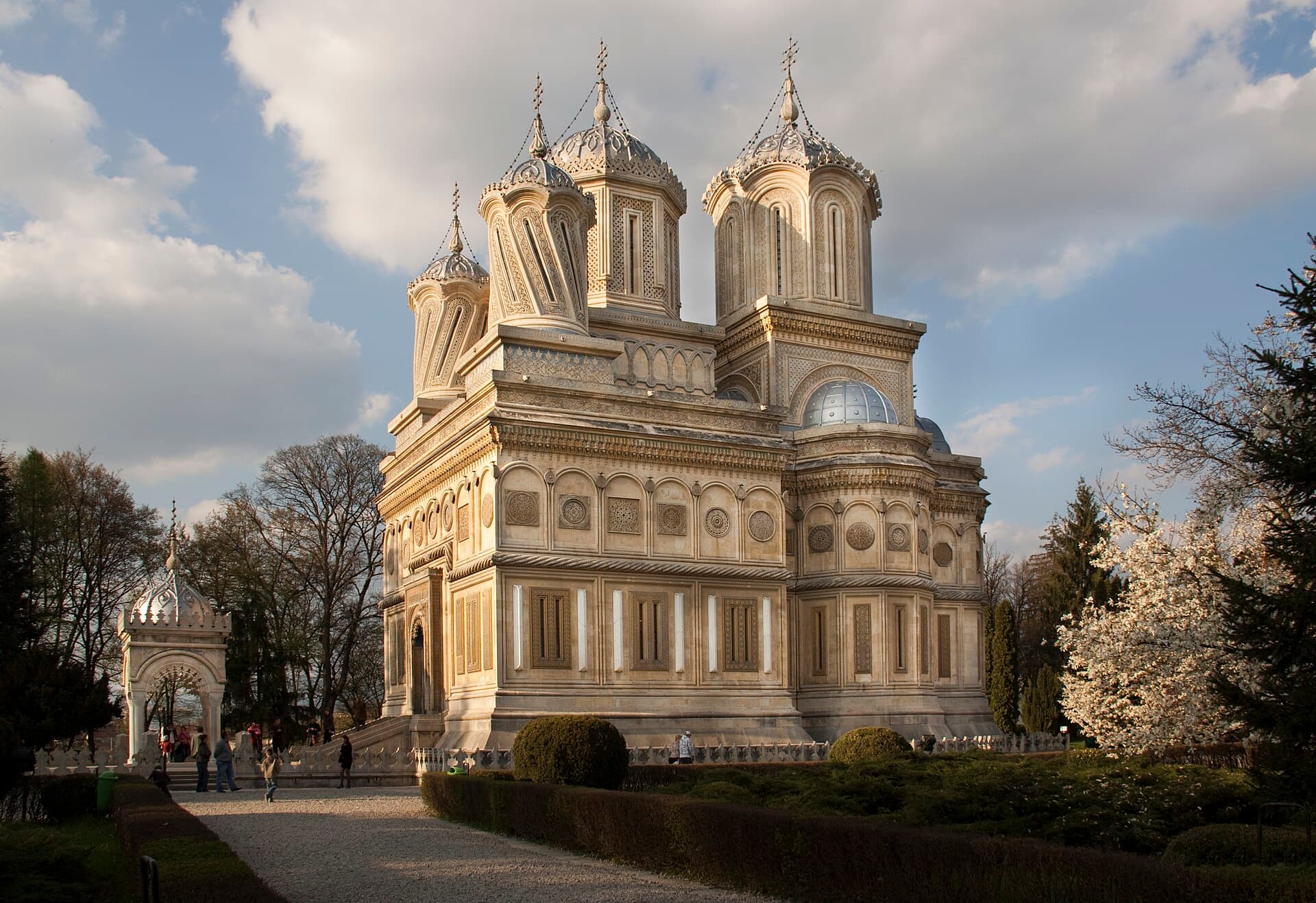
Das beeindruckende Aussehen des Klosters soll einen unvorstellbaren Preis gekostet haben, der das ultimative Opfer eines Baumeisters beinhaltete.
Die ganze Geschichte wird in der Tour freigeschaltet
 Alexandru Baboş Albabos / CC BY 3.0, via Wikimedia Commons
Selbstgeführte Audio-Walking-Tour durch Curtea de Argeș — GPS-Route, Offline-Wiedergabe, erzählerische Narration in 32 Sprachen.
“Wo Legenden in Stein gemeißelt sind und Geschichte durch Bergpässe widerhallt.”
Nicht die Postkarten. Die Geschichten, die selbst Einheimische nicht kennen – dir ins Ohr geflüstert, genau dort, wo sie geschahen.
Das beeindruckende Aussehen des Klosters soll einen unvorstellbaren Preis gekostet haben, der das ultimative Opfer eines Baumeisters beinhaltete.
In der Nähe des Klosters bietet ein Brunnen kühles Wasser, dessen Ursprung jedoch mit einem verzweifelten Fluchtversuch verbunden ist.
Die wahre Festung von Vlad dem Pfähler birgt eine dramatische Geschichte einer verzweifelten Flucht und eines rot gefärbten Flusses.
Entdecke jedes Geheimnis von Curtea de Argeș
Jede Adresse, jede Enthüllung vollständig – in deinem Ohr, genau dort, wo es geschah.
Du wählst deine Stationen. Du gehst. Die Stimme enthüllt, was andere übersehen.


Deine selbstgeführte Audio-Tour durch Curtea de Argeș ist bereit – wähle deine Sehenswürdigkeiten, deine Sprache und starte, sobald du ankommst.
KaufenLume enthält einen integrierten Augmented-Reality-Guide. Halten Sie Ihr Handy hoch: Die Kamera zeigt die Straße vor Ihnen, mit einem leuchtenden Pfeil über dem echten Bild, der immer auf Ihren nächsten Stopp zeigt — keine Karte zum Rätseln, keine falschen Abzweigungen. Wie alles bei Lume funktioniert es komplett offline.
Curtea de Argeș, eine Stadt im südzentralen Rumänien, erstreckt sich entlang des linken Ufers des Flusses Argeș, eingebettet in ein Tal der Südkarpaten. Einst die Hauptstadt der Walachei, verbindet diese geschichtsträchtige Stadt mittelalterlichen Charakter mit einer entspannten Atmosphäre. Sie ist ein bedeutendes kulturelles und spirituelles Zentrum, das Besucher mit seinen architektonischen Monumenten und seiner fesselnden Folklore anzieht.
Die fußgängerfreundlichen Straßen der Stadt laden zur Erkundung ein, während Cafés und Bäckereien die Luft mit dem Duft frischer Backwaren erfüllen. Curtea de Argeș dient als Tor zu den Făgăraș-Bergen und ist ein praktischer Zwischenstopp für Reisende, die Rumänien erkunden, insbesondere für diejenigen, die die landschaftlich reizvolle Transfăgărășan-Straße befahren möchten.
Curtea de Argeș nimmt einen prominenten Platz in der rumänischen Geschichte ein, da es eine der ältesten Städte der Walachei und für eine Zeit deren Hauptstadt war. Archäologische Funde deuten darauf hin, dass es bereits im 13. Jahrhundert Sitz eines lokalen Herrschers war und eine entscheidende Rolle bei der Einigung der Gebiete südlich der Karpaten spielte.
Die Bedeutung der Stadt wuchs durch den Handel mit siebenbürgischen Städten wie Hermannstadt. Während der Herrschaft von Basarab I. (1310–1352) wurde die Fürstliche Kirche des Heiligen Nikolaus erbaut, und bis 1359 wurde hier die Metropolitankirche der orthodoxen Kirche der Walachei gegründet. Im 16. Jahrhundert begann ihre Bedeutung jedoch zu schwinden, als die Hauptstadt nach Târgoviște verlegt wurde.
Curtea de Argeș erlebte in der Zwischenkriegszeit eine Wiederbelebung seines Prestiges. König Carol I., Rumäniens erster moderner Monarch, renovierte das Kloster Curtea de Argeș im Jahr 1886 und bestimmte es zur königlichen Nekropole. Dies festigte seine Rolle als Grabstätte für das rumänische Königshaus, einschließlich König Carol I., Königin Elisabeth, König Ferdinand I. und Königin Marie. König Carol I. beauftragte auch eine Eisenbahnverbindung von Curtea de Argeș nach Bukarest, und der Bahnhof der Stadt, der 1898 fertiggestellt wurde, ist ein bemerkenswertes architektonisches Werk. Die Stadt bleibt ein wichtiger Ort zum Verständnis der mittelalterlichen Vergangenheit Rumäniens und seines königlichen Erbes.
Das Kloster Curtea de Argeș ist ein Meisterwerk der rumänischen mittelalterlichen Architektur des 16. Jahrhunderts, das byzantinische, osmanische und lokale Stile vereint. Sein Äußeres weist kunstvolle Steinschnitzereien, gedrehte Säulen und elegante Kuppeln auf, während das Innere mit farbenfrohen Fresken und einem verzierten Altar geschmückt ist. Das Kloster ist ein verehrter Wallfahrtsort, beherbergt die Reliquien der Heiligen Filofteia und dient als letzte Ruhestätte für mehrere Mitglieder der rumänischen Königsfamilie, darunter König Carol I. und Königin Marie.
In der Nähe des Klosters bietet die Neue Königliche Erzbischoftliche Kathedrale einen modernen architektonischen Kontrapunkt, der zu Ehren der königlichen Familie und ihres Erbes erbaut wurde. Besucher können auch den Fürstlichen Hof und den archäologischen Komplex erkunden, der die Ruinen der fürstlichen Kirche aus dem 13. Jahrhundert (Biserica Domnească) und Fragmente mittelalterlicher Mauern enthält, die Einblicke in die walachischen Herrscher geben. Das Stadtmuseum in Curtea de Argeș zeigt lokale Geschichte und Ethnographie mit einer Sammlung von rund 12.000 Exponaten. Für diejenigen, die sich für die Legende von Meister Manole interessieren, befindet sich die Fântâna Meșterului Manole (Brunnen des Meisters Manole) in der Nähe des Klosters.
Die beste Zeit für einen Besuch in Curtea de Argeș sind die wärmeren Monate, vom späten Frühling bis zum frühen Herbst (Mai bis September). In dieser Zeit sind die Temperaturen mild und liegen zwischen 20°C und 27°C, was ideal für Erkundungen im Freien ist. Obwohl es etwas regnen kann, stehen die Gärten in voller Blüte und das Wetter ist im Allgemeinen angenehm für Besichtigungen. Von Ende Juni bis Anfang September ist besonders günstig für Aktivitäten bei warmem Wetter. Der Winter bietet ein ruhigeres Ambiente mit weniger Besuchern, obwohl die Temperaturen kälter sind.
Curtea de Argeș ist etwa 150 km von Bukarest entfernt, eine Fahrt von etwa 2,5 Stunden. Es ist auch von Brașov (140 km, 2,5 Stunden) und Hermannstadt (125 km, 2 Stunden) erreichbar. Öffentliche Verkehrsmittel umfassen Busse oder Kleinbusse von Bukarest oder nahegelegenen Städten, mit bequemen Verbindungen von Pitești. Obwohl Curtea de Argeș keinen eigenen Flughafen hat, ist Hermannstadt (SBZ) 86 km entfernt.
Planen Sie mindestens 45 Minuten bis eine Stunde für einen ausführlichen Besuch des Klosters Curtea de Argeș ein, einschließlich des Äußeren, Inneren, der königlichen Gräber und des Geländes. Fotografie-Enthusiasten benötigen möglicherweise 1,5-2 Stunden. Der Eintritt in das Kloster ist frei, Spenden werden jedoch gerne angenommen. Führungen sind auf Rumänisch und manchmal auf Englisch verfügbar. Die Stadt ist kompakt und gut zu Fuß erkundbar.
Curtea de Argeș — Koreanisch, Chinesisch, Hebräisch und 29 weitere Sprachen, jede Station von einer muttersprachlichen Stimme erzählt. Die größte Sprachauswahl aller selbstgeführten Audiotouren.
Verfügbar auf: