Dealey Plaza
De Grassy Knoll is een naam die in de geschiedenis is gegrift, maar de oorsprong van de indeling van het hele plein is minder bekend.
Volledig verhaal ontgrendeld in de tour
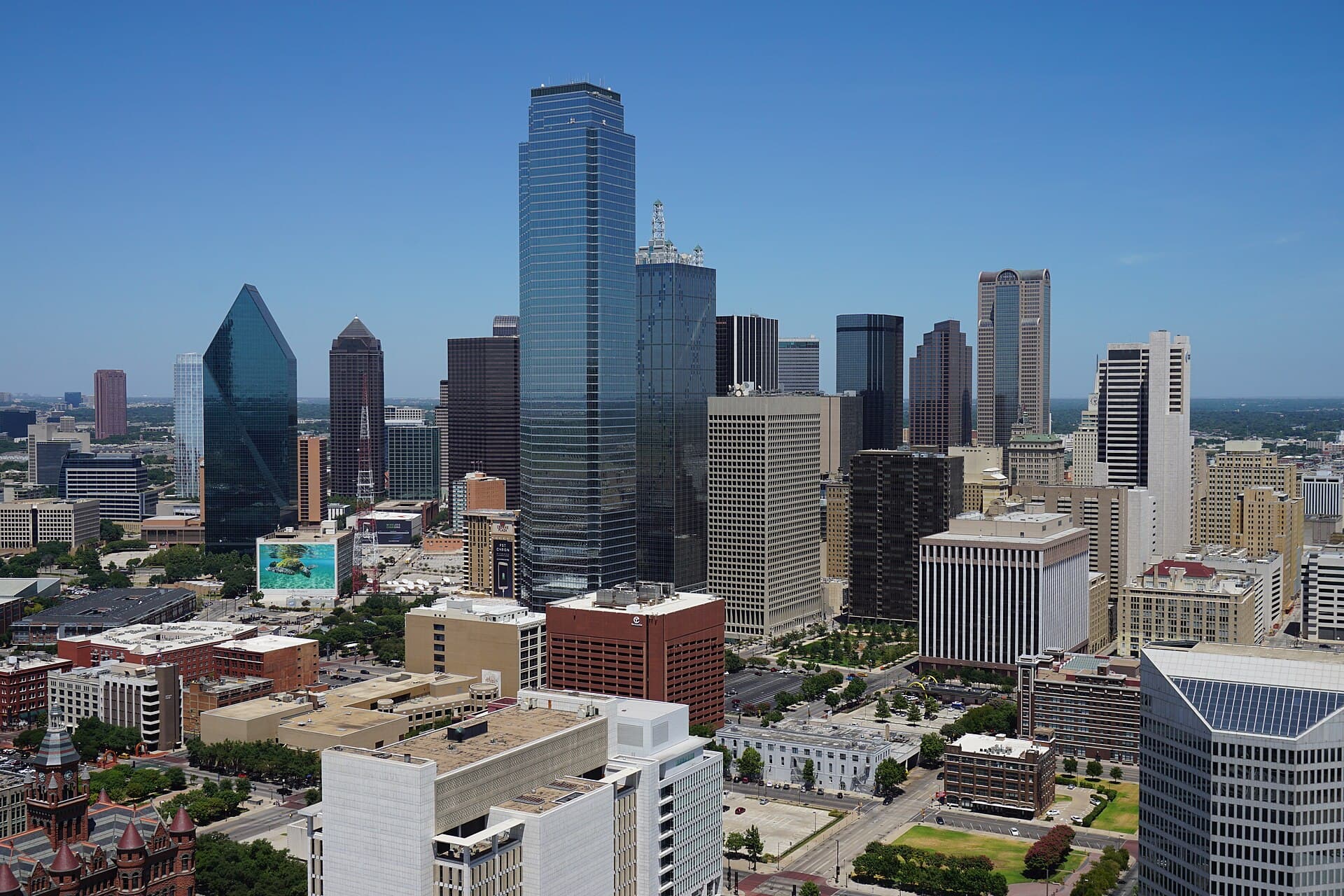 Michael Barera / CC BY-SA 4.0, via Wikimedia Commons
Zelfgeleide audiowandeling door Dallas — GPS-route, offline afspelen, meeslepende vertelling in 32 talen.
“Waar ambitie authentieke Texaanse charme ontmoet.”
Niet de ansichtkaarten. De verhalen die zelfs locals niet kennen — gefluisterd in je oor, precies waar ze gebeurden.
De Grassy Knoll is een naam die in de geschiedenis is gegrift, maar de oorsprong van de indeling van het hele plein is minder bekend.
Het iconische vliegende rode paard bovenop dit gebouw is een symbool van Dallas geworden, maar zijn oorspronkelijke verschijning was een tijdelijk spektakel.
Dit uitgestrekte culturele centrum wordt wereldwijd erkend voor zijn architectuur, maar het bestaan ervan was een doelbewuste daad van stadsplanning.
Ontdek elk geheim van Dallas
Elk adres, elke onthulling volledig — in je oor, precies waar het gebeurde.
Jij kiest je stops. Jij wandelt. De stem onthult wat de anderen missen.


Je zelfgeleide audiotour van Dallas is klaar — kies je bezienswaardigheden, kies je taal en start zodra je aankomt.
KopenLume heeft een ingebouwde augmented-reality-gids. Houd je telefoon omhoog: de camera toont de straat voor je, met een oplichtende pijl over het echte beeld die altijd naar je volgende stop wijst — geen kaart om uit te puzzelen, geen verkeerde afslagen. Zoals alles in Lume werkt het volledig offline.
Dallas, een uitgestrekte metropool in Noord-Texas, is een stad die met vertrouwen zijn diepe historische wortels combineert met een vooruitstrevende, moderne identiteit. Opgericht in 1841 door John Neely Bryan als een handelspost langs de Trinity River, groeide het snel uit tot een belangrijk commercieel en agrarisch centrum, grotendeels dankzij de komst van belangrijke spoorlijnen in de late 19e eeuw. Vandaag de dag staat Dallas als een bewijs van veerkracht en vooruitgang, bekend om zijn dynamische economie, diverse culturele scene en een gastvrije sfeer die de geest van Texas belichaamt.
Naast zijn reputatie als zakencentrum, biedt Dallas een breed scala aan ervaringen voor bezoekers. Van musea van wereldklasse en podiumkunsten tot uitgestrekte groene ruimten en gevarieerde culinaire aanbiedingen, de stad presenteert een dynamisch stedelijk avontuur. Of u nu de historische wijken verkent, geniet van buitenactiviteiten of zich tegoed doet aan de hedendaagse kunst en entertainment, Dallas biedt een boeiende reis naar het hart van Texas.
Het verhaal van Dallas begint in 1841, toen de advocaat uit Tennessee, John Neely Bryan, een permanente nederzetting stichtte aan de oostelijke oever van de Trinity River. Bryan, die eerder had geholpen bij het uitzetten van Van Buren, Arkansas, zag het potentieel van de locatie nabij een natuurlijke doorwaadbare plaats in de rivier en zag deze als een handelspost. De Republiek Texas annexeerde het gebied in 1845, en Dallas County werd het jaar daarop opgericht. Dallas werd formeel ingelijfd als stad op 2 februari 1856.
De komst van de Houston and Texas Central en de Texas and Pacific spoorwegen begin jaren 1870 was een cruciaal moment, dat Dallas transformeerde tot een vitaal zakelijk en handels centrum. Tegen het einde van de 19e eeuw bloeide Dallas op en werd het een toonaangevende katoenmarkt landinwaarts en een centrum voor productie, met name in zadels en katoenplukmachines. De bevolking van de stad groeide snel en in 1890 was het de meest bevolkte stad van Texas. Vroege infrastructuurontwikkelingen omvatten telefoons in 1881 en elektriciteit in 1882.
De vroege 20e eeuw zag de groei van Dallas verder gestimuleerd door de ontdekking van olie, waardoor grote oliemaatschappijen werden aangetrokken en zijn rol als bank- en financieel centrum werd verstevigd. Ondanks uitdagingen zoals de Grote Depressie, toonde Dallas veerkracht en groeide het uit tot een belangrijk stedelijk centrum. De naoorlogse periode bracht snelle verstedelijking. Een belangrijke ontwikkeling in het culturele landschap van de stad begon eind jaren 1970, toen consultants aanbevalen om de verspreide kunstinstellingen van Dallas te centraliseren. Deze visie leidde tot de oprichting van de Dallas Arts District, die in 1984 zijn eerste instelling opende, het Dallas Museum of Art. Tegenwoordig wordt de Dallas Arts District erkend als het grootste aaneengesloten stedelijke kunstendistrict in de natie, met gebouwen ontworpen door meerdere Pritzker Prize-winnende architecten. In de afgelopen decennia heeft Dallas zijn economie gediversifieerd en is het een prominent centrum geworden voor technologie, telecommunicatie en gezondheidszorg, waarmee het zijn nalatenschap als een van de grootste en meest invloedrijke steden in de Verenigde Staten voortzet.
Begin uw verkenning in de Dallas Arts District, een gebied van 48 hectare met 18 faciliteiten en organisaties, en met meer gebouwen ontworpen door Pritzker Prize-winnende architecten dan enige andere locatie wereldwijd. Hier kunt u het Dallas Museum of Art, het Morton H. Meyerson Symphony Center en het Nasher Sculpture Center bezoeken. Grenzend aan het Arts District ligt Klyde Warren Park, een stedelijke oase van 2 hectare gebouwd over een snelweg, die een verscheidenheid aan gratis activiteiten, foodtrucks en groene ruimte biedt.
Voor een aangrijpende historische ervaring bezoekt u Dealey Plaza en The Sixth Floor Museum at Dealey Plaza, dat de moord en nalatenschap van president John F. Kennedy documenteert. Verken de Grassy Knoll en het voormalige Texas School Book Depository gebouw.
Ervaar panoramische uitzichten over de stad vanaf het observatiedek van Reunion Tower, een onderscheidend Dallas-icoon. Ontdek de levendige sfeer van de Bishop Arts District, bekend om zijn onafhankelijke boetieks, kunstgalerijen en diverse restaurants. Proef de sfeer van het verleden van Dallas door een wandeling te maken door de West End Historic District, met zijn bewaard gebleven 19e-eeuwse gebouwen en diverse winkels en eetgelegenheden. Dierenliefhebbers zullen genieten van het Dallas World Aquarium en de Dallas Zoo, de oudste dierentuin van Texas.
De beste tijden om Dallas te bezoeken zijn in de lente (maart tot mei) en de herfst (september tot november), wanneer het weer mild en aangenaam is voor buitenactiviteiten. De lente biedt gemiddelde temperaturen variërend van de 15 tot 27 graden Celsius, met bloeiende wilde bloemen. De herfst brengt koelere temperaturen en lagere luchtvochtigheid, ideaal voor het verkennen van de parken van de stad en het bijwonen van evenementen zoals de State Fair of Texas. Zomers (juni tot augustus) zijn erg heet en vochtig, met gemiddelde maxima vaak rond de 35 graden Celsius en soms boven de 38 graden Celsius. Winters (december tot februari) zijn over het algemeen mild, met gemiddelde maxima rond de 14-18 graden Celsius, hoewel koude fronten vrieskou en af en toe ijzelstormen kunnen brengen.
Dallas wordt bediend door Dallas/Fort Worth International Airport (DFW) en Dallas Love Field (DAL). DART (Dallas Area Rapid Transit) biedt uitgebreid openbaar vervoer, waaronder lightrail, bussen en een tram. De DART Orange Line verbindt DFW Airport met het centrum van Dallas. Een regionale dagkaart biedt onbeperkt reizen met DART, TEXRail en Trinity Metro, die Dallas en Fort Worth verbinden. Enkele ritten beginnen bij $2,50, en dagkaarten zijn verkrijgbaar voor $6 via de GoPass app of kaartautomaten.
Hoewel Dallas over het algemeen veilig is, is het altijd verstandig om op uw omgeving te letten, vooral in drukke gebieden of bij gebruik van het openbaar vervoer 's nachts. De fooiencultuur is standaard voor de Verenigde Staten: 15-20% voor goede service in restaurants, bars en voor taxichauffeurs. Voor hotelservices is een paar dollar per tas voor kruiers en een paar dollar per dag voor kamermeisjes gebruikelijk. De valuta is de Amerikaanse Dollar en Engels is de primaire gesproken taal. De tijdzone is Central Time (CT).
Dallas — Koreaans, Chinees, Hebreeuws en nog 29 talen, elke stop verteld door een moedertaalspreker. Het grootste taalaanbod van alle zelfgeleide audiotours.
Beschikbaar in: