Dalyan-Fluss
Der Dalyan-Fluss ist zentral für die Identität der Stadt, aber sein Name selbst gibt einen Hinweis auf eine jahrhundertealte lokale Tradition.
Die ganze Geschichte wird in der Tour freigeschaltet
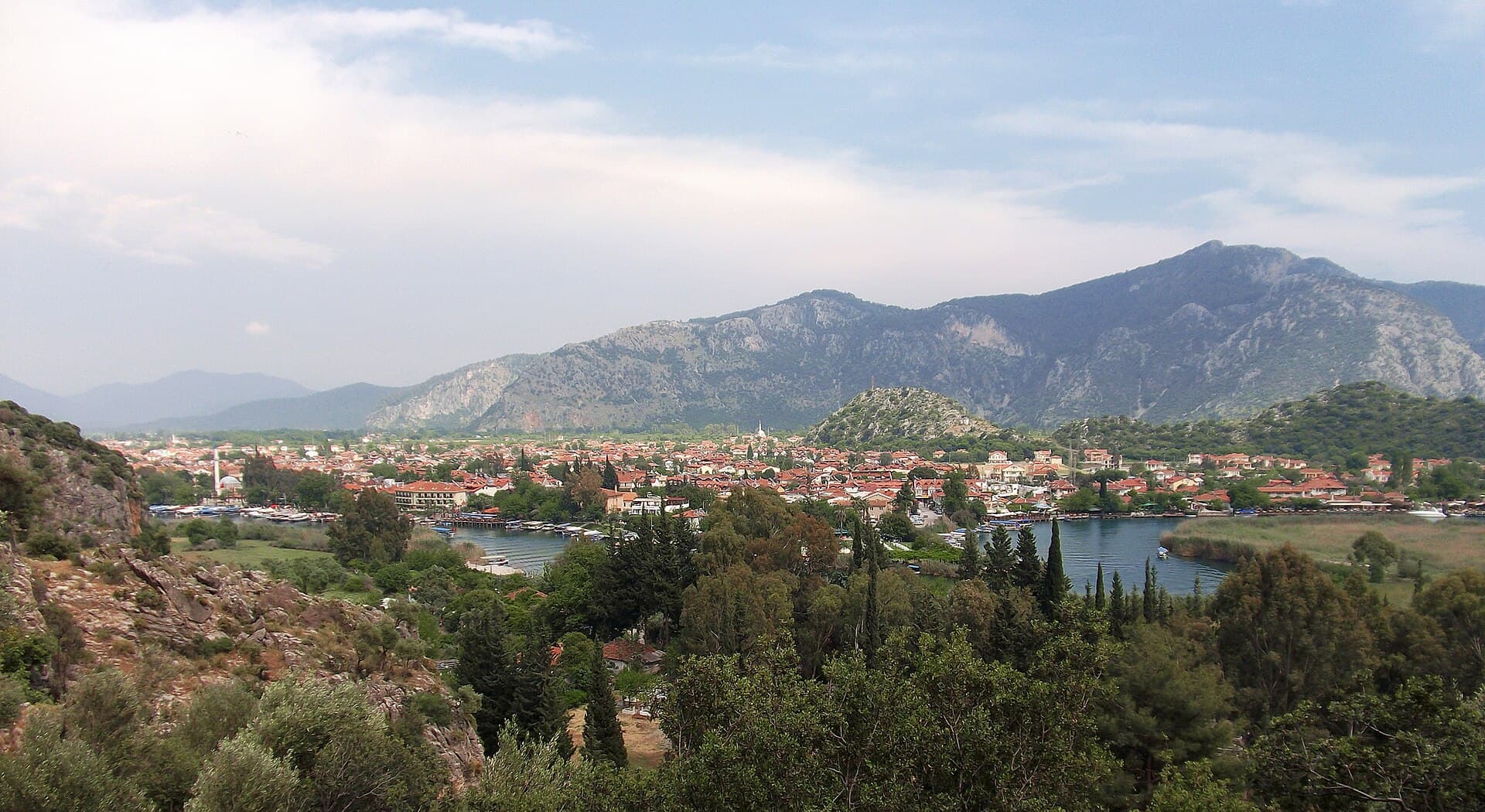 Fluxe-deluxe / CC BY-SA 4.0, via Wikimedia Commons
Selbstgeführte Audio-Walking-Tour durch Dalyan — GPS-Route, Offline-Wiedergabe, erzählerische Narration in 32 Sprachen.
“Wo alte Echos dem Flüstern der Schildkröten begegnen.”
Nicht die Postkarten. Die Geschichten, die selbst Einheimische nicht kennen – dir ins Ohr geflüstert, genau dort, wo sie geschahen.
Der Dalyan-Fluss ist zentral für die Identität der Stadt, aber sein Name selbst gibt einen Hinweis auf eine jahrhundertealte lokale Tradition.
Diese prächtigen, in die Klippenwand gegenüber dem Fluss von Dalyan gehauenen Gräber scheinen prächtige Tempel zu sein, aber ihre Konstruktion birgt ein Geheimnis, das dazu bestimmt war, eine bestimmte Art von unerwünschten Besuchern auszutricksen.
Dieser unberührte Sandstreifen ist berühmt für seine Meeresschildkröten, aber seine einzigartige Geografie spielte eine entscheidende Rolle bei der Verhinderung einer großen Entwicklung, die sein Schicksal drastisch verändert hätte.
Entdecke jedes Geheimnis von Dalyan
Jede Adresse, jede Enthüllung vollständig – in deinem Ohr, genau dort, wo es geschah.
Du wählst deine Stationen. Du gehst. Die Stimme enthüllt, was andere übersehen.


Deine selbstgeführte Audio-Tour durch Dalyan ist bereit – wähle deine Sehenswürdigkeiten, deine Sprache und starte, sobald du ankommst.
KaufenLume enthält einen integrierten Augmented-Reality-Guide. Halten Sie Ihr Handy hoch: Die Kamera zeigt die Straße vor Ihnen, mit einem leuchtenden Pfeil über dem echten Bild, der immer auf Ihren nächsten Stopp zeigt — keine Karte zum Rätseln, keine falschen Abzweigungen. Wie alles bei Lume funktioniert es komplett offline.
Dalyan, eine Stadt am Fluss in der türkischen Provinz Muğla, bietet eine Mischung aus Naturschönheit, antiker Geschichte und entspanntem Tempo. Der Fluss Dalyan Çayı, der den Köyceğiz-See mit dem Mittelmeer verbindet, fließt durch die Stadt, die für ihre dramatischen lykischen Felsengräber, die in die Klippen gehauen sind, die antike Stadt Kaunos und den geschützten İztuzu-Strand, ein wichtiges Nistgebiet für Unechte Karettschildkröten, bekannt ist.
Das Leben in Dalyan dreht sich größtenteils um den gleichnamigen Fluss, wobei Boote das wichtigste Transportmittel zu vielen lokalen Sehenswürdigkeiten sind. Die Stadt hat trotz ihrer wachsenden Beliebtheit ein Kleinstadtgefühl bewahrt und zieht Besucher an, die eine ruhige Erfahrung an der türkischen Riviera suchen. Neben seinen historischen und natürlichen Wundern bietet Dalyan auch therapeutische Schlammbäder und heiße Quellen, die seine Anziehungskraft noch verstärken.
Die Geschichte Dalyans ist tief mit der antiken Stadt Kaunos verbunden, einem wichtigen Seehafen, dessen Ursprünge bis ins 10. Jahrhundert v. Chr. zurückreichen sollen. Gegründet von den Dorern im 9. Jahrhundert v. Chr., war Kaunos zunächst ein separater Staat, bevor es Teil von Karien und später Lykien wurde. Seine strategische Lage an der Grenze von Karien und Lykien mit Zugang zum Fluss Calbys (heute Dalyan-Fluss) und zum Meer machte es zu einem wohlhabenden Handelshafen.
Im Laufe seiner fast 3.000-jährigen Geschichte erlebte Kaunos den Einfluss verschiedener Reiche und Zivilisationen, darunter die Perser, Griechen, Römer und Byzantiner, die jeweils ihre architektonischen und kulturellen Spuren hinterließen. Zu den heutigen Ruinen der Stadt gehören ein gut erhaltenes Theater, römische Bäder, eine byzantinische Basilika und Tempel, die Apollo gewidmet sind. Die Entstehung des İztuzu-Strandes und die Versandung seiner Häfen führten jedoch zusammen mit Erdbeben und der Verbreitung von Malaria schließlich zur Aufgabe von Kaunos im 15. Jahrhundert n. Chr.
Die auffälligsten historischen Merkmale, die vom modernen Dalyan aus sichtbar sind, sind die lykischen Felsengräber, die in die Klippen auf der anderen Seite des Flusses gehauen sind. Diese kunstvollen Grabkammern, von denen einige Tempeln ähneln, stammen hauptsächlich aus dem 4. Jahrhundert v. Chr. und dienten als letzte Ruhestätte für Könige und prominente Mitglieder der kaunosianischen Gesellschaft. Obwohl sie nicht zugänglich sind, bieten ihre kunstvollen Schnitzereien und ihre imposante Präsenz einen eindrucksvollen Einblick in die Überzeugungen und das Handwerk der alten Lykier.
Dalyan selbst erlangte 1987 internationale Bekanntheit, als ein geplanter Luxushotelbau am İztuzu-Strand die Brutgebiete der vom Aussterben bedrohten Unechten Karettschildkröten (Caretta caretta) bedrohte. Eine bedeutende Naturschutzaktion, angeführt von Persönlichkeiten wie June Haimoff, stoppte das Projekt erfolgreich und führte 1988 zur Ausweisung des Sondergebiets zum Schutz der Umwelt von Köyceğiz-Dalyan. Dieses Ereignis festigte Dalyans Ruf als ökologisch bewusstes Reiseziel, wobei das Schildkrötenmotiv heute im gesamten Ort allgegenwärtig ist.
Dalyan bietet eine Vielzahl von Sehenswürdigkeiten, die natürliche Schönheit mit antiker Geschichte verbinden. Die ikonischsten sind die Lykischen Felsengräber, die in die Klippenwand mit Blick auf den Dalyan-Fluss gehauen sind. Am besten von der anderen Seite des Flusses aus zu sehen, besonders wenn sie nachts beleuchtet sind, sind diese tempelähnlichen Strukturen aus dem 4. Jahrhundert v. Chr. ein Zeugnis antiker Handwerkskunst.
Eine kurze Bootsfahrt flussabwärts führt zum İztuzu-Strand, auch bekannt als Schildkrötenstrand. Diese 4,5 km lange Sandbank ist ein wichtiges Nistgebiet für vom Aussterben bedrohte Unechte Karettschildkröten (Caretta caretta). Besucher können sich in ausgewiesenen Bereichen des Strandes entspannen und im nahegelegenen DEKAMER-Forschungs-, Rettungs- und Rehabilitationszentrum für Meeresschildkröten mehr über die Naturschutzbemühungen erfahren.
Auf der anderen Seite des Flusses von Dalyan liegt die antike Stadt Kaunos. Diese archäologische Stätte, einst ein wichtiger Seehafen, beherbergt Ruinen, darunter ein gut erhaltenes hellenistisches und römisches Theater, römische Bäder, eine byzantinische Basilika und Überreste von Tempeln. Die Erkundung von Kaunos bietet einen Einblick in eine Stadt, die jahrtausendelang florierte.
Für ein anderes Erlebnis unternehmen Sie eine Bootsfahrt zu den Schlammbädern und Thermalquellen von Dalyan am Ufer des Köyceğiz-Sees. Diese schwefelhaltigen Becken sind ein beliebter Ort für ein therapeutisches und unterhaltsames Bad.
Schlendern Sie entlang der Uferpromenade des Dalyan-Flusses, um die Atmosphäre der Stadt aufzusaugen, lokale Geschäfte zu durchstöbern und in einem Café am Fluss zu essen. Der Dalyan-Samstagsmarkt ist ebenfalls ein lebhafter Ort, um lokale Produkte und Waren zu finden.
Dalyan genießt ein mediterranes Klima mit heißen, trockenen Sommern und milden, feuchten Wintern. Die beste Zeit für Aktivitäten bei warmem Wetter ist von Mitte Juni bis Ende September, wobei Juli und August die heißesten Monate sind und die täglichen Höchsttemperaturen um 32-38°C liegen. Die Meerestemperaturen sind von Juni bis November ideal zum Schwimmen und erreichen im August und September 27-29°C.
Für diejenigen, die mildere Temperaturen und weniger Menschenmassen bevorzugen, sind Frühling (April bis Juni) und Herbst (September und Oktober) ausgezeichnete Wahlmöglichkeiten. In diesen Perioden liegen die Temperaturen zwischen 20 und 30°C, perfekt für die Erkundung antiker Ruinen und Naturwanderungen. Der Frühling bietet üppige Landschaften und blühende Wildblumen, während der Herbst warme Meerestemperaturen und die Chance bietet, von August bis Oktober Schildkrötenbabys am İztuzu-Strand zu beobachten. Der Winter, obwohl kühler und feuchter, bietet ein ruhiges und authentisches Erlebnis der Stadt.
Die lokale Währung in Dalyan und in der gesamten Türkei ist die Türkische Lira (TRY). Während gängige Kreditkarten wie Visa und Mastercard in größeren Betrieben akzeptiert werden, ist es ratsam, etwas Bargeld für kleinere lokale Geschäfte und Märkte mitzunehmen. Geldautomaten sind in Dalyan leicht verfügbar und bieten oft bessere Wechselkurse als Wechselstuben. Wenn Sie einen Geldautomaten benutzen, wählen Sie die Abbuchung in Türkischen Lira, um ungünstige Wechselkurse zu vermeiden.
Der Flughafen Dalaman (DLM) ist der nächstgelegene Flughafen zu Dalyan, etwa 35-40 Minuten mit dem Taxi entfernt. Es gibt auch Shuttlebusse vom Flughafen nach Ortaca, von wo aus eine kurze Fahrt mit dem Dolmuş (Minibus) Sie nach Dalyan bringt. Innerhalb von Dalyan sind Boote eine beliebte und malerische Möglichkeit, Attraktionen wie den İztuzu-Strand und Kaunos zu erreichen. Minibusse bieten auch Transport zum İztuzu-Strand. Die Spannung in der Türkei beträgt 220 Volt Wechselstrom.
Dalyan — Koreanisch, Chinesisch, Hebräisch und 29 weitere Sprachen, jede Station von einer muttersprachlichen Stimme erzählt. Die größte Sprachauswahl aller selbstgeführten Audiotouren.
Verfügbar auf: