Umayyaden-Moschee
Unter der Pracht der Umayyaden-Moschee liegt eine überraschende Vergangenheit begraben, die einen kontinuierlichen Faden der Anbetung über Jahrtausende hinweg andeutet.
Die ganze Geschichte wird in der Tour freigeschaltet
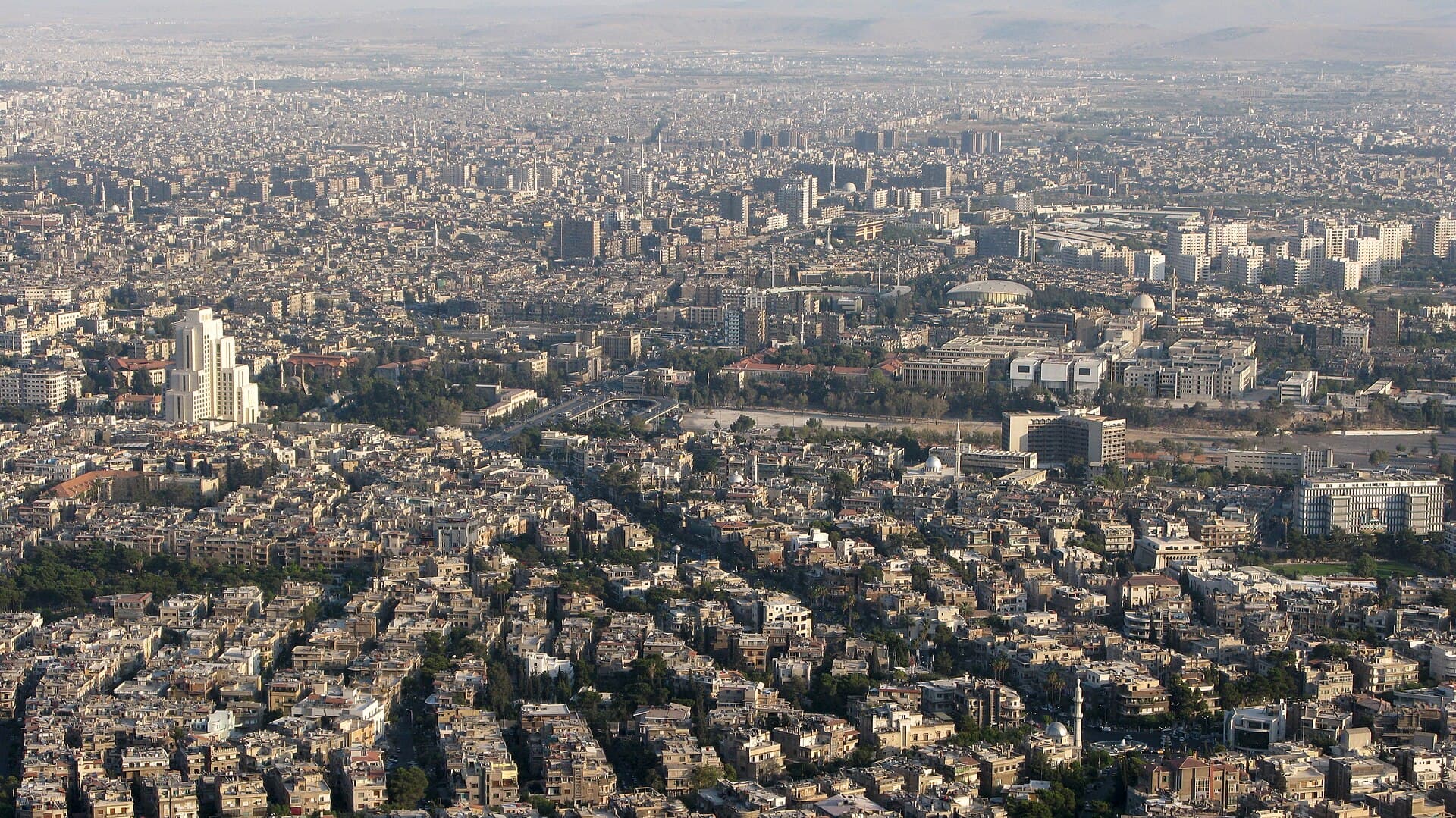 Vyacheslav Argenberg / CC BY 4.0, via Wikimedia Commons
Selbstgeführte Audio-Walking-Tour durch Damaskus — GPS-Route, Offline-Wiedergabe, erzählerische Narration in 32 Sprachen.
“Damaskus: Wo alte Echos sich mit dem Duft von Jasmin mischen und jeder Stein eine Geschichte erzählt.”
Nicht die Postkarten. Die Geschichten, die selbst Einheimische nicht kennen – dir ins Ohr geflüstert, genau dort, wo sie geschahen.
Unter der Pracht der Umayyaden-Moschee liegt eine überraschende Vergangenheit begraben, die einen kontinuierlichen Faden der Anbetung über Jahrtausende hinweg andeutet.
Betrachten Sie die Wände der Umayyaden-Moschee genau, und Sie könnten ein Geheimnis entdecken, das jahrhundertelang verborgen lag und ein künstlerisches Erbe enthüllt, das einst als verloren galt.
Diese antike Durchgangsstraße, die in biblischen Texten erwähnt wird, birgt ein Geheimnis über ihre römische Ingenieurskunst, die sowohl große Prozessionen als auch das tägliche Leben ermöglichte.
Entdecke jedes Geheimnis von Damaskus
Jede Adresse, jede Enthüllung vollständig – in deinem Ohr, genau dort, wo es geschah.
Du wählst deine Stationen. Du gehst. Die Stimme enthüllt, was andere übersehen.


Deine selbstgeführte Audio-Tour durch Damaskus ist bereit – wähle deine Sehenswürdigkeiten, deine Sprache und starte, sobald du ankommst.
KaufenLume enthält einen integrierten Augmented-Reality-Guide. Halten Sie Ihr Handy hoch: Die Kamera zeigt die Straße vor Ihnen, mit einem leuchtenden Pfeil über dem echten Bild, der immer auf Ihren nächsten Stopp zeigt — keine Karte zum Rätseln, keine falschen Abzweigungen. Wie alles bei Lume funktioniert es komplett offline.
Damaskus, die Hauptstadt Syriens, ist eine der ältesten durchgehend bewohnten Städte der Welt und ein lebendiges Zeugnis jahrtausendelanger menschlicher Bestrebungen. Ihr antiker Kern, ein UNESCO-Weltkulturerbe, bildet ein Labyrinth aus engen, gewundenen Gassen, geschäftigen Souks und architektonischen Wundern, die vom Aufstieg und Fall von Imperien erzählen. Ein Spaziergang durch Damaskus ist eine immersive Reise, bei der das Echo von Aramäern, Römern, Byzantinern und Umayyaden durch jeden Stein widerhallt.
Die Stadt, liebevoll bekannt als "Stadt des Jasmins", bietet eine einzigartige Mischung aus beständigen Traditionen und einer widerstandsfähigen, lebendigen Kultur. Von der Pracht der Umayyaden-Moschee bis zur historischen Geraden Straße (Via Recta) bietet Damaskus ein tiefgreifendes Erlebnis für diejenigen, die sich mit einer tiefgründig geschichteten Vergangenheit verbinden möchten.
Damaskus besitzt eine erstaunlich lange und vielschichtige Geschichte, mit archäologischen Beweisen, die auf eine Besiedlung bereits 9000 v. Chr. hindeuten. Einige Gelehrte schlagen sogar eine frühere menschliche Präsenz vor und positionieren sie unter den ältesten Städten der Erde. Die strategische Lage der Stadt, genährt vom Fluss Barada und der Oase al-Ghutah, machte sie zu einem begehrten Preis für zahlreiche Zivilisationen.
Im 15. Jahrhundert v. Chr. bezeichneten ägyptische Inschriften Damaskus als Hauptstadt eines Stadtstaates. In den folgenden Jahrhunderten wurde es wiederholt von verschiedenen Mächten erobert, darunter die Israeliten, Assyrer, Babylonier und Perser. Die Eroberung durch Alexander den Großen im Jahr 333 v. Chr. leitete eine lange Periode hellenistischen Einflusses ein, die fast tausend Jahre andauerte. Die Römer annektierten Damaskus im Jahr 64 v. Chr. und verwandelten es in ein wichtiges strategisches und Handelszentrum im östlichen Reich. Unter römischer Herrschaft florierte es und erhielt unter Hadrian den Status einer Metropole und unter Severus Alexander eine colonia.
Die arabische Eroberung im Jahr 634 n. Chr. markierte den Beginn der islamischen Reise von Damaskus. Von 661 bis 750 n. Chr. diente Damaskus als Hauptstadt des Umayyaden-Kalifats, einer Zeit, in der die prächtige Umayyaden-Moschee erbaut wurde. Nach dem Fall der Umayyaden-Dynastie und dem Aufstieg der Abbasiden zog die Hauptstadt nach Bagdad, was zu einem Rückgang der Bedeutung von Damaskus führte. Die Stadt gewann jedoch während der Ayyubiden-, Mamluken- und Osmanenzeit wieder an Bedeutung, wobei jede Ära ihren architektonischen und kulturellen Fußabdruck hinterließ. Die Osmanen kontrollierten Damaskus von 1516 bis 1918. Nach dem Zusammenbruch des Osmanischen Reiches wurde Damaskus kurzzeitig zum Zentrum eines unabhängigen syrischen Königreichs, bevor es 1920 unter französisches Mandat fiel. Syrien erlangte 1946 die Unabhängigkeit, mit Damaskus als Hauptstadt. Die Stadt hat seitdem Perioden bedeutender politischer Umwälzungen und Konflikte, einschließlich des jüngsten Bürgerkriegs, durchlaufen, steht aber weiterhin als Symbol der Ausdauer.
Der architektonische Stil von Damaskus ist ein Zeugnis seiner vielschichtigen Geschichte. Die Altstadt ist geprägt von traditionellen Damaszener Häusern mit Innenhöfen und kunstvollen Designs. Römische Einflüsse sind nach wie vor sichtbar, insbesondere in Strukturen wie Bab Sharqi, dem antiken Osttor, das bemerkenswert seine ursprüngliche dreifache römische Form beibehält. Die Umayyaden-Moschee, erbaut auf den Fundamenten früherer Tempel und Kirchen, zeigt eine Mischung aus architektonischen Stilen, einschließlich byzantinischer Einflüsse. Die Souks der Stadt, wie Al-Hamidiyah und Al-Buzuriyah, bieten ein historisches Einkaufserlebnis unter ihren Metalldächern, das Jahrhunderte des Handels und der Kunst widerspiegelt.
Beginnen Sie Ihre Erkundung in der Altstadt von Damaskus, einem UNESCO-Weltkulturerbe, wo enge Gassen zu einer Fülle von historischen Schätzen führen. Spazieren Sie entlang der Geraden Straße (Via Recta), dem antiken römischen decumanus maximus, der in der Bibel erwähnt wird, und stellen Sie sich die Schritte unzähliger Generationen vor. Entlang dieser historischen Achse stoßen Sie auf römische Bögen und traditionelle Damaszener Architektur.
Am östlichen Ende der Geraden Straße passieren Sie Bab Sharqi, das römische Osttor, das bemerkenswert seine ursprüngliche dreibogige römische Form beibehalten hat. In der Nähe tauchen Sie in die christliche Geschichte im Haus des Ananias ein, einer unterirdischen Kapelle, in der Saul (der Apostel Paulus) angeblich sein Augenlicht wiedererlangte und getauft wurde.
Die prächtige Umayyaden-Moschee, eine der größten und ältesten Moscheen der Welt, bietet ein tiefgreifendes Erlebnis. Bestaunen Sie ihren weitläufigen Innenhof, die kunstvollen Mosaiken und den Schrein des Propheten Yahya (Johannes des Täufers). Verpassen Sie nicht den lebhaften Al-Hamidiyah Souq und den Al-Buzuriyah Souq, wo Sie traditionellen Damaszener Handel erleben und lokales Handwerk, Gewürze und Süßigkeiten finden können. Für einen weiten Blick über die Stadt sollten Sie die Zitadelle von Damaskus besuchen, die Einblicke in die Militärgeschichte Syriens bietet.
Die günstigsten Zeiten für einen Besuch in Damaskus sind im Frühling (März–Mai) und Herbst (September–November). Während dieser Jahreszeiten ist das Wetter mild und angenehm, mit Tagestemperaturen um 25°C im Herbst. Der Frühling bringt blühende Blumen und den Duft von Jasmin, während der Herbst goldene Farbtöne und ein ruhiges Klima bietet. Die Sommer können heiß sein, mit Temperaturen, die oft 35°C überschreiten, obwohl die Abende kühl sein können. Die Winter sind kühler mit gelegentlichem Regen. Oktober ist besonders empfehlenswert wegen seines trockenen, angenehmen Wetters und des fotogenen Herbstlichts.
Eine Reise nach Damaskus erfordert sorgfältige Planung und Bewusstsein für die aktuelle Situation. Während Teile von Damaskus Besucher willkommen heißen, ist es unerlässlich, sich über die Reisehinweise der Regierung auf dem Laufenden zu halten. Die meisten ausländischen Staatsangehörigen benötigen ein Visum, und es ist ratsam, sich rechtzeitig mit dem syrischen Konsulat oder der Botschaft in Ihrem Land in Verbindung zu setzen. Einige Reisende müssen möglicherweise ein Visum bei der Ankunft über eine registrierte Reiseagentur arrangieren.
Aufgrund internationaler Sanktionen funktionieren Geldautomaten nicht für ausländische Karten, daher müssen Sie genügend Bargeld in USD oder Euro mitbringen und es vor Ort umtauschen. Das Syrische Pfund (SYP) ist die lokale Währung, und obwohl USD zunehmend akzeptiert wird, ist es ratsam, lokales Bargeld für kleinere Transaktionen zu haben. Kleiden Sie sich bescheiden, insbesondere beim Besuch religiöser Stätten. Fotografieren von militärischen oder staatlichen Einrichtungen sollte vermieden werden. Der Internetzugang kann eingeschränkt und langsam sein, daher wird das Herunterladen von Offline-Karten empfohlen. Erwägen Sie, in Paaren oder kleinen Gruppen unterwegs zu sein und vertrauenswürdige lokale Kontakte zu haben.
Damaskus — Koreanisch, Chinesisch, Hebräisch und 29 weitere Sprachen, jede Station von einer muttersprachlichen Stimme erzählt. Die größte Sprachauswahl aller selbstgeführten Audiotouren.
Verfügbar auf: