Askari-Denkmal
Der Bronzesoldat im Herzen des Kreisverkehrs von Daressalam ist mehr als nur eine Erinnerung an afrikanische Truppen.
Die ganze Geschichte wird in der Tour freigeschaltet
 David Stanley from Nanaimo, Canada / CC BY 2.0, via Wikimedia Commons
Selbstgeführte Audio-Walking-Tour durch Dar es Salaam — GPS-Route, Offline-Wiedergabe, erzählerische Narration in 32 Sprachen.
“Wo der Indische Ozean Geschichten von Imperien atmet und Märkte mit tausend Stimmen summen.”
Nicht die Postkarten. Die Geschichten, die selbst Einheimische nicht kennen – dir ins Ohr geflüstert, genau dort, wo sie geschahen.
Der Bronzesoldat im Herzen des Kreisverkehrs von Daressalam ist mehr als nur eine Erinnerung an afrikanische Truppen.
Dieser weitläufige Markt, eine Explosion von Waren und Geräuschen, trägt ein überraschendes sprachliches Erbe.
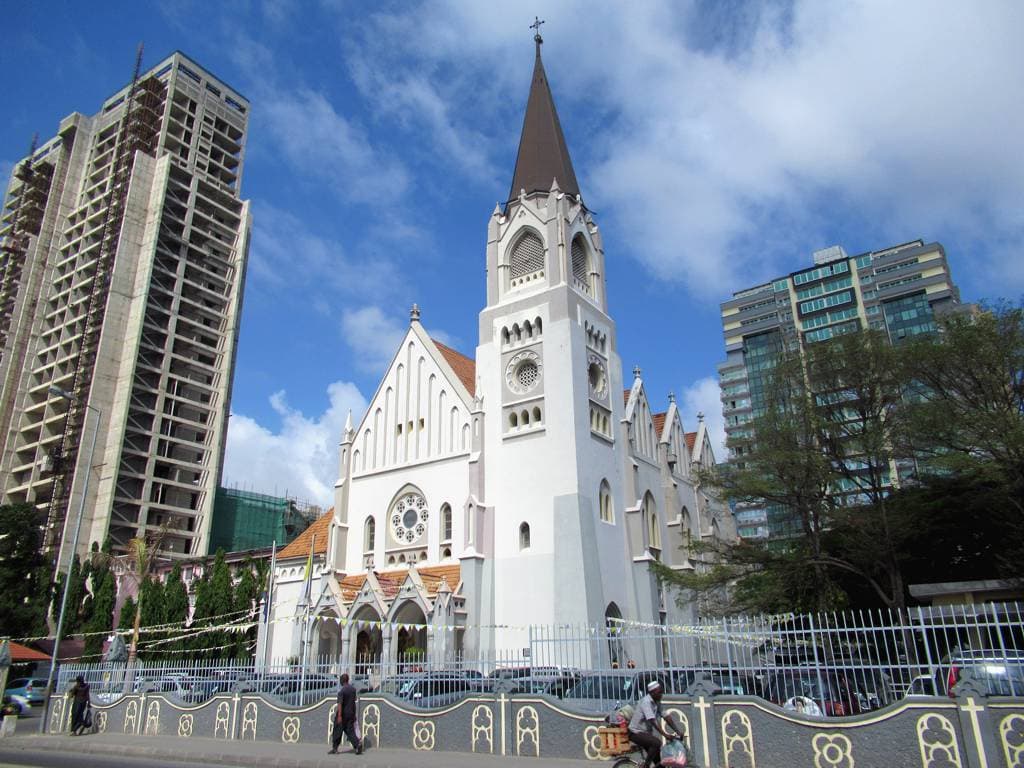
Die beeindruckende gotische Architektur dieser Kathedrale mit ihren hoch aufragenden Türmen hat ein deutliches europäisches Echo.
Entdecke jedes Geheimnis von Dar es Salaam
Jede Adresse, jede Enthüllung vollständig – in deinem Ohr, genau dort, wo es geschah.
Du wählst deine Stationen. Du gehst. Die Stimme enthüllt, was andere übersehen.


Deine selbstgeführte Audio-Tour durch Dar es Salaam ist bereit – wähle deine Sehenswürdigkeiten, deine Sprache und starte, sobald du ankommst.
KaufenLume enthält einen integrierten Augmented-Reality-Guide. Halten Sie Ihr Handy hoch: Die Kamera zeigt die Straße vor Ihnen, mit einem leuchtenden Pfeil über dem echten Bild, der immer auf Ihren nächsten Stopp zeigt — keine Karte zum Rätseln, keine falschen Abzweigungen. Wie alles bei Lume funktioniert es komplett offline.
Daressalam, Tansanias größte Stadt und Finanzzentrum, pulsiert mit einer dynamischen Energie, in der afrikanische, arabische, indische und europäische Einflüsse zusammenlaufen. Sein Name, der auf Arabisch „Hafen des Friedens“ bedeutet, wurde Mitte des 19. Jahrhunderts von Sultan Majid bin Said von Sansibar verliehen, der eine friedliche Hafenansiedlung visionierte. Heute ist diese Küstenmetropole ein geschäftiger Eintrittspunkt für Reisende, die Tansanias natürliche Pracht, seine lebendige Kultur und seine ausgedehnten Wildparks erkunden.
Obwohl Dodoma den offiziellen Titel der Hauptstadt trägt, bleibt Daressalam das de facto administrative und wirtschaftliche Zentrum, das die meisten Regierungsbüros, ausländischen Botschaften und bedeutenden Industrieaktivitäten beherbergt. Das rasante Wachstum der Stadt hat sie zu einem der am schnellsten wachsenden städtischen Zentren Afrikas gemacht, mit einer Bevölkerung von über 7 Millionen Menschen. Seine strategische Lage am Indischen Ozean mit einem natürlichen Hafen hat es seit langem zu einem wichtigen Verkehrsknotenpunkt für Ost- und Zentralafrika gemacht.
Die Ursprünge von Daressalam reichen bis in ein kleines Fischerdorf namens Mzizima zurück, ein Swahili-Wort, das „gesunde Stadt“ bedeutet. Seine vorteilhafte Lage an der Küste des Indischen Ozeans und ein natürlicher Hafen zogen seit Jahrhunderten Händler und Seefahrer an.
1862 begann Sultan Majid bin Said von Sansibar mit dem Bau einer neuen Stadt in der Nähe von Mzizima und nannte sie Daressalam oder „Hafen des Friedens“. Seine Vision war es, eine neue Hauptstadt zu gründen, aber sein Tod im Jahr 1870 unterbrach die Entwicklung der Stadt vorübergehend. Eine neue Wachstumsphase begann 1887, als die Deutsch-Ostafrikanische Gesellschaft einen Handelsposten errichtete. Bis 1891 hatte Daressalam Bagamoyo als Verwaltungszentrum der deutschen Kolonie Deutsch-Ostafrika abgelöst.
Unter deutscher Herrschaft wurden bedeutende Infrastrukturprojekte durchgeführt, darunter der Bau der Usambarabahn zwischen 1905 und 1907, die den Hafen mit dem Hinterland verband und die wirtschaftliche Bedeutung der Stadt steigerte. Deutsche architektonische Einflüsse sind heute noch in Bauwerken wie der St.-Josephs-Kathedrale und dem alten Krankenhausgebäude sichtbar. Während des Ersten Weltkriegs eroberten britische Truppen Daressalam im Jahr 1916, und die Stadt wurde anschließend 1919 zur Hauptstadt des britischen Mandatsgebiets Tanganjika. Die britische Ära sah die Entwicklung von getrennten europäischen Vierteln wie Oyster Bay und afrikanischen Siedlungen wie Kariakoo und Ilala.
Nach dem Zweiten Weltkrieg erlebte Daressalam eine rasante Expansion. Es spielte eine entscheidende Rolle auf dem Weg Tanganjikas zur Unabhängigkeit im Dezember 1961 und diente als dessen Hauptstadt. Auch nachdem Tanganjika und Sansibar 1964 die Vereinigten Republik Tansania bildeten, behielt Daressalam seinen Hauptstadtstatus. 1973 wurde jedoch beschlossen, die Hauptstadt in die zentraler gelegene Stadt Dodoma zu verlegen, ein Prozess, der 1996 offiziell abgeschlossen wurde. Dennoch fungiert Daressalam weiterhin als das wichtigste Finanz- und Handelszentrum des Landes, und viele Regierungsbüros befinden sich immer noch dort. Die Stadt hat sich zu einer vielfältigen Metropole entwickelt, die arabische, persische und europäische Einflüsse mit lokalen Kulturen verbindet.
Beginnen Sie Ihre Erkundung am Askari-Denkmal, einer Bronzeskulptur zu Ehren afrikanischer Soldaten, die im Ersten Weltkrieg dienten und sich auf einem zentralen Kreisverkehr befindet. Tauchen Sie von dort aus in die lebhafte Aktivität des Kariakoo-Marktes ein, einem der größten und belebtesten Märkte Ostafrikas, der auf mehreren Stadtblöcken alles von frischen Produkten und Gewürzen bis hin zu Textilien und Elektronik anbietet. Für einen Einblick in Tansanias Vergangenheit und vielfältige Kulturen besuchen Sie das Nationalmuseum und Haus der Kultur, das archäologische Funde, historische Ausstellungen und ethnografische Sammlungen beherbergt. In der Nähe bietet das Dorfmuseum ein Freiluft-Erlebnis mit authentisch rekonstruierten traditionellen Behausungen verschiedener tansanischer Volksgruppen.
Bewundern Sie die gotische Architektur der St.-Josephs-Metropolitan-Kathedrale, einer römisch-katholischen Kirche, die zwischen 1897 und 1911 von deutschen Missionaren erbaut wurde und über Buntglasfenster und Gewölbedecken verfügt. Für einen Eindruck vom lokalen Leben und frischen Meeresfrüchten besuchen Sie den Kivukoni-Fischmarkt, wo Fischer ihren täglichen Fang anlanden. Um der Hektik der Stadt zu entfliehen, unternehmen Sie eine kurze Bootsfahrt zur Bongoyo-Insel oder Mbudya-Insel, Teil des Dar es Salaam Marine Reserve, zum Schwimmen, Schnorcheln und Entspannen an unberührten Stränden.
Die beste Zeit für einen Besuch in Daressalam ist während der Trockenzeit von Juni bis Oktober. In diesen Monaten ist das Wetter angenehm mit geringerer Luftfeuchtigkeit und minimalen Niederschlägen, was es ideal für Outdoor-Aktivitäten und Stadterkundungen macht. Obwohl die Temperaturen das ganze Jahr über konstant warm bleiben (ca. 25-32 °C), bietet die Meeresbrise in dieser Zeit eine gewisse Erleichterung. Die lange Regenzeit findet von März bis Mai statt, mit häufigen Schauern und hoher Luftfeuchtigkeit. Eine kürzere Regenzeit fällt typischerweise im November und Dezember.
Die lokale Währung ist der Tansania-Schilling (TZS). Während große Hotels und Supermärkte Kreditkarten akzeptieren, wird Bargeld oft für lokale Märkte, Streetfood und Taxis bevorzugt. Geldautomaten sind im Stadtzentrum und in Einkaufszentren leicht verfügbar. Für kürzere Strecken ist ein Bajaji (Autodreirad) eine schnellere Option im Verkehr. Öffentliche Kleinbusse, bekannt als Dala-dalas, sind sehr preiswert, können aber für Erstbesucher überfüllt und verwirrend sein. Beim Gehen ist Vorsicht geboten, da Gehwege nicht immer vorhanden sind. Aus Respekt wird bescheidene Kleidung, die Schultern und Knie bedeckt, empfohlen, insbesondere beim Besuch von Märkten oder im Stadtzentrum.
Dar es Salaam — Koreanisch, Chinesisch, Hebräisch und 29 weitere Sprachen, jede Station von einer muttersprachlichen Stimme erzählt. Die größte Sprachauswahl aller selbstgeführten Audiotouren.
Verfügbar auf: