Darmstadt, GermanyHeidas / CC BY-SA 3.0, via Wikimedia Commons
DE

Darmstadt

Where scientific inquiry meets the flowing forms of Art Nouveau, and every corner of the city holds a story.

The secrets of Darmstadt

Darmstadt, as no one tells it.

Not the postcards. The stories even locals don't know — whispered in your ear, right where they happened.

3 secrets below. Many more wait inside the tour.
The Russian Chapel on Mathildenhöhe

This chapel, crowned with its distinctive onion domes, stands as a lively element within Darmstadt's Art Nouveau ensemble. Its presence here reveals a surprising connection to a distant empire.

Full story unlocks in the tour
Waldspirale

This residential building, with its undulating contours and lively colors, challenges conventional architectural norms. Its design philosophy extends beyond mere visual appeal.

Full story unlocks in the tour
Luisenplatz

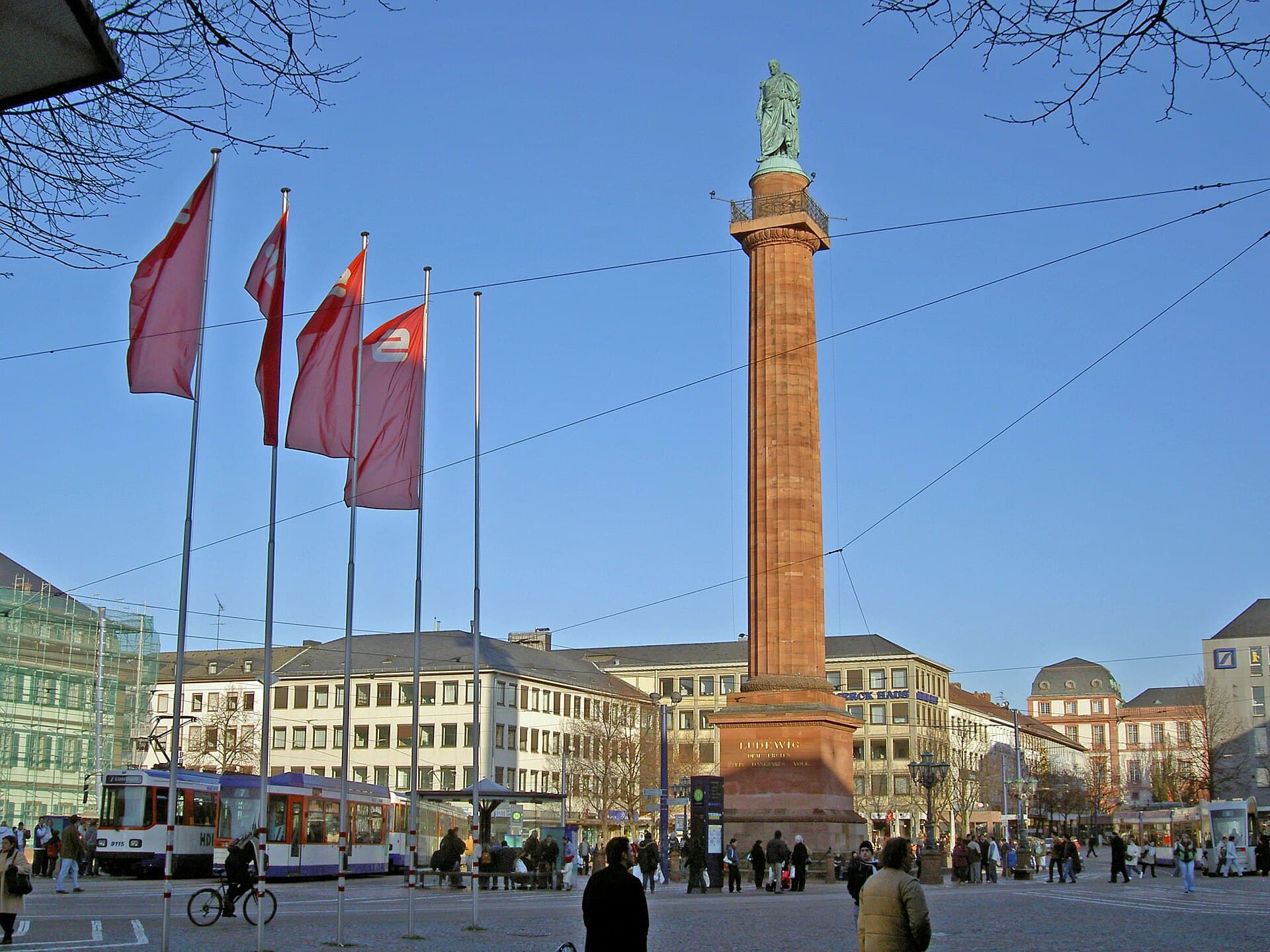
At first glance, Darmstadt's central square appears to be a busy transport hub. However, a towering monument at its core carries a poignant secret from a time of war.

Full story unlocks in the tour
The full tour

Discover every secret of Darmstadt

Every address, every reveal in full — in your ear, right where it happened.

Get the key to Darmstadt

You pick your stops. You walk. The voice reveals what the others miss.

Choose your time

How long do you have in Darmstadt?

No tours available yet. Check back soon — we're preparing them.

About Darmstadt

The story of Darmstadt

Darmstadt, a city in Germany's Hesse state, offers a compelling fusion of artistic heritage and scientific innovation. Since 1997, it has been known as the "City of Science," home to a respected Technical University and significant research institutions, including the European Space Operations Centre (ESOC). Alongside its technological advancements, Darmstadt cultivates a rich cultural landscape, most notably expressed through its distinctive Art Nouveau (Jugendstil) architecture.

While much of its historic center was lost during World War II, Darmstadt has rebuilt with determination, harmoniously integrating restored historical elements with contemporary structures. This unique character makes it a place where visitors can explore centuries of history alongside cutting-edge advancements. From grand ducal palaces to avant-garde artist colonies, Darmstadt invites a journey beyond the ordinary.

History

## From Medieval Settlement to Grand Duchy Capital Darmstadt's origins can be traced to the late 11th century, first appearing as "Darmundestat." It received its city charter, including the right to hold a market, in 1330 from Holy Roman Emperor Ludwig the Bavarian, at which point it belonged to the Counts of Katzenelnbogen. The counts established a small castle, and the city's early expansion was supported by its location on the historic Bergstrasse trade route.

In 1479, Darmstadt became part of the Landgraviate of Hesse. A significant turning point arrived in 1567 when Landgrave Georg I made Darmstadt his primary residence, establishing the Landgraviate of Hesse-Darmstadt. This initiated a period of investment, with the ruling family constructing palaces and encouraging the arts and sciences. The city served as the capital of the Grand Duchy of Hesse-Darmstadt from 1806 until 1918.

## The Flowering of Art Nouveau and Wartime Devastation Grand Duke Ernst Ludwig profoundly shaped Darmstadt's cultural identity in 1899 by establishing the Artists' Colony on Mathildenhöhe. This initiative transformed Darmstadt into a prominent European center of Art Nouveau (Jugendstil), drawing leading artists and architects of the movement. The colony's buildings and artworks, now recognized as a UNESCO World Heritage Site, exemplify early modern architecture and design.

The 20th century presented immense difficulties. During World War II, Allied bombing in 1944, particularly the "Firestorm Night," laid waste to much of the city center, destroying over three-quarters of Darmstadt. Post-war reconstruction prioritized science and technology, leading to the establishment of institutions like the European Space Operations Centre in 1967 and the expansion of the Technical University.

## A City of Science and Art Today Today, Darmstadt has successfully reimagined itself as a "City of Science," a title officially adopted in 1997. It continues to be a focal point for technology companies and research institutes, particularly in fields like spacecraft operations, chemistry, pharmacy, and information technology. Despite the wartime destruction, the city has preserved and rebuilt key historical and artistic landmarks, offering visitors a distinctive combination of its grand ducal past and its innovative present.

What to see

Begin your exploration at Mathildenhöhe Artists' Colony, a UNESCO World Heritage site and a prime example of Art Nouveau architecture. Here, you will find the iconic Wedding Tower (Hochzeitsturm), constructed to commemorate Grand Duke Ernst Ludwig's marriage, and several artists' houses with their distinctive designs. Be sure to see the striking Russian Chapel, with its onion domes and singular history.

For a different architectural experience, visit the Waldspirale, a residential complex conceived by Austrian artist Friedensreich Hundertwasser. This building is characterized by its absence of straight lines, bright colors, and a roof planted with trees, creating a truly imaginative appearance.

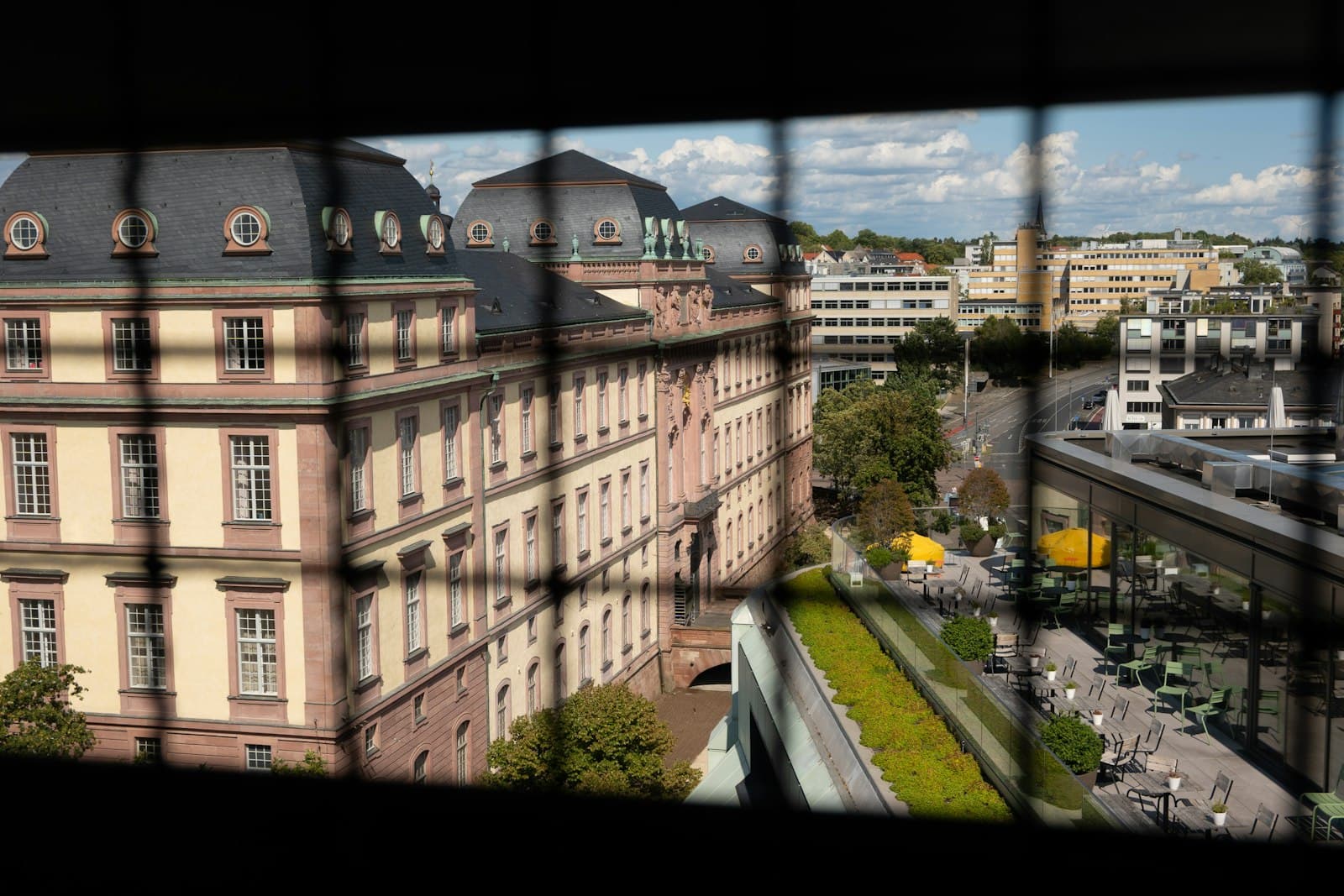
Luisenplatz serves as Darmstadt's central square and primary transport hub, featuring the 39-meter-high "Lange Ludwig" column dedicated to Grand Duke Ludwig I. Nearby, the Residential Palace (Stadtschloss) displays centuries of architectural styles and houses a museum with collections from the Hesse-Darmstadt ruling family.

Art and history converge at the Hessisches Landesmuseum Darmstadt (Hesse State Museum), a diverse institution with collections spanning natural history, ancient archaeology, and fine art, including fossils from the Messel Pit UNESCO World Heritage Site. For a peaceful escape, Rosenhöhe Park offers expansive rose gardens, scenic paths, and the mausoleums of the Hessian grand-ducal family.

When to visit

The most favorable time to visit Darmstadt for pleasant weather and outdoor pursuits is from mid-June to early September. During these summer months, average daily temperatures range from 23°C (73°F) to 25°C (77°F), occasionally reaching as high as 35°C (95°F) in July and August. Spring (March-May) and autumn (September-November) also provide agreeable conditions for exploration, with milder temperatures and moderate rainfall. While winters are cold and windy, with average lows around -1°C (30°F), the city still offers cultural events and Christmas markets.

Practical

Darmstadt is readily accessible, situated approximately 20 minutes by road from Frankfurt Airport (FRA). The "Airliner" shuttle bus provides a convenient direct connection from both airport terminals to Darmstadt Hauptbahnhof (central train station). Within the city, Darmstadt maintains an excellent public transport network of trams and buses, with Luisenplatz serving as the main interchange. The city center is largely welcoming to pedestrians.

As a member of the European Union, EU/EEA and Swiss nationals do not require a visa for stays up to 90 days. For longer visits, registration with the local administrative office is required. Non-EU/EEA nationals may need a visa, and it is advisable to consult with your local embassy or consulate. While German is the official language, English is commonly spoken, particularly among students and in international settings.

Good to know
Is Darmstadt a good city for students?
Yes, Darmstadt is considered a student city with a lively atmosphere, home to the Technical University of Darmstadt and other institutions. There are many opportunities for socializing, hobby clubs, and cultural activities.
What is Darmstadt known for?
Darmstadt is widely recognized as the "City of Science" due to its numerous universities, research institutes, and technology companies, including the European Space Operations Centre. It is also celebrated for its significant Art Nouveau (Jugendstil) architecture, particularly the Mathildenhöhe Artists' Colony.
How do I get to Darmstadt from Frankfurt Airport?
The most convenient way to reach Darmstadt from Frankfurt Airport (FRA) is by taking the "Airliner" shuttle bus, which operates frequently from both terminals directly to Darmstadt Hauptbahnhof.
Are there any UNESCO World Heritage Sites in Darmstadt?
Yes, the Mathildenhöhe Artists' Colony in Darmstadt was designated a UNESCO World Heritage Site in 2021 for its importance in early modern architecture and landscape design. The nearby Messel Pit Fossil Site is also a UNESCO World Heritage Site.
What is the Waldspirale?
The Waldspirale, meaning "forest spiral," is a unique residential building in Darmstadt designed by Austrian artist Friedensreich Hundertwasser. It is notable for its absence of straight lines, lively colors, and a green roof planted with trees.
Is Darmstadt a safe city?
Darmstadt is generally regarded as a very safe and orderly city. While some areas might be mentioned with caution, they are typically still quite secure.
Darmstadt
From€9.00
No booking · activate anytime · 12h to walk it
Get the key to Darmstadt