Government House
Diese prächtige viktorianisch-gotische Villa hat mehr als nur die Zeit überdauert.
Die ganze Geschichte wird in der Tour freigeschaltet
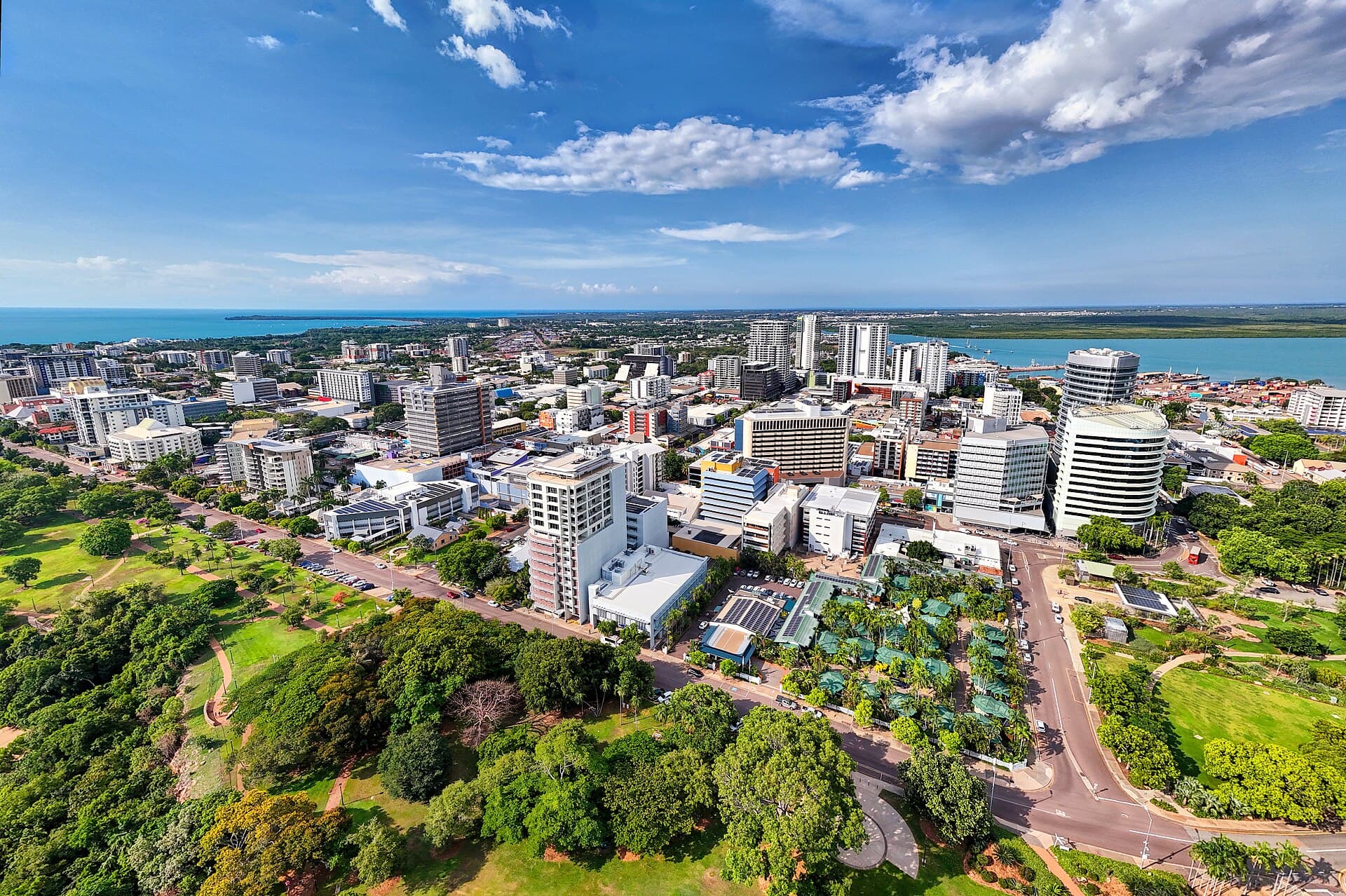 Hagai Agmon-Snir حچاي اچمون-سنير חגי אגמון-שניר / CC BY-SA 4.0, via Wikimedia Commons
Selbstgeführte Audio-Walking-Tour durch Darwin — GPS-Route, Offline-Wiedergabe, erzählerische Narration in 32 Sprachen.
“Wo die Tropen auf Zähigkeit treffen.”
Nicht die Postkarten. Die Geschichten, die selbst Einheimische nicht kennen – dir ins Ohr geflüstert, genau dort, wo sie geschahen.
Diese prächtige viktorianisch-gotische Villa hat mehr als nur die Zeit überdauert.
Jenseits seiner düsteren Zellen birgt dieses ehemalige Gefängnis ein überraschendes künstlerisches Erbe.
Der Glanz von Perlen brachte eine einzigartige und oft übersehene Arbeitskraft an die Küsten von Darwin.
Entdecke jedes Geheimnis von Darwin
Jede Adresse, jede Enthüllung vollständig – in deinem Ohr, genau dort, wo es geschah.
Du wählst deine Stationen. Du gehst. Die Stimme enthüllt, was andere übersehen.


Deine selbstgeführte Audio-Tour durch Darwin ist bereit – wähle deine Sehenswürdigkeiten, deine Sprache und starte, sobald du ankommst.
KaufenLume enthält einen integrierten Augmented-Reality-Guide. Halten Sie Ihr Handy hoch: Die Kamera zeigt die Straße vor Ihnen, mit einem leuchtenden Pfeil über dem echten Bild, der immer auf Ihren nächsten Stopp zeigt — keine Karte zum Rätseln, keine falschen Abzweigungen. Wie alles bei Lume funktioniert es komplett offline.
Darwin, die Hauptstadt des australischen Northern Territory, ist eine Stadt, die von ihrem tropischen Klima und einer Geschichte bemerkenswerter Widerstandsfähigkeit geprägt ist. Darwin liegt auf dem Land der Larrakia, dem traditionellen Gebiet des Larrakia-Volkes, und seine Verbindung zur indigenen Kultur reicht Zehntausende von Jahren zurück, mit etablierten Handelsrouten, die bis nach Südostasien reichen.
Mehr als jede andere australische Hauptstadt erlebt Darwin zwei ausgeprägte Jahreszeiten: die 'Regenzeit' (November bis April) und die 'Trockenzeit' (Mai bis Oktober). Dieses einzigartige Klima prägt das tägliche Leben und die lebendige Natur der Stadt. Von ihren Anfängen als Stadt Palmerston bis zu ihrer Umbenennung zu Ehren von Charles Darwin hat sich die Stadt kontinuierlich an ihre Umgebung angepasst und bedeutende Herausforderungen gemeistert.
Das Volk der Larrakia sind die traditionellen Hüter des Großraums Darwin, den sie Garramilla nennen, was "weißer Stein" bedeutet. Sie errichteten ausgedehnte Handelsrouten und tauschten Waren mit Südostasien und sogar bis nach Süd- und Westaustralien aus. Songlines, ein integraler Bestandteil der Kultur der Aborigines, ermöglichten den Austausch von Geschichten und Historien über weite Entfernungen.
Der europäische Kontakt begann 1839, als die HMS Beagle unter dem Kommando von John Clements Wickham in den Hafen segelte und ihn Port Darwin nach seinem ehemaligen Schiffsgenossen Charles Darwin benannte. Darwin selbst besuchte die Gegend jedoch nie. Die Siedlung Palmerston wurde 1869 gegründet und 1869 in Darwin umbenannt. Die Entdeckung von Gold in Pine Creek im Jahr 1871 beflügelte das Wachstum der Stadt und zog einen erheblichen Zustrom chinesischer Siedler an, von denen viele für die Arbeit in den Goldfeldern und auf der Eisenbahn von Palmerston nach Pine Creek angeheuert wurden. Bis 1888 übertrafen die chinesischen Einwohner die Europäer im Northern Territory.
Darwins strategische Lage machte es zu einem wichtigen Militärstützpunkt während des Zweiten Weltkriegs. Am 19. Februar 1942 erlebte die Stadt ihren ersten von vielen japanischen Luftangriffen, ein Ereignis, das ihre Entwicklung maßgeblich beeinflusste und ein bleibendes Erbe hinterließ. Viele historische Stätten rund um Darwin, darunter Bunker und Öltanks, erinnern an diese Zeit.
Jahrzehnte später, am Weihnachtstag 1974, wurde Darwin vom schweren tropischen Zyklon Tracy heimgesucht, einem der zerstörerischsten Zyklone Australiens. Windgeschwindigkeiten erreichten 217 km/h, bevor die Instrumente ausfielen, und der Zyklon zerstörte etwa 80 % der Gebäude der Stadt, wodurch 94 % der Häuser unbewohnbar wurden. Die Katastrophe forderte 71 Todesopfer und machte die Evakuierung von über 30.000 Menschen erforderlich, von denen viele nie zurückkehrten. Die Stadt wurde anschließend mit strengeren sturmsicheren Bauvorschriften wieder aufgebaut.
Beginnen Sie Ihre Erkundung im Darwin Waterfront Precinct, einem modernen Viertel mit Schwimmlagunen und gastronomischen Angeboten. Für einen Einblick in die lokale Kultur und Küche bietet der Mindil Beach Sunset Market (während der Trockenzeit geöffnet) eine vielfältige Auswahl an Essensständen und handgefertigtem Kunsthandwerk, die in Sonnenuntergängen über dem Meer gipfeln.
Tauchen Sie ein in die Geschichte im Museum and Art Gallery of the Northern Territory (MAGNT), das Sammlungen zur Naturgeschichte, zur Kunst der Aborigines und zu den Auswirkungen des Zyklons Tracy beherbergt. Nördlich der Stadt bietet das Fannie Bay Gaol einen eindringlichen Einblick in die Strafgeschichte der Region und diente fast ein Jahrhundert lang als Hauptgefängnis von Darwin.
Für Tierbegegnungen bietet Crocosaurus Cove im Stadtzentrum hautnahe Erlebnisse mit Krokodilen, einschließlich des 'Cage of Death' für die Mutigen. Alternativ können Sie eine Jumping Crocodile Cruise auf dem Adelaide River für ein aufregendes Naturerlebnis unternehmen. Entfliehen Sie der Stadthitze im Litchfield National Park, eine kurze Autofahrt entfernt, mit seinen ganzjährig geöffneten Wasserfällen und krokodilfreien Badestellen wie Florence Falls und Wangi Falls.
Die beste Reisezeit für Darwin ist während der Trockenzeit von Mai bis Oktober. In diesen Monaten ist das Wetter von klarem Himmel, geringer Luftfeuchtigkeit und angenehmen Temperaturen zwischen 20 °C und 33 °C geprägt. Diese Zeit ist ideal für Outdoor-Aktivitäten und die Erkundung von Nationalparks wie Kakadu und Litchfield, da die Straßen in der Regel offen und zugänglich sind. Die Regenzeit von November bis April bringt hohe Luftfeuchtigkeit, Monsunregen und dramatische Gewitter, die die Landschaft in üppiges Grün verwandeln und die Wasserfälle spektakulär machen, obwohl einige Gebiete aufgrund von Überschwemmungen unzugänglich sein können.
Das öffentliche Verkehrssystem von Darwin besteht hauptsächlich aus einem ausgedehnten Busnetz, das von der Regierung des Northern Territory betrieben wird. Busse verbinden das Stadtzentrum mit wichtigen Vororten und Sehenswürdigkeiten. Besucher können eine Tap and Ride-Karte oder Einzeltickets (nur Barzahlung) an Bord kaufen. Ein kostenloser Waterfront Shuttle verkehrt ebenfalls und verbindet Stokes Hill Wharf, das Waterfront Precinct und das Kreuzfahrtschiffterminal. Fahrdienste wie Uber sind verfügbar, ebenso wie lokale Taxiunternehmen. Für die Erkundung der Sehenswürdigkeiten der Stadt sind Hop-on, Hop-off-Bustouren ebenfalls eine Option. Darwin ist eine begehbare Stadt, insbesondere das Stadtzentrum, und bietet über 70 Kilometer Radwege.
Darwin — Koreanisch, Chinesisch, Hebräisch und 29 weitere Sprachen, jede Station von einer muttersprachlichen Stimme erzählt. Die größte Sprachauswahl aller selbstgeführten Audiotouren.
Verfügbar auf: