Bleischrotfabrik Daugavpils
Dies ist keine gewöhnliche Fabriktour; Sie betreten den einzigen funktionierenden Bleischrotturm Europas.
Die ganze Geschichte wird in der Tour freigeschaltet
 Ivo Kruusamägi / CC BY-SA 4.0, via Wikimedia Commons
Selbstgeführte Audio-Walking-Tour durch Daugavpils — GPS-Route, Offline-Wiedergabe, erzählerische Narration in 32 Sprachen.
“Wo Echos der Geschichte auf fesselnde Kunst und industriellen Charme treffen.”
Nicht die Postkarten. Die Geschichten, die selbst Einheimische nicht kennen – dir ins Ohr geflüstert, genau dort, wo sie geschahen.
Dies ist keine gewöhnliche Fabriktour; Sie betreten den einzigen funktionierenden Bleischrotturm Europas.
Aus der Vogelperspektive offenbart diese militärische Festung aus dem 19. Jahrhundert eine überraschende natürliche Form.
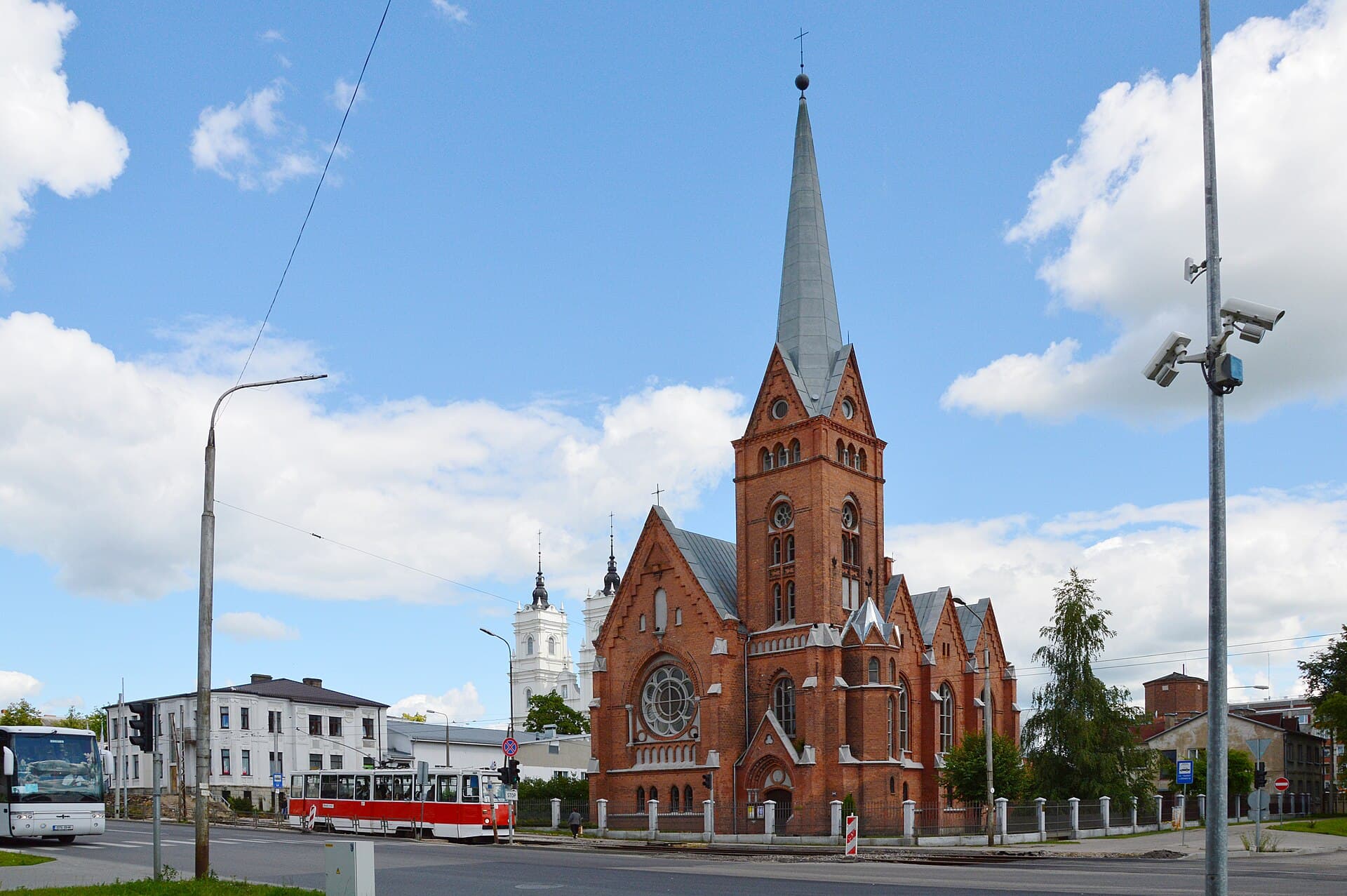
Vier verschiedene Gotteshäuser stehen nebeneinander auf einem einzigen Hügel, ein visuelles Zeugnis des vielfältigen Erbes der Stadt.
Entdecke jedes Geheimnis von Daugavpils
Jede Adresse, jede Enthüllung vollständig – in deinem Ohr, genau dort, wo es geschah.
Du wählst deine Stationen. Du gehst. Die Stimme enthüllt, was andere übersehen.
Deine selbstgeführte Audio-Tour durch Daugavpils ist bereit – wähle deine Sehenswürdigkeiten, deine Sprache und starte, sobald du ankommst.
KaufenLume enthält einen integrierten Augmented-Reality-Guide. Halten Sie Ihr Handy hoch: Die Kamera zeigt die Straße vor Ihnen, mit einem leuchtenden Pfeil über dem echten Bild, der immer auf Ihren nächsten Stopp zeigt — keine Karte zum Rätseln, keine falschen Abzweigungen. Wie alles bei Lume funktioniert es komplett offline.
Daugavpils, Lettlands zweitgrößte Stadt, bietet ein Erlebnis, das sich von der Hauptstadt Riga unterscheidet und durch seine authentische, unüberfüllte Atmosphäre und seine tiefe Verbindung zu multikulturellen Ursprüngen gekennzeichnet ist. Die Stadt liegt am Fluss Daugava und nahe den Grenzen zu Litauen und Weißrussland und diente historisch als Kreuzungspunkt für Handel, Traditionen und vielfältige Einflüsse, darunter lettische, russische, polnische und jüdische Kulturen.
Die Stadt präsentiert eine überzeugende Mischung aus historischen Wahrzeichen, weltklasse Kunst und industriellem Erbe. Besucher können eine gut erhaltene Festung aus dem 19. Jahrhundert erkunden, ein renommiertes Kunstzentrum entdecken, das Mark Rothko gewidmet ist, und die einzigartigen Abläufe einer noch betriebenen Bleischrotfabrik kennenlernen. Daugavpils lädt neugierige Reisende ein, seine Schichten von Geschichte und lokalem Leben in einem entspannten Tempo zu entdecken.
Über seine städtischen Attraktionen hinaus bietet Daugavpils Zugang zu malerischer Natur, darunter Seen, Wälder und Naturparks, die Möglichkeiten für Outdoor-Aktivitäten und friedliche Landschaften bieten. Die Grünflächen und Flussuferpromenaden der Stadt ergänzen ihr kulturelles Angebot und machen sie zu einem attraktiven Reiseziel für diejenigen, die eine Mischung aus Kultur und Natur schätzen.
Die Ursprünge von Daugavpils reichen bis ins Jahr 1275 zurück, als der Livländische Orden die Burg Dinaburg errichtete, um die herum sich die Stadt entwickelte. Über Jahrhunderte wurde Daugavpils von verschiedenen Mächten beherrscht, darunter Polen, Schweden, Russen und Deutsche, die jeweils unauslöschliche Spuren in seiner Architektur und seiner vielfältigen Bevölkerung hinterließen.
Ein entscheidender Moment in der Geschichte von Daugavpils war der Bau seiner ehrfurchtgebietenden Festung. Im Jahr 1810, in Erwartung der Invasion Napoleons, ordnete Zar Alexander I. von Russland den Bau einer Befestigungsanlage an, um die Westgrenzen des Russischen Reiches zu schützen. Der Militäringenieur Generalmajor Heckel leitete das Projekt, an dem etwa 10.000 Arbeiter in zwei Schichten ununterbrochen arbeiteten. Obwohl noch unvollendet, wehrte die Festung 1812 erfolgreich die Armee Napoleons ab. Der Bau wurde nach dem Krieg fortgesetzt, und bis 1878 war die Festung Daugavpils fertiggestellt, obwohl sie militärisch weitgehend obsolet war. Sie ist heute die einzige vollständig erhaltene Militärfestung des 19. Jahrhunderts ihrer Art in Nordeuropa.
1582 erhielt Daugavpils Stadtrechte und wurde 1621 zur Regionalhauptstadt. Die strategische Lage der Stadt bedeutete, dass sie häufig den Besitzer wechselte. 1577 führte Iwan der Schreckliche eine Invasion an, und ein Jahrhundert später belagerten die Truppen von Zar Alexis die Burg. 1772 wurde die Stadt unter Katharina der Großen vollständig in das Russische Reich eingegliedert.
Das 20. Jahrhundert brachte weitere Umwälzungen. Nach der Unabhängigkeit Lettlands beherbergte die Festung von 1920 bis 1940 die lettische Armee. Während des Zweiten Weltkriegs diente sie als Stalag 340, ein Kriegsgefangenenlager für sowjetische Soldaten, und im Brückenkopfgebiet wurde ein jüdisches Ghetto errichtet. Von 1948 bis 1993 beherbergte die Festung die Daugavpils Höhere Schule für Militärflugzeugtechnik. Heute ist die Festung ein Stadtteil mit über tausend Einwohnern und eine wichtige Touristenattraktion.
Beginnen Sie Ihre Erkundung in der Festung Daugavpils, einer weitläufigen Festungsanlage aus dem 19. Jahrhundert, die die einzige vollständig erhaltene ihrer Art in Osteuropa ist. Innerhalb ihrer Mauern finden Sie das Mark Rothko Art Centre, das dem in Daugavpils geborenen abstrakten Expressionisten gewidmet ist und Originalwerke sowie zeitgenössische Ausstellungen zeigt. Ein Besuch der Festung bietet auch die Möglichkeit, das Museum des Ersten Weltkriegs und das Daugavpils Fledermauszentrum zu erkunden.
Für ein wirklich einzigartiges Erlebnis besuchen Sie die Bleischrotfabrik Daugavpils, die älteste Munitionsfabrik Nordeuropas und die einzige im Baltikum, die für Touristen geöffnet ist. Erleben Sie den historischen Prozess des Bleischrotgießens und probieren Sie sogar den Schießstand der Fabrik aus.
Entdecken Sie die spirituelle Vielfalt von Daugavpils auf dem Kirchenberg (Baznīcu kalns), wo vier Kirchen verschiedener Konfessionen nebeneinander stehen. Spazieren Sie entlang der Rīgas iela, der Haupteinkaufsstraße, die den Platz der Einheit mit dem Bahnhof verbindet und einen Einblick in alte Fassaden und das lokale Leben bietet. Verpassen Sie nicht das Šmakovka-Museum im Haus der Einheit, das eine interaktive Reise in die Geschichte und Herstellung des traditionellen Starkgetränks von Latgale bietet.
Weitere Sehenswürdigkeiten sind das Regional- und Kunstmuseum Daugavpils für lokale Geschichte und Kunst sowie der Zoo Latgale für exotische Tiere.
Die beste Zeit für einen Besuch in Daugavpils sind die Sommermonate Juni bis August, wenn das Wetter am mildesten ist. Die durchschnittlichen Tagestemperaturen im Juli erreichen etwa 24 °C und schaffen angenehme Bedingungen für Besichtigungen und Outdoor-Aktivitäten. Erwarten Sie längere Tageslichtstunden, die ausreichend Zeit für Erkundungen bieten. Während der Sommer gelegentliche Regenfälle mit sich bringt, oft in Form von kurzen Schauern oder Gewittern, bleibt es im Allgemeinen angenehm. Frühling (Mai) und Frühherbst (September) bieten ebenfalls angenehme Temperaturen, wenn auch mit höherer Wahrscheinlichkeit kühlerer Abende.
Die offizielle Währung in Lettland und somit in Daugavpils ist der Euro (EUR). Kredit- und Debitkarten werden weithin akzeptiert, aber es ist ratsam, etwas Bargeld für kleinere Geschäfte mitzunehmen. Geldautomaten sind in der ganzen Stadt leicht verfügbar.
Daugavpils verfügt über ein gut ausgebautes öffentliches Nahverkehrssystem mit Bussen und Straßenbahnen, die erschwinglich und zuverlässig sind. Einzeltickets kosten etwa 1,00 €. Straßenbahnen, insbesondere Linie 3, bieten eine malerische Route vorbei an wichtigen Sehenswürdigkeiten. Taxis und Fahrdienste wie Bolt sind ebenfalls verfügbar und erschwinglich. Das Stadtzentrum ist kompakt und gut zu Fuß erreichbar, sodass viele Attraktionen bequem zu Fuß erkundet werden können. Daugavpils ist im Allgemeinen eine sichere Stadt für Touristen, aber es ist immer ratsam, wachsam zu sein, insbesondere in überfüllten Bereichen oder wenn man nachts allein unterwegs ist.
Daugavpils — Koreanisch, Chinesisch, Hebräisch und 29 weitere Sprachen, jede Station von einer muttersprachlichen Stimme erzählt. Die größte Sprachauswahl aller selbstgeführten Audiotouren.
Verfügbar auf: