The most famous plum tree at Dazaifu Tenmangu carries a legendary backstory that defies nature.
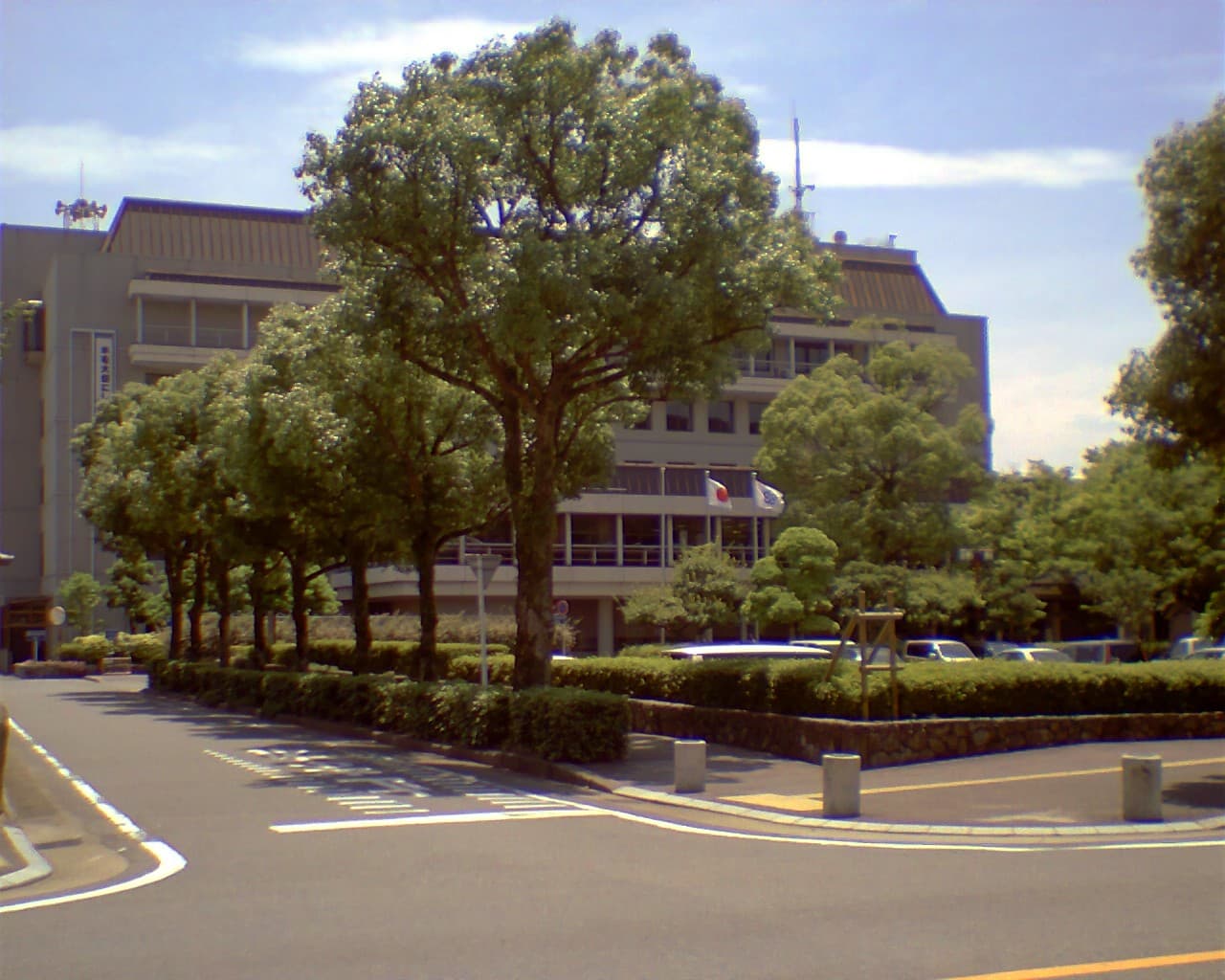
ja:user:Histwr / CC BY-SA 3.0, via Wikimedia CommonsDazaifu
“Where ancient scholarship meets modern design.”
Dazaifu, as no one tells it.
Not the postcards. The stories even locals don't know — whispered in your ear, right where they happened.
A Starbucks cafe in Dazaifu stands as a work of art, blending into its historic surroundings.
One of Dazaifu's tranquil Zen gardens holds a subtle message within its design.
Discover every secret of Dazaifu
Every address, every reveal in full — in your ear, right where it happened.
You pick your stops. You walk. The voice reveals what the others miss.
How long do you have in Dazaifu?
No tours available yet. Check back soon — we're preparing them.
The story of Dazaifu
Dazaifu, a captivating city in Fukuoka Prefecture, Kyushu, offers a tranquil escape just 15 kilometers from Fukuoka City. For over 500 years, Dazaifu served as the administrative and political heart of Kyushu, acting as Japan's primary gateway for diplomatic and trade relations with China and Korea. Today, it draws visitors with its serene atmosphere, ancient shrines, and verdant gardens, gracefully blending centuries-old traditions with contemporary cultural experiences.
The city is recognized for its historical weight, particularly as the final resting place of Sugawara Michizane, a revered 9th-century scholar and politician. His enduring legacy is enshrined at Dazaifu Tenmangu, a significant pilgrimage site for those seeking academic success. Beyond the spiritual, Dazaifu also embraces contemporary culture with architectural marvels and a national museum dedicated to Asian cultural exchange.
Ancient Administrative Hub
Dazaifu's origins reach back to the late 7th century, when it was established as the administrative center for the entire island of Kyushu. For over five centuries, it functioned as Japan's crucial 'window' to Asia, managing diplomatic and trade relations with mainland China and Korea. This strategic importance meant Dazaifu was not merely a city, but a vital government outpost, even as the imperial court governed from the Kansai Region.
The Exile of Sugawara Michizane
A pivotal moment in Dazaifu's history is linked to Sugawara Michizane (845–903), a highly accomplished scholar, poet, and politician of the Heian period. Despite his exceptional talents and rise in prominence, he was exiled to Dazaifu in 901 due to fierce rivalries within the court, particularly with the Fujiwara clan. Michizane passed away in Dazaifu in 903 at the age of 59.
The Birth of Tenmangu Shrines
Following Michizane's death, Japan experienced a series of natural disasters. These calamities were widely believed to be the manifestation of Michizane's wrathful spirit, angered by his unjust treatment. To appease his spirit, offerings were made, and the tradition of Tenmangu Shrines began. Dazaifu Tenmangu Shrine was built directly over his grave, transforming the burial site into a sacred place of pilgrimage. Michizane was deified as Tenjin, the deity of learning, culture, and the arts, and is worshipped for academic success and passing exams. The current main sanctuary, an important cultural property, dates back to 1591, a reconstruction of an earlier structure from 919.
Begin your exploration at Dazaifu Tenmangu Shrine, the spiritual heart of the city and head shrine of the Tenjin faith. Wander through its expansive grounds, home to approximately 6,000 plum trees of 200 varieties, which burst into bloom from late January to early March. Do not overlook the iconic 'Tobiume' (Flying Plum) tree, said to have flown from Kyoto to Dazaifu. The shrine's main hall, rebuilt in 1591, is an important cultural property. Along the approach to the shrine, you will find numerous shops selling local snacks like umegae mochi and souvenirs.
Just a short walk from Tenmangu is Komyozen-ji Temple, a serene Zen temple known as the 'Moss Temple' for its lush greenery. Its exquisite Japanese gardens include two abstract rock gardens, with the front garden featuring fifteen rocks arranged to form the Japanese character for 'light.' The rear garden is particularly noted for its autumn foliage.
For a dose of modern architecture and cultural immersion, visit the Kyushu National Museum. Opened in 2005, it is Japan's fourth national museum and focuses on the history of cultural exchange between Japan and other Asian countries. The museum's striking glass-walled building is a sight in itself, and it is connected to Dazaifu Tenmangu via a specially built access tunnel.
Consider a hike up Mount Homan from Kamado Shrine for rewarding views across Dazaifu and Fukuoka. The well-maintained trail takes about 2.5 hours to the summit.
Dazaifu offers a pleasant experience year-round, with distinct seasons. Spring (March to May) and autumn (September to November) provide moderate temperatures and beautiful scenery, making them ideal for walking. Late January to early March is particularly special for viewing the 6,000 plum blossoms at Dazaifu Tenmangu. Autumn, from mid-November to early December, brings radiant fall foliage to areas like Komyozen-ji. Summers (June-August) are hot and humid, with July being the wettest month. Winters (December-February) are cool and relatively dry.
Dazaifu is easily accessible from Fukuoka City, making it a popular day trip destination. Take the Nishitetsu Tenjin Omuta Line from Fukuoka's Tenjin Station to Nishitetsu Futsukaichi Station, then transfer to the Dazaifu Line to Dazaifu Station. The entire journey takes about 30 minutes. Many attractions are within walking distance of Dazaifu Station.
Comfortable walking shoes are essential, as you will be exploring on foot. Layering your clothing is advisable to adapt to temperature changes throughout the day. An umbrella is also recommended, as rainy days occur regularly, especially from June to September. Coin lockers are available at Nishitetsu Dazaifu Station for luggage storage. Bicycle, stroller, and wheelchair rentals are also available at the Dazaifu City Tourist Information Center at Nishitetsu Dazaifu Station.
- What is Dazaifu Tenmangu Shrine dedicated to?
- Dazaifu Tenmangu Shrine is dedicated to Sugawara Michizane, a 9th-century scholar and politician, who is revered as Tenjin, the Shinto deity of learning, culture, and the arts.
- Is there an entrance fee for Dazaifu Tenmangu Shrine?
- No, there is no entrance fee to visit Dazaifu Tenmangu Shrine and stroll its grounds. However, on-site museums and nearby attractions like the Kyushu National Museum may charge admission fees.
- How long does it take to see Dazaifu's main attractions?
- Most visitors spend about 60 to 90 minutes exploring Dazaifu Tenmangu Shrine itself. A full day is recommended to comfortably explore the shrine, its museums, and other nearby sites like Komyozen-ji Temple and the Kyushu National Museum.
- What is *umegae mochi*?
- *Umegae mochi* is a famous local specialty of Dazaifu: a grilled rice cake filled with sweet red bean paste, often sold along the approach to Dazaifu Tenmangu Shrine.
- Can I visit Dazaifu as a day trip from Fukuoka?
- Yes, Dazaifu is an excellent and popular day trip from Fukuoka City. The train ride takes approximately 30 minutes from Tenjin Station.
- What is the Kyushu National Museum about?
- The Kyushu National Museum, one of Japan's four national museums, focuses on understanding Japanese culture from an Asian historical perspective, showcasing the history of cultural exchange between Japan and its Asian neighbors.