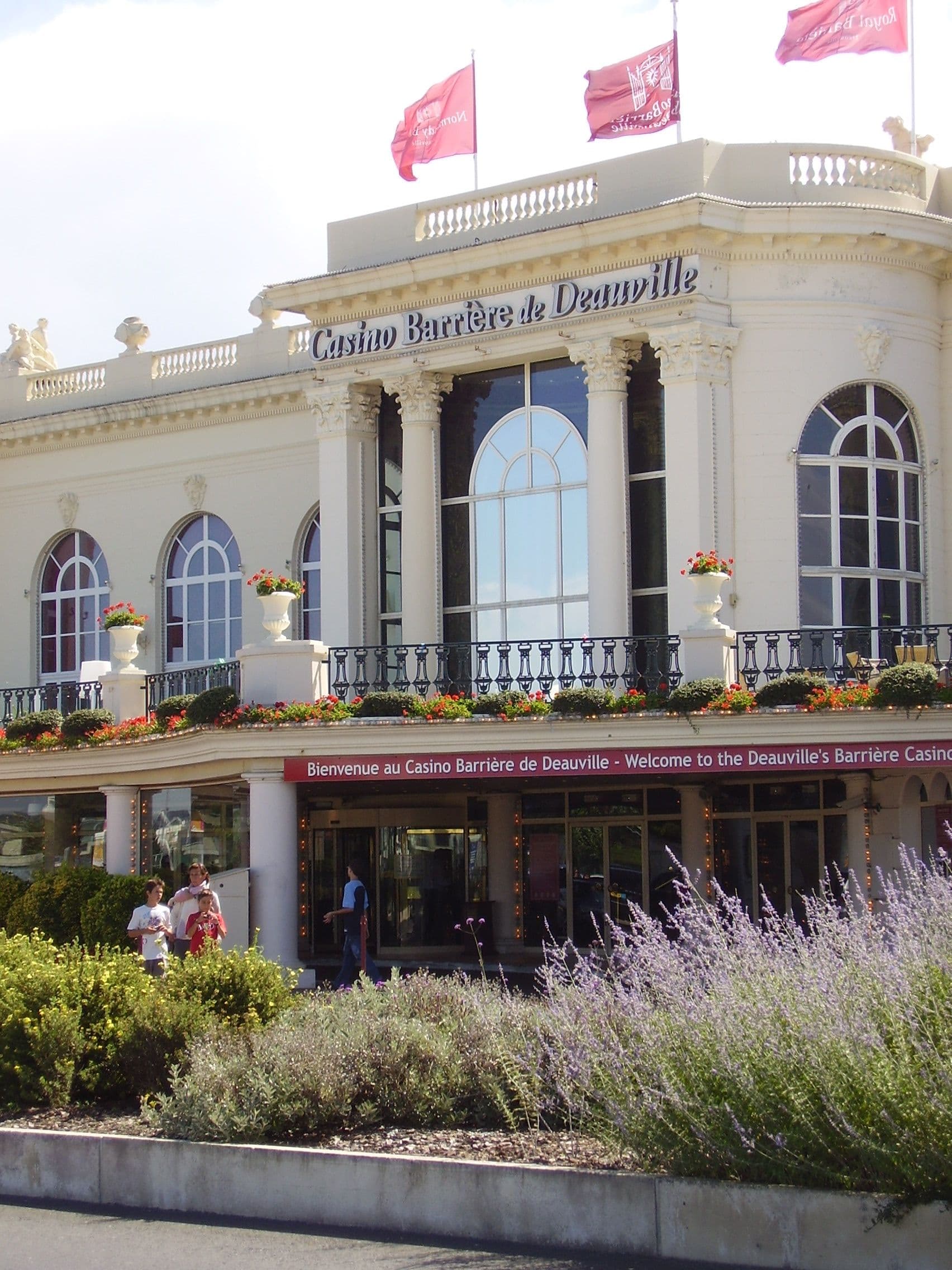
Deauville, FranceKamel15 / CC BY-SA 3.0, via Wikimedia Commons
FR

Deauville

Where the elegance of Paris meets the allure of the Norman coast.

The secrets of Deauville

Deauville, as no one tells it.

Not the postcards. The stories even locals don't know — whispered in your ear, right where they happened.

3 secrets below. Many more wait inside the tour.
Deauville Beach

The distinctive parasols of Deauville Beach, with their 'Deauville knot' and bright colors, are a recognized symbol of the town. Yet, their beginnings were more about utility than pure style.

Full story unlocks in the tour
Casino Barrière Deauville

This grand casino has witnessed countless glamorous evenings and high-stakes games since 1912. However, one of its more notorious visitors arrived not to gamble legally.

Full story unlocks in the tour
Deauville-La Touques Racecourse

Deauville's profound connection to horse culture is evident in its esteemed racecourse, established in 1864. What might surprise many is that this significant landmark was constructed even before another fundamental town structure.

Full story unlocks in the tour
The full tour

Discover every secret of Deauville

Every address, every reveal in full — in your ear, right where it happened.

Get the key to Deauville

You pick your stops. You walk. The voice reveals what the others miss.

Choose your time

How long do you have in Deauville?

No tours available yet. Check back soon — we're preparing them.

About Deauville

The story of Deauville

Deauville, a graceful seaside town on France's Normandy coast, has served as a refined retreat since the 19th century, frequently referred to as the "Parisian Riviera." Its expansive, sandy shores, celebrated boardwalk, and atmosphere of quiet luxury have long drawn discerning visitors. The town offers a particular blend of sophistication and relaxed coastal charm, making it a singular destination in Normandy. From its grand hotels to its esteemed events, Deauville provides an experience of cultivated leisure.

Conceived with tourism at its heart, Deauville emerged from marshlands in the 1860s through the vision of Dr. Joseph Olliffe and the Duke de Morny, half-brother of Emperor Napoleon III. They transformed the desolate dunes into a fashionable resort in just four years, establishing a railway line, grand hotels, and a racecourse. Today, Deauville remains a lively cultural center, recognized for its horse racing, upscale shopping, and the internationally acclaimed Deauville American Film Festival.

History

## From Marshland to Parisian Riviera Deauville's origins trace back to 1060, when the land, then known as Auevilla, was under the control of Hubert du Mont-Canisy. However, the modern resort town was essentially constructed from the ground up in the mid-19th century. In 1859, Dr. Joseph Olliffe, a physician with connections in Parisian financial circles, and banker Pierre-Armand Donon, with the backing of Duc Charles Auguste Louis Joseph de Morny, Napoleon III's half-brother, began transforming the marshland and dunes into a luxurious seaside destination. Morny's ambitious vision was to forge a "Kingdom of Elegance" near Paris.

Significant investments swiftly followed, including a railway line from Paris, which considerably reduced travel time to the capital. The Deauville hippodrome (racecourse) was established in 1864, even before the town's church, emphasizing the importance of horse culture from the very beginning. A small casino and grand hotels, built in the Anglo-Norman timber-frame style, catered to the affluent Parisians flocking to the new resort. By 1863, a promenade, "La Terrasse," stretching 1,800 meters along the seaside, was also created.

## Belle Époque and Beyond During the Belle Époque, just before World War I, Deauville continued to expand with more opulent hotels and a substantial casino. The current Casino Barrière Deauville, a lavish white stone edifice designed by Georges Wybo, opened in 1912. This era also saw the establishment of the Hôtel Barrière Le Normandy and Hôtel Barrière Le Royal, which became enduring landmarks. The town earned the moniker "the 21st arrondissement of Paris" due to its popularity with Parisian high society.

World War I saw Deauville's grand hotels converted into hospitals for Allied soldiers. Between the wars, theauville continued its development, constructing a new train station and its celebrated Art Deco bathing facilities and wooden boardwalk, Les Planches, in 1923. The Pompeian baths, with their mosaics and atriums, were completed in 1924. The Deauville American Film Festival, inaugurated in 1975, further solidified Deauville's international standing, attracting film stars and cinephiles. The town was also immortalized in Claude Lelouch's 1966 film Un Homme et Une Femme.

What to see

Deauville presents a range of attractions that weave its refined past with its coastal setting. An amble along Les Planches de Deauville, the renowned wooden boardwalk, is essential. Constructed in 1923 from Azobé wood, it extends along the sandy shore and is bordered by Art Deco bathing cabins, each bearing the name of a celebrity who has graced the Deauville American Film Festival. The Deauville Beach itself is celebrated for its colorful parasols, a fixture since 1875, and its fine sand, where you might even observe racehorses training in the early mornings.

For those drawn to equestrian culture, the Deauville-La Touques Racecourse is a compelling visit. It hosts prominent events throughout the year, including the Deauville Meeting in August, and offers behind-the-scenes tours. The Casino Barrière Deauville, a Belle Époque marvel built in 1912, provides entertainment with its gaming rooms, three restaurants, and a theater.

Those with an eye for architecture will appreciate the varied styles of Deauville's villas, from Norman to Art Nouveau and Second Empire. The Villa Strassburger, constructed between 1907 and 1912, exemplifies the Anglo-Norman style. For a cultural diversion, Les Franciscaines is an innovative cultural center housed in a former orphanage, featuring an auditorium, a museum, and galleries. The Calouste Gulbenkian Park offers a peaceful green expanse with unusual trees and a rose garden. Remember to explore the Deauville Marina for vistas of the Normandy shore and its brightly painted houses.

When to visit

Deauville welcomes visitors throughout the year, but the most agreeable time for outdoor pursuits and lively events spans from late spring to early autumn, specifically May to September. The summer months (June to August) are particularly animated, with the beach, horse races, and festivals drawing crowds. For a calmer experience with pleasant weather and fewer people, consider visiting during the shoulder seasons of May or September. While rain can occur at any time, December typically sees the most rainfall, and July often offers the clearest skies.

Practical

Deauville is readily accessible, approximately a two-hour drive or train journey from Paris. The Deauville-Trouville train station offers good connections. While Deauville lacks a public transportation system, the city center and beachfront are comfortably walkable. Cycling provides another pleasant way to explore, and taxis, rideshares, or rental cars are options for longer distances. If driving, parking is available near major attractions like the Casino, though spaces can be limited during peak season.

Layering clothing is advisable due to Normandy's changeable weather; even in summer, evenings can be cool, so a light sweater and waterproof jacket are useful. While comfortable walking shoes are essential for exploration, smart-casual attire is appropriate in the evenings, particularly at upscale establishments like the Casino. Unlike many French towns, Deauville's boutiques and food shops frequently remain open seven days a week, especially during high season and on weekends. Credit cards are widely accepted, but it is always wise to carry some cash for smaller market stalls.

Good to know
What is Deauville recognized for?
Deauville is celebrated for its elegant seaside resort ambiance, expansive sandy beaches, iconic boardwalk (Les Planches), esteemed horse racing, upscale shopping, and the annual Deauville American Film Festival. It is often called the "Parisian Riviera."
How far is Deauville from Paris?
Deauville is approximately a two-hour drive or train ride from Paris, making it a popular and convenient escape from the capital.
What are Les Planches de Deauville?
Les Planches de Deauville refers to the town's celebrated wooden boardwalk, which extends along the beach. It is lined with Art Deco bathing cabins, each inscribed with the name of a film star who has attended the Deauville American Film Festival.
Can one swim at Deauville Beach?
Yes, Deauville Beach is suitable for swimming, sunbathing, and relaxing by the sea. It is a wide, sandy beach known for its clean environment and colorful parasols.
What is the most favorable time to visit Deauville?
The most favorable time to visit Deauville for warm weather and events is from late spring to early autumn (May to September). The summer months (June-August) are the liveliest, while May and September offer a calmer experience with pleasant weather.
Are there horse races in Deauville?
Yes, Deauville is a significant center for horse racing, with the Deauville-La Touques Racecourse hosting numerous prominent events throughout the year, including the well-known Deauville Meeting in August.
Deauville
From€9.00
No booking · activate anytime · 12h to walk it
Get the key to Deauville