Kerk van Sint-Nicolaas
Het graf van Sint-Nicolaas in Demre bevat een verrassend geheim over zijn laatste rustplaats.
Volledig verhaal ontgrendeld in de tour
 Rab Lawrence / CC BY 2.0, via Wikimedia Commons
Zelfgeleide audiowandeling door Demre — GPS-route, offline afspelen, meeslepende vertelling in 32 talen.
“Waar oude Lycische echo's de legende van Sint-Nicolaas ontmoeten.”
Niet de ansichtkaarten. De verhalen die zelfs locals niet kennen — gefluisterd in je oor, precies waar ze gebeurden.
Het graf van Sint-Nicolaas in Demre bevat een verrassend geheim over zijn laatste rustplaats.
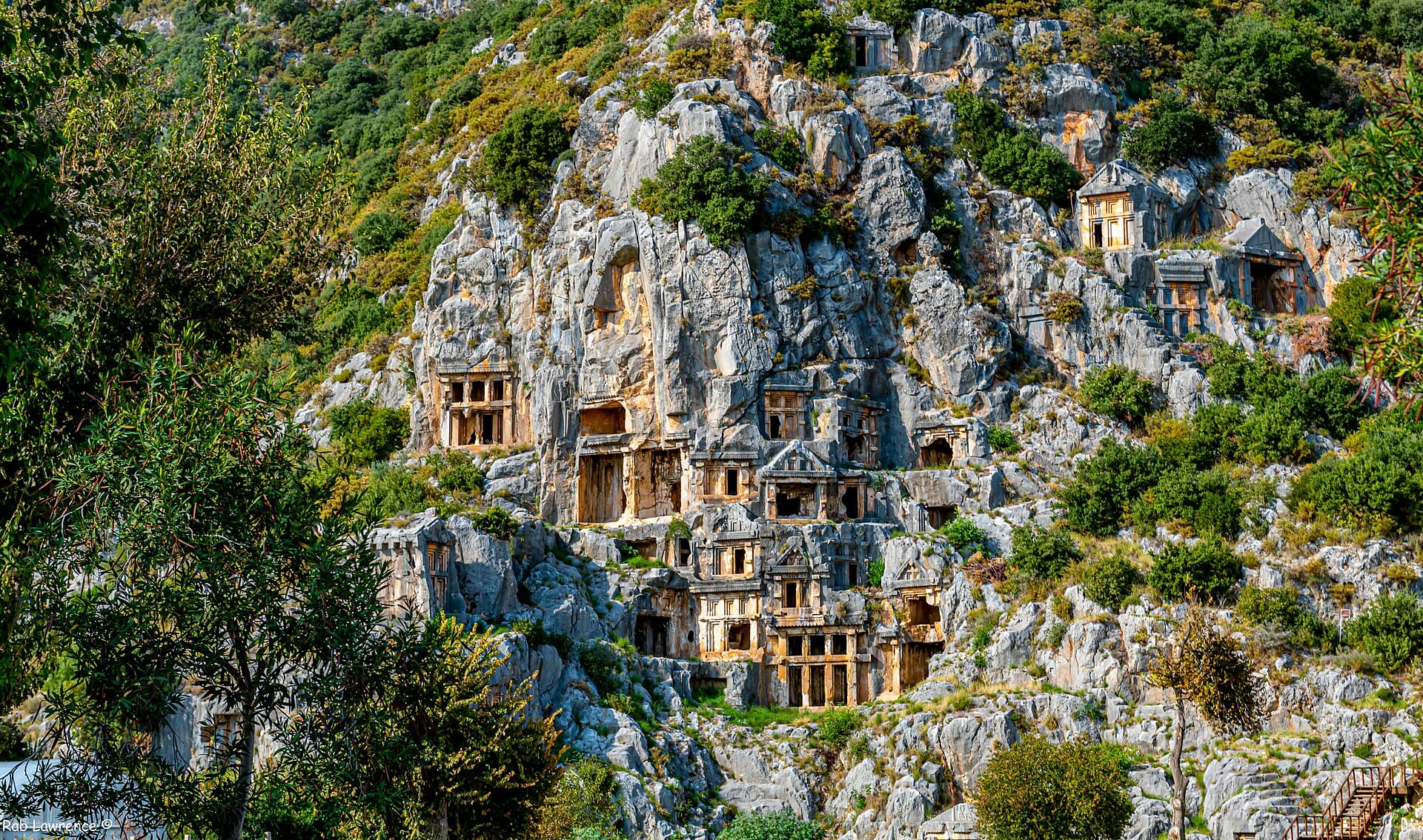
De indrukwekkende Lycische rotsgraven van Myra bevatten een architectonisch detail dat spreekt over oude Lycische huizen.
De oude haven van Myra, Andriake, speelde een belangrijke rol in de voedselvoorziening van het Romeinse Rijk, met een structuur die vandaag de dag nog steeds staat.
Ontdek elk geheim van Demre
Elk adres, elke onthulling volledig — in je oor, precies waar het gebeurde.
Jij kiest je stops. Jij wandelt. De stem onthult wat de anderen missen.


Je zelfgeleide audiotour van Demre is klaar — kies je bezienswaardigheden, kies je taal en start zodra je aankomt.
KopenLume heeft een ingebouwde augmented-reality-gids. Houd je telefoon omhoog: de camera toont de straat voor je, met een oplichtende pijl over het echte beeld die altijd naar je volgende stop wijst — geen kaart om uit te puzzelen, geen verkeerde afslagen. Zoals alles in Lume werkt het volledig offline.
Demre, een kustplaats in de Turkse provincie Antalya, biedt een boeiende reis door lagen van geschiedenis en legende. Ooit bekend als Myra, een prominente stad van de oude Lycische beschaving, is Demre misschien wel het beroemdst als de thuisbasis van Sint-Nicolaas, de 4e-eeuwse bisschop wiens vrijgevigheid de legende van de Kerstman inspireerde. Tegenwoordig combineert de stad zijn diepe verleden met een bloeiend agrarisch heden, omringd door vruchtbare vlaktes waar citrusvruchten en groenten gedijen in kassen.
Naast zijn historische betekenis biedt Demre toegang tot de Lycische kust, met zijn heldere Middellandse Zeewater en dramatische landschappen. Bezoekers kunnen oude ruïnes verkennen die verhalen vertellen over machtige beschavingen, boottochten maken naar ondergedompelde steden, of gewoon genieten van het ontspannen tempo van een stad die minder druk blijft dan sommige van zijn op resorts gerichte buren. Demre nodigt uit tot langzamere verkenning en laat zien hoe binnenlandse steden en kustroutes elkaar door de eeuwen heen hebben gevormd.
## Van Lycische Machtscentrum tot Byzantijnse Metropool De oorsprong van Demre gaat terug tot de oude Lycische stad Myra, een nederzetting waarvan wordt aangenomen dat deze al minstens sinds de 5e eeuw voor Christus bestaat. Myra was een belangrijk lid van de Lycische Liga, een confederatie van onafhankelijke stadstaten, en had aanzienlijke politieke en culturele invloed. De strategische ligging van de stad aan de rivier de Myros, omringd door vruchtbaar land, droeg bij aan de welvaart, waarbij landbouw een vitale rol speelde.
## Romeinse Expansie en Christelijke Betekenis Rome annexeerde Lycië in 43 n.Chr. als provincie, wat de meest welvarende periode van Myra inluidde. De stad onderging aanzienlijke ontwikkeling in de 2e eeuw na Christus, met de bouw of reparatie van veel openbare gebouwen. Tijdens de Byzantijnse periode werd Myra in de 5e eeuw de hoofdstad van Lycië en ontwikkelde zich tot een toonaangevend administratief en religieus centrum. Het was in dit tijdperk dat Sint-Nicolaas, geboren in het nabijgelegen Patara, in de 4e eeuw na Christus diende als de Griekse bisschop van Myra. Zijn reputatie voor vrijgevigheid en wonderen legde de basis voor de wereldwijde Kerstman-traditie.
## Verval en Moderne Heropleving De eeuwen na de dood van Sint-Nicolaas brachten een reeks uitdagingen met zich mee. Aardbevingen, overstromingen en Arabische invallen in de 7e eeuw leidden tot het verzanden van de haven van Myra bij Andriake en een snel verval van het belang van het gebied. Tegen de 12e eeuw was Myra gereduceerd tot een dorp. Een aanzienlijke gemeenschap van orthodoxe Grieken bleef in Demre wonen tot de bevolkingsuitwisseling tussen Griekenland en Turkije in de jaren 1920. De stad, lange tijd bekend als Kale, werd in 2005 officieel omgedoopt tot Demre. Tegenwoordig bloeit Demre als een agrarisch centrum en een belangrijke bestemming voor christelijke pelgrims en geschiedenisliefhebbers.
Demre biedt een fascinerende reeks historische bezienswaardigheden. De Oude Stad Myra is een hoogtepunt, met enkele van de meest indrukwekkende en best bewaarde ruïnes van Turkije. Hier vindt u twee necropolissen van Lycische rotsgraven, ingewikkeld in kliffen uitgehouwen, waarvan vele op blokhutten lijken. De site omvat ook een goed bewaard gebleven Grieks-Romeins theater, dat ooit gladiatoren- en dierenshows organiseerde.
Vlak buiten het centrale plein van Demre ligt de Kerk van Sint-Nicolaas, een Byzantijnse basiliek gebouwd over de oorspronkelijke begraafplaats van de heilige. Deze historisch belangrijke plek toont frescofragmenten, mozaïekvloeren en architectonische lagen die eeuwen van devotie weerspiegelen.
Vijf kilometer ten zuidwesten van Demre ligt de Oude Stad Andriake, de voormalige haven van Myra. Deze site omvat het massieve Granarium van Hadrianus, nu de thuisbasis van het Museum van Lycische Beschavingen, met artefacten uit de regio. Bezoekers kunnen ook havenresten, een monumentale fontein (Nymphaeum) en de ruïnes van een synagoge zien.
Naast deze bezienswaardigheden kunt u een boottocht maken naar het eiland Kekova om de deels ondergedompelde Lycische ruïnes van de 'Verzonken Stad' te verkennen, een unieke archeologische ervaring.
De beste tijden om Demre te bezoeken zijn in de lente (april tot mei) en de herfst (september tot november). Gedurende deze maanden is het weer mild en aangenaam, met gemiddelde temperaturen in de lente variërend van 15°C tot 25°C. Deze periode is ideaal voor het verkennen van archeologische vindplaatsen en het genieten van boottochten, met minder drukte dan in de piek van de zomer. De zomer (juni tot september) is het beste voor zwemmen en strandactiviteiten, hoewel de temperaturen heet kunnen zijn. De winter biedt een rustigere, cultureel gerichte ervaring.
Demre ligt aan de Middellandse Zeekust van Turkije, ten westen van Antalya. U kunt Demre vanuit Antalya bereiken met de bus (ongeveer 3-4 uur) of door een auto te huren (ongeveer 2,5 uur). Het busstation van Demre (Otogar) is centraal gelegen, op loopafstand van de Kerk van Sint-Nicolaas en de Oude Stad Myra.
Voor de Oude Stad Myra en de Kerk van Sint-Nicolaas zijn toegangsprijzen van toepassing. Het Museum van Lycische Beschavingen in Andriake heeft ook een toegangsprijs, maar een MuseumPass is geldig. Draag stevige schoenen voor het verkennen van archeologische vindplaatsen, vooral voor oneffen terrein rond de rotsgraven. Neem water en bescherming tegen de zon mee, aangezien schaduw minimaal kan zijn. Demre wordt over het algemeen als veilig beschouwd voor reizigers.
Demre — Koreaans, Chinees, Hebreeuws en nog 29 talen, elke stop verteld door een moedertaalspreker. Het grootste taalaanbod van alle zelfgeleide audiotours.
Beschikbaar in: