Denton County Courthouse-on-the-Square
Il grande tribunale del 1896 a Denton custodisce più di semplici registri storici.
La storia completa si sblocca nel tour
 US Congress / public domain, via Wikimedia Commons
Tour audio autoguidato di Denton — percorso GPS a piedi, riproduzione offline, narrazione coinvolgente in 32 lingue.
“Dove lo spirito indipendente incontra il fascino texano, e la musica non si ferma mai.”
Non le cartoline. Le storie che nemmeno i locali conoscono — sussurrate nel tuo orecchio, proprio dove sono accadute.
Il grande tribunale del 1896 a Denton custodisce più di semplici registri storici.
Molti locali conoscono questo storico ponte a traliccio in ferro con un nome diverso e più inquietante.
La torre dell'orologio centrale nel campus UNT ha un modo speciale per celebrare le vittorie nel football.
Scopri ogni segreto di Denton
Ogni indirizzo, ogni rivelazione completa — nel tuo orecchio, proprio dove è accaduta.
Scegli le tue tappe. Cammini. La voce rivela ciò che gli altri perdono.
Il tuo tour audio autoguidato di Denton è pronto — scegli i tuoi punti di interesse, seleziona la tua lingua e inizia nel momento in cui arrivi.
AcquistaLume include una guida in realtà aumentata. Alza il telefono: la fotocamera mostra la strada davanti a te, con una freccia luminosa sovrapposta all'immagine reale che punta sempre verso la tua prossima tappa — nessuna mappa da decifrare, nessuna svolta sbagliata. Come tutto in Lume, funziona completamente offline.
Denton, Texas, è una città che danza al proprio ritmo, un vivace centro dove il rigore accademico incontra una fiorente scena artistica e musicale indipendente. Situata al margine settentrionale del complesso metropolitano Dallas–Fort Worth, Denton raggiunge un equilibrio unico, offrendo un'atmosfera da piccola città con le comodità culturali di una metropoli molto più grande. Viene spesso paragonata ad Austin per la sua energia distintiva e creativa, un paragone che i Dentonites accolgono mantenendo il loro fascino individuale, leggermente fuori dai riflettori.
Sede di due importanti università, la University of North Texas (UNT) e la Texas Woman's University (TWU), Denton pulsa di energia giovanile e curiosità intellettuale. Questa presenza collegiale alimenta un panorama culturale dinamico, dai locali di musica dal vivo che ospitano ogni sera una vasta gamma di generi, alla scena artistica pubblica che anima le sue strade e gli spazi pubblici. Che siate attratti dal suo passato duraturo, dal suo presente artistico o dai suoi vivaci eventi comunitari, Denton offre un'esperienza texana genuinamente coinvolgente.
La storia di Denton iniziò l'11 aprile 1846, quando la legislatura del Texas istituì la Contea di Denton, ricavandola dalla Contea di Fannin poco dopo l'annessione del Texas agli Stati Uniti. I primi insediamenti anglosorsero lungo il fiume Trinity e i suoi affluenti, ai margini occidentali della frontiera. La contea, e successivamente la città, furono nominate in onore di John B. Denton, un predicatore e avvocato pioniere morto in uno scontro con gli indiani nel 1841.
La sede della contea iniziale era Pinckneyville, sebbene gli storici dibattano se lì sia mai stato costruito un tribunale. Nel 1857, i residenti cercarono una sede della contea più centrale, portando alla fondazione della città di Denton. Hiram Cisco, William Woodruff e William Loving donarono 100 acri per il sito della città, e i lotti per il nucleo originale furono messi all'asta il 10 gennaio 1857. Denton fu ufficialmente incorporata nel 1866.
Per il suo primo decennio, la Contea di Denton fu un'area di frontiera, con i residenti principalmente impegnati nell'allevamento e nell'agricoltura di sussistenza. L'arrivo delle linee ferroviarie Texas and Pacific Railway e Missouri, Kansas and Texas nel 1881 stimolò una significativa crescita demografica, più che raddoppiando la popolazione della città in quel decennio. Questo periodo vide anche un passaggio dall'agricoltura di sussistenza alla produzione di cotone e grano, con la Contea di Denton che divenne un importante produttore di grano in Texas tra il 1890 e il 1920.
Un momento cruciale nello sviluppo di Denton fu la creazione di istituzioni di istruzione superiore. La North Texas Normal College, ora University of North Texas, fu fondata nel 1890, seguita dalla Girls College of Industrial Arts, ora Texas Woman's University, nel 1901. Queste università trasformarono Denton in un importante centro educativo e continuano a plasmare il suo panorama culturale ed economico. Il Denton County Courthouse-on-the-Square, una struttura riconoscibile costruita nel 1896, testimonia la storia duratura della città, la sua facciata in arenaria color tortora accentuata da colonne in granito rosa e un prominente orologio.
Iniziate la vostra esplorazione dal Denton County Courthouse-on-the-Square, uno splendido edificio del 1896 che funge da cuore storico e culturale della città. All'interno, il Courthouse-on-the-Square Museum offre uno sguardo sul passato della Contea di Denton. Appena a sud della piazza, il Denton County Historical Park riunisce diverse strutture storiche, tra cui la Bayless-Selby House Museum in stile Queen Anne Victorian del 1898, arredata con mobili d'epoca. La Woods House Museum, anch'essa all'interno del parco, racconta la storia della famiglia Woods e dell'esperienza afroamericana nella Contea di Denton durante il Movimento per i Diritti Civili. Per ulteriori informazioni sulla storia locale, il Denton Firefighters' Museum espone oltre 150 anni di cimeli dei vigili del fuoco.
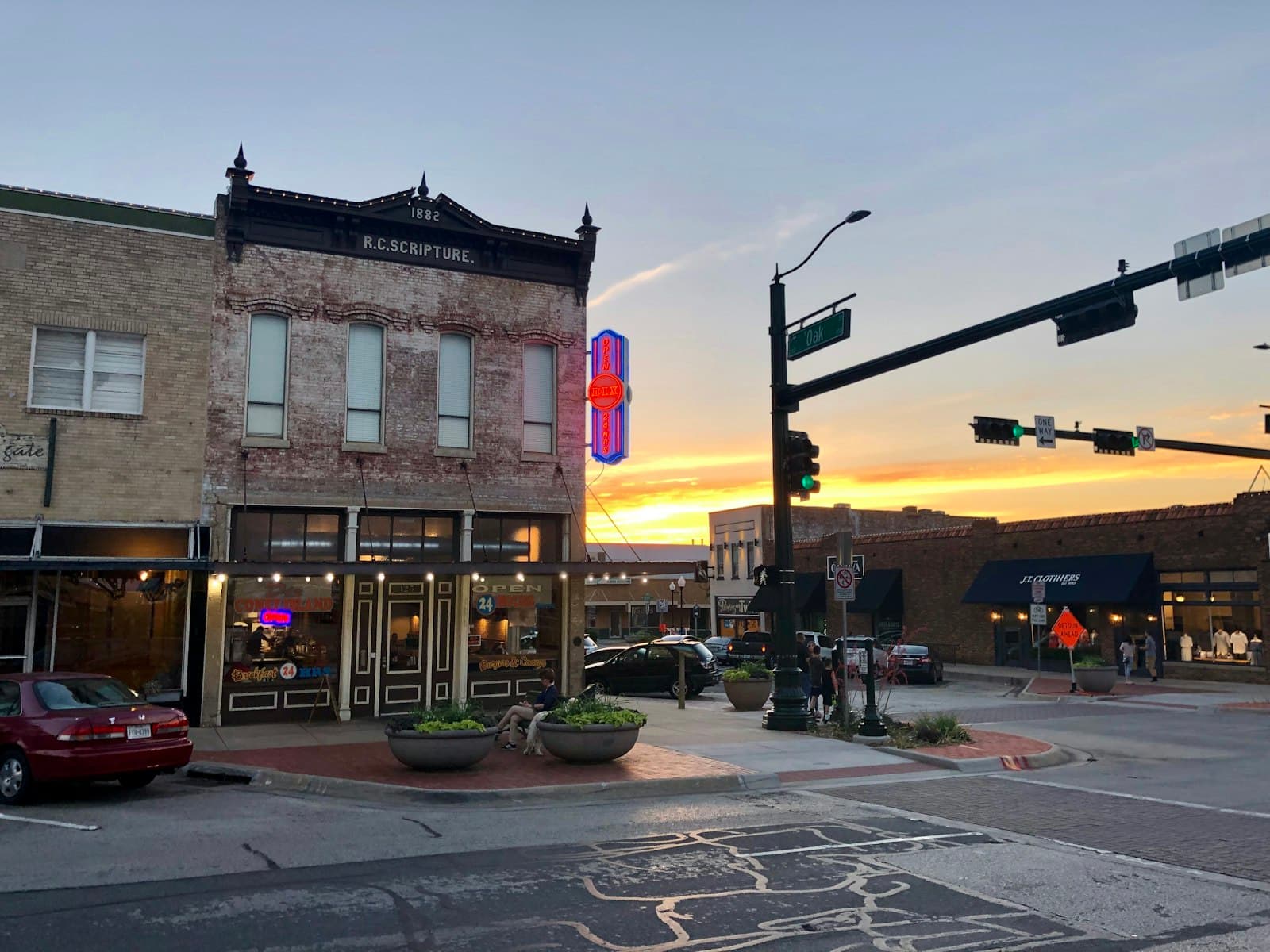
Denton è anche nota per la sua vivace arte pubblica. Esplorate i numerosi murales che adornano gli edifici in tutta la città, molti concentrati intorno alla piazza del centro, percorribile a piedi. Queste opere d'arte all'aperto fanno parte dell'Artscapes Mural Art Initiative, che mira a abbellire gli spazi pubblici e a ispirare l'orgoglio civico. Per gli amanti della natura, il Clear Creek Natural Heritage Center offre quasi otto miglia di sentieri naturali per il birdwatching e l'escursionismo attraverso diversi ecosistemi. Cercate la Little Chapel-in-the-Woods nel campus della Texas Woman's University, una serena e storica meraviglia architettonica.
I periodi migliori per visitare Denton sono la primavera (da marzo a maggio) e l'autunno (da ottobre a novembre). Durante queste stagioni intermedie, il clima è piacevole, con temperature medie che vanno dai 20°C ai 28°C, rendendolo ideale per esplorare le attrazioni e gli eventi all'aperto della città. La primavera porta fiori in fiore e ospita il Denton Arts & Jazz Festival ad aprile. L'autunno offre temperature confortevoli e splendidi colori autunnali. Le estati (da giugno a settembre) possono essere molto calde e umide, con massime giornaliere medie che raggiungono i 35°C a luglio. Gli inverni (da dicembre a febbraio) sono generalmente miti e più tranquilli, con temperature che raramente scendono sotto lo zero.
Denton è facilmente raggiungibile, situata sulla Interstate Highway 35, dove si biforca in I-35E per Dallas e I-35W per Fort Worth. Per spostarsi in città, la Denton County Transportation Authority (DCTA) fornisce servizi di autobus locali e opzioni di rideshare su richiesta come GoZone. La linea ferroviaria pendolare A-train collega Denton alla Contea di Dallas, offrendo collegamenti con i servizi DART (Dallas Area Rapid Transit). Denton è anche una città adatta ai ciclisti con piste ciclabili dedicate. Per coloro che arrivano in aereo, il Denton Enterprise Airport si trova a circa sei chilometri dal distretto centrale degli affari, e il Dallas/Fort Worth International Airport (DFW) è anch'esso convenientemente vicino.
Le opzioni di alloggio a Denton includono una varietà di hotel e affitti vacanze. Il parcheggio nel centro di Denton è generalmente gratuito, ad eccezione di una parte del parcheggio vicino alla Wells Fargo.
Denton — coreano, cinese, ebraico e altre 29 lingue, ogni tappa narrata da una voce madrelingua. La più ampia scelta di lingue tra i tour audio autoguidati.
Disponibile in: