One of East Africa's earliest mosques holds a curious detail about its initial builders.
Lebu Ayiga / CC BY 4.0, via Wikimedia CommonsDiani
“Where the Indian Ocean murmurs ancient stories to colossal baobabs.”
Diani, as no one tells it.
Not the postcards. The stories even locals don't know — whispered in your ear, right where they happened.
This serene island carries a profound, spiritual significance for the local Digo people.
The primary thoroughfare of Diani, linking its resorts and attractions, was once a profoundly different path.
Discover every secret of Diani
Every address, every reveal in full — in your ear, right where it happened.
You pick your stops. You walk. The voice reveals what the others miss.
How long do you have in Diani?
No tours available yet. Check back soon — we're preparing them.
The story of Diani
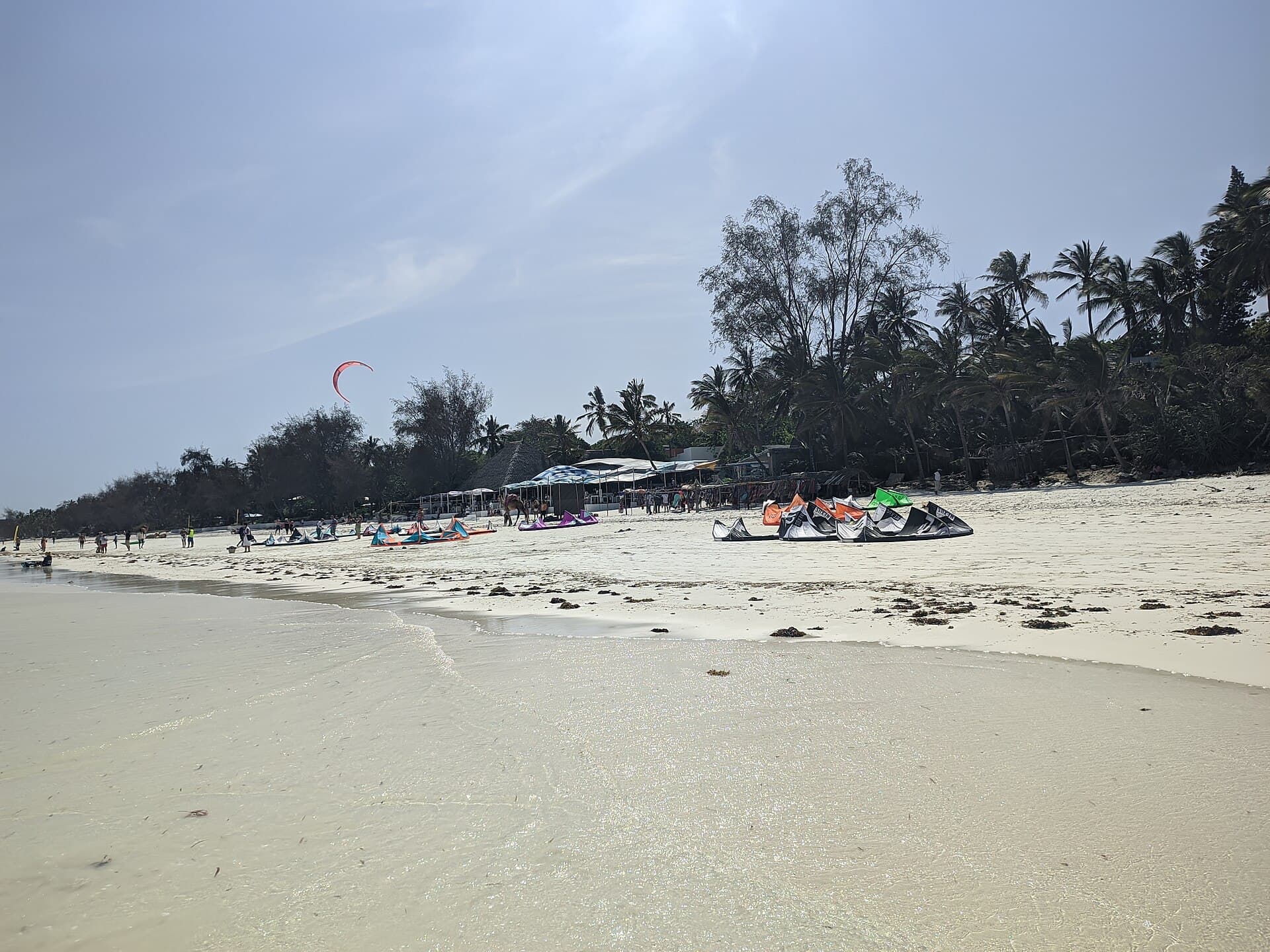
Diani, a coastal town in Kenya, is celebrated for its expansive white-sand beaches and the warm, clear waters of the Indian Ocean. Frequently ranked among Africa's premier beach destinations, it offers a fusion of tranquility, abundant marine life, and a lively atmosphere. Situated approximately 30 kilometers south of Mombasa, Diani is a tropical sanctuary that draws visitors seeking both peaceful escapes and adventurous pursuits.
The coastline extends for over 17 kilometers, fringed with palm trees and providing ample space for uncrowded enjoyment. Beyond the shoreline, Diani offers access to diverse ecosystems, from coral reefs teeming with life to nearby wildlife reserves. It is a destination that caters to a wide spectrum of travelers, from those desiring quiet moments by the sea to those eager to explore Kenya's natural and cultural offerings.
While Diani has matured into a cosmopolitan resort, it has managed to retain a simple ambiance and a relaxed feel. The area is characterized by its Swahili-inspired boutique hotels and thatched-roof accommodations, rather than towering structures, contributing to its allure.
The story of Diani, and the broader Kenyan coast, is intricately woven with centuries of maritime trade and cultural exchange. Evidence suggests human presence in the Diani area dates back to the 8th century AD. By the 9th century, Indian and Arab traders began interacting with the indigenous populations, leading to the evolution of the distinctive Swahili culture that continues to flourish today.
One of the most tangible connections to this past is the Kongo Mosque, considered one of the earliest mosques along the East African coastline. Its foundations are thought to date back to the 13th or 14th century, a testament to the significant influence of early Arab traders and merchants. Originally known as the Diani Persian Masjid, it was constructed using local coral rag stone, a common material in traditional Swahili coastal architecture. After a period of disuse, the mosque was rediscovered and restored around 300 years ago by Sheikh Mwenye Kombo, a local Muslim scholar, and renamed the Kongo Mosque.
For many centuries, Diani remained a quiet fishing settlement. However, the 1970s marked a pivotal moment with a surge in tourism. Kenya became an attractive destination for travelers, leading to the development of hotels along the coast. The dusty track that was Diani Beach Road was paved, and a small airport was constructed, contributing to Diani's evolution into a favored resort area. The Diani-Chale Marine National Reserve was established in 1995 to safeguard the area's coral reefs and marine life, balancing conservation with the traditional livelihoods of local communities.
The local communities in Diani are primarily the Digo and Duruma ethnic groups, who possess a strong connection to the ocean and the land, respectively. The Digo people have a heritage of seafaring and fishing, while the Duruma are traditionally farmers with a deep understanding of local vegetation and wildlife. Their cultural heritage is reflected in their music, dance, and art, and they are known for their hospitality.
Diani offers a range of experiences, from unspoiled beaches to cultural sites and natural reserves. The primary attraction is Diani Beach itself, known for its soft white sand and clear turquoise waters, ideal for swimming and sunbathing.
For those interested in history, the Kongo Mosque, dating back to the 13th or 14th century, offers a window into East Africa's ancient Swahili and Islamic heritage. It remains an active center of community life and is recognized as a national monument.
Nature enthusiasts can visit the Colobus Conservation, a center dedicated to protecting endangered colobus monkeys. Guided tours offer insights into these primates and the conservation efforts. Another significant natural and cultural site is the Kaya Kinondo Sacred Forest, a UNESCO World Heritage Site with profound spiritual meaning for the Mijikenda people. Guided tours here explore the forest's story, spirituality, and biodiversity.
Beyond the mainland, Chale Island, a short distance south of Diani, is an eco-sustainable sanctuary with coral reefs, mangrove forests, and white beaches. It is accessible by boat or, at low tide, by walking across a sandy causeway. For marine adventures, Kisite-Mpunguti Marine Park is a favored day trip for snorkeling and diving among lively coral reefs and observing dolphins and other marine life.
Diani enjoys a warm, tropical climate throughout the year, with an average temperature of 26 degrees Celsius. The most favored and recommended time to visit is during the dry season, which extends from June to October and again from January to March. During these months, rainfall is minimal, humidity is lower, and days are mostly sunny, creating ideal conditions for beach activities, swimming, snorkeling, and water sports.
For diving and marine life observations, late October to March offers the best visibility, with whale sharks and manta rays more likely to be seen between December and February. While April and May are the wettest and warmest months, the occasional rain showers usually occur in the late afternoon or at night, allowing for daytime activities. This 'secret season' can also offer quieter stays and lower prices.
Traveling to Diani is straightforward. Visitors can fly into Moi International Airport in Mombasa, followed by a one-hour road transfer, or directly into Ukunda Airstrip, which is just a brief drive from Diani Beach. From Nairobi, domestic flights are available to Ukunda, or one can take the SGR train to Mombasa and then a taxi or ferry to Diani.
Once in Diani, local transport options include tuk-tuks, motorbike taxis (boda bodas), and taxis. Tuk-tuks are a popular and affordable way to get around, with short rides typically costing around 50-100 Kenyan shillings. It is wise to agree on a price before beginning your journey.
Diani is generally considered a secure destination, but it is always prudent to take basic precautions. Avoid walking alone on the beach at night, use registered taxis or hotel transport after dark, and keep valuables secure. English and Swahili are widely spoken, making communication easy for most visitors. The local currency is the Kenyan Shilling, and it is recommended to carry some cash, as not all places accept cards.
- Is Diani Beach safe for tourists?
- Yes, Diani Beach is generally considered one of the most secure beach towns in Kenya. Basic precautions such as avoiding walking alone on the beach after dark and utilizing registered taxis are advised.
- What is Diani Beach known for?
- Diani Beach is celebrated for its pristine white-sand beaches, clear turquoise waters, abundant marine life, and a wide array of water sports. It has consistently been ranked among Africa's premier beach destinations.
- Can I combine a Diani Beach trip with a safari?
- Absolutely. Diani Beach is conveniently situated near several safari destinations, including Shimba Hills National Reserve (approximately 45 minutes away) and Tsavo East & West National Parks (3-4 hours away). Flights to Masai Mara are also available from Ukunda.
- What water sports are available in Diani?
- Diani is a center for water sports, offering scuba diving, snorkeling, kitesurfing, windsurfing, jet skiing, parasailing, and deep-sea fishing. There are also dhow safaris and dolphin watching excursions.
- Are there ATMs and supermarkets in Diani?
- Yes, Ukunda town, which is close to Diani, has major banks, ATMs, and supermarkets like Naivas and Chandarana.
- What is the local currency in Diani?
- The local currency is the Kenyan Shilling. It is advisable to carry some cash, as not all establishments accept card payments.