Cemitério Boot Hill
O Cemitério Boot Hill original guarda um sombrio segredo sobre sua nomenclatura.
História completa desbloqueada no tour
 Gerald B. Keane / Public domain, via Wikimedia Commons
Tour de áudio autoguiado por Dodge City — rota GPS a pé, reprodução offline, narração envolvente em 32 idiomas.
“Onde o Velho Oeste esculpiu sua lenda.”
Não os postais. As histórias que nem os locais conhecem — sussurradas ao seu ouvido, exatamente onde aconteceram.
O Cemitério Boot Hill original guarda um sombrio segredo sobre sua nomenclatura.
O lendário Long Branch Saloon, central para a reputação barulhenta de Dodge City, foi concebido em uma aposta surpreendente.
O primeiro reconhecimento oficial de Dodge City de seu passado de fronteira tomou uma forma inesperada.
Descubra cada segredo de Dodge City
Cada endereço, cada revelação na íntegra — no seu ouvido, exatamente onde aconteceu.
Você escolhe as suas paragens. Você caminha. A voz revela o que os outros perdem.


O seu tour áudio autoguiado de Dodge City está pronto — escolha os seus pontos de interesse, selecione o seu idioma e comece no momento em que chegar.
ComprarA Lume inclui um guia de realidade aumentada. Levante o telemóvel: a câmara mostra a rua à sua frente, com uma seta luminosa sobreposta à imagem real que aponta sempre para a sua próxima paragem — sem mapa para decifrar, sem voltas erradas. Como tudo na Lume, funciona totalmente offline.
Dodge City, Kansas, evoca o Velho Oeste Americano, um lugar onde a história e a lenda se entrelaçam. Reconhecida mundialmente como a "Rainha das Cidades de Gado" (Queen of the Cowtowns), esta cidade oferece uma conexão tangível com uma era passada de comitivas de gado, homens da lei e fora da lei. Situada nas Grandes Planícies do sudoeste do Kansas, Dodge City foi um dia um próspero povoado de fronteira, atraindo visitantes ansiosos para caminhar pelas mesmas ruas empoeiradas que figuras como Wyatt Earp e Bat Masterson.
Embora seu passado tenha sido frequentemente turbulento e sem lei, o que lhe rendeu o apelido de "A Cidade Mais Malvada da América" (The Wickedest Little City in America), a Dodge City moderna harmoniza sua importância histórica com a vida comunitária contemporânea. A cidade, com uma população de aproximadamente 27.788 habitantes em 2020, funciona como um centro regional de cultura e comércio. Os visitantes hoje podem mergulhar em sua profunda herança através de sítios históricos bem preservados, museus envolventes e eventos culturais animados, tudo isso enquanto experimentam o espírito duradouro do Velho Oeste.
As origens de Dodge City remontam a 1865 com o estabelecimento do Forte Dodge, um posto militar projetado para proteger os viajantes ao longo da Trilha de Santa Fé. Em 1871, o pecuarista Henry L. Sitler construiu uma casa de barro a oeste do forte, um ponto de parada conveniente para aqueles na trilha e caçadores de búfalos. A própria cidade foi formalmente fundada em 1872, inicialmente chamada Buffalo City antes de ser renomeada Dodge City em homenagem ao forte próximo. Sua localização estratégica no meridiano 100, o limite ocidental da reserva do Forte Dodge, e a chegada da Atchison, Topeka, and Santa Fe Railroad em setembro de 1872, solidificaram seu futuro.
Em seus anos iniciais, Dodge City foi caracterizada por uma clara ausência de aplicação da lei local, fomentando uma reputação de anarquia. Conflitos entre caçadores de búfalos, trabalhadores ferroviários, vagabundos e soldados eram frequentes, muitas vezes escalando para tiroteios. Essa era exigiu a criação do Cemitério Boot Hill, um local de sepultamento para aqueles que "morreram de botas calçadas". De 1872 a 1878, Dodge City serviu como um centro primário para o comércio de peles de búfalo, com uma estimativa de 1,5 milhão de peles enviadas da cidade. Assim que as manadas de búfalos diminuíram, a cidade se transformou na "Capital Mundial do Gado" (Cow Capital of the World), um centro crucial para as comitivas de gado do Texas. Mais de cinco milhões de cabeças de gado foram levadas pela Great Western Trail até Dodge City na década seguinte. Esse afluxo de cowboys e gado alimentou ainda mais os saloons barulhentos da cidade, estabelecimentos de jogos de azar e bordéis, cimentando sua imagem como a "cidade mais malvada da América" (wickedest little city in America).
Para estabelecer a ordem em meio ao caos, notáveis homens da lei como Wyatt Earp, Bat Masterson e Charlie Bassett foram fundamentais para manter a paz nos primeiros anos de Dodge City. Apesar de seus esforços, incidentes como o Tiroteio do Saloon Long Branch em 1879, onde Frank Loving matou Levi Richardson, sublinham o ambiente volátil. A era das comitivas de gado, no entanto, foi relativamente breve. Em 1885, foi aprovada legislação restringindo o movimento de gado do Texas através do Kansas devido a preocupações com doenças, encerrando efetivamente as comitivas de gado em larga escala para Dodge City. À medida que a agricultura, particularmente a introdução do resistente trigo de inverno "Turkey Red", transformou a pradaria circundante, o aspecto de fronteira de Dodge City gradualmente recuou. O Forte Dodge fechou em 1882, e o Cemitério Boot Hill não estava mais em uso em 1880. Hoje, a cidade abraça seu passado histórico, oferecendo uma janela cativante para a fronteira que moldou a identidade americana.
Uma visita a Dodge City oferece uma passagem de volta ao Velho Oeste, centrada em suas atrações mais icônicas. O Boot Hill Museum é uma parada envolvente, situado no local original do Cemitério Boot Hill. Aqui, você pode explorar uma recriação da Front Street de 1876, completa com edifícios de época e exposições interativas que dão vida aos primeiros dias da cidade. Durante o verão, o museu apresenta encenações diárias de tiroteios e o Long Branch Variety Show, com Miss Kitty e dançarinas de can-can. Você também pode entrar na réplica do Long Branch Saloon para uma sarsaparilla ou uma cerveja gelada.
Além do museu, a Dodge City Trail of Fame exibe medalhões e estátuas comemorando figuras famosas e infames ligadas à cidade, incluindo Wyatt Earp e Doc Holliday. Para uma perspectiva mais ampla, considere um Passeio de Bonde Histórico (Historic Trolley Tour), que oferece um percurso narrado por marcos importantes, incluindo o Forte Dodge e trechos da Trilha de Santa Fé. A Mueller-Schmidt Home of Stone, construída em 1881, oferece um vislumbre da vida de prósperos negociantes de gado. Para uma abordagem moderna de recreação ocidental, o Long Branch Lagoon Water Park oferece uma experiência aquática temática.
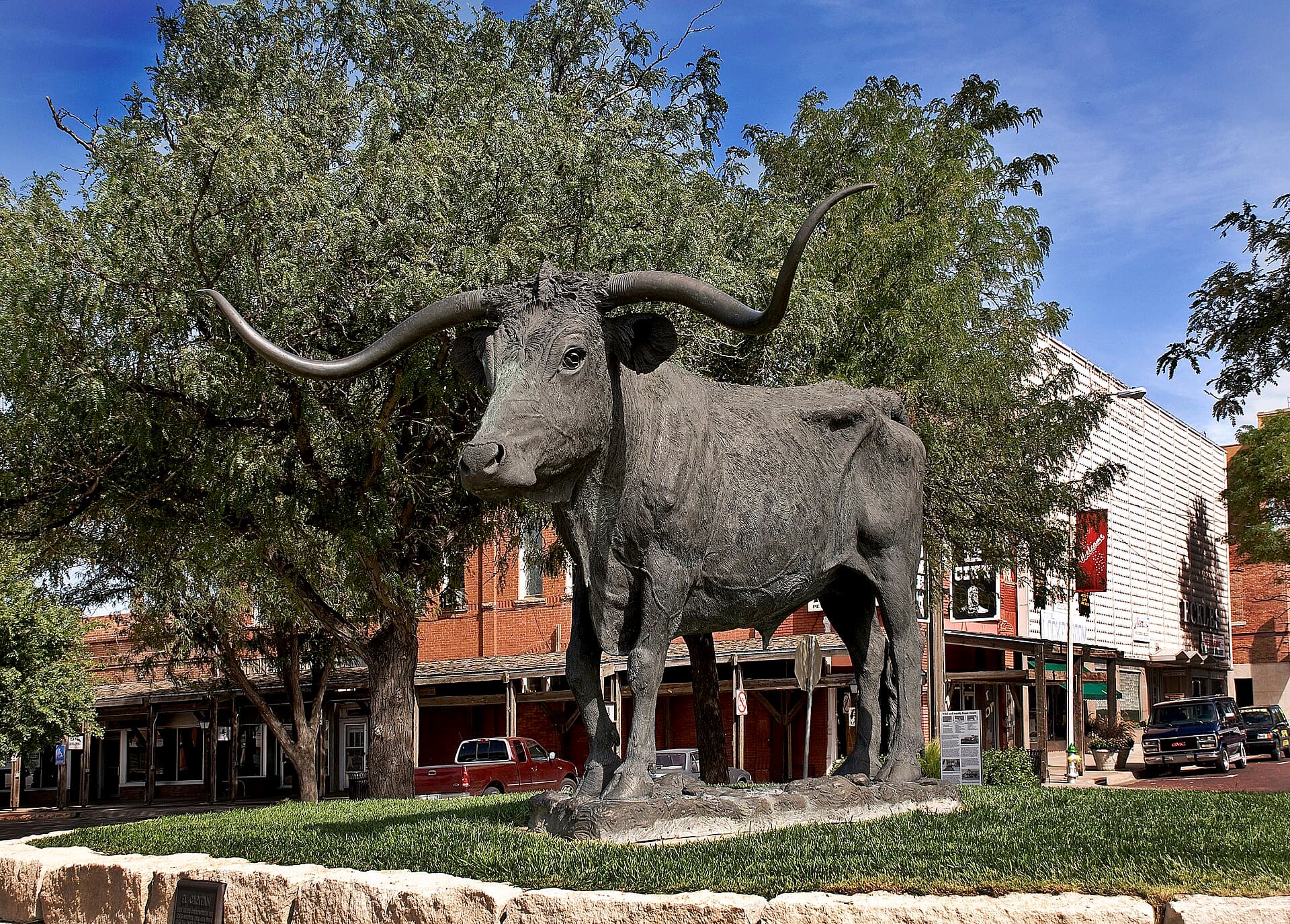
Certifique-se de observar a estátua El Capitan, um longhorn de bronze em tamanho real que comemora as comitivas de gado que definiram a cidade. Para aqueles interessados no patrimônio natural da região, o Wright Park Zoo oferece uma oportunidade de observar a vida selvagem regional e exótica.
A época ideal para visitar Dodge City para atividades ao ar livre em clima quente vai do final de maio até o final de setembro. Durante esses meses, as temperaturas médias máximas podem chegar aos 90 Fahrenheit em julho, com clima quente e ensolarado predominante. Junho geralmente experimenta a maior quantidade de chuva, enquanto julho frequentemente traz os dias mais úmidos. Para temperaturas mais amenas e menor umidade, o final da primavera (abril a maio) e o início do outono (meados de setembro a outubro) são excelentes escolhas. Esses períodos oferecem condições confortáveis para explorar atrações ao ar livre e participar de eventos locais. Dodge City Days, um importante festival comunitário que celebra a herança ocidental, ocorre no final de julho a início de agosto, atraindo multidões consideráveis.
Dodge City é facilmente acessível de carro, com as Rotas U.S. 50, 56 e 283 convergindo na cidade. A Amtrak também oferece serviço de trem diretamente para o centro da cidade. Embora o transporte público dentro da cidade seja limitado, a maioria das atrações é facilmente acessível de carro, e o estacionamento geralmente está disponível. Muitos visitantes acham um passeio autoguiado pelo distrito histórico agradável, especialmente com os medalhões da Dodge City Trail of Fame marcando pontos de interesse. A cidade oferece uma variedade de acomodações, de motéis econômicos a opções de gama média. É aconselhável reservar com antecedência, especialmente durante eventos populares como Dodge City Days, quando a demanda e os preços podem disparar. Para consultas gerais ou folhetos, o Dodge City Convention and Visitors Bureau é um recurso útil. O fuso horário local é Central Standard Time (CST) ou Central Daylight Time (CDT) durante o horário de verão.
Para informações locais, o site da Cidade de Dodge City oferece respostas a perguntas frequentes sobre licenças, serviços municipais e informações de contato para vários departamentos. Em caso de emergência, disque 911. Para denúncias de crimes não emergenciais, entre em contato com o Ford County Communications Center.
Dodge City — coreano, chinês, hebraico e mais 29 idiomas, cada parada narrada por uma voz nativa. A maior variedade de idiomas entre os passeios de áudio autoguiados.
Disponível em: