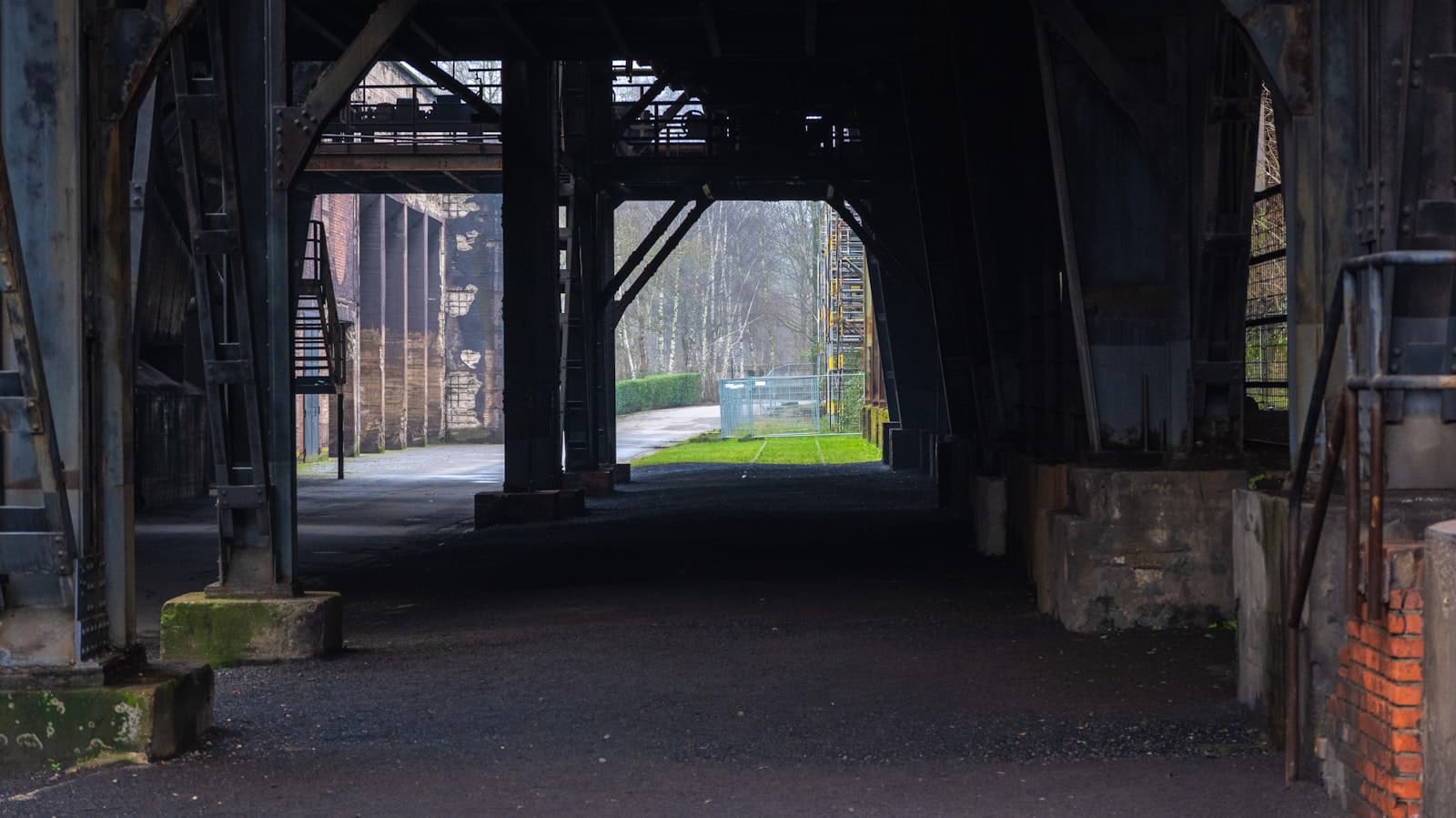
You can ascend a blast furnace here, but that's not the only surprising activity this former industrial site offers.
Tuxyso / CC BY-SA 3.0, via Wikimedia CommonsDuisburg
Self-guided audio walking tour of Duisburg — GPS route, offline playback, story-driven narration in 32 languages.
“Where industrial might meets artistic light.”
Duisburg, as no one tells it.
Not the postcards. The stories even locals don't know — whispered in your ear, right where they happened.
Venice is celebrated for its canals and bridges, but a German city often overlooked actually possesses more.
Beyond its varied animal collection, this zoo holds a surprising European distinction.
Discover every secret of Duisburg
Every address, every reveal in full — in your ear, right where it happened.
You pick your stops. You walk. The voice reveals what the others miss.


How long do you have in Duisburg?
No tours available yet. Check back soon — we're preparing them.
The story of Duisburg
Duisburg, a city in western Germany, converges at the Rhine and Ruhr rivers, a pivotal location that has forged its identity as a primary center for trade, industry, and transportation. With a population of around half a million, it stands as one of the largest cities in the Ruhr area and forms part of the Rhine-Ruhr metropolitan region. Though historically recognized for its industrial strength, particularly in steel production and its role as the world's largest inland port, Duisburg has undergone significant transformation.
Today, Duisburg is a city that embraces its industrial heritage while cultivating a lively cultural scene and verdant spaces. The city functions as a crucial hub for the steel, chemical, and logistics industries, and has become an important terminus for freight trains on the Chongqing–Xinjiang–Europe railway, connecting it to China. This fusion of past and present offers a singular experience for visitors, where repurposed industrial sites stand alongside modern developments, creating a dynamic urban landscape.
From Roman Settlement to Hanseatic Power
Duisburg's origins trace back to a Frankish settlement, with continuous habitation in its core area dating from the 1st century, initially Roman and later Frankish. It was first documented in 883 as "Diusburh" when Norman raiders captured the settlement. By the 8th century, a Frankish-Carolingian royal estate had been established, evolving into a palatinate. The city was granted a royal charter as a free imperial city in 1129 and became a member of the Hanseatic League. However, around 1000 AD, the Rhine River shifted westward, causing the silting of its old port and leading to a decline in Duisburg's importance as a trading town, transforming it into a predominantly agrarian settlement.
Industrial Revolution and Wartime Impact
Duisburg regained significance with the rise of heavy industry in the 19th century. The expansion of coal mining, ironworks, and steel production transformed it into a key industrial center during the Industrial Revolution. Major companies like Thyssen and Krupp influenced the city's development. The construction of the sulfuric acid factory Fr. W. Guilini in 1824 and Franz Haniel's dockyard for steamships in 1828 further contributed to its economic growth. By the 1840s, Duisburg's connection to the expanding railway network and the Ruhr River enabled it to participate in the growing coal trade, and its port became the second-largest Rhine port after Ruhrort.
During World War II, Duisburg, a major logistical center and home to vital industries, became a primary target for Allied bombers. Extensive bombing raids, particularly in June 1941 and May 1943, almost completely destroyed the historic cityscape, with 80% of residential buildings damaged or destroyed. Most historic landmarks were lost, and the city had to be largely rebuilt.
Post-Industrial Transformation
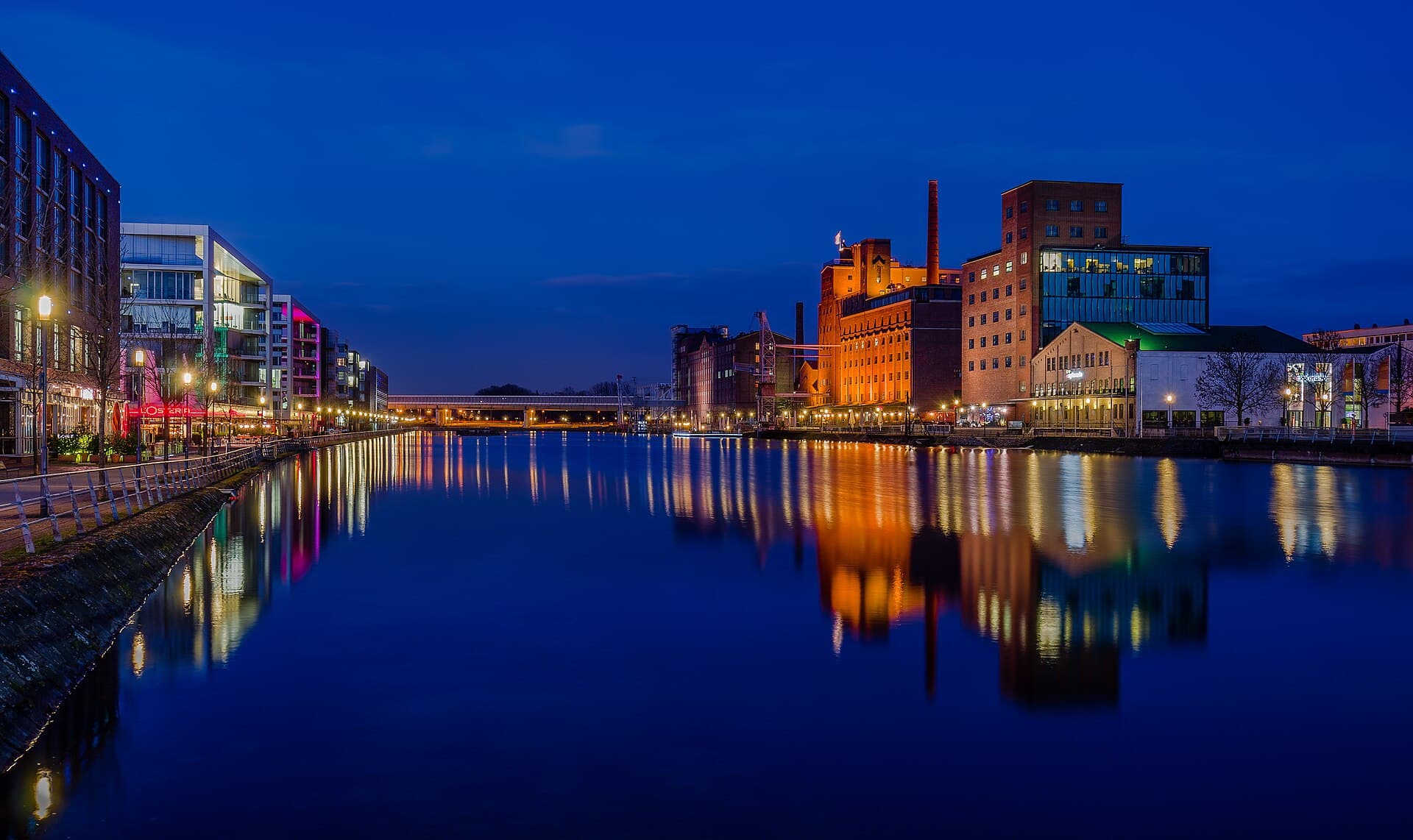
Following the war, Duisburg faced the decline of its steel and mining industries starting in the mid-1960s, leading to a significant population loss. However, the city embarked on a path of structural change and urban regeneration. Former industrial sites have been repurposed, with blast furnaces becoming viewpoints and warehouses transforming into museums and restaurants. The Inner Harbour, once an industrial port, is now a lively waterfront district with modern architecture alongside historic warehouses. Duisburg also serves as a key terminus for freight trains on the Chongqing–Xinjiang–Europe railway, highlighting its continued importance in global logistics.
Duisburg offers a compelling blend of industrial heritage and modern reinvention. A primary destination is the Landschaftspark Duisburg-Nord, a former ironworks transformed into a distinctive urban park. Here, you can explore old industrial buildings, ascend blast furnaces for expansive views, and even go diving in a former gasometer. At night, the park is illuminated with colorful light installations.
The Inner Harbour (Innenhafen) is another testament to the city's regeneration, where old warehouses now house bistros, restaurants, and cultural sites alongside contemporary architecture. Within the Inner Harbour, the Küppersmühle Museum (MKM), housed in a converted grain mill, showcases modern and contemporary art.
For a truly singular experience, visit Tiger & Turtle – Magic Mountain, a walkable sculpture resembling a roller coaster that offers panoramic views of the city and the Rhine, especially striking at sunset or when illuminated at night. The Lehmbruck Museum, dedicated to the sculptor Wilhelm Lehmbruck, features an impressive collection of sculptures, with many integrated into the surrounding park. For nature and recreation, the Six Lakes Plateau (Sechs-Seen-Platte) provides opportunities for water sports, hiking, and relaxation.
Duisburg experiences a temperate maritime climate with mild winters and warm, comfortable summers. The best time to visit for warm-weather activities and outdoor exploration is from late spring to early autumn, specifically from mid-May to mid-September. July and August are the warmest months, with average daily highs around 23-24°C (73-75°F), making them ideal for enjoying riverside life and festivals. While summer is popular, expect more crowds. Precipitation is fairly even throughout the year, so an umbrella is a useful item to pack.
Duisburg is well-connected and easy to navigate. Düsseldorf Airport (DUS) is the closest major airport, just 20 minutes away by public transportation. The city's main train station, Duisburg Hauptbahnhof, is a central hub with frequent connections to other German cities and the wider Rhine-Ruhr region.
Within Duisburg, public transportation is efficient, with an extensive network of buses, trams, and light rail services operated by Duisburger Verkehrsgesellschaft AG (DVG). The U79 tram line directly connects Duisburg with Düsseldorf. While driving is an option with well-developed roads and parking facilities, traffic congestion can occur during peak hours. Taxis are available, though fares are typical for Germany. For shorter distances and central areas, walking and cycling are practical, with dedicated paths available.
- What is Duisburg most known for?
- Duisburg is most known for having the world's largest inland port and its significant role in Germany's steel industry.
- Is Duisburg a good city to visit?
- Yes, Duisburg is a worthwhile city to visit, offering a distinctive blend of industrial heritage, modern cultural attractions, and green spaces.
- What can you do in Duisburg for free?
- Many of Duisburg's attractions are free, including exploring the expansive Landschaftspark Duisburg-Nord, walking on the Tiger & Turtle – Magic Mountain sculpture, and strolling along the Inner Harbour.
- Is Duisburg safe at night?
- Duisburg is generally considered a fairly safe city, with many people feeling comfortable at night. However, like any metropolitan area, it's always advisable to remain vigilant, especially when walking alone.
- What language is spoken in Duisburg?
- The official language spoken in Duisburg is German. The city is also notably diverse, with around 200 languages spoken by its inhabitants.
- How many days should I spend in Duisburg?
- To experience Duisburg's main attractions, including its industrial heritage sites, cultural venues, and waterfront areas, a city trip of one to three days is generally recommended.