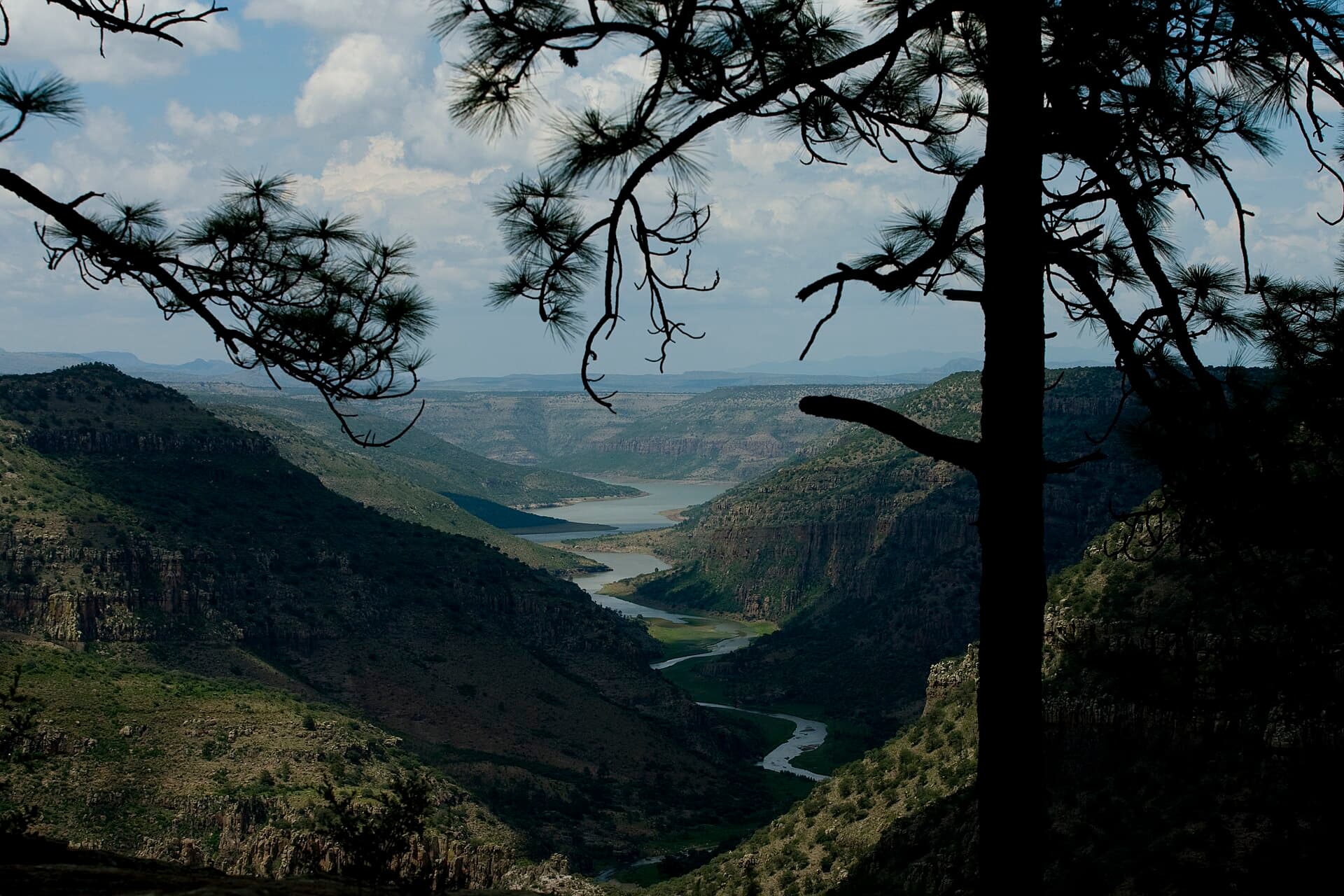
Durango, MexicoComisión Mexicana de Filmaciones from México D. F., México / CC BY-SA 2.0, via Wikimedia Commons
MX

Durango

Where colonial grandeur meets the untamed spirit of the Old West.

The secrets of Durango

Durango, as no one tells it.

Not the postcards. The stories even locals don't know — whispered in your ear, right where they happened.

3 secrets below. Many more wait inside the tour.
Paseo Túnel de Minería (Mining Tunnel Walk)

Beneath the city streets lies a network of tunnels, rumored to have served a scandalous purpose for Durango's elite.

Full story unlocks in the tour
A lost mine near Bear Creek

A prospector once stumbled upon a gold mine filled with riches, and a grim discovery, only for its location to become a haunting secret.

Full story unlocks in the tour
Durango's nickname, 'Hollywood de México'

Durango earned its cinematic moniker not just for its scenic backdrops, but also for a surprising connection to a legendary American actor.

Full story unlocks in the tour
The full tour

Discover every secret of Durango

Every address, every reveal in full — in your ear, right where it happened.

Get the key to Durango

You pick your stops. You walk. The voice reveals what the others miss.

Choose your time

How long do you have in Durango?

No tours available yet. Check back soon — we're preparing them.

About Durango

The story of Durango

Durango, officially Victoria de Durango, is the capital of the Mexican state of Durango, situated in the north-central part of the country. This city, often called the 'Pearl of the Guadiana,' offers a unique blend of colonial architecture, untamed natural beauty, and a modern identity shaped by its mining past and a thriving film industry. Durango sits at an elevation of approximately 6,200 feet (1,900 meters) in a fertile valley of the Sierra Madre Occidental, providing a temperate, semi-arid climate that distinguishes it from Mexico's hotter tropical regions.

The city's well-preserved historic center showcases centuries of history, from indigenous roots to Spanish influences, with colonial churches and restored haciendas. Beyond its historical charm, Durango is also recognized as 'Hollywood de México' due to its role as a filming location for numerous Westerns and other productions. This combination of history, culture, and cinematic tradition makes Durango a compelling destination for travelers seeking an authentic Mexican experience.

History

From Indigenous Lands to Colonial Powerhouse

The region where Durango now stands has a history predating the Spanish arrival by centuries. Indigenous groups such as the Huichols, Coras, Tepehuanos, and Tarahumaras established complex societies in the rugged terrain. These sedentary communities faced hostility from nomadic tribes, particularly the Chichimecas, who dominated the eastern edge of the state.

Spanish interest in the area was rekindled after the discovery of silver and other metals in Zacatecas in 1546. Captain Francisco de Ibarra led an expedition into the area in 1554, and on July 8, 1563, he officially founded the settlement of Villa de Durango, naming it after his home province in Spain. The city quickly became the capital of the vast province of Nueva Vizcaya, a significant administrative and military center for the Spanish Empire in northern Mexico. Its strategic location made it a crucial launching point for further exploration and colonization into what is now the American Southwest.

Durango's development was closely tied to its mineral deposits, particularly silver. Although initial hopes for mythical silver deposits were exaggerated, the region proved abundant in precious metals, and mining operations date back to the colonial period. The city was granted city status by King Philip IV of Spain in 1621. Throughout the colonial era, indigenous revolts, notably among the Tepehuanos and Tarahumara tribes, challenged Spanish economic efforts.

Independence and Modern Era

Durango played a role in Mexico's fight for independence from Spain. While early pro-rebellion efforts were suppressed, the city eventually rallied support for independence, signing the Plan of Iguala in 1821. In 1825, Durango was officially recognized as a Mexican state and drafted its own constitution. The city was renamed Victoria de Durango in honor of Guadalupe Victoria, Mexico's first president and a native of the region.

The 19th century saw Durango integrated into Mexico's railway and telegraph network, stimulating economic development and trade. The state and city were also significant during the Mexican Revolution (1910-1917), with revolutionary leaders like Francisco 'Pancho' Villa operating in the area. In recent decades, Durango has diversified its economy beyond mining to include services and manufacturing, with industries like clothing, wood products, auto parts, and electronics. The city has also cultivated a new identity as a major hub for the film industry, earning it the nickname 'Hollywood de México' due to its diverse landscapes and cost-effective filming opportunities.

What to see

Durango offers a range of attractions, blending history, culture, and outdoor adventure. The Durango Cathedral (Catedral Basílica Menor) dominates the city square with its Baroque architecture, twin towers, and intricate stonework, featuring gilded interior walls and stained glass windows. The Museo Francisco Villa, located in what was once Pancho Villa's residence, provides insight into the life of the renowned revolutionary. For a glimpse into the city's cinematic past, visit the Old West Movie Sets-Chupaderos, where numerous Westerns, including The Magnificent Seven, were filmed. Here, you can experience wooden saloons, dirt streets, and staged shootouts.

For those interested in the city's subterranean history, the Paseo Túnel de Minería (Mining Tunnel Walk) reveals Durango's mining heritage. Art enthusiasts can explore the Benigno Montoya Funerary Art at a historic cemetery, which functions as an open-air museum showcasing unique tombs sculpted by a single artist. The Durango Walk of Fame features sculptures of actors who starred in the many cowboy movies shot in the city. Beyond the city, Parque Mexiquillo offers zip-lining, waterfalls, volcanic rock fields, and hiking trails, while off-road desert tours provide an adventurous way to explore Durango's wilder side.

When to visit

Durango's climate is temperate and semi-arid, making it comfortable for travel year-round without extreme heat. The warmest months are May and June, with daytime temperatures reaching around 29–30°C (84–86°F), ideal for those who prefer warmth without high humidity. The main rainy season occurs from June to October, with July, August, and September being the wettest months, bringing refreshing rains and average temperatures around 20°C (68°F). Winters are mild and sunny, with daytime temperatures around 20°C (68°F), though nights can be cold, dropping to 3–5°C (37–41°F). Significant daily temperature fluctuations are common, so layered clothing is recommended.

Practical

The official currency in Durango, and throughout Mexico, is the Mexican Peso (MXN), symbolized by '$'. While US dollars might be accepted in some tourist areas, using pesos generally ensures better value. It's advisable to exchange money at banks or withdraw pesos from ATMs upon arrival for the best rates.

Durango International Airport (DGO), officially Aeropuerto Internacional General Guadalupe Victoria, handles national and international air traffic for the region. Major airlines operating from DGO include Aeromexico, American Airlines, Viva, and Volaris.

Regarding safety, Durango City is considered moderately safe, with a relatively stable crime situation compared to other parts of Mexico. Property crimes like petty theft are the most frequently reported incidents, while violent crime rates targeting tourists are statistically low. It's recommended to use authorized taxi services or ride-sharing apps after dark and to keep valuables concealed. The U.S. Department of State advises increased caution in the state of Durango due to a risk of violence from criminal organizations, particularly in western and southern Durango, and restricts U.S. government employees from traveling west or south of Federal Highway 45.

Good to know
What is the currency in Durango, Mexico?
The official currency in Durango, Mexico, is the Mexican Peso (MXN), symbolized by '$'.
What is the airport code for Durango, Mexico?
The IATA airport code for Durango International Airport is DGO.
Is Durango, Mexico safe for tourists?
Durango City is considered moderately safe for tourists, with low rates of violent crime against visitors. Petty theft is the most common crime, so it's advisable to take standard precautions like keeping valuables secure and using official transportation.
What is the best time of year to visit Durango, Mexico?
The best time to visit Durango for warm weather and less rain is from January through June and October through December. May and June are the warmest months, while July through September see the most rainfall.
What is Durango, Mexico known for?
Durango is known for its colonial architecture, its history as a mining center, and its role as 'Hollywood de México' due to the numerous Western films shot there.
Who are some famous people from Durango, Mexico?
Notable figures from Durango include actors Ramon Novarro and Dolores del Río, and revolutionary leader Francisco 'Pancho' Villa.
Durango
From€9.00
No booking · activate anytime · 12h to walk it
Get the key to Durango
Durango: the city, lit one façade at a time · Lume