Plaza de España
Beneath the central square, a Roman marvel reveals Écija's ancient engineering.
Full story unlocks in the tour
 Рустам Абдрахимов / CC BY 3.0, via Wikimedia Commons
Self-guided audio walking tour of Écija — GPS route, offline playback, story-driven narration in 32 languages.
“Écija: Where Baroque towers touch the Andalusian sky, and Roman echoes lie beneath your feet.”
Not the postcards. The stories even locals don't know — whispered in your ear, right where they happened.
Beneath the central square, a Roman marvel reveals Écija's ancient engineering.
Among the Roman artifacts, a rare sculpture tells a story of an Amazonian warrior, with a surprising detail.
This Baroque palace holds a record-breaking architectural feature that stretches across its façade.
Discover every secret of Écija
Every address, every reveal in full — in your ear, right where it happened.
You pick your stops. You walk. The voice reveals what the others miss.

Lume has a built-in augmented-reality guide. Hold your phone up and its camera shows the street ahead of you, with a glowing arrow laid over the real view that always points to your next stop — no map to puzzle over, no wrong turns. Like everything in Lume, it works fully offline.
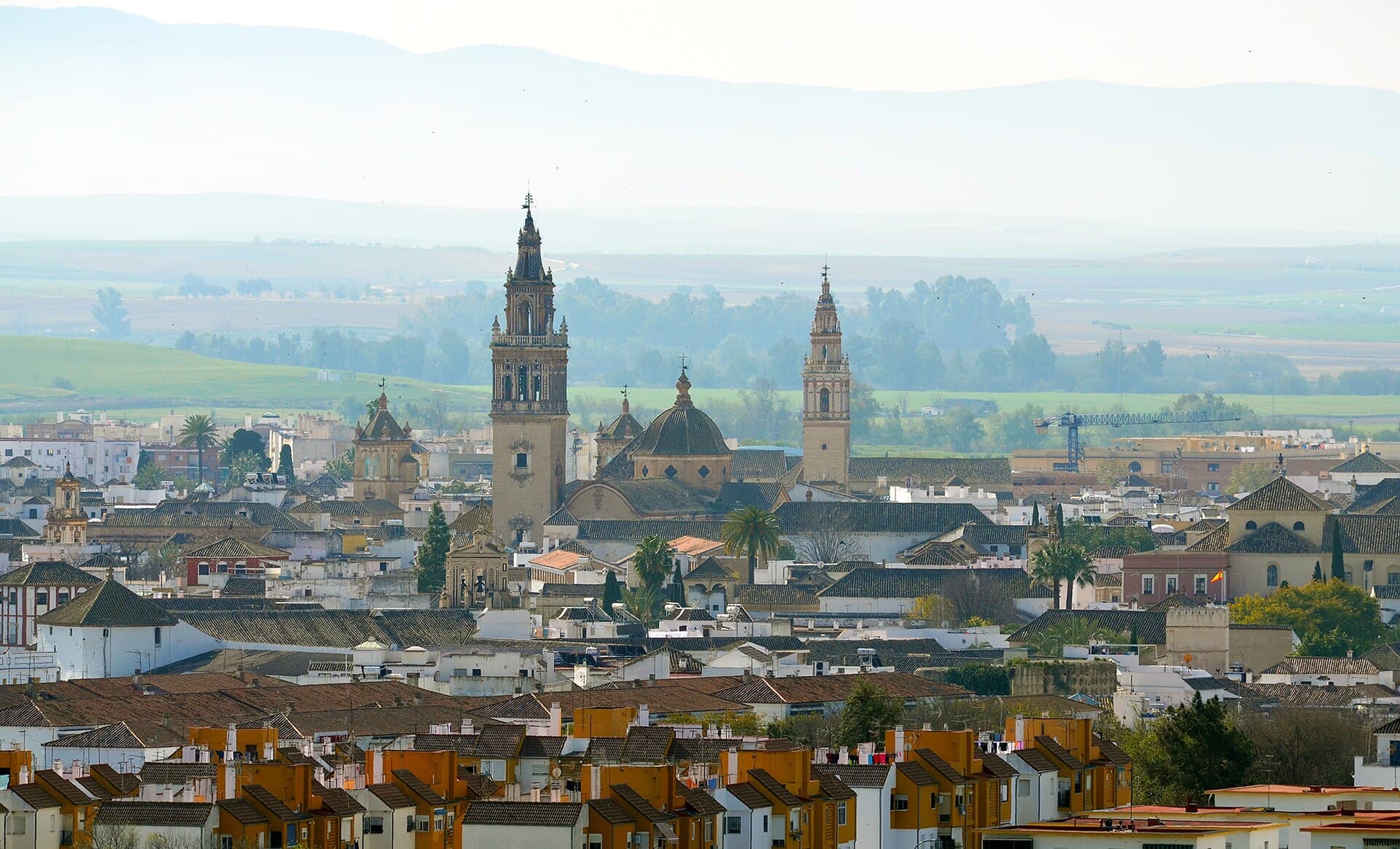
Écija, often called the 'City of Towers' or the 'Frying Pan of Andalusia,' is a city in the province of Seville that offers a journey through millennia of history. Its skyline is punctuated by eleven ornate Baroque church bell towers, a testament to a prosperous 17th and 18th century. Situated roughly halfway between Seville and Córdoba, Écija presents a less-trodden path for those seeking an authentic Andalusian experience, rich in architectural heritage and Roman echoes.
Designated a Historic-Artistic Site in 1966, Écija's streets unfold a narrative of Roman foundations, Moorish influences, and a Baroque 'Golden Age.' Beyond its impressive monuments, the city's appeal lies in its quiet pace, inviting visitors to wander through its historic center and discover archaeological remains integrated into the urban fabric. From grand palaces to ancient Roman engineering beneath bustling squares, Écija offers a captivating blend of past and present.
Écija's story begins with ancient Iberian settlements dating back to the 8th century BC. Under Roman rule, it flourished as Astigi, a significant city in the province of Hispania Baetica. It supported Julius Caesar during the Battle of Munda in 45 BC, and as a reward, was refounded as a Julian colony, possibly named Colonia Iulia Firma Astigitana. Astigi became a vital hub for olive oil production and export throughout the Roman Empire, utilizing the Genil and Guadalquivir rivers.
Following the Romans, Écija was successively ruled by Suevs and Visigoths. In 711 AD, an Islamic army conquered Écija, which became known as Istiǧǧa. During the Muslim era, it served as a provincial capital and a crucial agricultural center, supplying food to Córdoba and Seville. The city walls were rebuilt by the Almohads after an earlier demolition.
In 1240, King Fernando III of Castile reconquered Écija, and it became a border town with the Nasrid Kingdom of Granada. This period saw the settlement of Castilian families and the development of large landowning properties. Écija was granted city status in 1402. The 17th and 18th centuries marked Écija's 'Golden Age,' characterized by economic prosperity from agriculture, trade, and horse breeding, which funded an ambitious building program. This era left an enduring legacy of Baroque churches, palaces, and stately homes that define the city's architectural character today.
Écija's skyline is dominated by its eleven Baroque church towers, each with distinct designs and colorful ceramic details. Key examples include the Torre de San Juan, Torre de Santa Bárbara, and Torre de los Jerónimos. The Plaza de España, also known as El Salón, is the city's main square, rebuilt after the 1755 earthquake and flanked by the 18th-century town hall and the Church of Santa María. Beneath this square, you can explore a Roman reservoir, a testament to Écija's ancient past.
The city is home to numerous palaces, many dating from its Baroque 'Golden Age.' The Palacio de Peñaflor is a highlight, known for its curved façade adorned with frescoes and Andalusia's longest balcony. The Palacio de Benamejí, an 18th-century Baroque masterpiece, now houses the Écija Municipal History Museum, where you can see Roman mosaics and the rare 'Amazona Herida' sculpture. Other notable palaces include the Palacio de Valderhermoso, with its Plateresque façade, and the Santaella Palace. For a unique experience, visit one of Écija's stud farms to learn about the breeding of Spanish purebred horses.
Écija can be visited year-round, but spring (March to May) and autumn (September to November) offer the most pleasant weather for exploring on foot. During these seasons, temperatures are comfortable, ranging from 18°C to 28°C (64°F to 82°F). Summers, from June to September, are extremely hot, with July and August regularly reaching highs of 37°C (99°F) or even 45°C (113°F). If visiting in summer, plan sightseeing for mornings and evenings, utilizing shaded squares during the hottest parts of the day. Winters are typically mild and quieter, making them a good option for avoiding crowds.
Écija is located in the province of Seville, about 85-88 kilometers east of Seville and 50 kilometers from Córdoba, making it an easy day trip from either city. It is accessible via the A-4 motorway. While public transport is available, having a car offers more flexibility for exploring the surrounding area. Once in the city center, Écija is walkable. Parking is available around the perimeter of the old town. The Écija Tourist Office provides free maps and information on monuments and guided tours, including options focused on archaeology, Baroque architecture, and local legends.
Many churches are open for a few hours in the morning and again in the early evening. It's advisable to book tickets online in advance for guided visits to avoid issues. Audio guides may be in Spanish only, so a translation app could be useful. Remember to stay hydrated, especially during the hot summer months.
Écija in Korean, in Chinese or in Hebrew — and 29 more languages, every stop narrated by a native voice. The widest language range of any self-guided audio tour.
Available in: