Edinburgh Castle
Beyond its formidable walls and royal chambers, the castle once housed a rather unexpected resident.
Full story unlocks in the tour
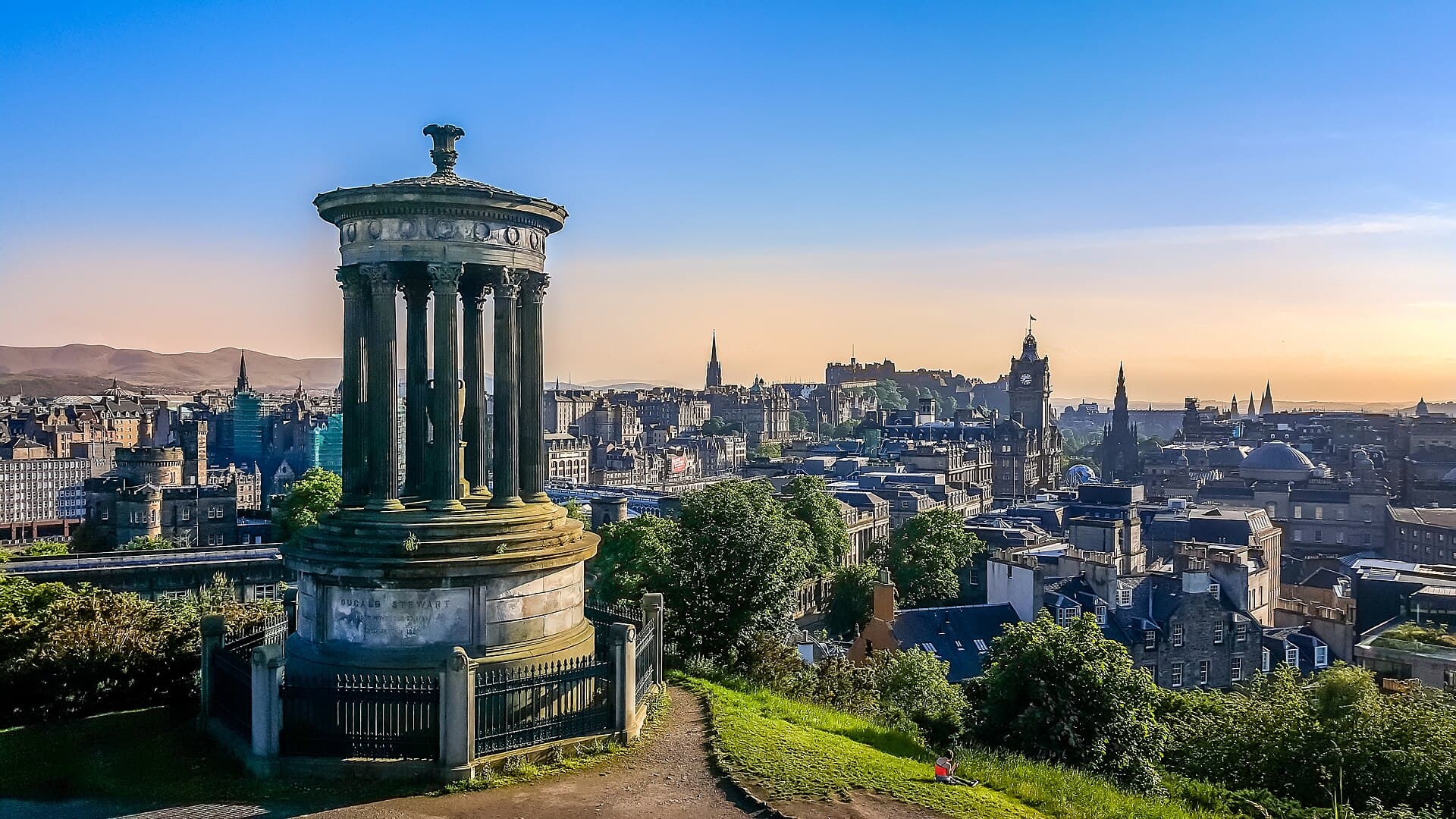 Andrew Colin / CC BY 2.0, via Wikimedia Commons
“Where ancient history breathes through cobbled closes and modern tales unfold in every shadow.”
Not the postcards. The stories even locals don't know — whispered in your ear, right where they happened.
Beyond its formidable walls and royal chambers, the castle once housed a rather unexpected resident.
This prominent clock tower, a landmark on Edinburgh's skyline, has a peculiar habit that has served travelers for over a century.
Despite its evocative name, this historic thoroughfare connecting Edinburgh Castle to Holyrood Palace isn't quite what it seems in terms of length.
Discover every secret of Edinburgh
Every address, every reveal in full — in your ear, right where it happened.
You pick your stops. You walk. The voice reveals what the others miss.
No tours available yet. Check back soon — we're preparing them.
Edinburgh, Scotland's capital since the 15th century, is a city sculpted by dramatic geological formations. Its Old Town rises from a volcanic crag, while the New Town fans out below, creating a distinct character that has earned it the nickname "Athens of the North." The city's layered past is palpable, from the medieval closes and towering tenements of the Old Town to the elegant Georgian architecture of the New Town, both designated UNESCO World Heritage Sites.
Beyond its historic structures, Edinburgh is a city of narratives and intellectual heritage. It stood as a major center of the Scottish Enlightenment in the 18th century, home to thinkers like David Hume and Adam Smith. Today, its enduring literary tradition continues, recognized by UNESCO as the first City of Literature in 2004. With over 112 parks and nearly half a million trees, Edinburgh provides more green space per person than any other UK city, offering tranquil escapes amidst its urban landscape.
The story of Edinburgh begins long before it became Scotland's capital. The city's site, particularly Castle Rock, has shown continuous habitation since at least 850 BC, valued for its naturally defensible position. The name "Edinburgh" itself is thought to derive from "Din Eidyn," or "Fort of Eidyn," a Gododdin hillfort, predating the 7th-century King Edwin of Northumbria, to whom its origin is sometimes mistakenly attributed.
Edinburgh officially became the capital of Scotland in 1437, replacing Scone. This shift occurred after King James I's assassination in Perth, prompting the royal court to relocate to Edinburgh for the strategic advantages of its fortified castle. The city's Old Town developed organically around the Royal Mile, a central artery connecting Edinburgh Castle to the Palace of Holyroodhouse. The intense demand for space within the Old Town's limited 140 acres led to a unique architectural solution: buildings expanded skyward, resulting in the characteristic 6-, 10-, and even 12-story tenements that still stand today. This vertical expansion, particularly prominent in the 16th and 17th centuries, gave the Old Town its distinctive herringbone pattern of narrow passageways, known as 'closes,' which often received little light.
The 18th century marked a period of profound intellectual and scientific advancement for Edinburgh, as it became a leading center of the Scottish Enlightenment. This era saw a flourishing of philosophy, economics, and literature, drawing renowned figures to the city. The University of Edinburgh, one of the oldest in the English-speaking world, played a crucial role in this intellectual ferment. The city's expansion continued with the planned development of the New Town, beginning in the mid-18th century, which introduced elegant Georgian squares and broad avenues, a stark contrast to the medieval Old Town. Both the Old and New Towns were collectively designated a UNESCO World Heritage Site in 1995, recognizing their outstanding universal value.
Begin your exploration at Edinburgh Castle, a historic fortress crowning an extinct volcano, offering wide views and housing Scotland's Crown Jewels. Descend the Royal Mile, a lively thoroughfare that connects the castle to the Palace of Holyroodhouse, lined with historic buildings, shops, and closes. Take time to wander into these narrow alleys to discover secluded courtyards and centuries of untold stories. A notable stop along the Royal Mile is St Giles' Cathedral, also known as the High Kirk of Edinburgh. This historic church, founded in 1124, features a distinctive crown spire and the ornate Thistle Chapel, the private chapel for the Order of the Thistle.
For a different perspective, climb Arthur's Seat, another extinct volcano, for expansive views across the city and beyond. Explore the elegant Georgian architecture of the New Town, with its spacious squares and gardens. Do not miss the National Museum of Scotland for a journey through Scottish history and natural wonders. For a quirky experience, visit the Camera Obscura and World of Illusions near the castle, offering optical illusions and a unique view of the city. Finally, a stroll through the picturesque Dean Village, a tranquil oasis with its charming riverside path along the Water of Leith, provides a peaceful escape.
Edinburgh is a year-round destination, each season offering a distinct experience. For warm weather activities and lively festivals, visit between early July and late August. August is particularly animated, hosting the world-renowned Edinburgh Fringe Festival and other major events. Spring (March to May) brings milder weather, cherry blossoms, and fewer crowds, ideal for sightseeing at a relaxed pace. Autumn (September to November) offers crisp air, golden foliage, and a moody, gothic atmosphere, perfect for ghost tours and cozy pubs. While winters are cold, they are relatively mild, with average daily minimum temperatures remaining above freezing. December is magical with Christmas markets and Hogmanay (New Year) celebrations.
Edinburgh is a safe city with a low crime rate, generally considered a low-risk destination for travelers. However, like any busy city, petty crimes like pickpocketing can occur, especially in crowded tourist areas such as the Royal Mile or during festival season. It's advisable to be aware of your surroundings and keep belongings secure. When walking at night, stick to well-lit, populated areas. The city's public transport system is efficient, and recognized ride-sharing apps or black cabs are readily available. Remember that traffic drives on the left in the UK. The currency used is the Great British Pound (GBP). Tipping is customary in restaurants (around 10-15% for good service) and for taxi drivers, but less common in pubs. The weather can be changeable, so dressing in layers and carrying an umbrella is always a good idea, regardless of the season.