El Suelo de la Arena
La arena bajo tus pies guarda un sorprendente secreto sobre el espectáculo romano.
La historia completa se desbloquea en el tour
 Carole Raddato / CC BY-SA 2.0, via Wikimedia Commons
Tour de audio autoguiado de Anfiteatro de El Djem — ruta GPS a pie, reproducción offline, narración en 32 idiomas.
“Donde los ecos de los rugidos de los gladiadores aún resuenan en el aire del norte de África.”
No las postales. Las historias que ni los locales conocen — al oído, justo donde ocurrieron.
La arena bajo tus pies guarda un sorprendente secreto sobre el espectáculo romano.
La impresionante altura de los muros del Anfiteatro de El Djem cuenta una historia de ambición ingenieril romana que desafió las limitaciones naturales.
Debajo de la arena, un mundo revela los 'efectos especiales' del antiguo entretenimiento romano.
Descubre todos los secretos de Anfiteatro de El Djem
Cada dirección, cada revelación al completo — a tu oído, justo donde ocurrió.
Eliges tus paradas. Caminas. La voz te revela lo que los demás ignoran.
Tu tour de audioguía por Anfiteatro de El Djem te espera — elige tus lugares, tu idioma y empieza al llegar.
ComprarLume incluye una guía de realidad aumentada. Levanta el móvil y su cámara muestra la calle que tienes delante, con una flecha luminosa sobre la imagen real que siempre apunta a tu próxima parada — sin mapas que descifrar, sin giros equivocados. Como todo en Lume, funciona completamente sin conexión.
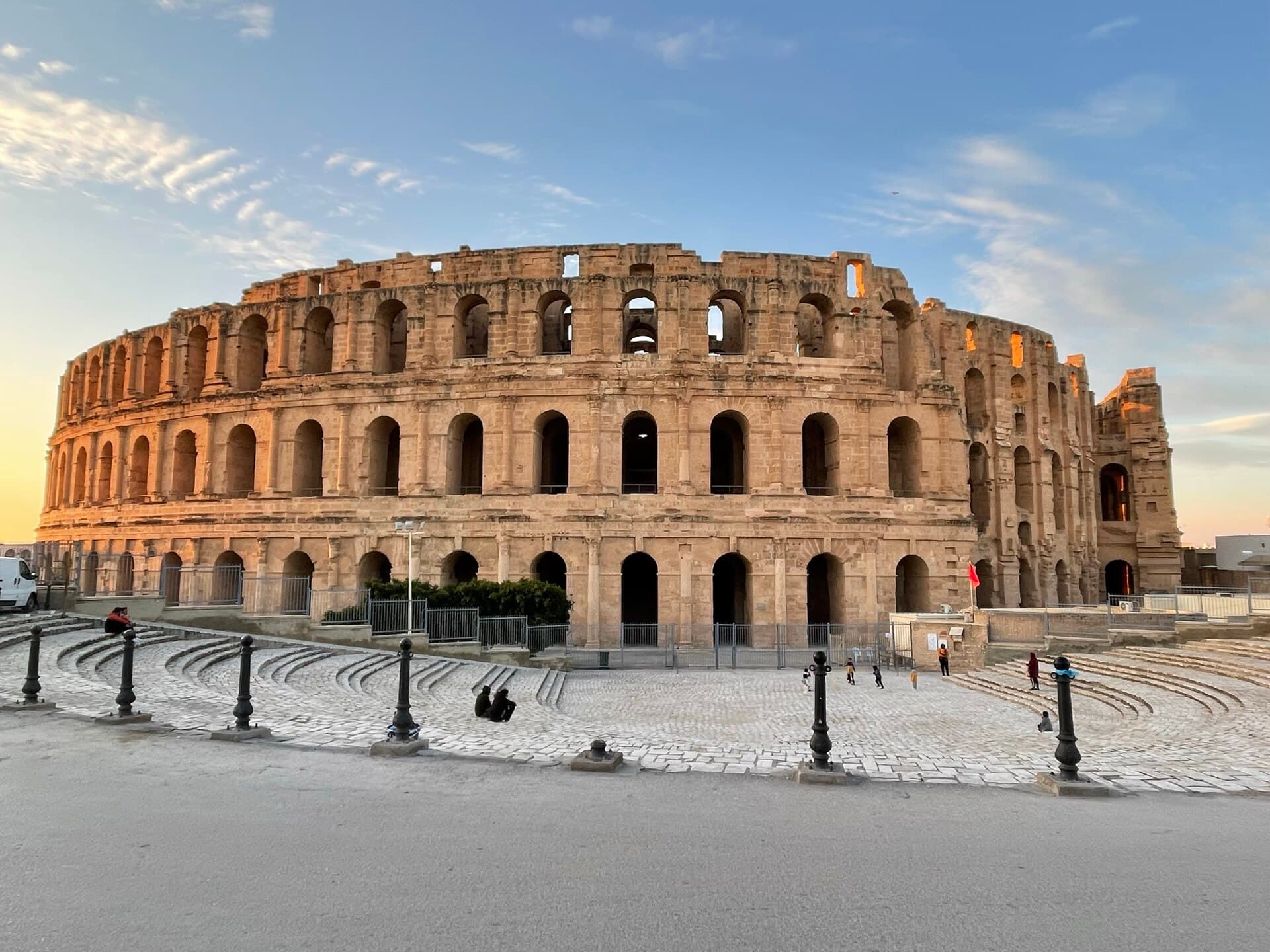
Emergiendo de las llanuras de Túnez central, el Anfiteatro de El Djem se erige como un testimonio monumental de la destreza arquitectónica romana en el norte de África. Esta estructura notablemente conservada, Patrimonio de la Humanidad de la UNESCO desde 1979, a menudo se compara con el Coliseo de Roma, y muchos argumentan que está en incluso mejor estado. Su magnitud es inmediatamente aparente, un edificio elíptico de piedra que una vez albergó a unos 30.000 a 35.000 espectadores.
Conocida en tiempos romanos como Thysdrus, la ciudad floreció como un centro de producción y comercio de aceite de oliva. El anfiteatro, construido alrededor del 238 d.C., fue un símbolo de esta prosperidad y de la propaganda imperial romana, diseñado para grandes espectáculos públicos como los juegos de gladiadores. Hoy en día, ofrece una experiencia inmersiva, permitiendo a los visitantes explorar sus imponentes arcadas, cámaras subterráneas y amplias gradas, proporcionando una conexión tangible con un pasado distante.
La ciudad de Thysdrus, la predecesora romana del moderno El Djem, fue establecida por los romanos en el 46 a.C. sobre un antiguo asentamiento púnico. Las tierras fértiles de la región, particularmente sus abundantes olivares, llevaron a una inmensa prosperidad a través de la producción y el comercio de aceite de oliva. Para el siglo II d.C., Thysdrus se había convertido en un importante centro urbano con una población de 30.000 habitantes, siendo el principal centro de aceite de oliva en el norte de África romana. Esta riqueza impulsó un programa de obras públicas y privadas, siendo el anfiteatro su empresa más ambiciosa.
La construcción del anfiteatro actual, la tercera estructura de este tipo en Thysdrus, comenzó alrededor del 230-238 d.C., durante el reinado del emperador Gordiano. Construido completamente con bloques de piedra y sin cimientos, se erige como un monumento independiente, una notable hazaña de ingeniería para su época. Su diseño, que presenta tres niveles de arcadas en estilo corintio o compuesto, se inspiró en el Coliseo de Roma, aunque no es una réplica exacta. Con un eje mayor de 148 metros y un eje menor de 122 metros, y una altura de 36 metros, fue diseñado para albergar a 35.000 espectadores, lo que lo convierte en el anfiteatro más grande del norte de África y uno de los más grandes del mundo romano.
A pesar de su grandeza, la historia del anfiteatro también está marcada por conflictos y adaptaciones. Sobrevivió a la destrucción de la ciudad en el 238 d.C. y más tarde sirvió como fortaleza durante la Edad Media, ofreciendo refugio a los lugareños durante los ataques de los vándalos en el 430 d.C. y de los árabes en el 647 d.C. Se produjeron daños significativos en el siglo XVII cuando Mohamed Bey El Mouradi, un líder muradita, rompió uno de sus muros para desalojar a los rebeldes. También se extrajeron piedras del anfiteatro para la construcción local, incluida la Gran Mezquita de Kairuán. A pesar de estos desafíos, gran parte de la estructura, incluyendo sus tres pisos, escaleras y galerías, permanece notablemente intacta hoy en día.
El Anfiteatro de El Djem ofrece una amplia oportunidad de exploración. Comience apreciando la fachada exterior de tres niveles, compuesta por 64 arcos superpuestos, notando la precisión de la mampostería en seco. Desde el exterior, el parecido del anfiteatro con el Coliseo es sorprendente, aunque muchos consideran que El Djem está en mejores condiciones.
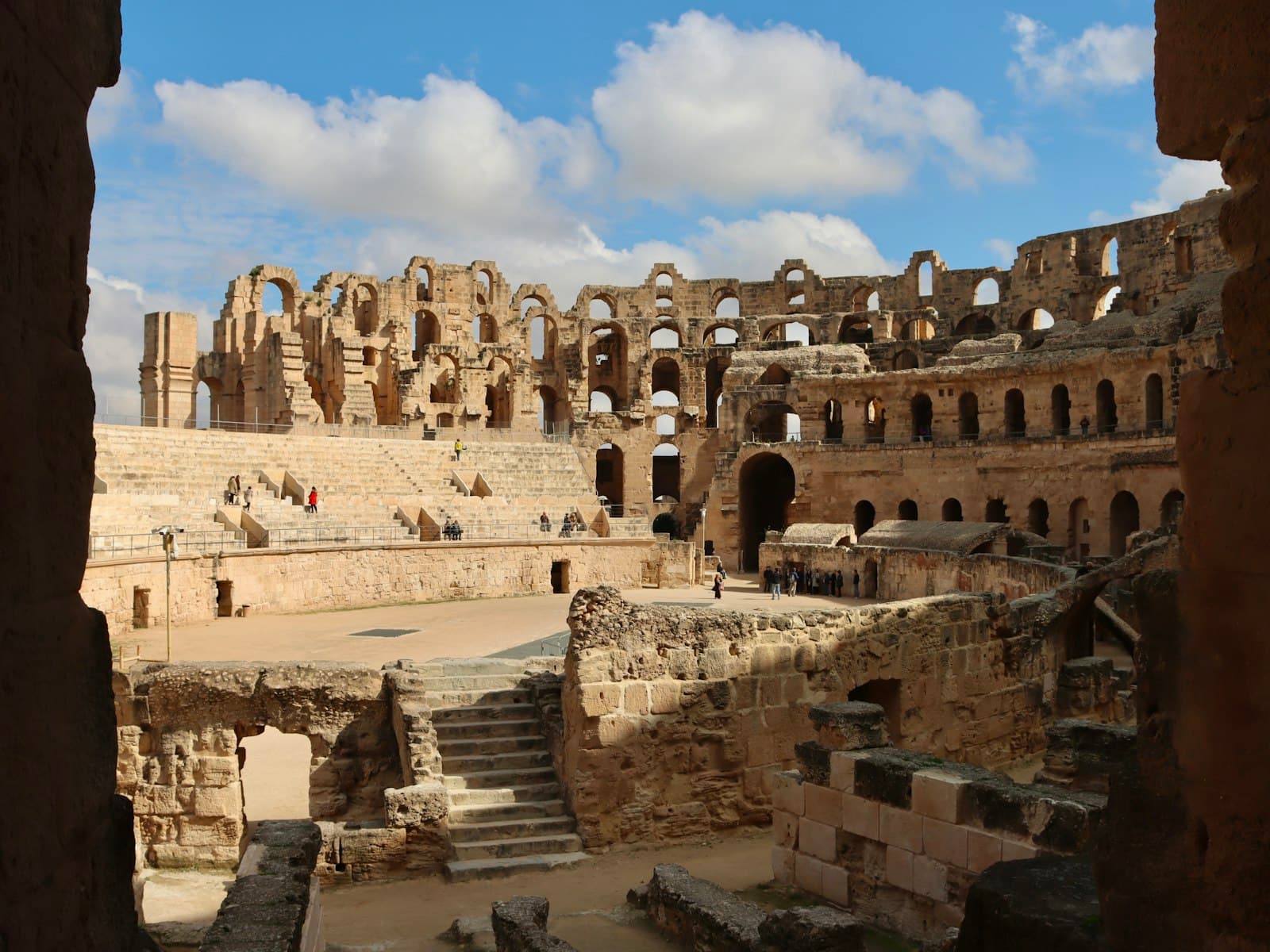
Adéntrese para pasear por la arena, donde las batallas de gladiadores y los espectáculos de fieras cautivaron a miles. Descienda a los pasajes subterráneos notablemente intactos, conocidos como el hipogeo. Aquí, puede recorrer la red de galerías abovedadas, celdas y túneles que una vez albergaron a gladiadores y animales salvajes esperando su turno en el centro de atención. El suelo de la arena aún tiene aberturas que revelan cómo se subían y bajaban los animales.
Ascienda por las enormes gradas para disfrutar de vistas panorámicas de la arena y de la moderna ciudad de El Djem, que desde esta altura parece una colección de propiedades residenciales de uno o dos pisos. Una escalera interna conduce a pasillos cubiertos, proporcionando acceso a cada nivel de asientos. Permita al menos 90 minutos a dos horas para explorar completamente el anfiteatro.
A poca distancia del anfiteatro, el Museo Arqueológico de El Djem alberga una colección de mosaicos romanos y artefactos de clase mundial descubiertos en las villas de la antigua Thysdrus. Este museo proporciona un valioso contexto a la monumental estructura.
Los mejores momentos para visitar el Anfiteatro de El Djem son durante las temporadas intermedias de primavera (abril/mayo) y otoño (octubre/principios de noviembre). Estos meses ofrecen temperaturas agradables para explorar el sitio. Si visita durante el verano (julio/agosto), planifique su visita para temprano en la mañana o al final de la tarde para evitar el calor intenso, que puede alcanzar los 35°C o más. Temprano en la mañana o al final de la tarde también proporciona una iluminación óptima para la fotografía. El anfiteatro también alberga el Festival Internacional de Música Sinfónica anual en julio y agosto.
El Anfiteatro de El Djem está abierto todos los días. El horario de verano (del 1 de mayo al 15 de septiembre) suele ser de 7:30 AM a 7:00 PM, mientras que el horario de invierno es de 8:00 AM a 5:30 PM. Durante el Ramadán, el horario suele ser de 8:00 AM a 5:00 PM. Una entrada combinada da acceso tanto al anfiteatro como al Museo de El Djem. Las entradas cuestan aproximadamente 12 TND para no residentes y 4 TND para residentes, y a menudo solo se aceptan pagos en efectivo.
Es esencial usar calzado cómodo debido a las piedras irregulares antiguas y las escaleras. La hidratación es crucial, especialmente en los meses más cálidos, así que lleve mucha agua y busque áreas sombreadas. También se recomienda protección solar, incluyendo un sombrero y protector solar. Para explorar los pasajes subterráneos, una pequeña linterna puede ser útil.
El anfiteatro se encuentra a poca distancia a pie (5-10 minutos) de la estación de tren de El Djem. Hay trenes disponibles desde Túnez, ofreciendo un viaje directo. Los taxis compartidos, conocidos como louages, también viajan a El Djem desde ciudades costeras como Sousse, Monastir y Mahdia, aunque los trenes suelen ser más convenientes. También hay tours organizados ampliamente disponibles desde las principales ciudades como Túnez, Sousse y Sfax, que a menudo incluyen transporte y guía.
Anfiteatro de El Djem en coreano, en chino o en hebreo — y 29 idiomas más, cada parada narrada por una voz nativa. La mayor variedad de idiomas de cualquier audioguía autoguiada.
Disponible en: