The grand, illuminated star etched onto the Franklin Mountains is an unmistakable El Paso symbol, yet its initial purpose was far more fleeting than its current nightly radiance.
WmCheez / CC BY-SA 4.0, via Wikimedia CommonsEl Paso
Self-guided audio walking tour of El Paso — GPS route, offline playback, story-driven narration in 32 languages.
“Where the Chihuahuan Desert meets the Rio Grande, cultures converge under an expansive sky.”
El Paso, as no one tells it.
Not the postcards. The stories even locals don't know — whispered in your ear, right where they happened.
El Paso's Triple-A baseball team, the Chihuahuas, bears a name that often sparks conversation, but its genesis is deeply woven into the region's character.
Before earning its contemporary reputation for safety and abundant sunshine, El Paso carried a wilder moniker, speaking to a distinctly different era.
Discover every secret of El Paso
Every address, every reveal in full — in your ear, right where it happened.
You pick your stops. You walk. The voice reveals what the others miss.


How long do you have in El Paso?
Your self-guided audio tour of El Paso is ready — pick your landmarks, choose your language, and start the moment you arrive.
BuyThe story of El Paso
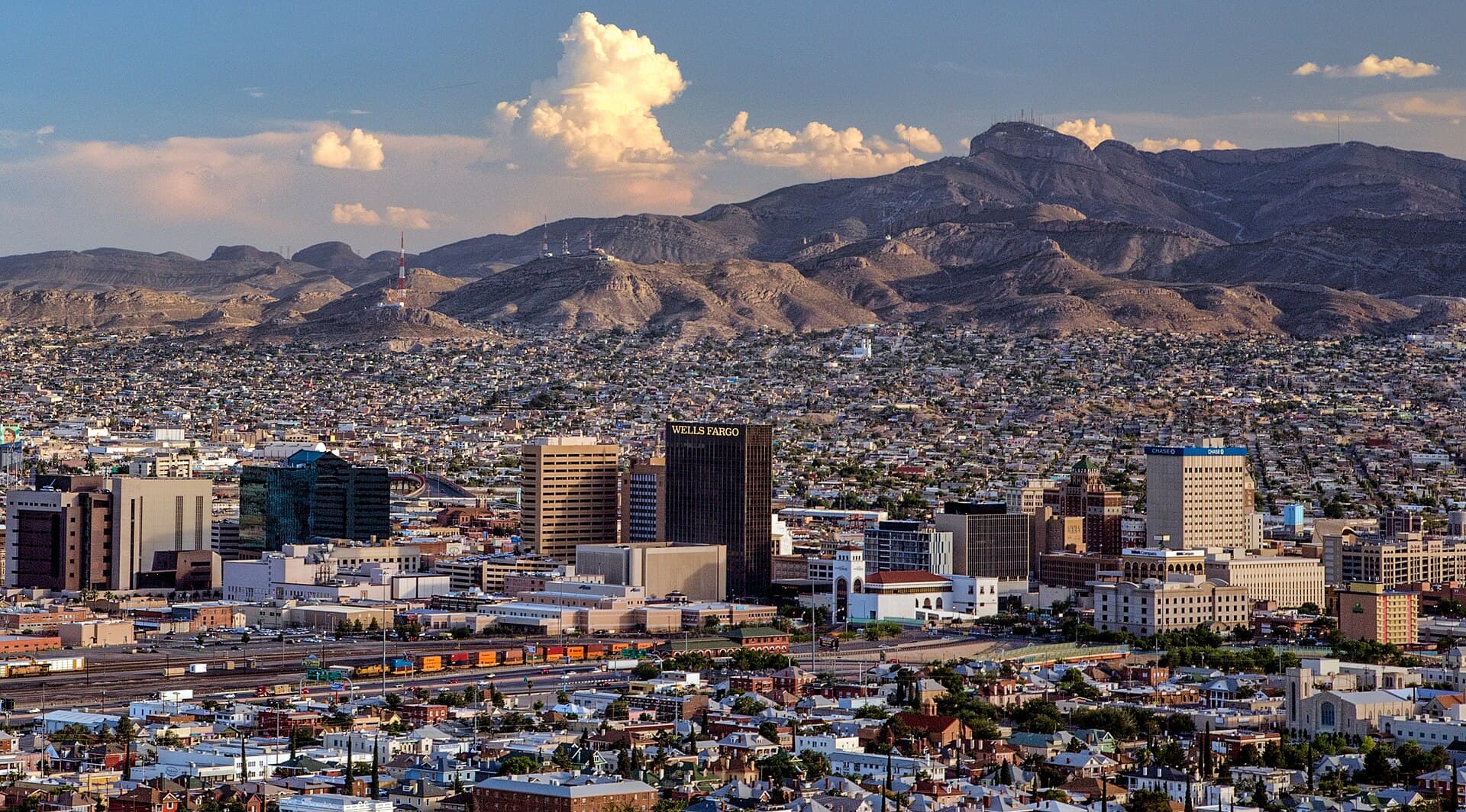
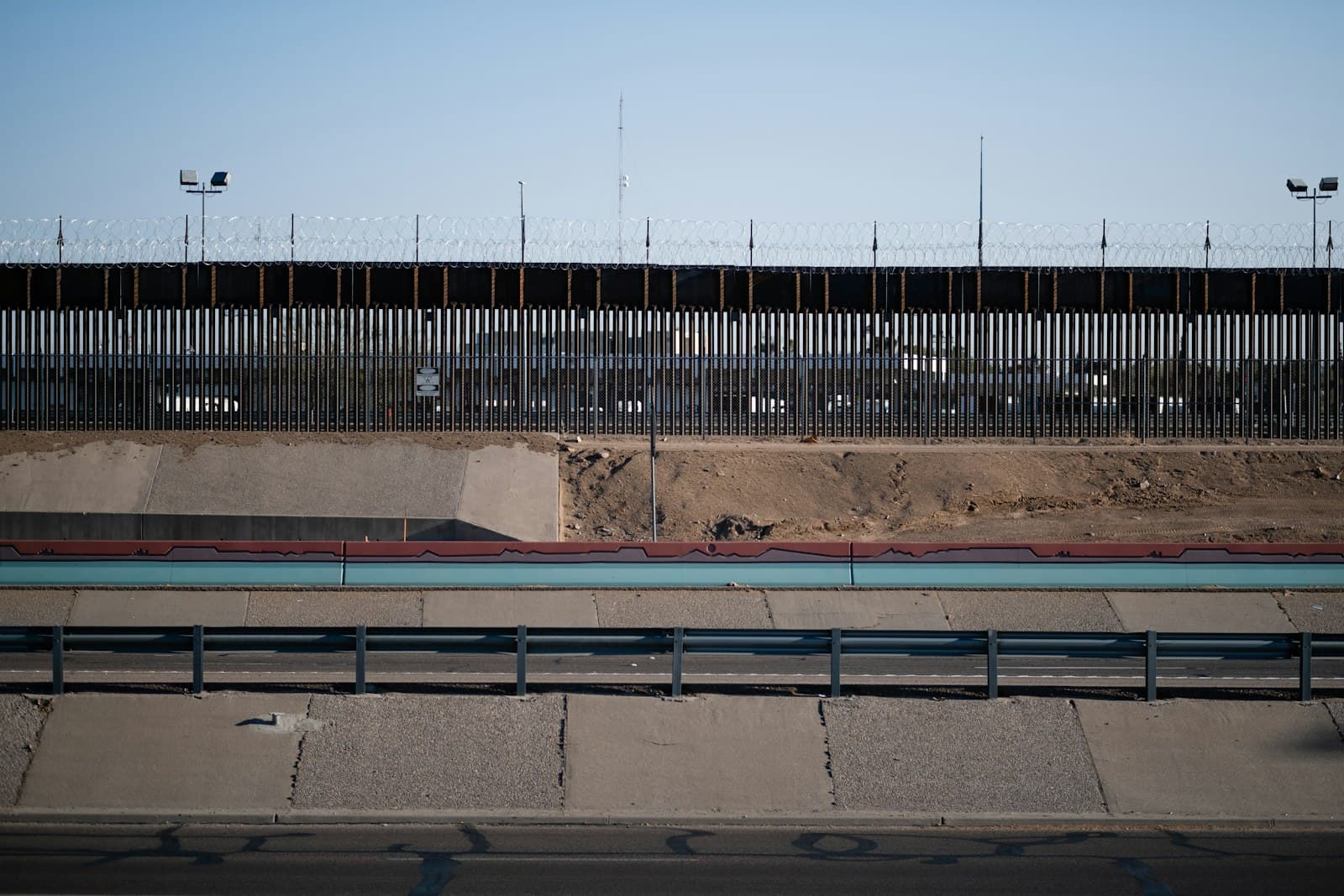
El Paso, Texas, often referred to as 'The Sun City' for its average of 302 luminous days each year, occupies the westernmost point of Texas. Here, two nations and three states converge. This singular geographic position along the Rio Grande, sharing a border with Ciudad Juárez, Mexico, and New Mexico, has forged a distinct cultural landscape, where American, Mexican, and Native American influences blend. It is a city where languages and customs flow together, offering an experience unlike other major Texas urban centers.
The city's identity is profoundly connected to its desert environment and the Franklin Mountains, which offer a dramatic backdrop and avenues for outdoor discovery. El Paso has received the All-America City Award multiple times and has been recognized for its safety. From its historic downtown core to its lively arts scene and culinary offerings, El Paso presents a compelling destination for those seeking a rich cultural experience and ample sunshine.
From Ancient Crossroads to Modern Metropolis
The story of the El Paso region stretches back over two million years, when Lake Cabeza de Vaca covered the area, and humans made their homes here around 10,000 BCE. The ancestral Rio Grande carved the 'Pass of the North' approximately 50,000 BCE, a natural corridor that would later lend its name to the city. Spanish explorers arrived in the early 1500s, with Don Juan de Oñate leading an expedition in 1595 to colonize the pass. In 1598, his expedition observed Thanksgiving near what is now San Elizario.
In 1659, Franciscan friars established Our Lady of Guadalupe Mission of El Paso del Norte, around which a village grew. This settlement became the largest in the area, now known as Ciudad Juárez. Following the Pueblo Revolt in 1680, El Paso served as the temporary seat for Spanish governance of New Mexico. The area prospered with agrarian farming, yielding wine and brandy.
In the 1850s, a settlement called Franklin, situated on the north bank of the Rio Grande, became the core of contemporary El Paso, Texas. El Paso County was established in 1850, and Fort Bliss was founded in 1854. The arrival of railroads in 1881 and 1882 transformed El Paso from a small village into a burgeoning frontier town, with its population reaching over 10,000 by 1890. This rapid expansion led to a period where El Paso earned appellations like 'Six Shooter Capital' and 'Sin City' due to its numerous saloons and gambling establishments, a reputation that began to shift around 1905.
The current New Mexico–Texas boundary, placing El Paso on the Texas side, was drawn in the Compromise of 1850. The city's growth continued into the 20th century, with significant structures like the O.T. Bassett Tower and the Plaza Theatre opening in 1930. Today, El Paso is recognized for its strong community spirit and resilience, symbolized by the Star on the Mountain.
El Paso offers a variety of attractions reflecting its distinct heritage and natural surroundings. The Star on the Mountain, a grand illuminated star on the Franklin Mountains, is a prominent landmark visible from many miles away, its colors shifting for various events and causes. For those who enjoy the outdoors, Franklin Mountains State Park provides 100 miles of trails across 27,000 acres. Nearby, Hueco Tanks State Park and Historic Site offers opportunities for exploration and rock climbing.
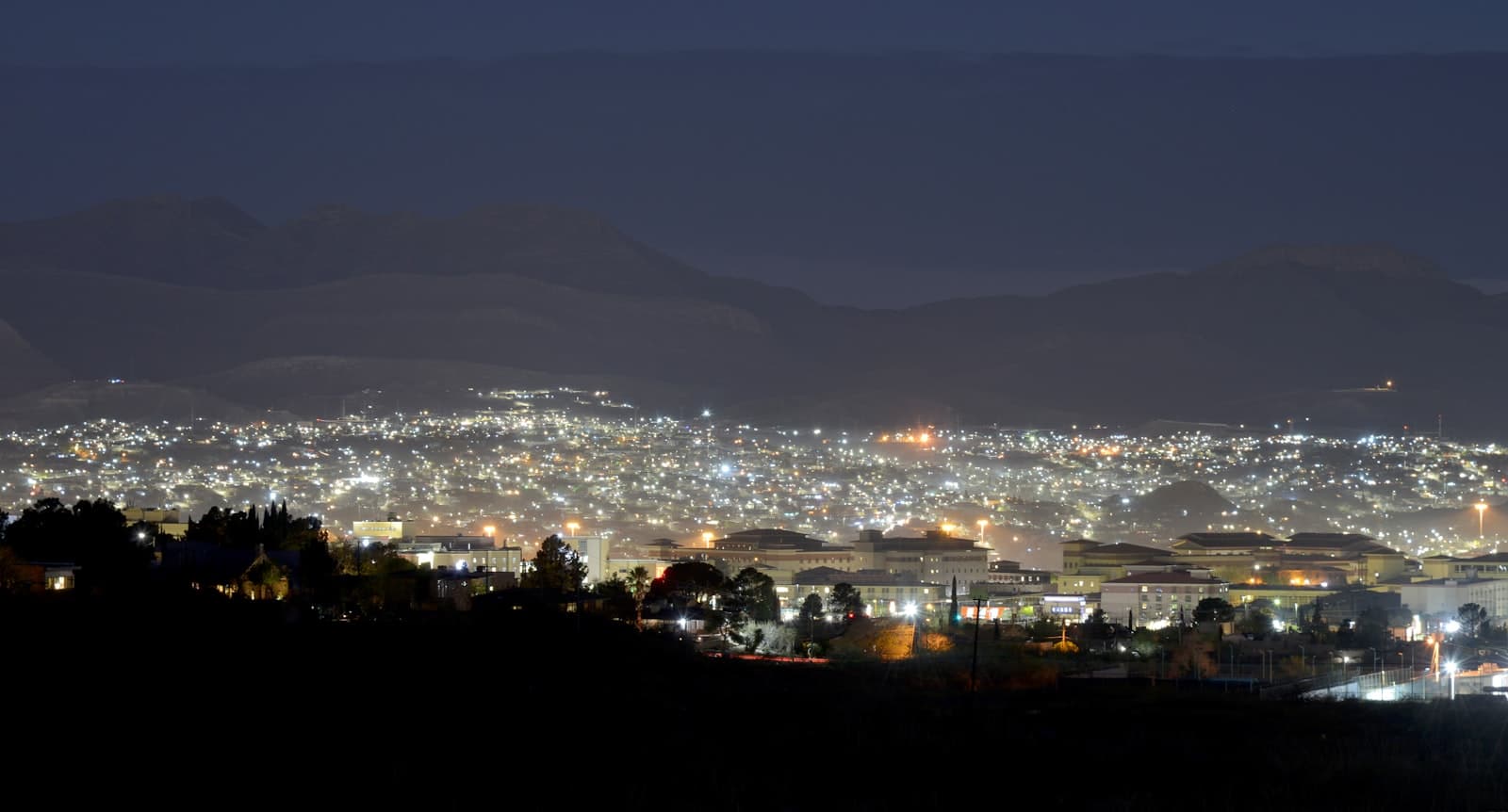
Downtown El Paso features numerous historic sites and districts, including Sunset Heights, Rio Grande Avenue Historic District, Segundo Barrio Historic District, and Magoffin Historic District. The University of Texas at El Paso (UTEP) is notable for its Bhutanese architectural design, inspired by images from a 1914 National Geographic magazine. The city also serves as an entrance to several national parks, including White Sands National Park in New Mexico, Carlsbad Caverns National Park, and Guadalupe Mountains National Park in Texas, all within a few hours' drive.
El Paso is known as 'The Sun City,' receiving an average of 302 sunny days each year. The city experiences dry conditions and minimal rainfall, with the surrounding mountains often blocking clouds, ensuring frequent sunshine. Spring and fall offer comfortable temperatures for outdoor pursuits. Summers can be very hot and arid, with notable temperature shifts between day and night. Winters are generally mild.
El Paso International Airport (EPIA) serves the city, with the terminal open from 3:00 AM until the final departure. Parking options at EPIA include short-term, long-term, west parking, and premium reserved parking. Public transportation is available through Sun Metro, offering bus services and a streetcar. When exploring, especially if spending time outdoors, it is wise to remain hydrated and apply sunscreen due to the desert climate and abundant sunshine. The city operates on Mountain Time. For information on city services, including permits, zoning, and code enforcement, the City of El Paso website and 311 service are available. The minimum age to purchase products from El Paso smoke shops is 21, with age verification required.
- Why is El Paso called 'The Sun City'?
- El Paso is nicknamed 'The Sun City' because it experiences an average of 302 sunny days per year, with sunshine during 83% of daylight hours. This is due to its desert location, low rainfall, and mountains that block clouds.
- What is the Star on the Mountain?
- The Star on the Mountain is a large, illuminated star on the Franklin Mountains in El Paso. Originally a Christmas decoration from 1940, it is now lit nightly and changes colors for various community events and tributes.
- What is the significance of the El Paso Chihuahuas team name?
- The El Paso Chihuahuas, a Minor League Baseball team, chose their name to reflect the surrounding Chihuahuan Desert and the dog breed, aiming for a fun and family-friendly brand.
- Is El Paso a safe city?
- El Paso has consistently ranked among the safest large cities in the United States, holding the title of safest city between 2011 and 2014.
- What time zone is El Paso in?
- El Paso is the only major city in Texas that observes Mountain Time.
- What is the legal age for purchasing tobacco or vape products in El Paso?
- The minimum age to purchase any products from El Paso smoke shops, including tobacco and vape products, is 21 years old. Age verification with a valid government-issued photo ID is required for every transaction.