Rademachersmedjorna
Treten Sie ein ins 17. Jahrhundert und beobachten Sie ein Handwerk, das eine Nation prägte, auch wenn nicht jeder Schmied sich strikt an die Regeln hielt.
Die ganze Geschichte wird in der Tour freigeschaltet
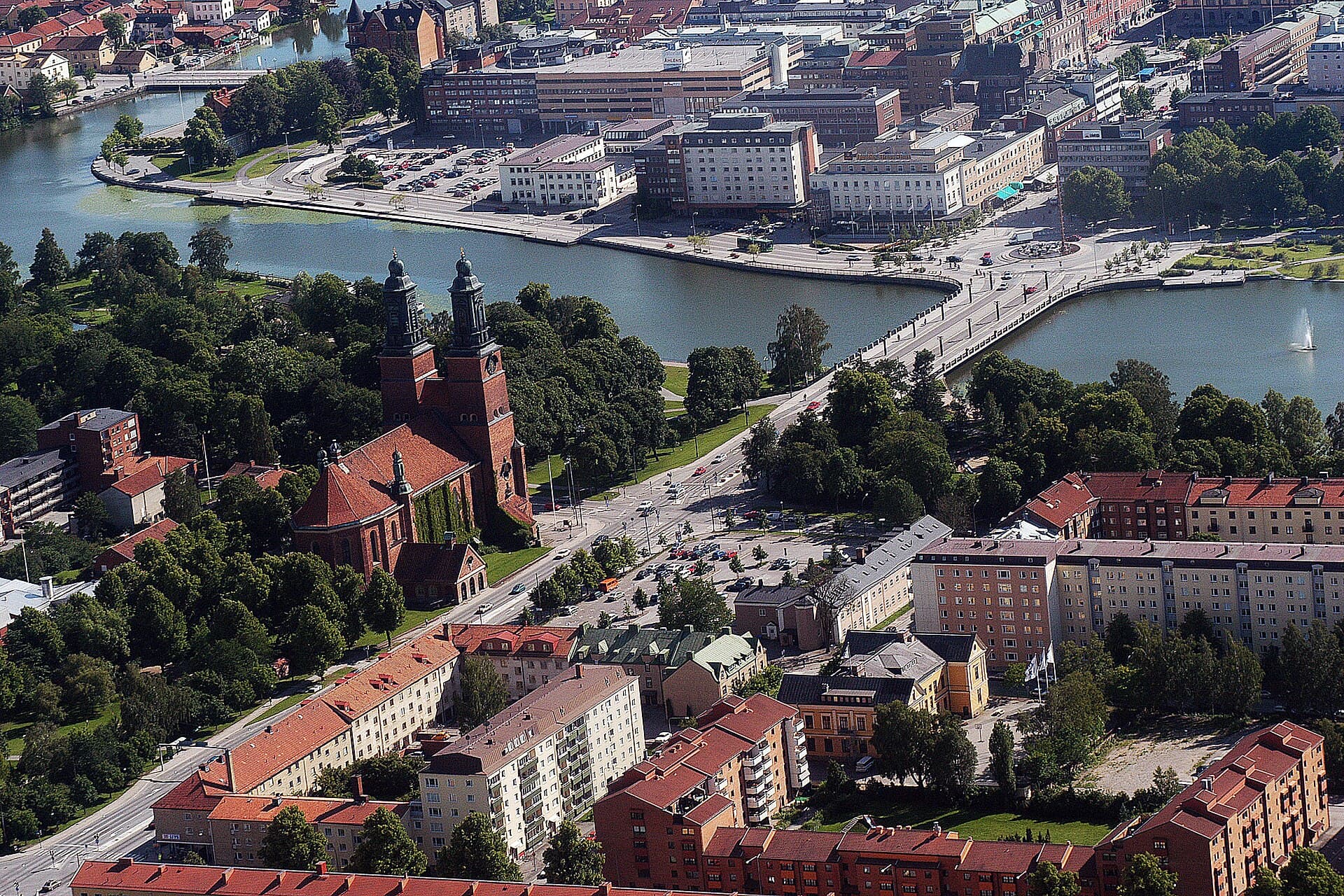 Joakim Serrander / CC BY 3.0, via Wikimedia Commons
Selbstgeführte Audio-Walking-Tour durch Eskilstuna — GPS-Route, Offline-Wiedergabe, erzählerische Narration in 32 Sprachen.
“Wo das Summen der Industrie auf die Echos der Wikingersagen trifft, entlang eines mäandernden Flusses.”
Nicht die Postkarten. Die Geschichten, die selbst Einheimische nicht kennen – dir ins Ohr geflüstert, genau dort, wo sie geschahen.
Treten Sie ein ins 17. Jahrhundert und beobachten Sie ein Handwerk, das eine Nation prägte, auch wenn nicht jeder Schmied sich strikt an die Regeln hielt.
Eine lokale Publikation befasst sich eingehend mit der Vergangenheit Eskilstunas, und Sie können ein Exemplar kostenlos erhalten.
Eskilstuna beherbergt ein Einkaufszentrum mit einem besonderen Konzept, bei dem jeder Artikel eine neue Bestimmung findet.
Entdecke jedes Geheimnis von Eskilstuna
Jede Adresse, jede Enthüllung vollständig – in deinem Ohr, genau dort, wo es geschah.
Du wählst deine Stationen. Du gehst. Die Stimme enthüllt, was andere übersehen.


Deine selbstgeführte Audio-Tour durch Eskilstuna ist bereit – wähle deine Sehenswürdigkeiten, deine Sprache und starte, sobald du ankommst.
KaufenLume enthält einen integrierten Augmented-Reality-Guide. Halten Sie Ihr Handy hoch: Die Kamera zeigt die Straße vor Ihnen, mit einem leuchtenden Pfeil über dem echten Bild, der immer auf Ihren nächsten Stopp zeigt — keine Karte zum Rätseln, keine falschen Abzweigungen. Wie alles bei Lume funktioniert es komplett offline.
Eskilstuna, eine Stadt in der schwedischen Provinz Södermanland, liegt am Fluss Eskilstunaån, der den Hjälmaren- und den Mälarensee verbindet. Diese vorteilhafte Lage hat die Entwicklung der Stadt maßgeblich beeinflusst, von einem Wikinger-Handelsplatz zu einem bedeutenden Industriezentrum.
Die Stadt verbindet ihre industrielle Vergangenheit geschickt mit dem modernen skandinavischen Leben. Historische Backsteinfabriken stehen neben modernen Wohnungen, und die Stadt präsentiert stolz ihr Erbe, wobei alte Werkstätten in Museen, Cafés und Kulturzentren umgewandelt wurden. Eskilstuna ist auch für sein Engagement für Nachhaltigkeit bekannt, was sich in Initiativen wie dem innovativen Recycling-Einkaufszentrum zeigt.
Mit einer wachsenden Bevölkerung und einem Fokus auf Bildung, einschließlich eines Campus der Mälardalen Universität, bietet Eskilstuna eine abwechslungsreiche Erfahrung für alle, die sich für Geschichte, Kultur und einen zukunftsorientierten Ansatz im städtischen Leben interessieren.
Die Geschichte Eskilstunas reicht über ein Jahrtausend zurück, mit Ursprüngen im Mittelalter als Handelsplatz namens Tuna. Seinen heutigen Namen verdankt die Stadt dem Heiligen Eskil, einem englischen Missionarsmönch, der im 11. Jahrhundert in der Gegend predigte und von heidnischen Wikingern im nahegelegenen Strängnäs getötet wurde. Seine Bestattung in Tuna machte die Siedlung zu einem wichtigen religiösen Zentrum, in dessen Nähe ein Kloster des Johanniterordens errichtet wurde.
Das Kloster wurde jedoch 1527 während der Reformation aufgelöst und von König Gustav Vasa abgerissen, seine Steine wurden für ein Königsschloss wiederverwendet. Die Stadtrechte wurden Eskilstuna 1659 von König Karl X. Gustav verliehen, was eine neue Ära einleitete. Ein entscheidender Moment ereignete sich Mitte des 17. Jahrhunderts mit der Gründung der Rademacher-Schmieden (Rademachersmedjorna). Eingeladene deutsche Meister unter der Leitung von Reinhold Rademacher führten eine hochwertige Metallverarbeitung ein und legten damit den Grundstein dafür, dass Eskilstuna als "Stahlstadt" bekannt wurde.
Im 18. Jahrhundert wurde 1771 eine "Fristaden"-Zone (freie Stadt) geschaffen, die es Metallhandwerkern erlaubte, ohne Zunftbeschränkungen und Steuern zu arbeiten, was die industrielle Expansion weiter ankurbelte. Das 19. Jahrhundert brachte die Industrielle Revolution, und Eskilstuna expandierte erheblich und wurde zu einer der wichtigsten Industriestädte Schwedens. Im Jahr 1832 gründete Johan Theofron Munktell eine mechanische Werkstatt, die sich zu einem bedeutenden Maschinenbauunternehmen entwickelte und Landmaschinen, Dampfmaschinen und Traktoren herstellte. Dieses Unternehmen fusionierte später zu Bolinder-Munktell (BM) und wurde schließlich 1950 von Volvo übernommen, wodurch Volvo BM entstand, der Vorläufer von Volvo Construction Equipment.
Im 20. Jahrhundert wuchs die Bevölkerung Eskilstunas weiter und erreichte 1970 etwa 94.000 Einwohner. Während die Stahlindustrie in den 1970er Jahren einen Abschwung erlebte, diversifizierte die Stadt ihre Wirtschaft, und 1977 wurde eine Hochschule gegründet, die später zur Mälardalen Universität wurde. Heute ist Eskilstuna nach wie vor eine wichtige Industriestadt, Heimat von Unternehmen wie Volvo Radlader, Assa (Schlösser und Schlüssel) und Outokumpu (Edelstahl), und nimmt gleichzeitig ihre Rolle als Universitätsstadt und Zentrum für Bildung und Innovation an.
Beginnen Sie Ihre Erkundung bei den Rademachersmedjorna, einem Freilichtmuseum mit gut erhaltenen Schmieden aus dem 17. Jahrhundert, einigen der ältesten Bauwerke Eskilstunas. Hier können Sie traditionelles Handwerk beobachten und Werkstätten erkunden. In der Nähe bietet das Stadtmuseum Eskilstuna (Eskilstuna City Museum) eine tiefere Auseinandersetzung mit der Geschichte und industriellen Entwicklung der Stadt mit Ausstellungen, die von ihren mittelalterlichen Ursprüngen bis in die Neuzeit reichen.
Für Technik- und Maschineninteressierte ist das Munktell Museum im historischen Stadtteil Munktellstaden ein lohnenswerter Besuch. Es feiert schwedische Innovationen und zeigt Traktoren, Baumaschinen und Dampfmaschinen mit interaktiven Exponaten für alle Altersgruppen. Das Gebiet Munktellstaden selbst, einst ein Fabrikviertel, hat sich zu einem lebendigen Kulturzentrum mit Museen, Sportarenen und Veranstaltungsorten entwickelt.
Außerhalb des Stadtzentrums entdecken Sie das Schloss Sundbyholm (Sundbyholm Castle), ein malerisches Schloss aus dem 17. Jahrhundert am Mälarensee. Ein kurzer Spaziergang vom Schloss entfernt liegt die Sigurd-Schnitzerei (Sigurd Carving), eine bemerkenswerte Wikinger-Felsritzerei aus der Zeit um 1000 n. Chr., die Szenen aus der Sigurd-Sage darstellt. Für Familien kombiniert der Parken Zoo einen zoologischen Garten mit einem Vergnügungspark und Schwimmbad, mit exotischen Tieren und Fahrgeschäften.
Verpassen Sie nicht die ReTuna Återbruksgalleria, das weltweit erste Recycling-Einkaufszentrum, wo Sie recycelte und upcycelte Waren finden, was Eskilstunas Engagement für Nachhaltigkeit unterstreicht. Die Altstadt (Gamla Staden), insbesondere die Köpmangatan, bietet charmante bemalte Holzhäuser, enge Gassen und kleine Geschäfte, die einen Einblick in ein früheres Eskilstuna gewähren.
Eskilstuna erlebt deutliche saisonale Veränderungen mit kalten, verschneiten Wintern und angenehmen, milden Sommern. Die warme Jahreszeit dauert normalerweise von Ende Mai bis Anfang September. Die günstigste Zeit für Outdoor-Aktivitäten und Besichtigungen sind die Sommermonate Juni, Juli und August, wenn die Durchschnittstemperaturen zwischen 17,0°C und 17,8°C liegen und die Höchsttemperaturen im Juli bis zu 22,4°C erreichen. Der Juli verzeichnet auch die meisten Niederschläge mit durchschnittlich 9,8 Regentagen. Frühling und Herbst bieten mildere Übergangsperioden. Dezember bringt kalte, windige Bedingungen mit Temperaturen zwischen -4°C und 0°C.
Eskilstuna ist gut angebunden und leicht zu navigieren. Die Stadt ist etwa eine Stunde von Stockholm entfernt und mit dem Auto, Bus und Zug erreichbar. Hochgeschwindigkeitszüge aus Stockholm kommen am Eskilstuna Central Station (Eskilstuna C) an, der sich in günstiger Gehweite zu wichtigen Sehenswürdigkeiten und Hotels befindet. Für Flugreisende ist der Flughafen Stockholm Arlanda (ARN) das wichtigste internationale Tor, mit günstigeren Optionen am Flughafen Stockholm Skavsta (NYO) oder Stockholm Västerås (VST), letzterer ist nur 50 km entfernt. Von diesen Flughäfen gibt es regelmäßige Zug- und Busverbindungen.
In Eskilstuna sind die Entfernungen kurz, was das Fortbewegen zu Fuß, mit dem Fahrrad oder mit dem städtischen Busnetz, das auch Elektrobusse umfasst, erleichtert. Taxidienste, einschließlich Uber, sind ebenfalls verfügbar. Englisch wird weitgehend gesprochen, sodass die Kommunikation im Allgemeinen unkompliziert ist. Die Stadt gilt als sehr sicher für Besucher.
Eskilstuna — Koreanisch, Chinesisch, Hebräisch und 29 weitere Sprachen, jede Station von einer muttersprachlichen Stimme erzählt. Die größte Sprachauswahl aller selbstgeführten Audiotouren.
Verfügbar auf: