Kessler Sekt
Esslingen bewaart een sprankelend geheim onder zijn straten.
Volledig verhaal ontgrendeld in de tour
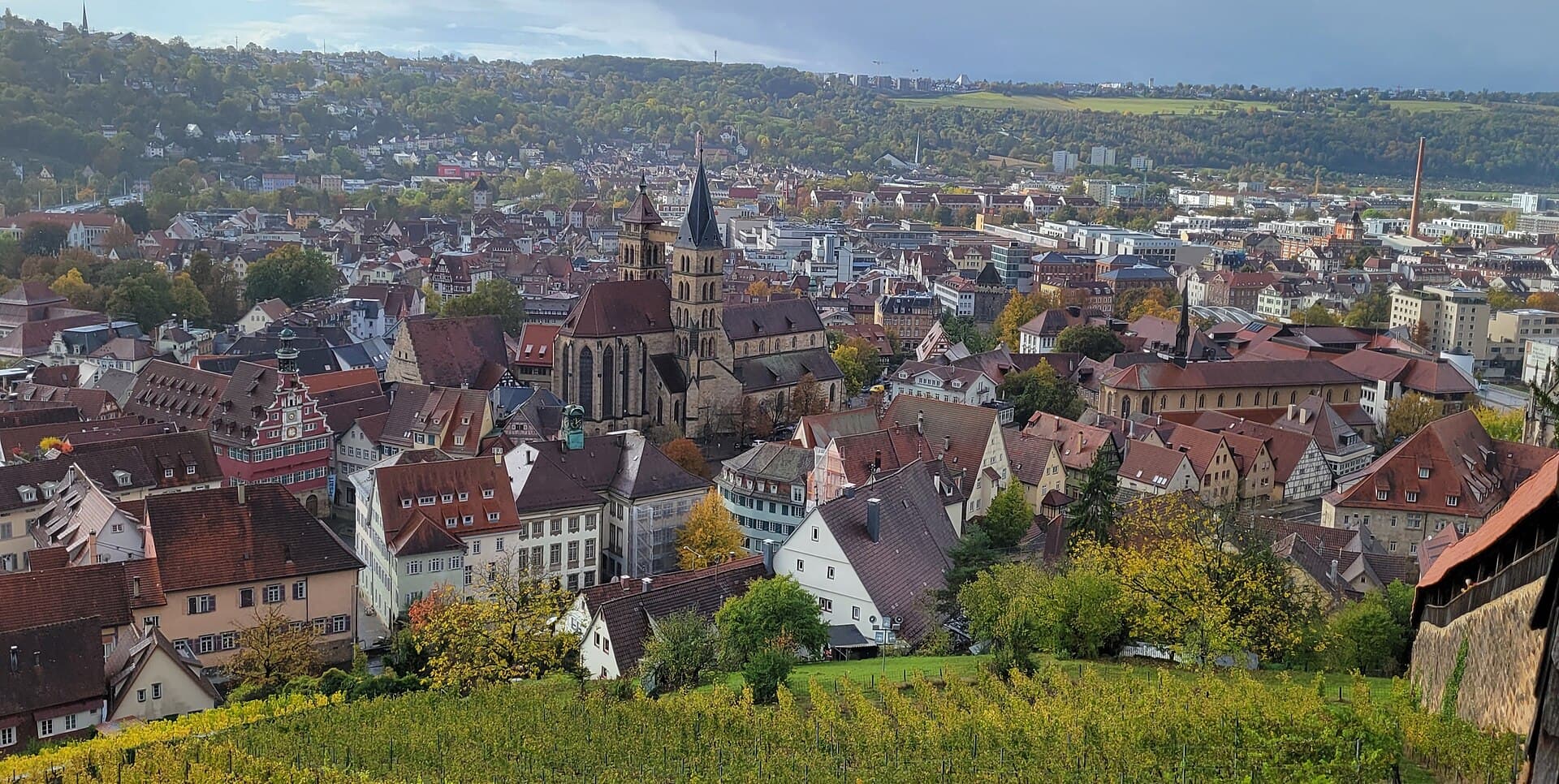 Qwerty123uiop / CC0, via Wikimedia Commons
Zelfgeleide audiowandeling door Esslingen — GPS-route, offline afspelen, meeslepende vertelling in 32 talen.
“Waar middeleeuws karakter moderne stromingen ontmoet langs de Neckar.”
Niet de ansichtkaarten. De verhalen die zelfs locals niet kennen — gefluisterd in je oor, precies waar ze gebeurden.
Esslingen bewaart een sprankelend geheim onder zijn straten.
Observeer de dubbele torens van de hoofdkerk van dichtbij.
Dit vooraanstaande gebouw heeft een uniek onderscheid in Duitsland.
Ontdek elk geheim van Esslingen
Elk adres, elke onthulling volledig — in je oor, precies waar het gebeurde.
Jij kiest je stops. Jij wandelt. De stem onthult wat de anderen missen.


Je zelfgeleide audiotour van Esslingen is klaar — kies je bezienswaardigheden, kies je taal en start zodra je aankomt.
KopenLume heeft een ingebouwde augmented-reality-gids. Houd je telefoon omhoog: de camera toont de straat voor je, met een oplichtende pijl over het echte beeld die altijd naar je volgende stop wijst — geen kaart om uit te puzzelen, geen verkeerde afslagen. Zoals alles in Lume werkt het volledig offline.
Esslingen am Neckar, vaak simpelweg Esslingen genoemd, is een boeiende stad in de Zuidwest-Duitse deelstaat Baden-Württemberg. Gelegen aan de rivier de Neckar en omgeven door wijngaarden, is het een plek waar meer dan 1.200 jaar geschiedenis zichtbaar in het stadsbeeld is verweven. In tegenstelling tot veel Duitse steden, heeft het middeleeuwse centrum van Esslingen de beide Wereldoorlogen grotendeels doorstaan, waardoor een opmerkelijke verzameling vakwerkhuizen en historische bouwwerken bewaard is gebleven.
De stad biedt een unieke mix van oude allure en hedendaagse vitaliteit. Van de grachten, die doen denken aan "Klein Venetië", tot zijn rol als modern onderwijs- en ingenieursknooppunt, Esslingen nodigt bezoekers uit om terug te stappen in de tijd terwijl ze genieten van een levendig heden. Op korte treinreis van Stuttgart is het een toegankelijke en betoverende ontsnapping naar een typisch Duitse omgeving.
## Van Romeinse Buitenpost tot Vrije Rijksstad De oorsprong van Esslingen reikt tot in de oudheid, met bewijs van Neolithische bewoners en een Romeins pakhuis in de omgeving tijdens de 1e eeuw na Christus. De officiële geschiedenis van de stad begint in 777 na Christus, toen abt Fulrad van Saint-Denis bij Parijs in zijn testament een nederzetting genaamd 'Hetsilinga' vermeldde, waarbij hij een monnikencel aan de Neckar aan zijn klooster legateerde. Deze daad, samen met de overdracht van de beenderen van Sint Vitalis, vestigde Esslingen als een bedevaartsoord, wat de vroege groei bevorderde.
Tijdens het Staufen-tijdperk, van de 12e tot de vroege 16e eeuw, beleefde Esslingen een "Gouden Eeuw" en werd het een vooraanstaande en welvarende stad aan de midden-Neckar. In 1229 kreeg het de status van Vrije Rijksstad, wat het politieke onafhankelijkheid en directe verantwoording alleen aan de Keizer gaf. Deze autonomie stelde de stedelijke elite in staat te investeren in monumentale bouw, wat zijn kenmerkende architectonische karakter vormde. Esslingen was ook een belangrijke handelsroute tijdens het Heilige Roomse Rijk, waarbij vele veldslagen werden gevoerd om zijn onafhankelijkheid van het naburige Württemberg te handhaven.
## Industrialisatie en Hedendaagse Bescherming Esslingen verloor zijn onafhankelijkheid in 1803 en werd deel van het Hertogdom Württemberg tijdens het Napoleontische tijdperk. De 19e eeuw bracht industrialisatie, waardoor Esslingen veranderde in een industrieel en productiecentrum, hoewel sommige historische gebouwen verloren gingen door de bouw van fabrieken en arbeiderswoningen. Gelukkig ontsnapte de stad grotendeels aan zware schade tijdens de Tweede Wereldoorlog, waardoor de middeleeuwse oude stad opmerkelijk bewaard is gebleven. Na de oorlog groeide de bevolking met de komst van vluchtelingen, en nieuwe stadsdelen ontwikkelden zich op de hellingen boven het Neckardal, terwijl de historische kern een voorbeeldige restauratie onderging. Vandaag de dag combineert Esslingen zijn blijvende verleden met een moderne focus op wetenschap en hightech engineering, de thuisbasis van de Esslingen University of Applied Sciences.
Begin uw verkenning in de Altstadt, de oude binnenstad van Esslingen, geroemd om zijn uitgebreide collectie vakwerkhuizen, waarvan vele dateren uit de 13e eeuw. De oudste bewaard gebleven rij vakwerkhuizen in Duitsland vindt u aan de Hafenmarkt 4-10, gebouwd tussen 1328 en 1331. Wandel door "Klein Venetië", waar grachten van de rivier de Neckar door de oude stad slingeren, begrensd door eeuwenoude watermolens en huizen die alleen per brug bereikbaar zijn.
Klim naar de Esslinger Burg, het "kasteel" dat de stad kroont. Hoewel nooit een echte adellijke residentie, maakte het deel uit van de stadsversterkingen en biedt het een weids uitzicht over Esslingen en de omliggende wijngaarden. Verken het stadscentrum om drie stadhallen te ontdekken, waaronder het Oude Stadhuis (Altes Rathaus) met zijn ingewikkelde renaissancegevel en de oudste functionerende astronomische klok van Duitsland. Bezoek de Stadtkirche St. Dionys, een gotisch meesterwerk met fundamenten die teruggaan tot de 7e eeuw, en de Frauenkirche (Onze-Lieve-Vrouwekerk), een belangrijk voorbeeld van Zwabische gotische architectuur. Voor een diepere duik in het oude verleden van de stad biedt het Opgravingsmuseum van St. Dionysius een glimp van de oorsprong van Esslingen.
Esslingen am Neckar is het hele jaar door een bestemming, maar de meest aangename tijd voor activiteiten in de buitenlucht is van eind juni tot begin september. Gedurende deze zomermaanden liggen de gemiddelde temperaturen tussen de 18-20°C, met uitschieters tot 23-25°C, wat comfortabele omstandigheden biedt om de stad te verkennen. De lente (april-mei) en vroege herfst (september-oktober) bieden ook mild weer, ideaal voor comfortabel sightseeing. Bezoekers eind november en december kunnen de befaamde Esslinger Middeleeuwse & Kerstmarkt ervaren.
Esslingen ligt gunstig op slechts 14 kilometer ten zuidoosten van Stuttgart en is goed verbonden met het openbaar vervoer. De S-Bahn lijn S1 biedt een snelle treinrit van 15-20 minuten vanaf het centraal station van Stuttgart (Hauptbahnhof) naar Esslingen. De luchthaven van Stuttgart (STR) is de dichtstbijzijnde grote luchthaven, slechts enkele kilometers verderop. Binnen Esslingen is de compacte Altstadt het best te voet te verkennen. Voor wie met de auto komt, zijn er parkeerplaatsen beschikbaar, met parkeerterreinen nabij het treinstation aanbevolen, hoewel het raadzaam is om vroeg te komen tijdens populaire evenementen. Openbare toiletten en geldautomaten zijn beschikbaar, onder meer op het treinstation en bij Agneshof nabij het marktplein. Stadswandelingen zijn beschikbaar voor individuen en groepen, met verschillende thema's en vinden vaak plaats onder alle weersomstandigheden.
Esslingen — Koreaans, Chinees, Hebreeuws en nog 29 talen, elke stop verteld door een moedertaalspreker. Het grootste taalaanbod van alle zelfgeleide audiotours.
Beschikbaar in: