Die Klippen von Étretat
Die ikonische 'Hohle Nadel' von Étretat, die in der Fiktion verewigt wurde, soll ein Geheimnis bergen, das weitaus größer ist als ihr auffälliges Aussehen.
Die ganze Geschichte wird in der Tour freigeschaltet
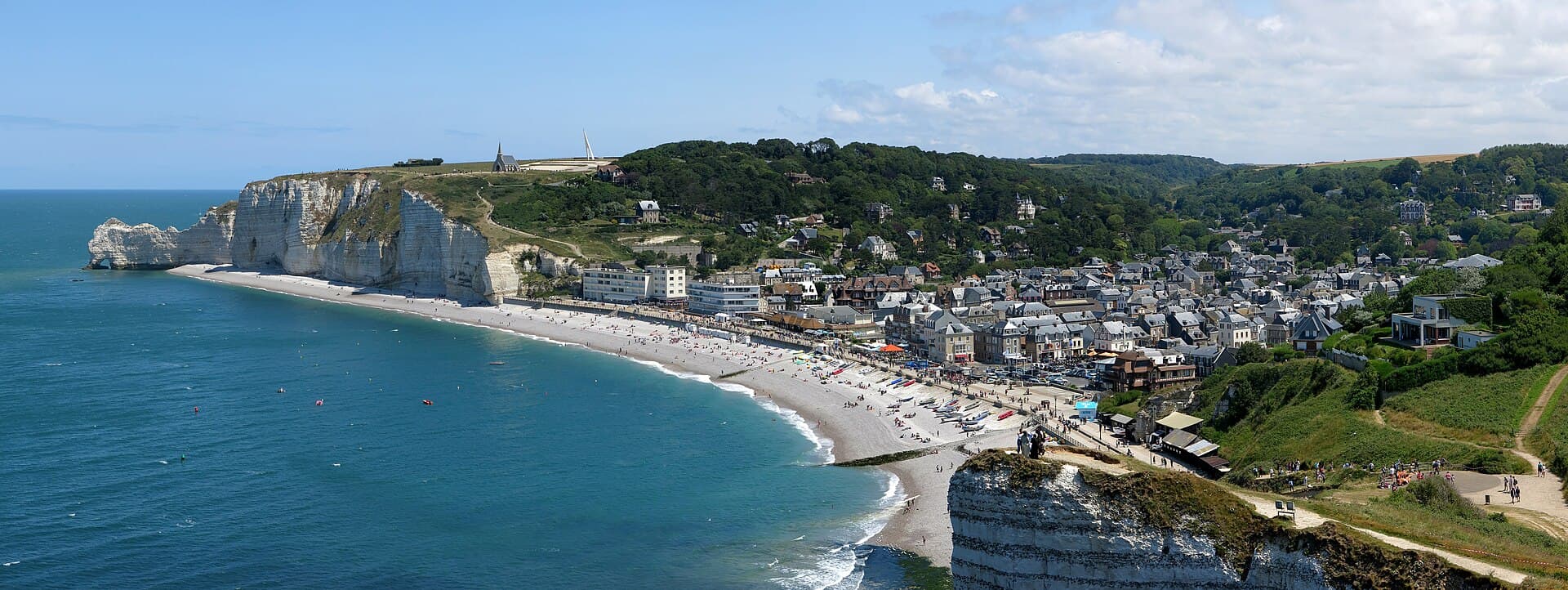 Jörg Braukmann / CC BY-SA 4.0, via Wikimedia Commons
Selbstgeführte Audio-Walking-Tour durch Étretat — GPS-Route, Offline-Wiedergabe, erzählerische Narration in 32 Sprachen.
“Wo kolossale Kreidefelsen auf das rastlose Meer treffen, schnitzt Étretat eine dramatische Bühne für die Kunst der Natur.”
Nicht die Postkarten. Die Geschichten, die selbst Einheimische nicht kennen – dir ins Ohr geflüstert, genau dort, wo sie geschahen.
Die ikonische 'Hohle Nadel' von Étretat, die in der Fiktion verewigt wurde, soll ein Geheimnis bergen, das weitaus größer ist als ihr auffälliges Aussehen.
Unter den hoch aufragenden Bögen von Étretat sind bei Ebbe Überreste eines unerwarteten königlichen Unternehmens zu finden.
Diese holzgerahmte Markthalle im Herzen von Étretat birgt eine subtile, aber ergreifende Erinnerung an einen fernen Konflikt.
Entdecke jedes Geheimnis von Étretat
Jede Adresse, jede Enthüllung vollständig – in deinem Ohr, genau dort, wo es geschah.
Du wählst deine Stationen. Du gehst. Die Stimme enthüllt, was andere übersehen.


Deine selbstgeführte Audio-Tour durch Étretat ist bereit – wähle deine Sehenswürdigkeiten, deine Sprache und starte, sobald du ankommst.
KaufenLume enthält einen integrierten Augmented-Reality-Guide. Halten Sie Ihr Handy hoch: Die Kamera zeigt die Straße vor Ihnen, mit einem leuchtenden Pfeil über dem echten Bild, der immer auf Ihren nächsten Stopp zeigt — keine Karte zum Rätseln, keine falschen Abzweigungen. Wie alles bei Lume funktioniert es komplett offline.
Étretat, ein ehemaliges Fischerdorf an der Alabasterküste der Normandie, bietet ein Schauspiel der rohen Naturgewalt und künstlerischen Inspiration. Seine dramatischen weißen Kreidefelsen, geformt durch jahrhundertelange Erosion, stürzen in den Ärmelkanal und bilden natürliche Bögen und eine markante, nadelartige Felsformation. Diese beeindruckende Landschaft hat Künstler wie Claude Monet und Eugène Boudin gefesselt, die versuchten, ihr sich ständig veränderndes Licht einzufangen.
Jenseits der geologischen Wunder bietet Étretat ein charmantes Dorfleben mit seinem Kieselstrand, der historischen Architektur und einem spürbaren Hauch der Vergangenheit. Es ist ein Ort, an dem Sie entlang von Klippenpfaden spazieren, faszinierende Gärten erkunden und literarischen Geheimnissen nachspüren können, während Sie die frische Meeresluft einatmen.
Die Ursprünge von Étretat sind mit Geschichte und Legenden verwoben. Einige Theorien besagen, dass das Dorf nach einer Wikingerinvasion gegründet wurde und möglicherweise nach einem Wikingerführer namens Styrr benannt wurde. Jahrhundertelang blieb es ein bescheidenes Fischerdorf, dessen Wirtschaft vom Rhythmus der Gezeiten und den Gaben des Meeres bestimmt wurde. Spuren dieser Ära sind noch heute am Ufer zu sehen: Spillhölzer, die zum Hochziehen der Boote an den Kiesstrand dienten, und 'Caloges' – alte Boote, die zu Reetdächern umfunktioniert wurden.
Das 19. Jahrhundert markierte eine bedeutende Wandlung für Étretat. Dem Maler Eugène Isabey wird zugeschrieben, 1820 als Erster seine einzigartige Schönheit auf Leinwand festgehalten zu haben, einer Zeit, als die Küste der Normandie gerade erst begann, Künstler anzuziehen. Das wachsende Interesse am Seebad wegen seiner therapeutischen Qualitäten rückte Étretat weiter in den Mittelpunkt. In den 1830er Jahren lenkte der Journalist und Romanautor Alphonse Karr die Aufmerksamkeit des breiteren Publikums auf das Dorf und zog Besucher aus Paris und England an. Dieser Zustrom von Künstlern, Industriellen und wohlhabenden Kaufleuten führte zum Bau charmanter Villen, von denen einige berühmten Persönlichkeiten wie dem Komponisten Jacques Offenbach gehörten. Étretat entwickelte sich zu einem mondänen Seebad der Belle Époque und wurde zu einem wahren Freilichtstudio für impressionistische Maler, die von der Art und Weise fasziniert waren, wie das Licht über die Kreidefelsen spielte.
Das 20. Jahrhundert fügte Étretats Mystik eine weitere Ebene hinzu, als Maurice Leblanc, der Schöpfer von Arsène Lupin, die Stadt und ihre geologischen Formationen zu zentralen Elementen seiner Romane machte. Die Stadt trug jedoch auch die Narben von Konflikten. Während des Zweiten Weltkriegs führte seine strategische Küstenlage zur Zerstörung vieler Gebäude am Meer, einschließlich des Casinos, und zum Bau von Bunkern in die Klippen als Teil des Atlantikwalls. Trotz dieser Herausforderungen hat Étretat seinen Reiz bewahrt und zieht Besucher weiterhin mit seinen dramatischen Landschaften und seinem beständigen kulturellen Erbe an.
Die ikonischen weißen Kreidefelsen sind Étretats Hauptanziehungspunkt. Sie umfassen drei natürliche Bögen – die Porte d'Aval, die Porte d'Amont und die größere Manneporte – sowie die markante L'Aiguille (die Nadel), die 70 Meter aus dem Meer ragt. Spazieren Sie entlang der Küstenpfade auf den Klippen und genießen Sie weite Ausblicke auf den Ärmelkanal und die einzigartigen Felsformationen.
Besuchen Sie die Jardins d'Étretat, eine einzigartige Sammlung avantgardistischer Gärten auf dem Amont-Kliff, die einen Panoramablick auf die Bucht und den Aval-Bogen bieten. Erkunden Sie Le Clos Arsène Lupin, das ehemalige Wohnhaus des Autors Maurice Leblanc, das heute ein Museum ist, das seinem berühmten Gentleman-Einbrecher Arsène Lupin gewidmet ist. Schlendern Sie durch die Stadt und entdecken Sie den holzgerahmten Alten Markt (Le Vieux Marché) mit seinen lokalen Handwerkskunst- und Souvenirangeboten sowie die romanische und gotische Kirche Notre-Dame de l'Assomption.
Für eine andere Perspektive können Sie bei Ebbe den Strand erkunden, der den Zugang durch den Trou à l'Homme (Männerloch) Tunnel zur anderen Seite der Aiguille ermöglicht. Golffreunde können eine Runde im Golf d'Étretat spielen, einem 18-Loch-Platz auf den Klippen mit beeindruckenden Küstenblicken.
Die beste Zeit für einen Besuch in Étretat ist zwischen späten Frühling und frühem Herbst, von April bis Juni und im September, wenn das Wetter mild ist und sich ideal zum Erkunden der Wanderwege eignet. Während Juli und August wärmere Temperaturen bieten, bringen sie auch größere Menschenmengen mit sich. Ein Besuch außerhalb der Stoßzeiten, wie am frühen Morgen oder späten Abend, ermöglicht ein friedlicheres Erlebnis und bietet wunderschönes Licht für die Fotografie.
Étretat ist von Paris aus etwa 2,5 bis 3 Stunden mit dem Auto entfernt. Es gibt zwar keine direkte Bahnverbindung, aber Sie können einen Zug nach Le Havre oder Bréauté-Beuzeville nehmen und von dort mit dem Bus oder Taxi weiterfahren. Mit dem Auto sind Sie am flexibelsten, um die Alabasterküste zu erkunden.
Das Parken in Étretat ist das ganze Jahr über kostenpflichtig, auch an Wochenenden und Feiertagen, von 9:00 bis 19:00 Uhr. Mehrere kostenpflichtige Parkplätze stehen zur Verfügung, darunter Parking du Grand Val und die an der Place de la Mairie, Place de Gaulle und Place du Marché. Eine frühe Anreise, besonders an Sommerwochenenden, ist ratsam, um einen Platz zu sichern. Einige Parkplätze am Stadtrand bieten möglicherweise Shuttle-Services oder Fußgängerzugang.
Überprüfen Sie immer die Gezeitenzeiten, bevor Sie sich zum Strand begeben oder durch den Trou à l'Homme gehen, da der Zugang bei Flut eingeschränkt sein kann.
Étretat — Koreanisch, Chinesisch, Hebräisch und 29 weitere Sprachen, jede Station von einer muttersprachlichen Stimme erzählt. Die größte Sprachauswahl aller selbstgeführten Audiotouren.
Verfügbar auf: