Owen Memorial Rose Garden
Eugene's Owen Memorial Rose Garden holds a botanical secret that predates the city itself.
Full story unlocks in the tour
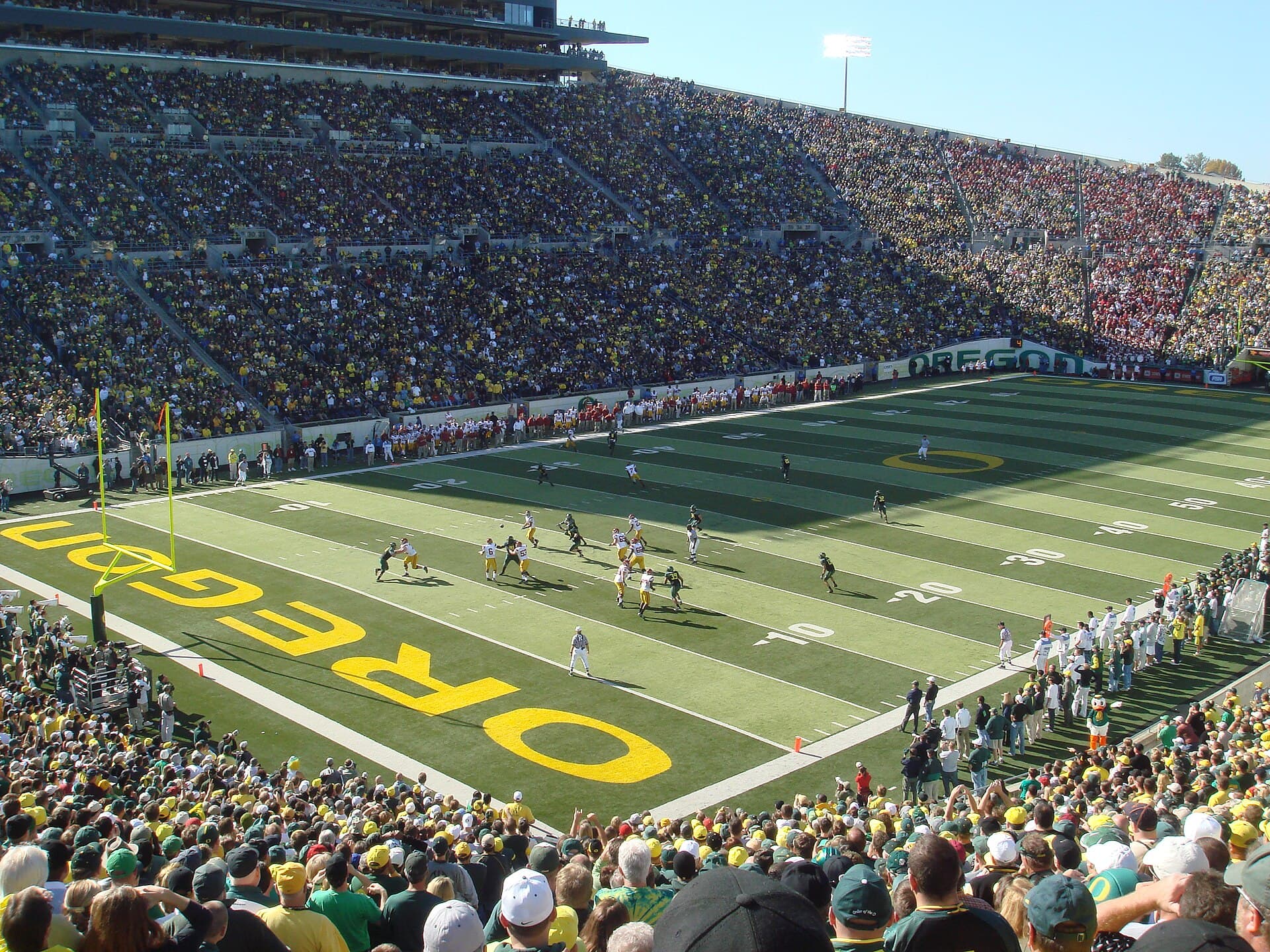 Bobak Ha'Eri / CC BY 3.0, via Wikimedia Commons
Self-guided audio walking tour of Eugene — GPS route, offline playback, story-driven narration in 32 languages.
“Where the Willamette River meets innovation and emerald green.”
Not the postcards. The stories even locals don't know — whispered in your ear, right where they happened.
Eugene's Owen Memorial Rose Garden holds a botanical secret that predates the city itself.
Even when the forecast is clear, you might experience a unique weather phenomenon at the Fifth Street Public Market.
Before every University of Oregon Ducks home football game, the stadium's announcer makes a statement about the weather that defies reality.
Discover every secret of Eugene
Every address, every reveal in full — in your ear, right where it happened.
You pick your stops. You walk. The voice reveals what the others miss.

Your self-guided audio tour of Eugene is ready — pick your landmarks, choose your language, and start the moment you arrive.
BuyLume has a built-in augmented-reality guide. Hold your phone up and its camera shows the street ahead of you, with a glowing arrow laid over the real view that always points to your next stop — no map to puzzle over, no wrong turns. Like everything in Lume, it works fully offline.
Eugene, Oregon, often called the “Emerald City” for its abundant greenery, sits at the southern end of the Willamette Valley where the McKenzie and Willamette rivers converge. This city, the second-most populous in Oregon, is a confluence of ideas, attracting artists, academics, innovators, and visionaries. Known for its natural environment, Eugene offers extensive recreational opportunities, from bicycling and hiking to rafting and kayaking.
Beyond its outdoor appeal, Eugene is also celebrated for its spirited arts and counterculture scenes, a strong sense of community, and a commitment to sustainability. It's a place where you can find world-class track and field events, a flourishing craft beverage industry with numerous breweries and wineries, and a diverse culinary landscape ranging from food carts to boutique restaurants. Whether you're drawn to athletic prowess, artistic expression, or the tranquility of nature, Eugene presents a dynamic and welcoming experience.
## Early Beginnings and Indigenous Roots Eugene's history stretches back thousands of years, with the Chifin band of the Kalapuya people originally inhabiting the fertile Willamette Valley. Their numbers significantly declined in the 19th century due to diseases like smallpox and malaria introduced by settlers.
## The Founding of Eugene City The first non-indigenous settler, Eugene Skinner, arrived in 1846, describing the valley as “beautiful, surrounded by these hills, reminding me of a bird's nest.” He filed his land claim in July of that year and, following the Kalapuyans' advice to build on high ground to avoid flooding, constructed his cabin on what is now Skinner Butte. This cabin served as a trading post and became an official post office in 1850, with the settlement initially known as Skinner's Mudhole due to frequent flooding. The settlement was relocated in 1853 and renamed Eugene City, formally incorporated as a city in 1862. The name was shortened to Eugene in 1889.
## Growth and Development Eugene's growth accelerated significantly after the founding of the University of Oregon in 1876. The city raised initial funds to establish the public university, hoping to transform the small town into a center of learning. The Oregon and California Railroad arrived in 1871, connecting Eugene to Portland and other areas. By the mid-20th century, the timber industry was a dominant force, employing almost half of Lane County's workforce.
## A City of Nicknames and Innovation Over time, Eugene earned several nicknames reflecting its diverse character. It's known as “TrackTown USA” due to its enduring legacy in track and field, having hosted numerous Olympic Trials and being home to the iconic Hayward Field. The city is also called the “Silicon Shire” for its tech industry, “A Great City for the Arts & Outdoors” for its cultural and recreational offerings, and the “Emerald City” for its lush landscapes. Eugene is also notably the birthplace of Nike, founded in 1964 by Phil Knight and his University of Oregon track coach, Bill Bowerman.
Begin your exploration at the University of Oregon campus, a living arboretum with over 500 tree species. Here, you'll find historic buildings like University Hall (1876) and the iconic Hayward Field, a world-renowned track and field facility. The Jordan Schnitzer Museum of Art, also on campus, houses diverse collections, including an acclaimed Asian art collection.
For outdoor enthusiasts, Spencer Butte offers rewarding hikes and expansive city and valley views. Skinner Butte Park, named after the city's founder, provides trails, climbing areas, and sweeping vistas, along with the historic Shelton McMurphey Johnson House, a Victorian-style mansion known as the “Castle on the Hill.” The Ruth Bascom Riverbank Path System offers miles of paved trails along the Willamette River for walking and cycling.
Immerse yourself in local culture at the 5th Street Public Market, a lively hub of shops, eateries, and artisanal goods. If you're visiting on a Saturday between April and mid-November, experience the colorful Saturday Market, a long-standing tradition since 1970. For a unique wildlife encounter, the Cascades Raptor Center features one of the largest collections of native raptors in the Pacific Northwest.
The best time to visit Eugene for warm-weather activities is from early July to late August. During these months, the weather is typically warm and dry with sunny skies, ideal for outdoor adventures. September is also highly recommended, offering fine weather with warm days and cool nights, and fewer crowds. Spring (March-May) brings mild, rainy conditions with occasional sunshine, while autumn (September-November) is cool and comfortable with increasing rainfall. Winters (December-February) are generally cold and damp with higher rainfall, and light snowfall is possible.
Eugene is easily accessible via Interstate 5, which connects the city to other parts of Oregon and the Pacific Northwest. The Eugene Airport (EUG) is located just 15 minutes northwest of downtown, offering commercial flights to several major cities. Amtrak Cascades train service also stops in downtown Eugene.
Getting around Eugene is convenient, especially given its reputation as one of America's most bicycle-friendly cities. The city offers extensive on-street bike lanes and shared-use paths. Public transportation is provided by the Lane Transit District (LTD), with an extensive bus system and the Emerald Express (EmX) rapid transit service connecting key areas like downtown, the University of Oregon, and shopping centers. Ride-sharing services like Uber and Lyft are also available. For parking, metered street parking and parking garages are available downtown, with the Overpark and Parcade garages offering one free hour on weekdays and free parking all day Saturday and Sunday, except during special events.
Eugene in Korean, in Chinese or in Hebrew — and 29 more languages, every stop narrated by a native voice. The widest language range of any self-guided audio tour.
Available in: