Das 1886 Crescent Hotel & Spa
Dieses prächtige viktorianische Hotel, ein Leuchtfeuer des Luxus, birgt ein dunkleres Geheimnis, als seine verzierte Fassade vermuten lässt.
Die ganze Geschichte wird in der Tour freigeschaltet
 Photolitherland (talk)Chris Litherland / CC BY-SA 3.0, via Wikimedia Commons
Selbstgeführte Audio-Walking-Tour durch Eureka Springs — GPS-Route, Offline-Wiedergabe, erzählerische Narration in 32 Sprachen.
“Wo viktorianische Eleganz auf Ozark-Zauber trifft.”
Nicht die Postkarten. Die Geschichten, die selbst Einheimische nicht kennen – dir ins Ohr geflüstert, genau dort, wo sie geschahen.
Dieses prächtige viktorianische Hotel, ein Leuchtfeuer des Luxus, birgt ein dunkleres Geheimnis, als seine verzierte Fassade vermuten lässt.
Unter den gewundenen Straßen und historischen Gebäuden liegt eine Welt, die vom Kampf der Stadt gegen die Natur geprägt ist.
Während viele Quellen Heilung versprachen, ist eine bestimmte Quelle mit einer dramatischen Genesung verbunden, die die Stadt fesselte.
Entdecke jedes Geheimnis von Eureka Springs
Jede Adresse, jede Enthüllung vollständig – in deinem Ohr, genau dort, wo es geschah.
Du wählst deine Stationen. Du gehst. Die Stimme enthüllt, was andere übersehen.

Deine selbstgeführte Audio-Tour durch Eureka Springs ist bereit – wähle deine Sehenswürdigkeiten, deine Sprache und starte, sobald du ankommst.
KaufenLume enthält einen integrierten Augmented-Reality-Guide. Halten Sie Ihr Handy hoch: Die Kamera zeigt die Straße vor Ihnen, mit einem leuchtenden Pfeil über dem echten Bild, der immer auf Ihren nächsten Stopp zeigt — keine Karte zum Rätseln, keine falschen Abzweigungen. Wie alles bei Lume funktioniert es komplett offline.
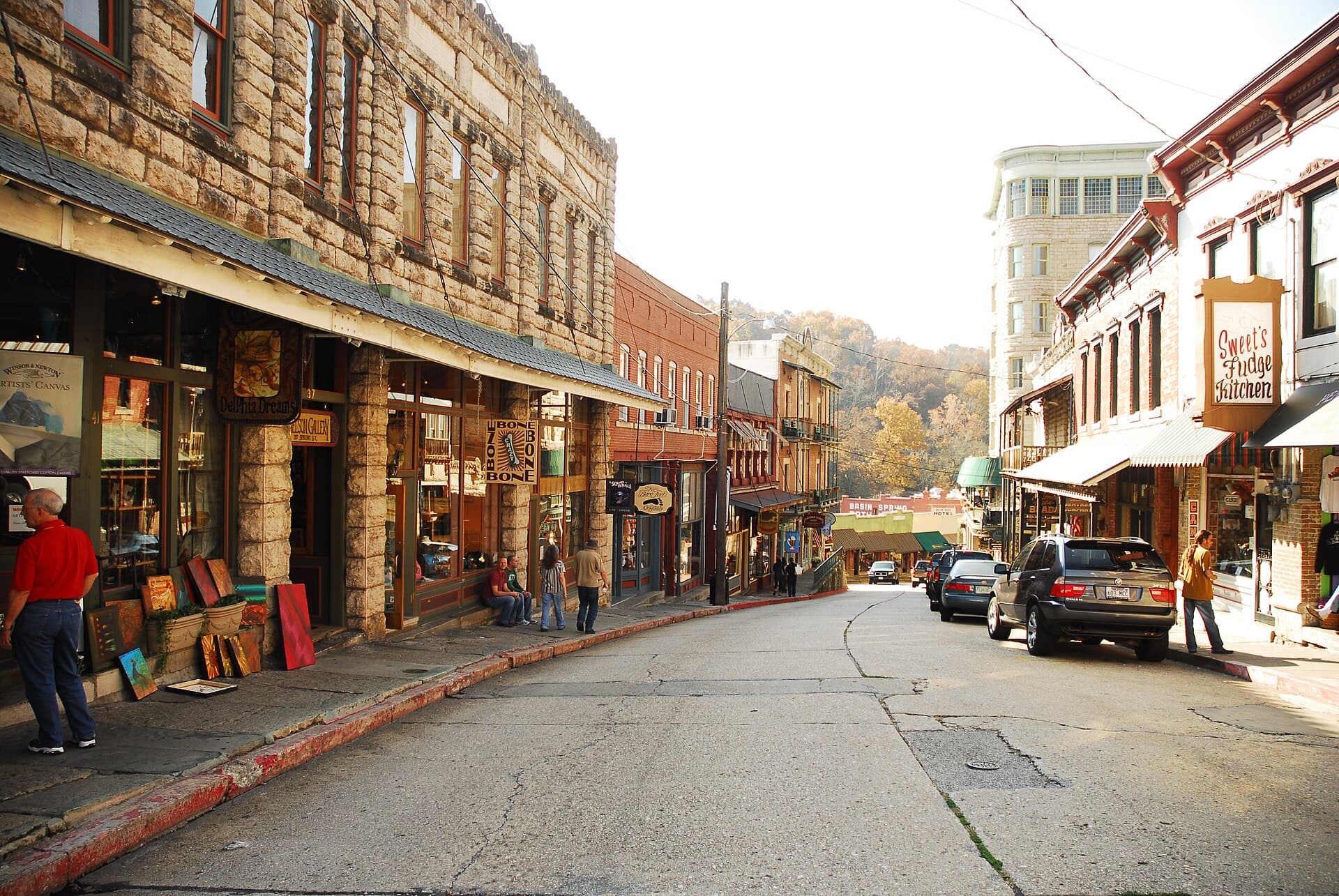
Eureka Springs, Arkansas, liegt in den Ozarks, einer Bergstadt, die für ihre gut erhaltene viktorianische Architektur und ihren unverwechselbaren künstlerischen Geist gefeiert wird. Im Gegensatz zu typischen Städten mit einem Gitternetzmuster schlängeln sich die Straßen unerwartet und folgen den natürlichen Konturen der steilen Berghänge, wodurch eine einzigartige, dreidimensionale Stadtlandschaft entsteht. Das gesamte Stadtzentrum steht im National Register of Historic Places und bietet mit seinen verzierten Gebäuden aus dem 19. Jahrhundert eine Reise in die Vergangenheit.
Neben seinem architektonischen Reiz ist Eureka Springs für die zahlreichen natürlichen Quellen bekannt, die einst Besucher anzogen, die therapeutische Vorteile suchten. Heute verbindet die Stadt ihren historischen Charme mit einer aktiven Kunstszene, eklektischen Geschäften und einer Vielzahl von Outdoor-Aktivitäten. Von der Erkundung von Kunstgalerien bis hin zu Wanderungen auf malerischen Wegen bietet Eureka Springs eine Mischung aus kultureller Immersion und natürlicher Pracht.
Die Geschichte von Eureka Springs beginnt lange vor seiner formellen Gründung. Indianerstämme betrachteten die Quellen der Gegend als heiligen Boden und glaubten, dass das Wasser heilende Eigenschaften besaß. Sie betrachteten das Gebiet um Basin Spring als neutrales Territorium, einen Ort, an dem keine Schlachten geschlagen wurden. Auch europäische Siedler fühlten sich von diesen 'Wundernwassern' angezogen. Dr. Alvah Jackson wird die 'Entdeckung' der Heilquellen um 1858 zugeschrieben, angeblich nutzte er das Wasser, um die Augenkrankheit seines Sohnes zu heilen. Er hielt die Quelle seines 'Dr. Jackson's Eyewater' über zwei Jahrzehnte geheim.
Die Stadt Eureka Springs wurde offiziell am 4. Juli 1879 gegründet, nachdem Richter J.B. Saunders, ein Freund von Dr. Jackson, behauptete, die Quellwasser hätten seine lähmende Krankheit geheilt, und begann, sie weithin zu bewerben. Die Nachricht von den angeblichen medizinischen Qualitäten der Quellen verbreitete sich schnell und verwandelte das abgelegene Ozark-Gebiet in ein geschäftiges Gesundheitsresort. Tausende strömten zu den Quellen und errichteten zunächst Zelte und Baracken. Bis Ende 1879 wurde die Bevölkerung auf 10.000 geschätzt, und bis 1881 wurde Eureka Springs zur 'City of the First Class' erklärt und wurde die viertgrößte Stadt von Arkansas.
Das späte 19. Jahrhundert markierte den Höhepunkt der Popularität und des Reichtums von Eureka Springs, das Investoren und die Eisenbahn anzog. Die Eureka Improvement Company spielte eine bedeutende Rolle bei der Entwicklung der Stadt und finanzierte und baute die Eureka Springs Railroad. Diese Ära sah eine 'viktorianische Explosion' in der Architektur mit über 190 Gebäuden aus diesem Jahrzehnt, die Stile wie Queen Anne, Italianate und Second Empire zeigten. Die einzigartige Anlage der Stadt mit Gebäuden, die in die steilen Berghänge gebaut wurden, und gewundenen Straßen war eine direkte Reaktion auf das schwierige Gelände. Doch das Wasser, das Wohlstand brachte, bereitete auch Probleme. Oberflächenabfluss von den Hügeln und Überschwemmungen aus dem Leatherwood Creek führten in den 1890er Jahren dazu, dass Teile der Innenstadt angehoben wurden, wodurch ein faszinierendes 'unterirdisches' Netzwerk unterhalb des aktuellen Straßenniveaus entstand.
Nach einer Periode des Niedergangs im frühen 20. Jahrhundert blieb die viktorianische Architektur von Eureka Springs weitgehend unberührt, was zu ihrer Wiederentdeckung später im Jahrhundert führte. 1970 wurde die gesamte Stadt in das National Register of Historic Places aufgenommen. Bemühungen zur Restaurierung und Erhaltung von Eureka Springs als wünschenswertes Touristenziel begannen 1979, dem hundertsten Jahr seines Bestehens. Heute zieht die Stadt Besucher weiterhin mit ihrer Mischung aus historischem Charme, künstlerischer Gemeinschaft und natürlicher Schönheit an.
Beginnen Sie Ihre Erkundung im Historic Downtown Eureka Springs, wo viktorianische Architektur in einzigartigen Geschäften, Kunstgalerien und Restaurants untergebracht ist. Schlendern Sie durch die Spring Street und Main Street und beachten Sie die erhaltenen Gebäude aus dem 19. Jahrhundert und den unverwechselbaren, gewundenen Straßenplan der Stadt. Erwägen Sie eine geführte Tour, um in die Geschichte und vielleicht sogar in die 'Underground Eureka'-Passagen einzutauchen.
Besuchen Sie den Basin Spring Park im Herzen der Innenstadt, wo sich die ursprüngliche Heilquelle befindet, die der Stadt ihren Namen gab. Für eine andere Art von historischem Erlebnis nehmen Sie an einer Geistertour durch das 1886 Crescent Hotel & Spa teil, bekannt als 'Amerikas meistbesuchtes Hotel'. Außerhalb des historischen Viertels erkunden Sie die Thorncrown Chapel, ein architektonisches Wunderwerk aus Holz und Glas in Waldlage. Tierliebhaber können das Turpentine Creek Wildlife Refuge besuchen, das Großkatzen und andere Wildtiere rettet. Für weite Ausblicke sehen Sie die siebenstöckige Christus der Ozarks-Statue.
Eureka Springs erlebt vier ausgeprägte, aber milde Jahreszeiten. Frühling und Sommer bieten angenehmes warmes Wetter, ideal für Outdoor-Aktivitäten und die Erkundung der vielen Quellen der Stadt. Der Herbst bringt eine spektakuläre Herbstlaubfärbung, was die Zeit von Ende Oktober bis Anfang November zu einer beliebten Zeit für malerische Fahrten und Spaziergänge macht. Die Winter sind im Allgemeinen mild, mit seltenem starken Schneefall, und viele Attraktionen bleiben das ganze Jahr über geöffnet. Die Stadt veranstaltet auch das ganze Jahr über eine Vielzahl von Veranstaltungen, von Blues- und Jazzfestivals bis hin zu Weihnachtsfeiern.
Eureka Springs liegt im Nordwesten von Arkansas und ist über den U.S. Highway 62 und den State Highway 23 erreichbar. Der nächstgelegene kommerzielle Flughafen befindet sich in Fayetteville, ein internationaler Flughafen westlich von Bentonville (XNA). Sobald Sie in der Stadt sind, nutzen Sie den Eureka Springs Trolley Service, da viele Unterkünfte einen Tür-zu-Tür-Service anbieten, der es einfach macht, das hügelige Gelände ohne Auto zu navigieren. Parkplätze können in der historischen Innenstadt aufgrund der engen, gewundenen Straßen schwierig sein. Die Unterkünfte reichen von historischen Hotels und Bed & Breakfasts bis hin zu Hütten und Cottages. Viele lokale Geschäfte sind unabhängig geführt und bieten einzigartige Einkaufs- und Essenserlebnisse. Seien Sie auf steile Straßen und Treppen vorbereitet, wenn Sie die Innenstadt erkunden.
Eureka Springs — Koreanisch, Chinesisch, Hebräisch und 29 weitere Sprachen, jede Station von einer muttersprachlichen Stimme erzählt. Die größte Sprachauswahl aller selbstgeführten Audiotouren.
Verfügbar auf: