Museu Internacional de Cerâmica (MIC)
O MIC reúne uma vasta coleção de cerâmicas, mas uma seção oferece um vislumbre singular dos ritmos diários dos séculos passados.
História completa desbloqueada no tour
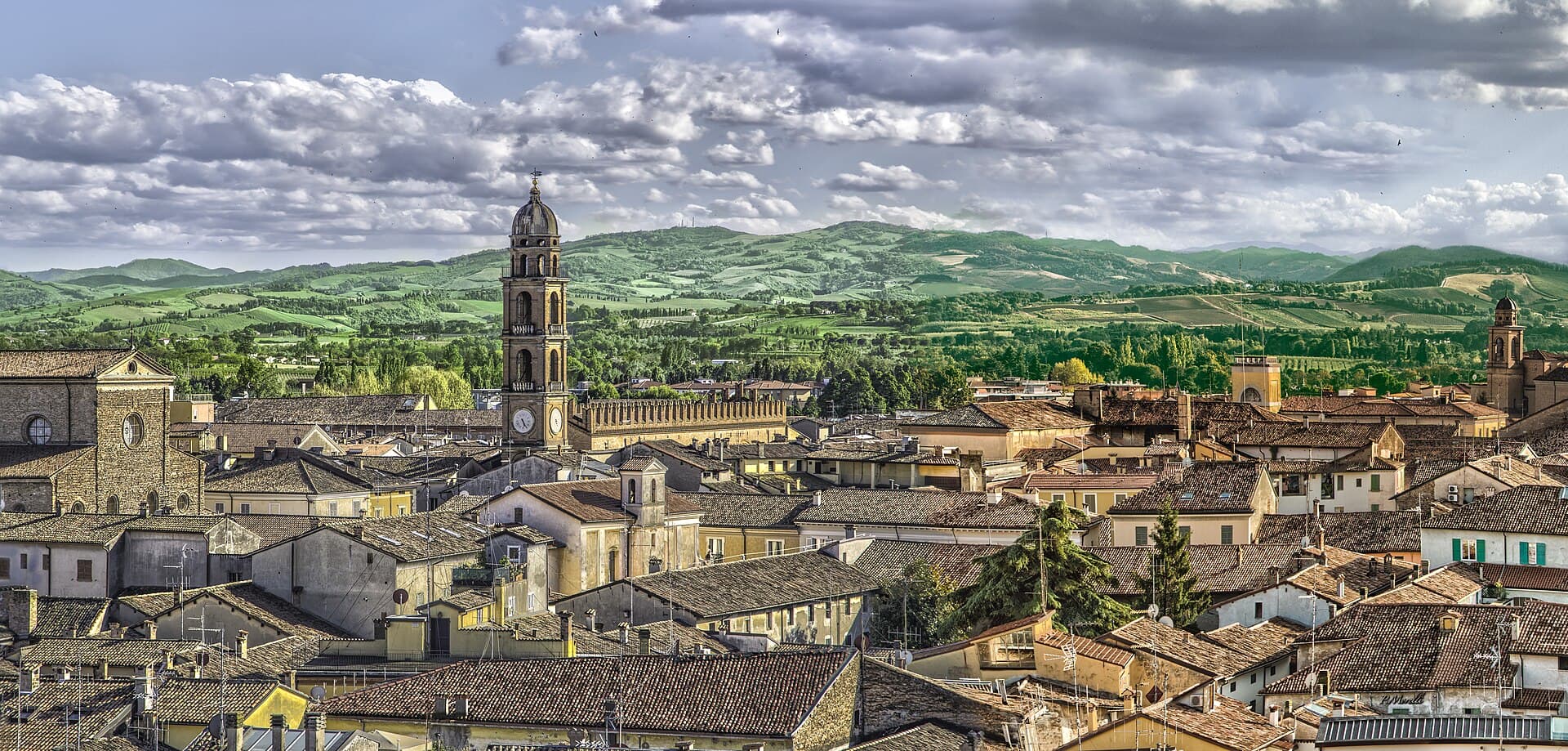 Pmorelli1969 / CC BY-SA 4.0, via Wikimedia Commons
Tour de áudio autoguiado por Faenza — rota GPS a pé, reprodução offline, narração envolvente em 32 idiomas.
“Onde a terra se lembra, e mãos hábeis moldam sua memória.”
Não os postais. As histórias que nem os locais conhecem — sussurradas ao seu ouvido, exatamente onde aconteceram.
O MIC reúne uma vasta coleção de cerâmicas, mas uma seção oferece um vislumbre singular dos ritmos diários dos séculos passados.
A fachada severa e sem adornos de tijolos da Catedral de Faenza esconde um detalhe artístico gravado em seu piso de mármore.
Este palácio neoclássico é aclamado por seus elaborados afrescos; no entanto, a decoração de uma sala se inspira em uma descoberta antiga muito específica.
Descubra cada segredo de Faenza
Cada endereço, cada revelação na íntegra — no seu ouvido, exatamente onde aconteceu.
Você escolhe as suas paragens. Você caminha. A voz revela o que os outros perdem.


O seu tour áudio autoguiado de Faenza está pronto — escolha os seus pontos de interesse, selecione o seu idioma e comece no momento em que chegar.
ComprarA Lume inclui um guia de realidade aumentada. Levante o telemóvel: a câmara mostra a rua à sua frente, com uma seta luminosa sobreposta à imagem real que aponta sempre para a sua próxima paragem — sem mapa para decifrar, sem voltas erradas. Como tudo na Lume, funciona totalmente offline.
Faenza, uma cidade na região de Emilia-Romagna, na Itália, é mundialmente reconhecida por sua arte em cerâmica, tanto que o termo 'faiança' para a cerâmica esmaltada com estanho se origina do nome da cidade. Situada ao longo da antiga Via Emilia romana, a cidade serve como um cruzamento cultural entre Bolonha, Ravena e Florença. Além de sua célebre cerâmica, Faenza oferece uma mistura atraente de arquitetura renascentista e neoclássica, com praças elegantes e edifícios históricos moldando sua paisagem urbana.
Designada Cidade Criativa da UNESCO para Artesanato e Arte Popular, Faenza proporciona uma experiência tangível de seu patrimônio cerâmico através de inúmeros museus, exposições e oficinas de artesãos onde os visitantes podem observar ou até mesmo participar do ofício. O encanto da cidade se estende à sua cena culinária, oferecendo especialidades e vinhos locais da Romagna. O ritmo tranquilo de Faenza e suas profundas ofertas culturais a tornam um destino atraente para aqueles que buscam uma autêntica experiência italiana longe das rotas turísticas mais movimentadas.
A localização estratégica da cidade aos pés dos Apeninos de Faenza também concede acesso a paisagens naturais, incluindo parques urbanos, colinas de argila e mirantes cênicos, convidando à exploração a pé ou de bicicleta. A dedicação de Faenza em preservar suas tradições artísticas enquanto abraça a criatividade contemporânea garante uma visita dinâmica e enriquecedora.
As origens de Faenza remontam aos tempos romanos, estabelecida como 'Faventia' ao longo da Via Aemilia em 187 a.C. Evidências arqueológicas sugerem que o local foi habitado ainda antes, em tempos pré-históricos. Durante o Império Romano, Faenza prosperou através de atividades agrícolas e cerâmicas industriais. No entanto, a cidade experimentou um período de declínio com a queda do Império Romano, perdurando até um renascimento urbano no século VIII, que viu a construção inicial de muralhas.
O período medieval de Faenza testemunhou a ascensão do sistema comunal e, no século XII, tornou-se uma comuna independente. A poderosa família Manfredi consolidou sua influência, assumindo o controle em 1313 e governando até 1501. Sob os Manfredi, Faenza entrou em um período significativo de crescimento, tornando-se um portal cultural estratégico com conexões a famílias influentes como os Medici em Florença. Essa era, particularmente o Renascimento, marcou o auge da fama artística e técnica de Faenza, influenciando profundamente a produção de cerâmica tanto nacional quanto internacionalmente. Os artesãos da cidade dominaram técnicas complexas, produzindo requintada majólica admirada em toda a Europa.
Em 1501, Cesare Borgia conquistou Faenza, e a cidade subsequentemente se tornou parte dos Estados Papais, um status que manteve em grande parte até a era napoleônica em 1797. Os séculos XVIII e XIX viram Faenza emergir como um centro proeminente do Neoclassicismo na Itália e na Europa. Arquitetos como Giuseppe Pistocchi, Giovanni Antonio Antolini e Pietro Tomba lideraram significativas transformações de edifícios, redesenhando o tecido urbano da cidade com linhas harmoniosas e detalhes arquitetônicos equilibrados. O Palazzo Milzetti é um exemplo primordial dessa arte neoclássica.
Apesar dos pesados danos durante a Segunda Guerra Mundial, que impactaram sua estrutura urbana, Faenza manteve inúmeros exemplos de sua arquitetura renascentista e barroca, particularmente em seu centro histórico. O Museu Internacional de Cerâmica, embora amplamente destruído em 1944, foi reconstruído e reaberto em 1949, graças a doações de artistas como Picasso, Léger, Matisse e Chagall. Hoje, Faenza continua seu legado como capital mundial da cerâmica, reconhecida como Cidade Criativa da UNESCO, mesclando sua profunda história com a inovação artística contínua.
Comece sua exploração no coração de Faenza, na Piazza del Popolo, um grandioso espaço público ladeado por elegantes arcadas e palácios históricos, incluindo o Palazzo del Podestà e o Palazzo del Municipio. Adjacente fica a Piazza della Libertà, lar da Catedral de Faenza. Construída entre 1474 e 1520, a Catedral de São Pedro, com sua fachada de tijolos inacabada, exibe a arquitetura renascentista da Romagna e abriga notáveis esculturas renascentistas e o túmulo de São Pedro Damião.
Uma visita a Faenza é incompleta sem mergulhar em seu patrimônio cerâmico. O Museu Internacional de Cerâmica (MIC) é uma instituição de renome mundial com uma coleção de mais de 60.000 obras que abrangem 6.000 anos de história, incluindo peças de Picasso, Matisse e Fontana. Explore as muitas oficinas de artesãos pela cidade, onde você pode testemunhar a criação de cerâmica pintada à mão e até mesmo tentar modelar argila.
Para um vislumbre do esplendor neoclássico de Faenza, visite o Palazzo Milzetti. Esta residência aristocrática, agora o Museu Nacional da Era Neoclássica na Romagna, apresenta salas primorosamente decoradas com afrescos de Felice Giani e trabalhos em estuque de Antonio Trentanove. Considere uma visita ao Teatro Angelo Masini, um exemplo extraordinário de arquitetura neoclássica, ou à Pinacoteca Municipal, um dos museus mais antigos da Emilia-Romagna, que abriga arte do Renascimento ao século XX.
Faenza experimenta um clima mediterrâneo com invernos amenos e verões quentes. As épocas mais agradáveis para visitar são durante a primavera (março a maio) e o outono (setembro a novembro), quando as temperaturas são confortáveis, variando de 15°C a 25°C (59°F a 77°F). Esses períodos são ideais para explorar as atrações culturais da cidade e desfrutar de atividades ao ar livre, com menos multidões do que no verão. Faenza também sedia vários eventos culturais, exposições de arte e festivais de cerâmica ao longo do ano, tornando-a um destino que vale a pena o ano todo.
Faenza é facilmente acessível de carro e trem. É bem conectada por serviços frequentes de trem de grandes cidades italianas como Bolonha, Florença e Ravena, com a estação de trem localizada centralmente para fácil exploração a pé. Se for de carro, Faenza está situada ao longo da autoestrada A14. O centro da cidade é compacto e amigável para pedestres, com muitas atrações a uma curta distância. Um serviço gratuito de mini-ônibus público ecológico e um serviço de bicicleta pública estão disponíveis para se locomover, especialmente se você estiver hospedado fora do centro imediato.
Ao planejar sua visita, esteja ciente de que muitos negócios na Itália, incluindo Faenza, observam uma 'siesta', fechando por algumas horas à tarde. O centro histórico tem restrições de tráfego (ZTL - zona de tráfego limitado) e áreas exclusivas para pedestres, portanto, preste atenção à sinalização. Para informações turísticas, o escritório Pro Loco Faenza pode fornecer mapas, sugestões de acomodação e detalhes sobre eventos e passeios guiados.
Faenza — coreano, chinês, hebraico e mais 29 idiomas, cada parada narrada por uma voz nativa. A maior variedade de idiomas entre os passeios de áudio autoguiados.
Disponível em: