Kom Oshim Museum, Fayoum
Most of the world's striking Fayoum mummy portraits are scattered in museums globally.
Full story unlocks in the tour
 Roland Unger / CC BY-SA 3.0, via Wikimedia Commons
Self-guided audio walking tour of Faiyum — GPS route, offline playback, story-driven narration in 32 languages.
“Where ancient ingenuity meets the desert's quiet expanse.”
Not the postcards. The stories even locals don't know — whispered in your ear, right where they happened.
Most of the world's striking Fayoum mummy portraits are scattered in museums globally.
The rhythmic, groaning sound echoing across the canals of Fayoum isn't just an old wives' tale.
Deep in the Egyptian desert, far from any ocean, lies a valley filled with whale skeletons.
Discover every secret of Faiyum
Every address, every reveal in full — in your ear, right where it happened.
You pick your stops. You walk. The voice reveals what the others miss.


Your self-guided audio tour of Faiyum is ready — pick your landmarks, choose your language, and start the moment you arrive.
BuyLume has a built-in augmented-reality guide. Hold your phone up and its camera shows the street ahead of you, with a glowing arrow laid over the real view that always points to your next stop — no map to puzzle over, no wrong turns. Like everything in Lume, it works fully offline.
Fayoum, an expansive oasis approximately 100 kilometers southwest of Cairo, presents a distinctive landscape unlike typical desert oases. Instead of relying on underground springs, it is sustained by a channel of the Nile River, the Bahr Yussef, which has nourished its fertile lands for millennia. This unique hydrological connection has shaped Fayoum into a verdant agricultural region, often called "Egypt's Garden," known for its diverse crops like figs, grapes, olives, and roses.
Beyond its agricultural bounty, Fayoum is a captivating blend of natural beauty and profound historical significance. It encompasses serene lakes, the only waterfalls in Egypt, and expansive desert plains. The region is a haven for birdwatchers and those seeking a peaceful escape from urban life, with its slow pace and authentic rural culture. From ancient archaeological sites to a thriving contemporary pottery scene, Fayoum provides a multifaceted experience for travelers willing to venture off the well-traveled tourist paths.
The oasis stands as a testament to human ingenuity, with its ancient irrigation systems still in operation today. It's a place where the echoes of pharaohs, Greeks, and Romans mingle with the sounds of daily life, offering a tangible connection to Egypt's layered past.
The history of Fayoum stretches back millions of years, to a time when it was a dry hollow in the desert during the Messinian Salinity Crisis, when much of the Mediterranean Sea had dried up. Later, as the Mediterranean refilled, the Nile River's course shifted, eventually overflowing into the Fayoum basin and creating a vast lake. This transformation attracted early human inhabitants, with evidence of settlements dating back to around 7200 BCE, and the establishment of the first agricultural communities by 5200 BCE. The region was initially known as Ta-She, or "Land of the Lakes," by Old Kingdom pharaohs who favored it for hunting.
Fayoum's agricultural potential was fully realized during the Middle Kingdom (1901-1802 BC), when it became a crucial center for farming and royal pyramid building. Around 2300 BC, the Bahr Yussef canal, a waterway connecting the Nile to the natural lake, was widened and deepened. This ambitious engineering feat served to control Nile floods, regulate water levels during dry seasons, and irrigate the surrounding farmlands. The pharaohs of the Twelfth Dynasty utilized the lake as a massive reservoir, a testament to the advanced waterworks of the era.
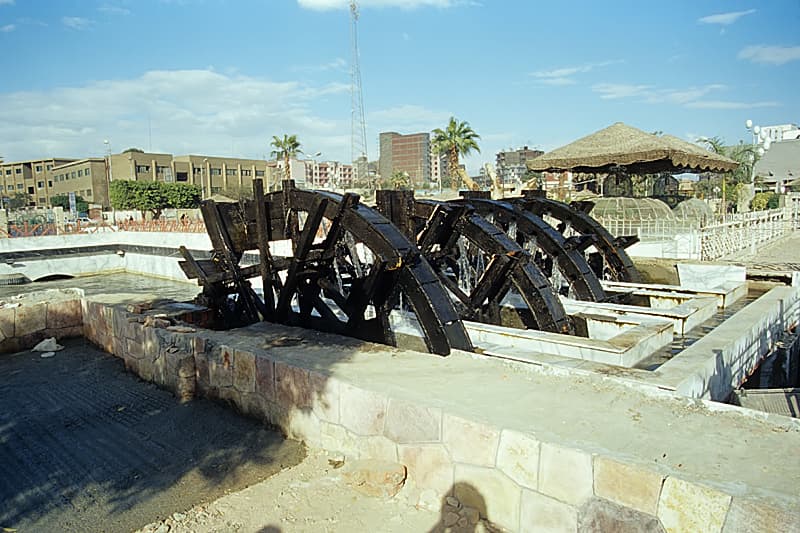
During the Ptolemaic Dynasty (323-30 BCE), Fayoum experienced a significant revival. Ptolemaic engineers introduced hundreds of waterwheels to lift water into irrigation channels, many of which are still in use today. The region continued to flourish under Roman rule, becoming one of the Roman world's major breadbaskets. It was during this period, from the 1st to 3rd centuries CE, that the distinctive Fayoum mummy portraits emerged, a unique funerary art form combining Egyptian mummification with Greco-Roman portraiture. However, from the 3rd century onwards, the area saw a decline, with many settlements abandoned and the canal systems falling into disrepair.
Modern efforts, such as the construction of the Aswan Low Dam, helped to restore the region's agricultural vitality in the early 20th century, bringing a fuller water supply and allowing more land to be cultivated. Today, Fayoum remains an important agricultural region and a destination that reveals layers of Egyptian history, from prehistoric marine life to pharaonic engineering and Roman artistry.
Fayoum offers a diverse range of attractions, blending natural wonders with ancient history. A prominent feature are the Waterwheels of Fayoum, over 200 ancient wooden wheels, many still operational, that lift water for irrigation and create a distinctive, rhythmic sound. You can find a cluster of seven waterwheels along the Bahr Sinnuris canal, and four of the largest in Fayoum City itself.
The Wadi El Rayan Protected Area is a highlight, featuring Egypt's only waterfalls, formed by water flowing between two man-made lakes. This area is also ideal for birdwatching and offers opportunities for sandboarding on its dunes. Nearby, Lake Qarun, one of Egypt's largest natural lakes, is a significant birdwatching site and a remnant of the ancient Lake Moeris.
For a journey into deep time, Wadi El Hitan (Valley of the Whales), a UNESCO World Heritage Site, showcases remarkably preserved fossils of ancient whales and other marine life from approximately 40 million years ago, when the area was a sea. The Tunis Village offers a contemporary cultural experience, known for its active pottery workshops and art scene, with pottery classes and an annual festival.
Archaeological sites include the Hawara Pyramid of Amenemhat III and the Lahun Pyramid of Senusret II, offering insights into Middle Kingdom pyramid building. The Qasr Qarun Temple, a well-preserved Ptolemaic temple, and the ruins of the Greco-Roman town of Karanis (Kom Aushim) provide further historical exploration.
The optimal time to visit Fayoum is from October to April. During these months, the weather is mild and pleasant, with daytime temperatures typically ranging between 15°C and 25°C (59°F and 77°F), making it ideal for outdoor activities and exploring historical sites. This period also coincides with bird migration seasons, particularly in October-November and March-April, offering excellent opportunities for birdwatching at Lake Qarun and Wadi El Rayan. It's advisable to avoid the summer months of May to September, when temperatures can exceed 35°C (95°F), making daytime outdoor excursions less comfortable.
Fayoum is easily accessible from Cairo, located approximately 100 kilometers southwest, a drive of about 1.5 to 2 hours. Options for transportation include microbuses, shared taxis, private cars, or organized tours from Cairo. Within Fayoum, renting a car with a driver or joining an organized tour is recommended for efficiently visiting multiple sites, as public transport between attractions can be limited. Taxis are available in Fayoum City for local trips.
When packing, bring comfortable walking shoes, sunscreen, a hat, and light cotton or linen clothing, especially during warmer months. Layers are advisable for cooler evenings, particularly if you plan to camp in the desert. It's also wise to carry cash, especially when visiting more remote locations. Fayoum is a more conservative region than Cairo, so dressing modestly, particularly in rural areas and religious sites, is respectful of local customs. Drink plenty of water to stay hydrated in the dry climate.
Faiyum in Korean, in Chinese or in Hebrew — and 29 more languages, every stop narrated by a native voice. The widest language range of any self-guided audio tour.
Available in: