The Vault Bar
Imaginez siroter un cocktail artisanal entre des murs qui gardaient autrefois des fortunes.
L'histoire complète se débloque dans le tour
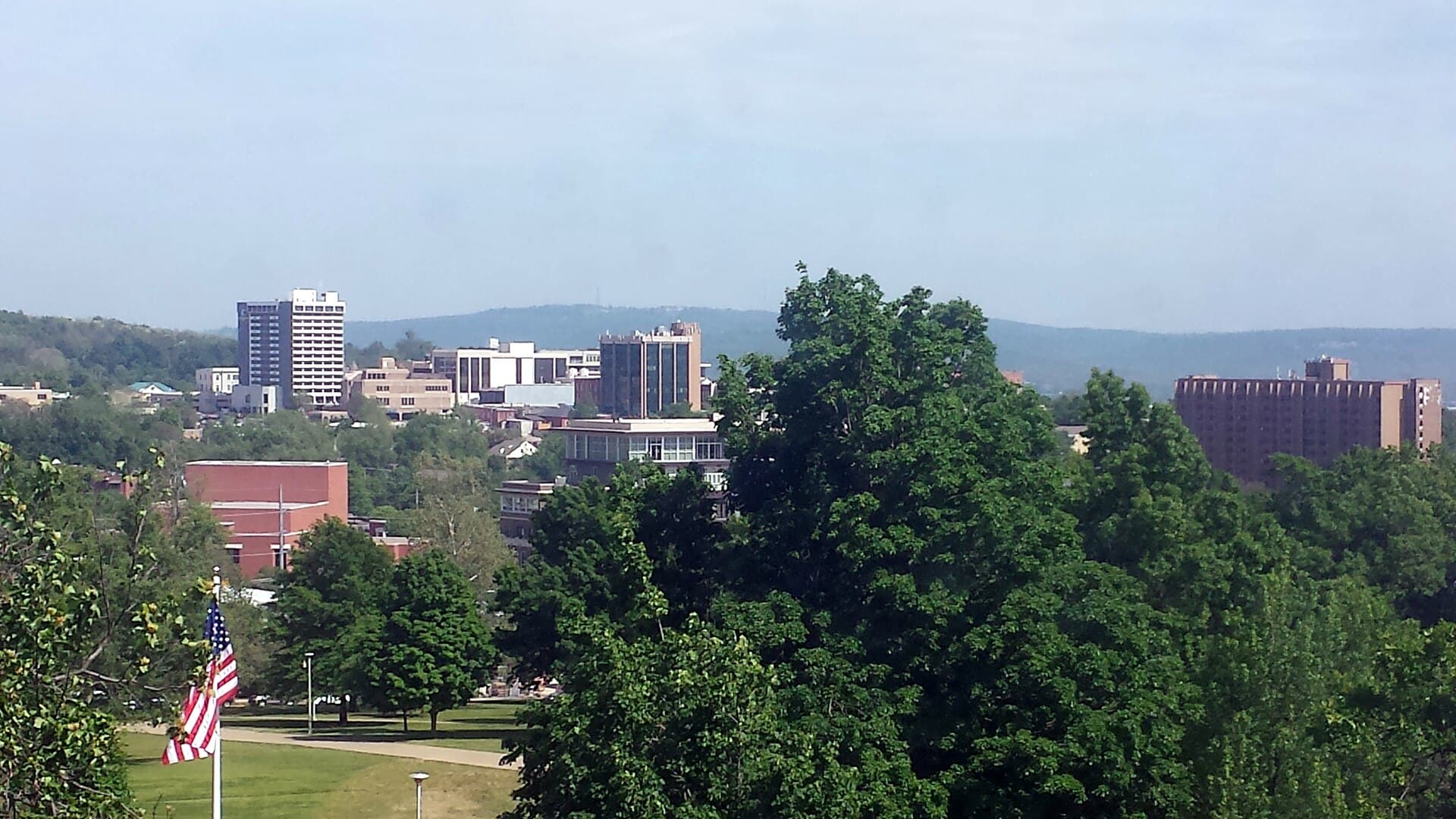 Brandonrush / CC BY-SA 3.0, via Wikimedia Commons
Visite audio autoguidée de Fayetteville — parcours GPS à pied, lecture hors ligne, narration en 32 langues.
“Là où le pouls vibrant d'une ville universitaire rencontre la beauté sauvage des Ozarks.”
Pas les cartes postales. Les histoires que même les habitants ignorent — soufflées à l'oreille, là où elles se sont passées.
Imaginez siroter un cocktail artisanal entre des murs qui gardaient autrefois des fortunes.
Vous pourriez tomber sur un terrain de basketball aux couleurs vives dans un endroit inattendu du centre-ville.
Le plus petit Walmart du monde a autrefois fonctionné à Fayetteville.
Découvrez tous les secrets de Fayetteville
Chaque adresse, chaque révélation en entier — dans ton oreille, là où elle s'est passée.
Tu choisis tes lieux. Tu marches. La voix te révèle ce que les autres ignorent.


Votre visite audioguidée de Fayetteville vous attend — choisissez vos lieux, votre langue, et lancez-vous dès votre arrivée.
AcheterLume intègre un guide en réalité augmentée. Levez votre téléphone : sa caméra montre la rue devant vous, avec une flèche lumineuse posée sur l'image réelle qui pointe toujours vers votre prochain arrêt — aucune carte à déchiffrer, aucun mauvais virage. Comme tout dans Lume, ça fonctionne entièrement hors-ligne.
Fayetteville, Arkansas, est une ville qui prospère sur les contrastes : une communauté profonde et progressiste située au milieu de la beauté naturelle des montagnes Ozark. C'est un endroit où l'énergie créative d'une grande université rencontre des racines communautaires profondes, favorisant un esprit distinctement indépendant. Connue pour sa scène artistique animée, ses vastes possibilités de loisirs en plein air et une atmosphère accueillante, Fayetteville offre un mélange unique de commodités urbaines et d'évasions naturelles.
Souvent décrite comme dynamique et amoureuse de la nature, Fayetteville a acquis la réputation d'être l'une des villes les plus agréables à vivre en Amérique. De sa place animée du centre-ville et de sa vibrante Dickson Street à son vaste réseau de sentiers et d'espaces verts, la ville invite à l'exploration et promet des découvertes inattendues. Que vous soyez attiré par la musique live, l'art local, les sports universitaires ou simplement la tranquillité de la nature, Fayetteville offre une expérience mémorable.
L'engagement de la ville envers la durabilité et la vie active est évident partout, de sa désignation comme « Gold Bicycle Friendly Community » à ses nombreux parcs et zones naturelles. Fayetteville est un endroit où vous pouvez facilement passer d'encourager les Razorbacks à faire du VTT sur des sentiers de classe mondiale, tout en profitant d'une scène culinaire florissante et d'une atmosphère détendue et accueillante.
## Premiers établissements et dénomination Les origines de Fayetteville remontent au début des années 1820, lorsque les pionniers ont commencé à s'installer dans la région, qui était alors un territoire de chasse amérindien pour les Osages, puis le foyer des Cherokees. La première ferme permanente a été établie vers 1828 par la famille George McGarrah près de ce qui est aujourd'hui le coin de Spring Street et Willow Avenue, au pied du mont Sequoyah. En 1828, Fayetteville a été désignée chef-lieu du comté de Washington. Elle a été initialement nommée Washington Courthouse, mais le nom a été changé en 1829 par le ministre des Postes William T. Barry pour éviter toute confusion avec une autre ville nommée Washington dans le comté de Hempstead. Le nom Fayetteville a été choisi par les commissaires du comté, dont deux venaient de Fayetteville, Tennessee, qui elle-même avait été nommée en l'honneur du marquis de Lafayette, le héros français de la guerre d'indépendance américaine.
## Croissance et guerre civile Fayetteville a été officiellement incorporée en 1841. La ville a rapidement grandi en tant que centre politique et éducatif, avec le premier journal, The Fayetteville Witness, commençant sa publication en 1840. Des personnalités notables comme Archibald Yell, qui a été le premier membre du Congrès de l'Arkansas et son deuxième gouverneur, s'y sont installées. Cependant, la guerre civile a considérablement affecté Fayetteville, une grande partie de la ville d'origine ayant été détruite par le feu. La ville a connu une activité militaire et est devenue le site d'un cimetière national et d'un cimetière confédéré.
## Redéveloppement après la guerre civile et influence universitaire La création de l'Université de l'Arkansas à Fayetteville en 1871 a été un moment charnière pour le redéveloppement et la croissance future de la ville. L'université a transformé Fayetteville en un centre académique et culturel, lui valant le surnom d'« Athènes des Ozarks ». Dans les années 1890, Fayetteville était devenue un centre pour le tourisme et des industries comme le bois et la transformation des fruits. La ville a continué à développer ses infrastructures, y compris l'arrivée du télégraphe en 1860.
## L'ère moderne et l'identité « funky » À la fin du 20e et au début du 21e siècle, Fayetteville a connu une croissance spectaculaire, en partie due à l'expansion de grandes entreprises dans le nord-ouest de l'Arkansas. Aujourd'hui, l'Université de l'Arkansas reste une force motrice, insufflant à la ville une énergie vivante et créative. Fayetteville est connue pour sa philosophie « Keep Fayetteville Funky », un engagement à soutenir les entreprises locales et indépendantes et à célébrer son caractère unique. Cet esprit se reflète dans sa scène artistique et musicale florissante, ses diverses offres culinaires et son statut de ville leader pour les loisirs de plein air, reconnue comme la première « Ville cyclable » d'Amérique par l'Union Cycliste Internationale en 2021.
Commencez votre exploration à la Fayetteville Downtown Square & Gardens, le cœur historique de la ville, où vous pourrez vous promener dans les jardins et trouver des boutiques et des restaurants locaux. Le samedi, le Fayetteville Farmers' Market remplit la place de produits locaux et d'articles artisanaux.
Pour une dose de culture, visitez le Walton Arts Center ou le TheatreSquared pour des spectacles en direct. Explorez le Clinton House Museum, la première maison de Bill et Hillary Clinton, qui offre un aperçu de leurs débuts. L'Arkansas Air & Military Museum présente des avions rénovés de la Seconde Guerre mondiale. Les amateurs d'art peuvent découvrir des artistes locaux dans les galeries du centre-ville ou explorer le monde artisanal fantaisiste de Terra Studios.
Profitez du plein air au lac Fayetteville et son parc environnant, offrant des possibilités de camping, de kayak, de pêche, de randonnée et de disc golf. Le Botanical Garden of the Ozarks présente 12 jardins thématiques et la seule maison aux papillons de l'Arkansas. Pour des expériences uniques, recherchez le Wilson Park Castle ou faites une promenade panoramique jusqu'au Mount Sequoyah Center pour des vues imprenables sur la ville. N'oubliez pas d'explorer Dickson Street, le principal quartier de divertissement de Fayetteville, connu pour ses restaurants, ses bars et ses salles de concert comme le George's Majestic Lounge, le plus ancien et le plus long en activité de l'Arkansas.
Les meilleures périodes pour visiter Fayetteville sont le printemps (avril à mai) et l'automne (septembre à octobre). Ces saisons intermédiaires offrent un temps agréable avec des températures douces, une humidité plus faible et des précipitations modérées, idéales pour profiter des activités de plein air et du feuillage d'automne éclatant. Les étés (juin à août) sont chauds et humides, avec des maximales moyennes proches de 32°C, ce qui convient aux activités par temps chaud, mais l'air peut être lourd. Les hivers sont doux avec des chutes de neige légères occasionnelles. Bien que la haute saison estivale puisse être chargée et plus chère, les saisons intermédiaires offrent souvent un meilleur équilibre entre la météo, l'affluence et le rapport qualité-prix.
Le centre-ville de Fayetteville est particulièrement propice à la marche et au vélo, avec un vaste réseau de sentiers, y compris le Razorback Greenway de 64 km. Des vélos électriques sont disponibles à la location via des applications ou des magasins locaux, offrant un moyen pratique d'explorer la ville. Pour ceux qui arrivent par avion, l'aéroport principal le plus proche est le Northwest Arkansas National Airport (XNA), situé à environ 32 km au nord de Fayetteville. Les options de transport en commun dans la ville comprennent Razorback Transit, qui dessert le campus de l'Université de l'Arkansas et les zones environnantes, et Ozark Regional Transit. Les hébergements vont des hôtels près de l'université et du centre-ville à diverses locations de vacances. Les options de restauration sont nombreuses, avec une concentration de restaurants le long de Dickson Street et de la place du centre-ville, offrant de tout, des plats décontractés à la cuisine raffinée.
Fayetteville en coréen, en chinois ou en hébreu — et dans 29 autres langues, chaque étape narrée par une voix native. La plus large gamme de langues de tous les audioguides autoguidés.
Disponible en :