Castello Estense
Este imponente castelo com fossos, um símbolo do poder Este, guarda um segredo sombrio em suas muralhas.
História completa desbloqueada no tour
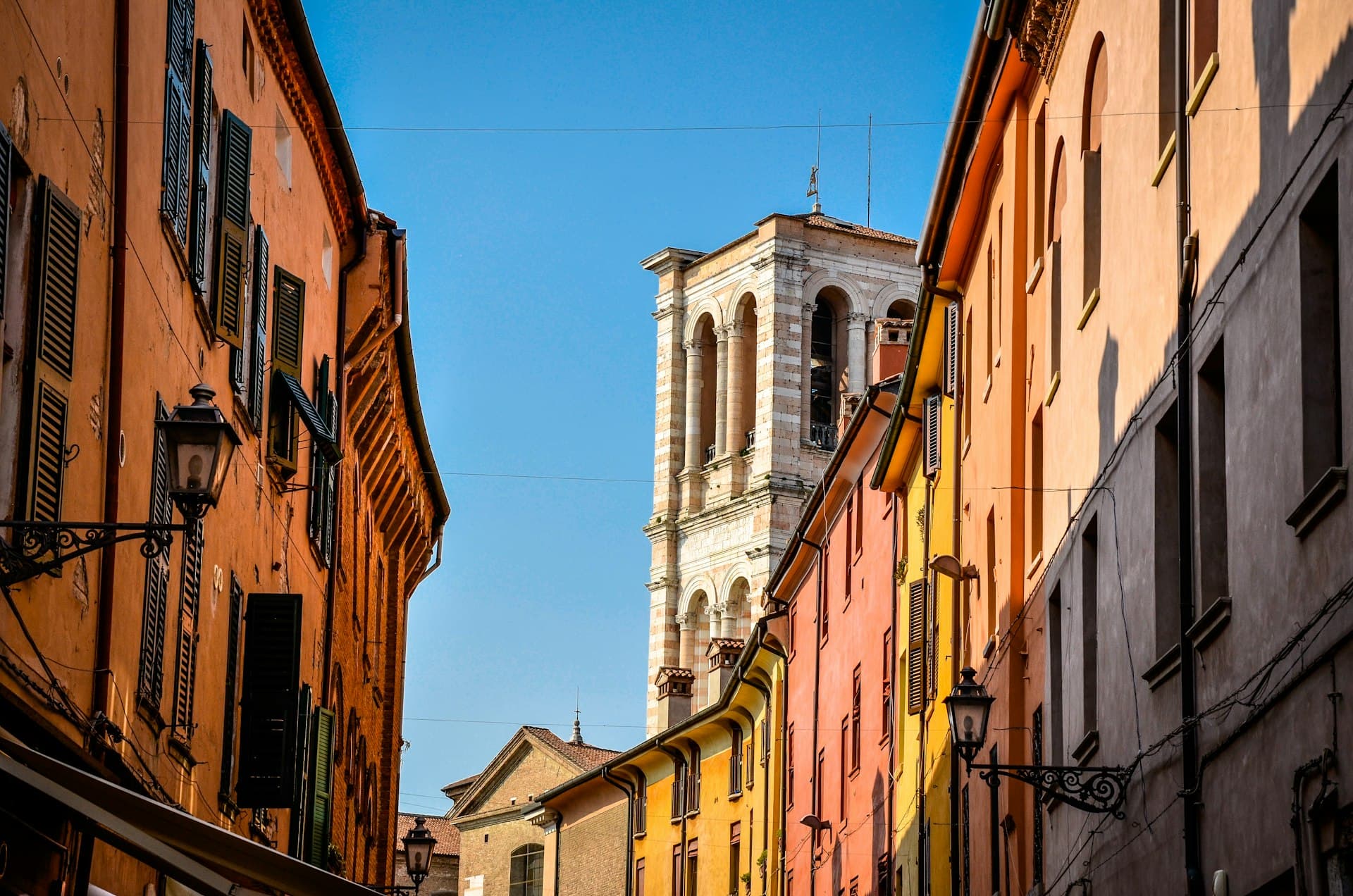 Photo: Lukas Tennie / Unsplash
Tour de áudio autoguiado por Ferrara — rota GPS a pé, reprodução offline, narração envolvente em 32 idiomas.
“Onde a grandiosidade renascentista encontra o charme tranquilo e vivido.”
Não os postais. As histórias que nem os locais conhecem — sussurradas ao seu ouvido, exatamente onde aconteceram.
Este imponente castelo com fossos, um símbolo do poder Este, guarda um segredo sombrio em suas muralhas.
Caminhe pelas ruas estreitas e arqueadas do antigo Gueto Judaico de Ferrara, e você poderá notar algo incomum nos edifícios.
Ferrara abriga um bar com uma história tão longa que é reconhecido pelo Guinness World Records.
Descubra cada segredo de Ferrara
Cada endereço, cada revelação na íntegra — no seu ouvido, exatamente onde aconteceu.
Você escolhe as suas paragens. Você caminha. A voz revela o que os outros perdem.


O seu tour áudio autoguiado de Ferrara está pronto — escolha os seus pontos de interesse, selecione o seu idioma e comece no momento em que chegar.
ComprarA Lume inclui um guia de realidade aumentada. Levante o telemóvel: a câmara mostra a rua à sua frente, com uma seta luminosa sobreposta à imagem real que aponta sempre para a sua próxima paragem — sem mapa para decifrar, sem voltas erradas. Como tudo na Lume, funciona totalmente offline.
Ferrara, uma cidade na região da Emília-Romanha, Itália, oferece uma jornada cativante através do tempo. Reconhecida como Patrimônio Mundial da UNESCO por seu tecido urbano renascentista notavelmente intacto, a cidade proporciona um vislumbre de um período de extraordinário florescimento artístico e cultural. Ao contrário de alguns destinos italianos mais movimentados, Ferrara mantém uma atmosfera serena e autêntica, convidando os visitantes a explorar suas ruas medievais e grandiosos palácios renascentistas em um ritmo mais tranquilo.
Situada no Po di Volano, um braço do rio Pó, a paisagem plana de Ferrara é ideal para o ciclismo, um meio de transporte popular entre os locais. A história da cidade está profundamente entrelaçada com a poderosa família Este, que transformou Ferrara de uma cidade medieval em uma capital europeia líder durante seu domínio do século XIII ao XVI. Sua influência duradoura é evidente na arquitetura, no planejamento urbano e no patrimônio cultural da cidade.
As origens de Ferrara remontam a pelo menos 753 d.C., quando foi conquistada pelos Lombardos. Mais tarde, passou para o Papado e, no século X, tornou-se uma comuna independente. O século XII viu conflitos internos entre famílias rivais, mas em 1242, a família Este afirmou seu poder, marcando o início de uma era de ouro que se estendeu por mais de três séculos.
A dinastia Este foi fundamental na transformação de Ferrara em um importante centro cultural e político. Eles estabeleceram uma universidade em 1391 e iniciaram programas para pavimentar as ruas e praças da cidade. Sob seu patrocínio, Ferrara atraiu proeminentes artistas, poetas e filósofos, tornando-se um centro do Renascimento italiano. Esta era viu a implementação de princípios revolucionários de planejamento urbano, notavelmente a 'Addizione Erculea' sob Ercole I d'Este no final do século XV. Esta ambiciosa expansão, projetada pelo arquiteto Biagio Rossetti, criou um distrito espaçoso e ordenado com ruas largas e retas e edifícios elegantes, rendendo a Ferrara o título de 'primeira cidade moderna europeia'.
No entanto, o domínio da família Este em Ferrara terminou em 1598, quando o último duque, Alfonso II, morreu sem um herdeiro legítimo. A cidade então passou para o controle dos Estados Papais, levando a um período de declínio. Ferrara permaneceu parte dos Estados Papais por quase 300 anos, experimentando uma diminuição populacional. Revoltas revolucionárias eventualmente levaram à sua anexação ao Estado Unitário da Itália em 1860.
Ferrara também possui uma herança judaica significativa, com uma presença contínua que remonta à Idade Média. A comunidade judaica floresceu sob os duques Este, que adotaram uma política de portas abertas que incentivou o assentamento e promoveu o intercâmbio cultural. No entanto, com o retorno da cidade ao controle papal em 1598, restrições foram impostas e um Gueto Judaico foi estabelecido em 1627, durando até a unificação italiana em 1859. Hoje, o antigo gueto, com suas ruas estreitas como a Via Mazzini, ainda mantém seu caráter histórico.
No século XX, Ferrara foi impactada pela Primeira Guerra Mundial e, mais tarde, viu um aumento na adesão ao Fascismo. Após a Segunda Guerra Mundial, a cidade experimentou expansão industrial. Hoje, Ferrara é uma cidade universitária, conhecida por suas exposições de arte, temporada de concertos e o Palio di Ferrara, a corrida de cavalos mais antiga da Itália.
Comece sua exploração no Castello Estense, uma formidável fortaleza com fossos e quatro torres de canto que se ergue no centro da cidade. Originalmente construído como uma estrutura defensiva em 1385, mais tarde se tornou a residência da família Este. Do castelo, uma curta caminhada leva à Piazza Trento e Trieste, a praça principal e um centro vibrante. Aqui, você encontrará a Catedral de San Giorgio, uma obra-prima românica e gótica consagrada em 1135, com uma impressionante fachada de mármore rosado e um campanário.
Explore o encanto medieval da Via delle Volte, uma viela estreita e arqueada que oferece um vislumbre do passado de Ferrara. Perto dali, o antigo Gueto Judaico, centrado na Via Mazzini, revela uma história complexa e significativa. Não perca o Palazzo dei Diamanti, um palácio renascentista conhecido por sua fachada única de cantaria em forma de diamante, que abriga a Pinacoteca Nacional e exposições temporárias. Para um refúgio sereno, visite a Certosa di Ferrara, um antigo mosteiro cartuxo que agora serve como um cemitério monumental e um tranquilo jardim de esculturas. Finalmente, considere um passeio de bicicleta pelas antigas muralhas da cidade, que se estendem por 9 quilômetros e oferecem vistas panorâmicas e uma conexão com a natureza.
As melhores épocas para visitar Ferrara são durante a primavera (meados de abril a meados de junho) e o outono (setembro). Essas estações oferecem temperaturas amenas, jardins floridos e uma atmosfera agradável para explorar a cidade a pé ou de bicicleta. Embora a primavera possa trazer mais chuva, maio é particularmente ativo com celebrações como o Palio di Ferrara. Setembro também é recomendado, e o final de agosto traz o Ferrara Buskers Festival. Os verões (junho a agosto) são quentes e úmidos, com temperaturas potencialmente atingindo 33°C (91°F) ou mais, embora junho possa oferecer alguns dias aceitáveis. Os invernos são geralmente frios, úmidos e muitas vezes com neblina.
Ferrara é facilmente acessível de trem, localizada a menos de uma hora de Bolonha. O centro da cidade é compacto e plano, tornando-o ideal para caminhar ou andar de bicicleta. Aluguel de bicicletas está amplamente disponível, permitindo que você experimente a cidade como um local. O centro histórico é um Patrimônio Mundial da UNESCO, e painéis informativos estão disponíveis para ajudar os visitantes a navegar. Considere comprar o MyFE Card, o passe turístico de Ferrara, para possíveis economias em atrações e isenção do imposto turístico se você pernoitar. O escritório de turismo oficial está localizado no pátio interno do Castello Estense. Ferrara é conhecida por sua culinária local; não deixe de provar especialidades como cappellacci di zucca (tortellini de abóbora) e salama da sugo (um prato tradicional de porco), muitas vezes acompanhados pelo pão coppia ferrarese.
Ferrara — coreano, chinês, hebraico e mais 29 idiomas, cada parada narrada por uma voz nativa. A maior variedade de idiomas entre os passeios de áudio autoguiados.
Disponível em: