Flåm Railway
The Flåm Railway is celebrated as one of the world's most scenic train journeys, yet its construction presented an unexpected challenge beyond the steep terrain.
Full story unlocks in the tour
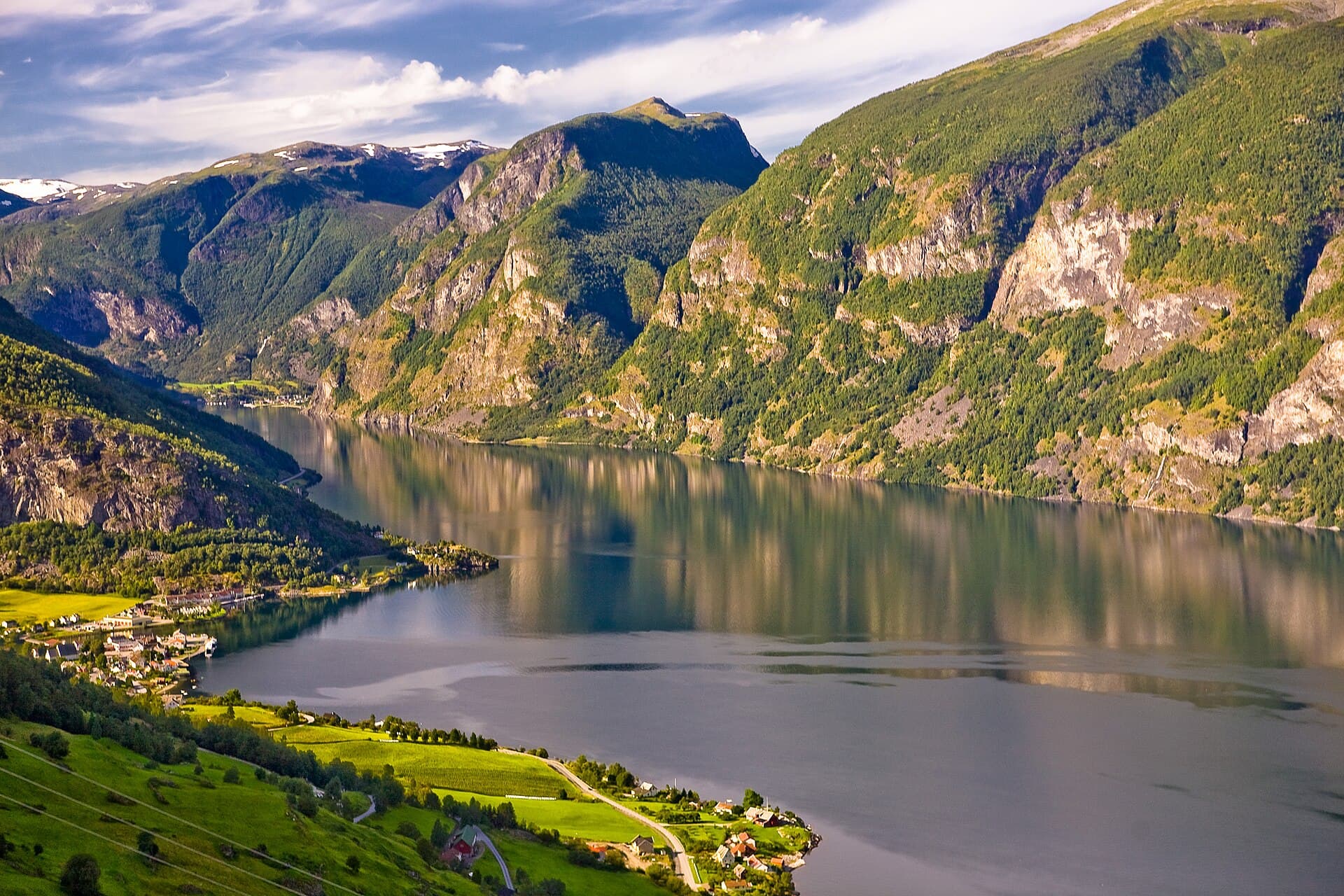 Kenny Louie / CC BY 2.0, via Wikimedia Commons
Self-guided audio walking tour of Flåm — GPS route, offline playback, story-driven narration in 32 languages.
“Where the fjord embraces the mountains, a journey unfolds.”
Not the postcards. The stories even locals don't know — whispered in your ear, right where they happened.
The Flåm Railway is celebrated as one of the world's most scenic train journeys, yet its construction presented an unexpected challenge beyond the steep terrain.
Flåm Church, a simple wooden structure from 1670, conceals a surprising secret within its unassuming interior.
The grand Fretheim Hotel, a prominent landmark in Flåm, began its existence not as a hotel, but as a response to a particular aristocratic pastime.
Discover every secret of Flåm
Every address, every reveal in full — in your ear, right where it happened.
You pick your stops. You walk. The voice reveals what the others miss.


Your self-guided audio tour of Flåm is ready — pick your landmarks, choose your language, and start the moment you arrive.
BuyLume has a built-in augmented-reality guide. Hold your phone up and its camera shows the street ahead of you, with a glowing arrow laid over the real view that always points to your next stop — no map to puzzle over, no wrong turns. Like everything in Lume, it works fully offline.
Flåm, a small village at the innermost reach of the Aurlandsfjord, a branch of Norway's longest fjord, Sognefjord, is a place where the dramatic beauty of Western Norway truly comes alive. Surrounded by towering, serrated mountains and verdant valleys, Flåm offers a landscape that feels like a living watercolor painting. Despite its small population of around 300 residents, Flåm welcomes nearly half a million visitors annually, drawn by its captivating scenery and unique attractions.
The village serves as a major hub for exploring the fjords, offering a blend of natural wonders and cultural experiences. From the world-renowned Flåm Railway to tranquil fjord cruises and exhilarating outdoor activities, Flåm provides a gateway to some of Europe's most spectacular natural settings. Its popularity has grown significantly, especially since the construction of a new pier in 2000 allowed large cruise ships to dock directly, transforming it into a bustling tourist destination.
The history of Flåm stretches back centuries, with archaeological finds suggesting human habitation and farming in the valley since the Viking Age. The name 'Flåm' itself, derived from the Old Norse word 'Flá', means 'plain' or 'flat piece of land,' a fitting description for the river valley amidst steep mountains. For much of its history, Flåm was a secluded farming community, with travel primarily by boat as the surrounding mountains made overland journeys arduous.
By the 17th century, Flåm had its own church, the modest wooden Flåm Church built in 1670. This structure replaced an even older medieval stave church, underscoring the village's long-standing importance as a local parish. Radical changes began in the late 19th century with the arrival of wealthy English tourists, often called 'salmon lords,' drawn by the excellent sport fishing in the Flåmselvi River. This influx led to the establishment of the Fretheim Hotel in the late 1800s, initially a guesthouse on Christen Fretheim's farm, which expanded to accommodate international guests.
The village's evolution accelerated with the coming of the Bergen-Oslo Railway in 1909. This sparked the need for a branch line connecting Flåm to the main railway at Myrdal. In 1908, the Norwegian Parliament approved the Flåm Line railway, though construction didn't begin until 1923. This engineering marvel, involving two decades of carving tunnels and creating a spiraling rail bed, opened in 1940 for freight and then passengers in 1941. The Flåm Railway quickly became a popular tourist attraction, preventing its proposed closure in the 1960s. The introduction of the 'Norway in a Nutshell' tour in the 1980s, which included the Flåm Railway and a fjord ferry, further cemented Flåm's status as a premier tourist destination.
Flåm offers a concentrated experience of Norway's fjord landscape. The Flåm Railway (Flåmsbana) is often hailed as one of the world's most spectacular train journeys, ascending 867 meters from the fjord to Myrdal station, passing through 20 tunnels and alongside thundering waterfalls like Kjosfossen. A short stop at Kjosfossen allows passengers to experience the mist and roar of the falls.
A fjord cruise on the Nærøyfjord, a UNESCO World Heritage site and a narrow branch of the Sognefjord, is another essential experience. Boats glide between near-vertical cliffs, offering views of waterfalls and tiny farms clinging to ledges. For expansive views, the Stegastein Viewpoint, a striking architectural platform extending 30 meters over the Aurlandsfjord, provides a sense of floating 650 meters (2,132 feet) above the water.
Beyond these highlights, consider a hike to Brekkefossen Waterfall, a moderate climb rewarding hikers with views over Flåm village and the Aurlandsfjord. The Flåm Railway Museum, located in the old station building, offers free admission and insights into the railway's construction and local history. For a distinctive experience, the Fjord Sauna, a floating sauna on the Aurlandsfjord, provides a warm escape with direct fjord access for a refreshing dip.
The best time to visit Flåm for outdoor activities and mild weather is between May and August. During summer, melting snow feeds spectacular waterfalls, and attractions like Flåm Church are open. While the weather is generally mild, it can be unpredictable, so layers and waterproofs are advisable. Autumn, particularly September, offers beautiful foliage and fewer crowds, with most activities still available. Many core attractions, including the Flåm Railway, fjord cruises, and Stegastein Viewpoint, operate year-round, offering distinct experiences in winter's snowy landscapes.
Flåm is a small village, and while it's a popular tourist destination, it's manageable on foot. The distance from the ferry pier to the train platform is approximately 50 steps. Train tickets for the Flåm Railway, especially during high season (May to September), often sell out months in advance, so booking ahead is highly recommended. Public toilets are available in the visitor center. Accommodation in Flåm can be expensive, often two to three times higher than elsewhere in Norway, and also requires advance booking due to limited options. Alternatives include staying in nearby Voss, Sogndal, or Kaupanger. Checking the cruise ship schedule can help avoid peak crowd times, as the village can see over a thousand passengers on cruise days.
Flåm in Korean, in Chinese or in Hebrew — and 29 more languages, every stop narrated by a native voice. The widest language range of any self-guided audio tour.
Available in: