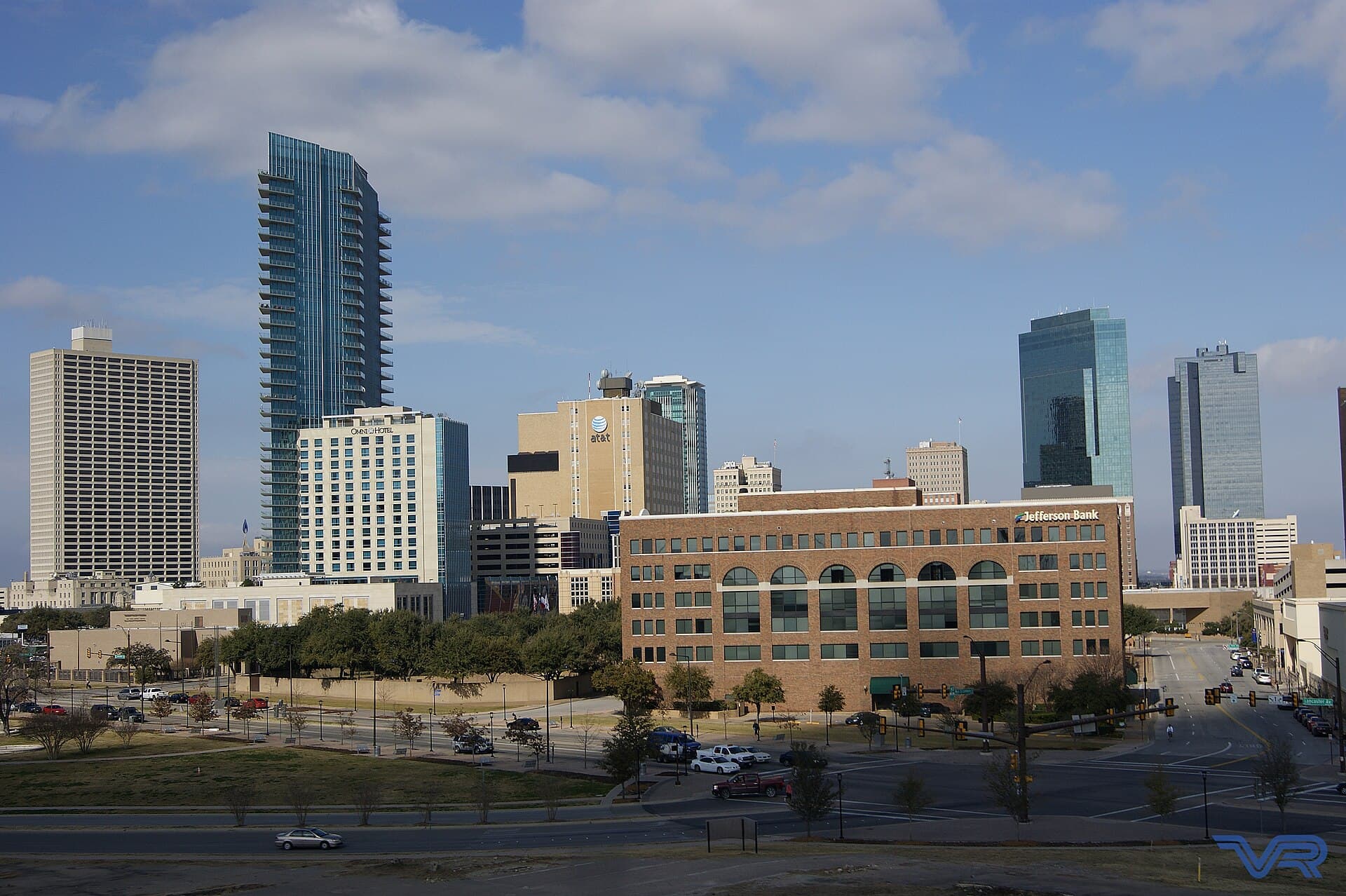
Before downtown Fort Worth became a center of commerce and culture, it was a district with a name that perfectly captured its untamed reputation.
Neuwieser / CC BY-SA 2.0, via Wikimedia CommonsFort Worth
“Where the West begins, and the unexpected unfolds.”
Fort Worth, as no one tells it.
Not the postcards. The stories even locals don't know — whispered in your ear, right where they happened.
The lively core of modern Fort Worth, Sundance Square, holds a rather surprising namesake for a place now home to banks and businesses.
The Kimbell Art Museum is celebrated for its architectural brilliance and world-class collection, but one of its most prized possessions holds a unique distinction in the Americas.
Discover every secret of Fort Worth
Every address, every reveal in full — in your ear, right where it happened.
You pick your stops. You walk. The voice reveals what the others miss.
How long do you have in Fort Worth?
No tours available yet. Check back soon — we're preparing them.
The story of Fort Worth
Fort Worth, Texas, often called 'Cowtown,' is a city that proudly embraces its Western heritage while simultaneously cultivating a sophisticated cultural scene. Established in 1849 as an army outpost on a bluff overlooking the Trinity River, it quickly evolved from a frontier settlement into a bustling center for the Texas Longhorn cattle trade. Today, Fort Worth is a dynamic metropolis that seamlessly blends its Old West roots with modern architecture, world-class museums, and a lively downtown.
The city's identity is deeply intertwined with its history as 'where the West begins,' a slogan that reflects its pivotal role as the last stop for pioneers before venturing into uncharted territories. Visitors can witness daily cattle drives, explore historic stockyards, and then, just a short distance away, immerse themselves in art and entertainment districts. This unique juxtaposition of cowboy culture and contemporary charm makes Fort Worth an unforgettable destination.
From Frontier Outpost to Cowtown Capital
Fort Worth's story begins in 1849, when Major Ripley A. Arnold established a military outpost on a bluff overlooking the Trinity River, naming it Camp Worth in honor of the late General William Jenkins Worth. This fort was part of a series of outposts designed to protect American settlers along the western frontier after the Mexican-American War. Although the military abandoned the post by 1853, the settlement around it continued to grow, attracting traders, farmers, and cattlemen.
The post-Civil War era saw the cattle industry boom, and Fort Worth's strategic location on the Chisholm Trail transformed it into a central hub for cattle drives. Cowboys herded millions of longhorn cattle through the city on their way to northern markets, earning Fort Worth its enduring nickname, 'Cowtown.' The arrival of the Texas and Pacific Railway in 1876 further solidified Fort Worth's status as a key shipping point, leading to significant economic growth and the establishment of the Fort Worth Stockyards.
At its peak, the Fort Worth Stockyards became one of the largest livestock markets in the world, attracting major meatpacking companies like Armour and Swift. The city's wealth and population surged, and by 1900, it was a major center for the meat-packing industry. The early 20th century also brought diversification beyond cattle, with the discovery of oil in Texas leading to Fort Worth becoming a regional headquarters for oil companies and later, oil stock exchanges.
While its economy diversified, Fort Worth never lost touch with its Western heritage. The Fort Worth Stock Show and Rodeo, which began as a livestock show in 1896, became the world's first indoor rodeo and continues to be a major annual event. In 1976, the Fort Worth Stockyards was designated a National Historic District, preserving its historic architecture and offering visitors an authentic glimpse into the Old West. Today, Fort Worth is recognized as one of the fastest-growing cities in the United States, balancing its enduring past with a forward-looking vision.
Begin your exploration at the Fort Worth Stockyards National Historic District, where the spirit of the Old West is alive. Witness the twice-daily cattle drive of Texas longhorns, explore historic buildings, and visit Billy Bob's Texas, the 'World's Largest Honky-Tonk.' The Livestock Exchange Building, built in 1902, now houses the North Fort Worth Historical Society Museum, offering insights into the Stockyards' past.
For a dose of culture, head to the Cultural District, home to several world-class museums. The Kimbell Art Museum, designed by Louis Kahn, is celebrated for its architecture and diverse collection spanning antiquity to the 20th century. Nearby, the Modern Art Museum of Fort Worth, designed by Tadao Ando, and the Amon Carter Museum of American Art, designed by Philip Johnson, showcase impressive collections. Do not miss the Fort Worth Botanic Garden, a lush oasis with 23 specialty gardens.
In downtown, Sundance Square offers a lively urban experience with shops, restaurants, theaters, and live entertainment. The Fort Worth Water Gardens, an urban oasis of concrete and water features, provides a unique and tranquil space for relaxation. For outdoor enthusiasts, the Trinity Trails offer over 100 miles of scenic pathways along the Trinity River for walking, jogging, and biking, some adorned with murals by local artists.
The most comfortable times to visit Fort Worth are during the spring (March to May) and fall (October to November). During these months, temperatures are mild, ranging from the high 60s to mid-80s Fahrenheit, ideal for exploring outdoor attractions. Spring brings blooming flowers and festivals like Mayfest and the Main Street Arts Festival. Fall offers pleasant weather, football games, and events like Fort Worth Oktoberfest. Summers (June to August) are typically very hot and humid, with temperatures often reaching triple digits, though outdoor activities like paddleboarding on the Trinity River are still popular. Winters (December to February) are generally mild, with opportunities for holiday festivities and indoor events.
Fort Worth is accessible by car, being centrally located in the United States. Once in the city, downtown Fort Worth and its various entertainment districts are well-connected by the Trinity Metro bus system. The Trinity Metro Bikes program offers an inexpensive and eco-friendly way to get around with numerous docking stations across the city, including downtown and the Cultural District. For travel between downtown Fort Worth and Dallas, the Trinity Railway Express (TRE) commuter rail line is available. Ride-sharing services like Uber and Lyft are also readily available. If driving, parking is available throughout the city, with specific parking management programs in place for areas like downtown. Fort Worth is also working on a comprehensive transportation plan, 'Move a Million,' to unify its transportation-related initiatives and address future growth.
- How did Fort Worth get its nickname 'Cowtown'?
- Fort Worth earned the nickname 'Cowtown' during the late 19th century due to its crucial role as a major hub for the Texas Longhorn cattle trade. It was a primary stop on the Chisholm Trail, where millions of cattle were herded through the city.
- What is the Fort Worth Stockyards National Historic District?
- The Fort Worth Stockyards National Historic District is a preserved area that showcases the city's Old West heritage. It features historic buildings, daily cattle drives with Texas longhorns, rodeos, and various Western-themed shops and restaurants.
- What are the Trinity Trails?
- The Trinity Trails are a network of over 100 miles of pathways along the Trinity River in Fort Worth. They are popular for walking, jogging, and biking, connecting numerous parks and neighborhoods, and feature public art installations.
- Is Fort Worth known for its art museums?
- Yes, Fort Worth is home to a notable Cultural District with several renowned art museums, including the Kimbell Art Museum, the Modern Art Museum of Fort Worth, and the Amon Carter Museum of American Art, all featuring significant collections and architectural designs.
- What is Sundance Square?
- Sundance Square is a 35-block commercial, residential, entertainment, and retail district in downtown Fort Worth. It's known for its blend of modern architecture and restored historic buildings, offering shops, restaurants, theaters, and a lively atmosphere.
- What is the best way to get around Fort Worth?
- Fort Worth offers several transportation options. Trinity Metro provides public bus service, and Trinity Metro Bikes is a bike-sharing program. Ride-sharing services are available, and the Trinity Railway Express connects Fort Worth to Dallas.