Represa de Itaipú
La Represa de Itaipú es una hazaña monumental de ingeniería, que genera una potencia inmensa. Sin embargo, su creación implicó un sacrificio profundo, del que rara vez se habla.
La historia completa se desbloquea en el tour
 SamirNosteb / CC BY 3.0, via Wikimedia Commons
Tour de audio autoguiado de Foz do Iguaçu — ruta GPS a pie, reproducción offline, narración en 32 idiomas.
“Donde tres naciones se encuentran y la fuerza de la naturaleza ruge.”
No las postales. Las historias que ni los locales conocen — al oído, justo donde ocurrieron.
La Represa de Itaipú es una hazaña monumental de ingeniería, que genera una potencia inmensa. Sin embargo, su creación implicó un sacrificio profundo, del que rara vez se habla.
Parque das Aves, un santuario vibrante, se dedica a preservar las especies de aves de la Selva Atlántica. Su propio emblema, sin embargo, encierra una historia conmovedora y de advertencia.
El Marco de las Tres Fronteras celebra la convergencia pacífica de Brasil, Argentina y Paraguay. Sin embargo, el propósito inicial de los obeliscos aquí era mucho más afirmar las reclamaciones nacionales.
Descubre todos los secretos de Foz do Iguaçu
Cada dirección, cada revelación al completo — a tu oído, justo donde ocurrió.
Eliges tus paradas. Caminas. La voz te revela lo que los demás ignoran.
Tu tour de audioguía por Foz do Iguaçu te espera — elige tus lugares, tu idioma y empieza al llegar.
ComprarLume incluye una guía de realidad aumentada. Levanta el móvil y su cámara muestra la calle que tienes delante, con una flecha luminosa sobre la imagen real que siempre apunta a tu próxima parada — sin mapas que descifrar, sin giros equivocados. Como todo en Lume, funciona completamente sin conexión.
Foz do Iguaçu, a menudo simplemente llamada Foz, se encuentra en el estado brasileño de Paraná, precisamente en su punto más occidental. Forma una región trinacional, compartiendo límites con Ciudad del Este en Paraguay y Puerto Iguazú en Argentina, donde convergen los ríos Iguaçu y Paraná. Esta geografía distintiva permite a los viajeros explorar tres países en un solo viaje, ofreciendo una mezcla de culturas y cocinas brasileñas, argentinas y paraguayas.
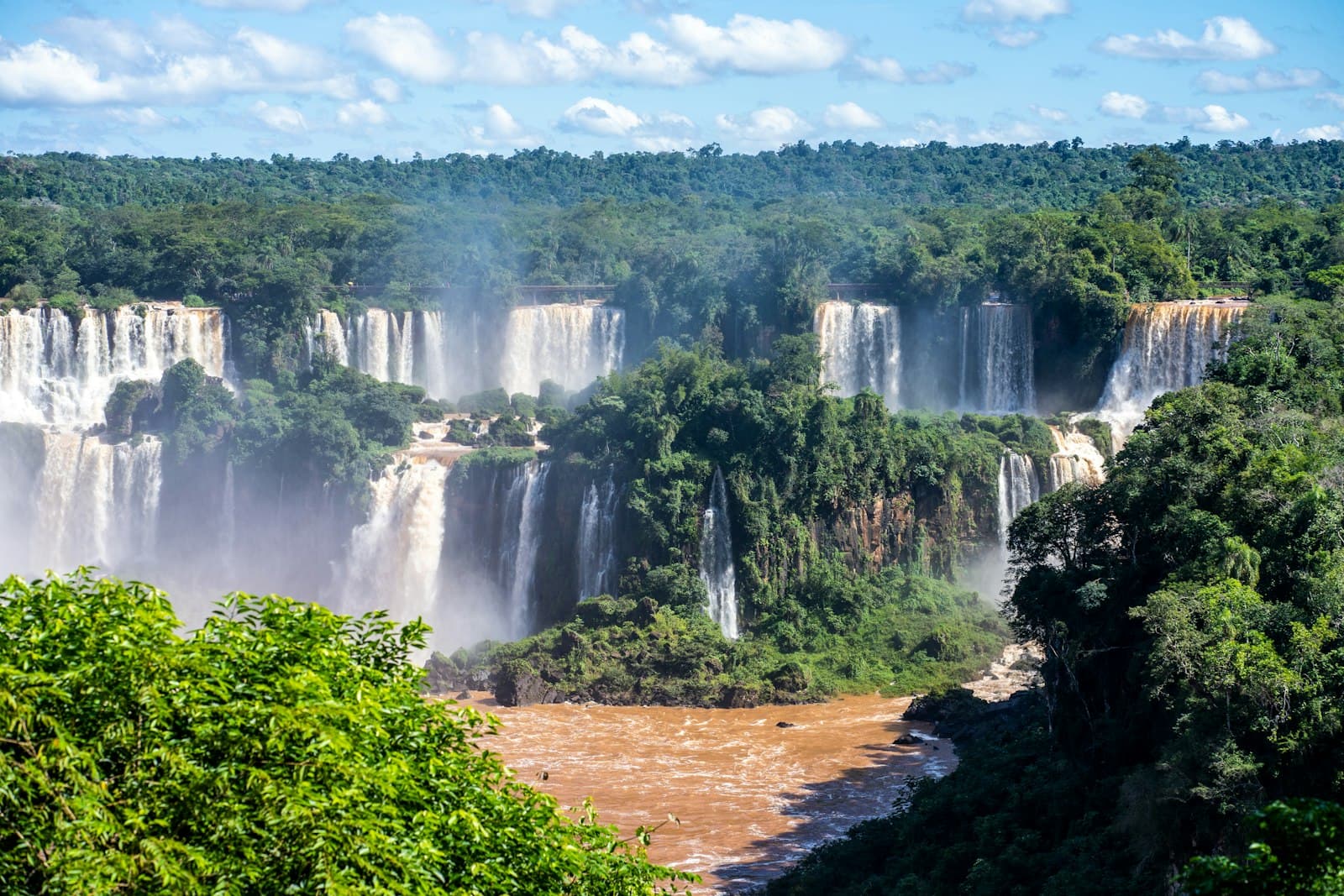
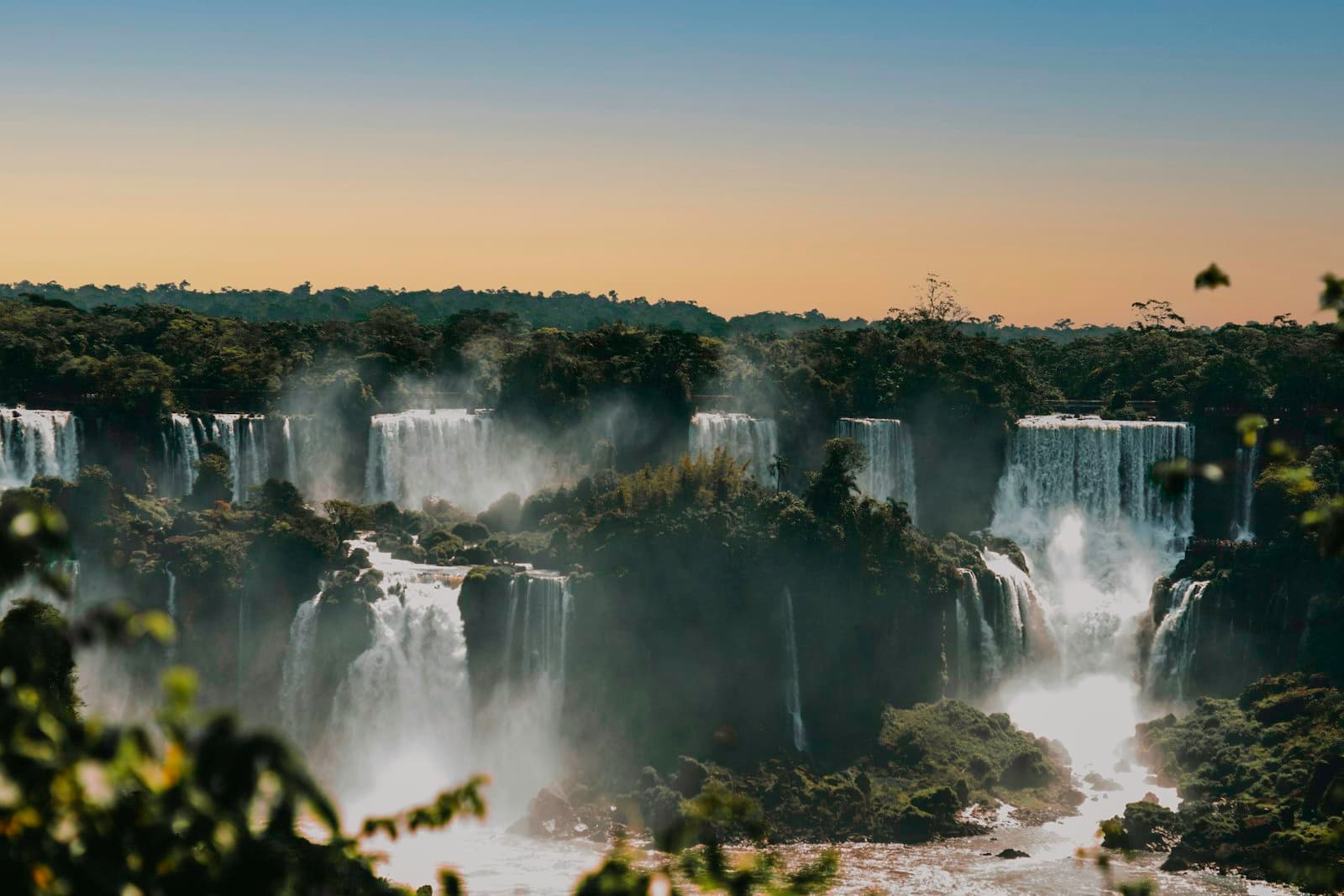
La ciudad es reconocida mundialmente por las grandiosas Cataratas del Iguaçu, Patrimonio de la Humanidad por la UNESCO y una de las Nuevas 7 Maravillas de la Naturaleza. Estas notables cascadas, que suman alrededor de 275 caídas individuales, se extienden por casi 3 kilómetros a lo largo de la frontera entre Brasil y Argentina. Más allá de las cataratas, Foz do Iguaçu también alberga la colosal Represa de Itaipú, una de las centrales hidroeléctricas más grandes del mundo, y se erige como un centro importante para la preservación de la Selva Atlántica.
## Primeros Habitantes y Llegada Europea Las investigaciones arqueológicas realizadas por la Universidad Federal de Paraná dentro del sector brasileño del embalse de Itaipú revelan la presencia humana en la zona desde el 6.000 a.C. Varios grupos indígenas se sucedieron a lo largo de milenios, siendo los caingangues uno de los últimos antes de la llegada europea.
El primer europeo en encontrar las Cataratas del Iguaçu fue el explorador español Álvar Núñez Cabeza de Vaca en 1542. Guiado por indígenas caingangues, siguió el río Iguaçu y documentó las cascadas, nombrándolas inicialmente 'Cataratas de Santa María'.
## Colonización y Formación del Municipio En 1881, Foz do Iguaçu dio la bienvenida a sus dos primeros residentes permanentes, Pedro Martins da Silva de Brasil y Manuel Gonzáles de España. Poco después, llegaron los hermanos Goycochéa y comenzaron a cultivar yerba mate. Ocho años más tarde, en 1889, se estableció una colonia militar en la frontera por el Teniente Antonio Batista da Costa Júnior y el Sargento José Maria de Brito. Esto marcó el comienzo de la ocupación brasileña efectiva y sentó las bases de lo que se convertiría en el municipio de Foz do Iguaçu. La colonia militar fue responsable de parcelar tierras a los colonos interesados.
A principios del siglo XX, la población de Foz do Iguaçu había crecido a aproximadamente 2.000 personas. El asentamiento contaba con una casa de huéspedes, cuatro tiendas de abarrotes, cuarteles militares, una oficina de recaudación, una estación de telégrafos, ingenios de azúcar y cachaça, y agricultura de subsistencia. En 1910, la colonia militar fue elevada a la categoría de 'Vila Iguassu', un distrito del municipio de Guarapuava. El municipio de Vila Iguaçu fue creado oficialmente el 14 de marzo de 1914, e instalado efectivamente el 10 de junio del mismo año, siendo Jorge Schimmelpfeng su primer alcalde. El municipio fue renombrado Foz do Iguaçu en 1918.
## Desarrollo Moderno El siglo XX trajo transformaciones significativas. La construcción de una carretera que conectaba Foz do Iguaçu con Curitiba comenzó en 1920, aunque inicialmente era precaria. La inauguración del Puente Internacional de la Amistad entre Brasil y Paraguay en 1965, seguida de la finalización de la carretera BR-277 que unía Foz do Iguaçu con Curitiba y la costa en 1969, aceleró drásticamente el desarrollo de la ciudad. Este período vio una intensificación del comercio, particularmente con la ciudad paraguaya de Puerto Presidente Stroessner (ahora Ciudad del Este).
Un momento crucial en la historia de Foz do Iguaçu fue la construcción de la Central Hidroeléctrica de Itaipú. Este proyecto masivo, un esfuerzo conjunto entre Brasil y Paraguay, comenzó en 1975 y se completó en 1984. La Represa de Itaipú transformó Foz do Iguaçu en un importante centro económico y turístico, atrayendo visitantes y contribuyendo significativamente a la expansión de la región.
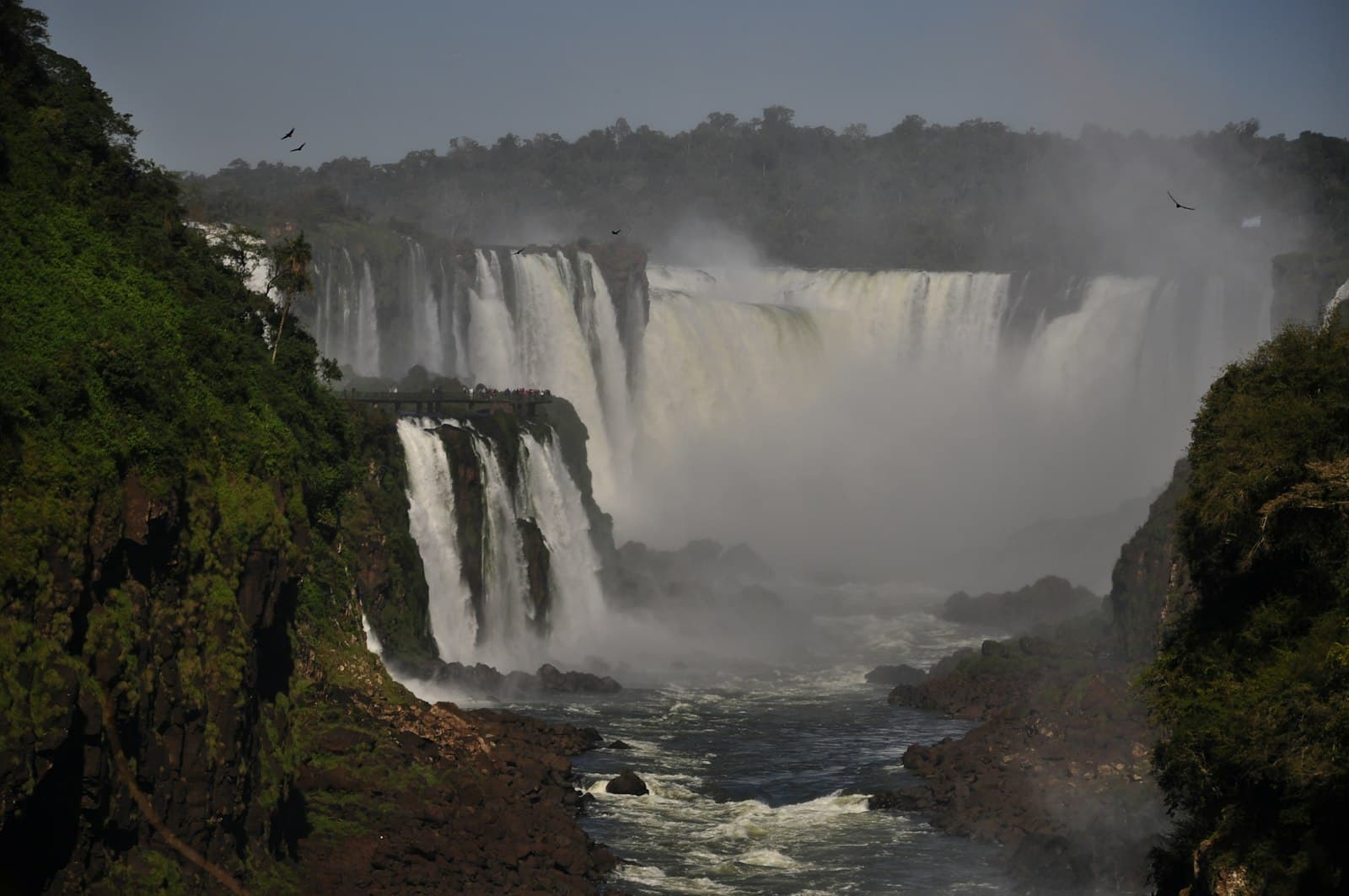
El principal atractivo de Foz do Iguaçu son las Cataratas del Iguaçu, un grandioso espectáculo natural. Los viajeros pueden experimentar las cascadas desde los lados brasileño y argentino, cada uno ofreciendo perspectivas distintas. El lado brasileño ofrece amplias vistas panorámicas, mientras que el lado argentino permite una experiencia más íntima, con pasarelas que se extienden directamente hacia los torrentes, incluyendo la impresionante Garganta del Diablo.
Junto a la entrada del Parque Nacional del Iguaçu en el lado brasileño se encuentra el Parque das Aves (Parque de las Aves). Este santuario está dedicado a la conservación de especies de aves de la Selva Atlántica, muchas de las cuales están en peligro de extinción. Los visitantes pueden pasear por aviarios inmersivos, observando una amplia variedad de aves coloridas, así como otras criaturas como caimanes y serpientes.
La Represa de Itaipú es otra atracción importante, que ofrece recorridos que revelan una de las centrales hidroeléctricas más grandes del mundo. El Marco das Três Fronteiras (Marco de las Tres Fronteras) presenta un punto de vista único donde convergen los ríos Iguaçu y Paraná, marcando el encuentro de Brasil, Argentina y Paraguay. El sitio presenta presentaciones culturales y ofrece una memorable vista del atardecer.
Otros sitios notables incluyen el Templo Budista Chen Tien, el templo budista más grande de Brasil, que ofrece un escape tranquilo, y el Museo de Cera Dreamland.
Foz do Iguaçu experimenta un clima subtropical húmedo, con temperaturas cálidas a calurosas durante todo el año. La época ideal para visitar depende de las preferencias individuales. Para aquellos que deseen presenciar las Cataratas del Iguaçu en su máximo volumen de agua, los meses de verano (diciembre a marzo) son óptimos, aunque este período también es el más caluroso y lluvioso. Si se prefieren temperaturas más suaves y menos lluvia, el otoño (marzo a junio) y la primavera (septiembre a diciembre) ofrecen un clima agradable y menos multitudes. El invierno (junio a agosto) trae condiciones más frescas y secas, que pueden ser cómodas para actividades al aire libre, aunque el volumen de agua de las cataratas puede ser menor.
Foz do Iguaçu es un destino turístico bien establecido con una infraestructura sólida, que incluye numerosos hoteles y posadas. La ciudad es accesible en autobuses de larga distancia y vuelos desde toda Sudamérica. Al planificar su viaje, considere alojarse en el centro de la ciudad para facilitar el acceso a diversas atracciones. Una duración recomendada para una visita completa es de 4 a 5 días, lo que permite tiempo suficiente para las cataratas, la Represa de Itaipú y las excursiones transfronterizas.
Para cruzar a Paraguay (Ciudad del Este) y Argentina (Puerto Iguazú), asegúrese de llevar los documentos de viaje necesarios, como su pasaporte. Se recomienda ropa ligera y cómoda, protector solar, un sombrero y zapatos cómodos para caminar, especialmente para los recorridos que implican largas caminatas. Un impermeable es esencial, particularmente para las visitas a las cataratas y otros recorridos al aire libre. Es aconsejable estar atento a sus pertenencias en áreas concurridas y utilizar operadores turísticos y servicios oficiales.
Foz do Iguaçu en coreano, en chino o en hebreo — y 29 idiomas más, cada parada narrada por una voz nativa. La mayor variedad de idiomas de cualquier audioguía autoguiada.
Disponible en: