Römer
For centuries, this iconic complex wasn't just a city hall; it was a stage for grand imperial affairs, yet its name hints at a more humble, perhaps even playful, origin.
Full story unlocks in the tour
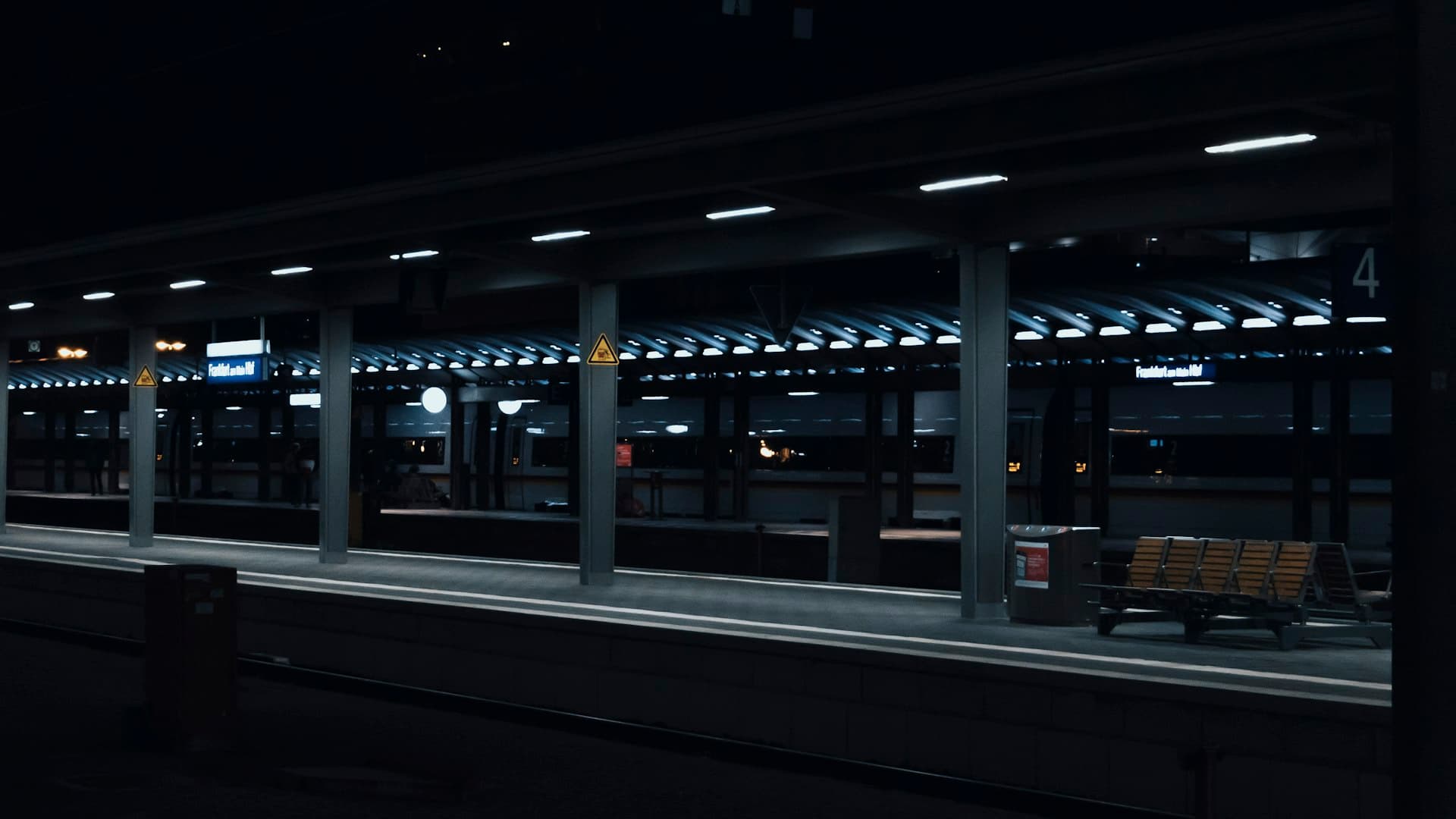 Photo: Adrien Brunat / Unsplash
“Frankfurt: Where ancient coronations meet soaring skyscrapers.”
Not the postcards. The stories even locals don't know — whispered in your ear, right where they happened.
For centuries, this iconic complex wasn't just a city hall; it was a stage for grand imperial affairs, yet its name hints at a more humble, perhaps even playful, origin.
Germany's most celebrated writer, Johann Wolfgang von Goethe, penned his early masterpieces in this Frankfurt home. But a peculiar detail in his writing room suggests a very specific, and perhaps surprising, working habit.
This magnificent opera house, once a beacon of culture, lay in ruins after World War II. A local politician earned a rather explosive nickname for his radical proposal to deal with 'Germany's most beautiful ruin.'
Discover every secret of Francfort
Every address, every reveal in full — in your ear, right where it happened.
You pick your stops. You walk. The voice reveals what the others miss.
No tours available yet. Check back soon — we're preparing them.
Frankfurt am Main, often called simply Frankfurt, is a city that confidently wears many hats. It is a global financial powerhouse, with a skyline that has earned it the moniker 'Mainhattan' due to its cluster of skyscrapers along the Main River. Yet, beneath this modern exterior lies a deep historical narrative, where medieval trade routes once converged and emperors were crowned.
Beyond the banks and business, Frankfurt is a surprisingly diverse and cultural center. It offers a lively arts scene, numerous museums, and a welcoming riverfront that invites exploration. From its historic Römerberg square to its world-class museums along the Museumsufer, Frankfurt presents a compelling blend of old-world charm and contemporary dynamism, making it a destination worth more than just a layover.
## From Roman Ford to Imperial City Frankfurt's origins stretch back to the 1st century, with its name, 'Frankfurt,' meaning 'ford of the Franks,' a nod to its strategic location on the Main River. Charlemagne, King of the Franks, is credited with giving the city its name after a victory against the Saxons.
By 855 AD, Frankfurt had risen to prominence as a significant city within the Holy Roman Empire. German kings were elected here, a tradition that began in 1152. In 1372, Frankfurt became an Imperial Free City, directly answerable to the Holy Roman Emperor. From 1562 until 1792, it served as the designated site for the coronations of kings and emperors.
## A City of Commerce and Culture Frankfurt's history is deeply intertwined with trade. International trade fairs have been held here since 1240, and the city established its first bank in 1405 and a stock exchange in 1585. This commercial spirit fostered a thriving cultural environment, evident in the birth of literary giant Johann Wolfgang von Goethe in 1749.
## Wartime Destruction and Resilient Rebirth The 20th century brought immense challenges. Frankfurt was severely bombed during World War II, with its medieval city center almost completely destroyed in 1944. An estimated 5,500 residents were killed during these raids. However, the city demonstrated remarkable resilience, undertaking extensive reconstruction efforts. The iconic Römer, the historic city hall, was rebuilt, as were many of the half-timbered houses in the Römerberg square, giving visitors a sense of its pre-war appearance. The Alte Oper, the old opera house, also rose from its ruins, reopening as a concert hall in 1981.
## Modern Metropolis Today, Frankfurt is a leading financial and commercial center, home to the European Central Bank and the Frankfurt Stock Exchange. It is also a major transportation hub, with one of the busiest airports in the world and a central train station. Despite its modern skyline, Frankfurt has meticulously restored and preserved key historical sites, creating a dynamic blend of past and present.
Begin your exploration at the Römerberg, Frankfurt's historic main square. Here you will find the Römer, the city hall with its distinctive stepped gables, which has served as the city's administrative center for over 600 years. Nearby, the Frankfurt Cathedral (Kaiserdom St. Bartholomäus), a red sandstone Gothic church, was where Holy Roman Emperors were elected and crowned.
Cross the Eiserner Steg, an iron pedestrian bridge adorned with countless 'love locks,' offering expansive views of the Main River and the city's impressive skyline. For a closer look at the towering architecture, ascend the Main Tower, the city's only skyscraper with a public observation deck, for unparalleled vistas.
Immerse yourself in culture along the Museumsufer (Museum Embankment), a cluster of world-class museums on both sides of the Main River. Highlights include the Städel Museum, showcasing European art from the Old Masters to contemporary works, and the German Film Museum. Do not miss the Goethe House, the faithfully reconstructed birthplace and childhood home of Johann Wolfgang von Goethe.
For a taste of local life, visit the Kleinmarkthalle, a bustling indoor market offering fresh produce, local delicacies, and international foods. In the evening, experience a performance at the magnificent Alte Oper, the beautifully restored old opera house that now functions as a concert hall.
Frankfurt experiences a temperate-oceanic climate, with mild summers and chilly winters. The most pleasant times to visit are during the spring (April to May) and early autumn (September to October), when temperatures are mild and the city's parks are in full bloom or displaying autumn colors. Summer (June to August) offers warm, long days, ideal for outdoor activities and festivals, though it is also the peak tourist season with higher accommodation rates. December is magical for its renowned Christmas markets.
Frankfurt is a highly walkable city, especially its central areas. The public transportation system is efficient and comprehensive, with U-Bahn (subway), S-Bahn (fast train), bus, and tram networks covering the city and surrounding region. Consider purchasing a Frankfurt Card for unlimited public transport and discounts on museums and attractions. The city is a major transportation hub, with Frankfurt Airport being one of the busiest in the world. From the airport, the S-Bahn provides a quick 10-minute connection to the city center. While German is the official language, English is widely spoken, especially in central areas and business districts. The currency is the Euro (€), and plug types are C, E, and F.