Walk the ramparts of Fredericia, and you'll trace the outline of a city built for defense. But look closely at the White Water Tower, and you'll discover a subtle clue to a time when even a tall building was considered a liability.
sejrup / CC BY 3.0, via Wikimedia CommonsFredericia
“Where history isn't just told, it's walked.”
Fredericia, as no one tells it.
Not the postcards. The stories even locals don't know — whispered in your ear, right where they happened.
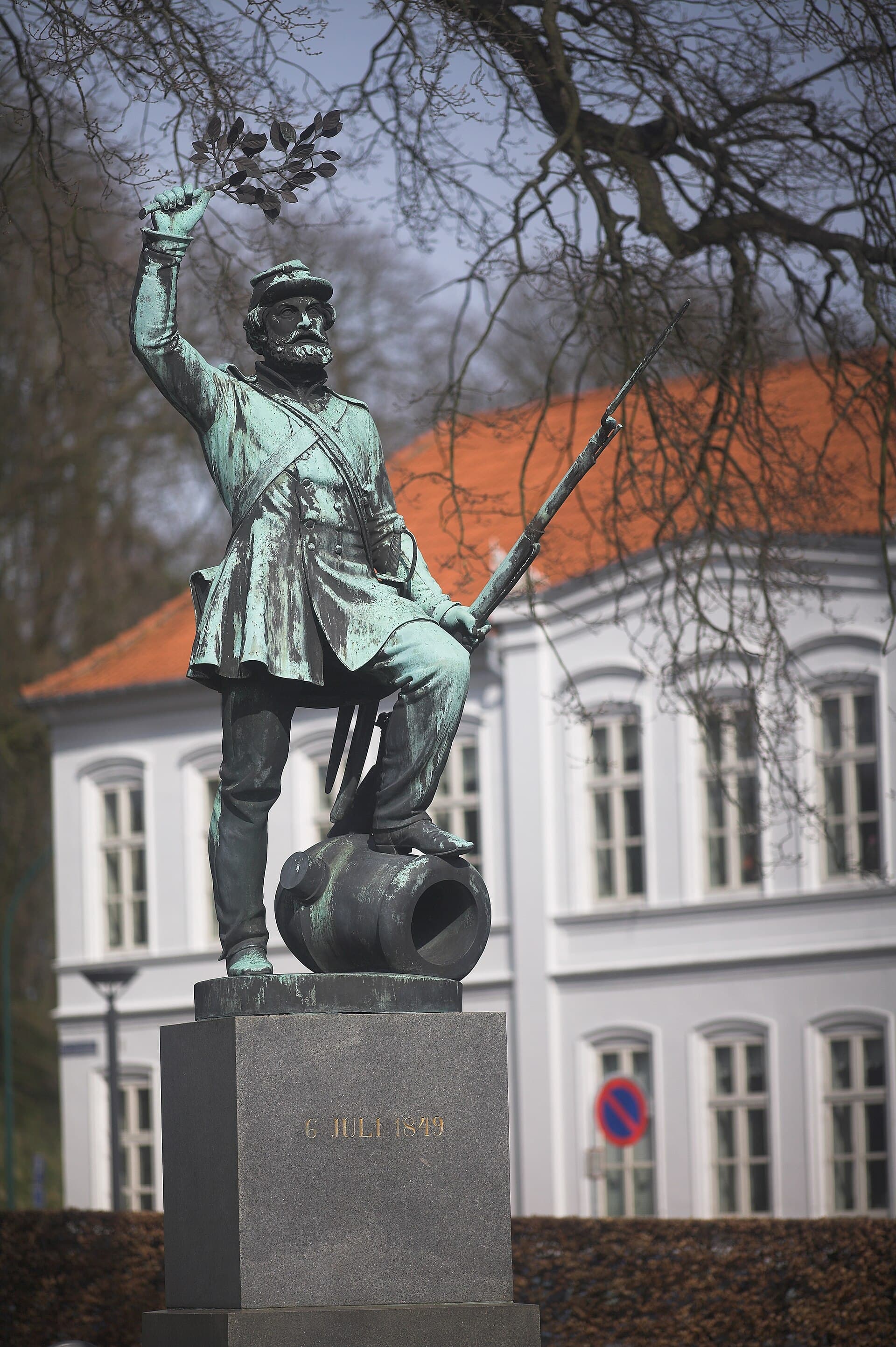
The statue of 'The Valiant Soldier' stands as a powerful symbol in Fredericia. It's a tribute to the common soldier, but its very existence reveals a shift in how heroism was commemorated.
The Prince's Gate, with its sturdy stone construction, has stood for centuries as a primary entrance to Fredericia. Yet, the cost of its construction tells a surprising story about Danish foresight.
Discover every secret of Fredericia
Every address, every reveal in full — in your ear, right where it happened.
You pick your stops. You walk. The voice reveals what the others miss.
How long do you have in Fredericia?
No tours available yet. Check back soon — we're preparing them.
The story of Fredericia
Fredericia, a city on the southeastern part of the Jutland peninsula, stands as a testament to Danish military history and strategic planning. Founded in 1650 by King Frederick III, the city was conceived as a formidable fortress to protect Jutland and control the vital Little Belt strait. Today, its well-preserved ramparts encircle the historic city center, offering a unique blend of green spaces and echoes of a turbulent past.
More than just a historical site, Fredericia is a thriving port city and a significant railway hub, connecting major lines across Denmark. Its grid-patterned streets, a stark contrast to older Danish cities, reflect its planned origins. Visitors can explore a city where history is not confined to museums but is woven into the very fabric of daily life, from its monumental defenses to its diverse cultural heritage.
## A Royal Fortress is Born Fredericia's story begins in 1650 when King Frederick III decreed the establishment of a fortified settlement on the Bersodde peninsula. Originally named Frederiksodde, or 'Frederick's Cape,' it was renamed Fredericia in 1664. The primary motivation was to create a powerful fortress to defend Jutland against attacks, particularly after the Thirty Years' War, and to secure the passage of the Little Belt.
## Unprecedented Privileges and Growth To attract settlers to this new, uninhabited fortress, King Frederick III granted Fredericia extraordinary privileges. These included a 10-year tax exemption, followed by 20 years of half-tax, and the right to build within the ramparts without further permission. Crucially, Fredericia was granted religious freedom, a rarity in strictly Lutheran Denmark at the time. This policy welcomed French Huguenots, Jews, and Catholics, transforming the city into a multicultural melting pot and fostering economic growth through new agricultural skills like tobacco and potato cultivation.
## Battles and Transformations The fortress faced its first major test during the Dano-Swedish War in 1657, when it was stormed and heavily damaged. However, Fredericia's most renowned historical event is the Battle of Fredericia on July 6, 1849, during the First Schleswig War. Danish troops, outnumbered by Schleswig-Holsteinian forces, launched a surprise nighttime attack, securing a decisive victory that became a turning point in the war. This victory is still commemorated annually with parades and celebrations. After 1864, the fortress lost its military significance and was decommissioned in 1909. Its ramparts, however, were preserved and designated a Grade A listed site in 1917, becoming one of Denmark's largest city parks.
Begin your exploration at the Fredericia Ramparts (Fredericia Vold), among Northern Europe's largest and best-preserved fortifications. These earthen defenses, now a sprawling park with over 18 km of trails, offer sweeping views of the city and the Little Belt. Look for old cannons and bastions as you walk.
At the heart of the city, visit The Valiant Soldier Square (Landsoldatpladsen), home to the iconic statue of 'The Valiant Soldier,' the world's first monument dedicated to the common soldier. Nearby, the White Water Tower offers an excellent lookout point, providing 360-degree views from 44 meters above sea level. Inside, an exhibition details Fredericia's historic buildings visible from the tower.
Step through Prince's Gate (Prinsens Port), which served as the main gateway until 1924, and marvel at its 18th-century construction. For a deeper dive into local history, the Fredericia Town Museum offers insights into the city's early years and military struggles. Don't miss Den Historiske Miniby in Madsbyparken, a miniature version of Fredericia as it appeared in 1849, featuring over 700 tiny buildings.
The best time to visit Fredericia for pleasant weather and outdoor activities is from late spring to early autumn, typically May to September. Summers are comfortable with average daytime temperatures reaching around 20°C in July and August, ideal for exploring the ramparts and enjoying waterfront areas. While winters are cold, with average temperatures around 3°C, the city still offers indoor cultural experiences. Be prepared for changeable weather and potential rain throughout the year, so a waterproof jacket is always a good idea.
Fredericia is well-connected and easily accessible. It serves as a major railway hub, with frequent train services from cities like Copenhagen, Aarhus, and Odense. If driving, there are approximately 2500 free parking spaces available, though a free parking disc from the Tourist Office is required. The city center and most attractions are easily explored on foot or by bike, as Fredericia is very cyclist-friendly. For those arriving by air, Billund Airport is approximately 52 kilometers away.
Accommodation options range from hotels to bed and breakfasts. The local cuisine offers traditional Danish dishes, with many restaurants along the waterfront. Consider a guided tour of the ramparts to gain deeper historical insights. The city's official tourism website, VisitFredericia, provides up-to-date information on events and activities.
- What is Fredericia best known for?
- Fredericia is best known as a historic fortress town with some of Northern Europe's best-preserved ramparts, and for its pivotal role in the Battle of Fredericia in 1849.
- What is the significance of July 6th in Fredericia?
- July 6th commemorates the Battle of Fredericia in 1849, a decisive Danish victory during the First Schleswig War. The city celebrates this day annually with festivals, parades, and historical reenactments.
- Are the Fredericia Ramparts accessible to visitors?
- Yes, the Fredericia Ramparts are a public park with over 18 km of trails, offering ample opportunity for walks and exploration.
- What unique privileges did Fredericia have?
- From its founding, Fredericia was granted religious freedom, attracting diverse communities like French Huguenots, Jews, and Catholics, and also offered tax exemptions to encourage settlement.
- Can I get a good view of Fredericia?
- Yes, the White Water Tower, located on the ramparts, offers panoramic views of Fredericia and the Little Belt from its rooftop terrace, 44 meters above sea level.
- Is Fredericia a good base for exploring other areas?
- Yes, Fredericia is part of the 'Triangle Region' and serves as a major railway hub, making it an excellent base for day trips to nearby cities like Kolding, Vejle, and even the island of Funen.