Église d'Aghia Paraskevi
Cette église recèle un secret dans son sol qui la relie à l'immensité du cosmos et au rythme de la mer.
L'histoire complète se débloque dans le tour
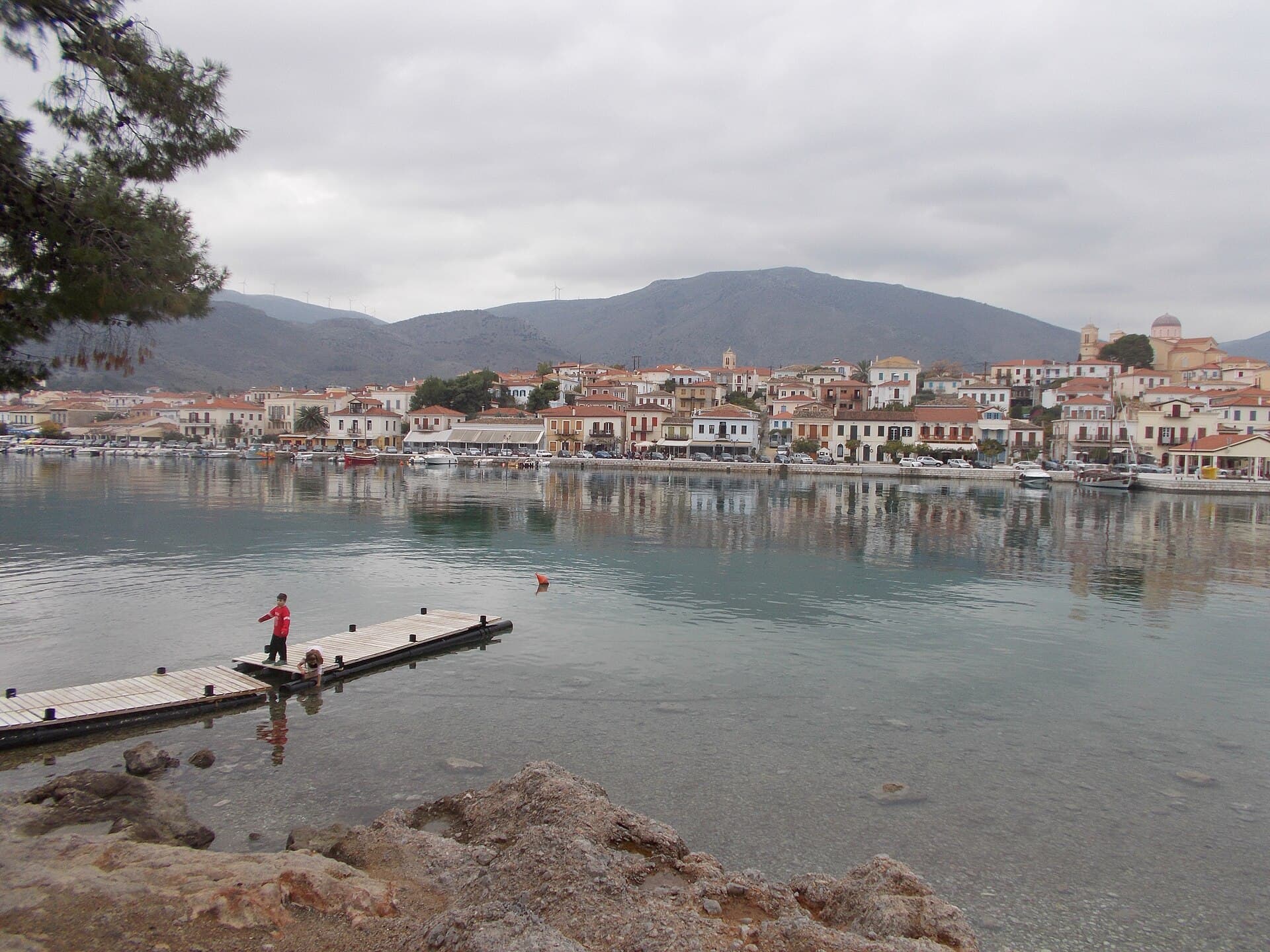 Odysses / CC BY-SA 4.0, via Wikimedia Commons
Visite audio autoguidée de Galaxidi — parcours GPS à pied, lecture hors ligne, narration en 32 langues.
“Là où les capitaines de mer ont bâti des fortunes et où le temps s'est arrêté.”
Pas les cartes postales. Les histoires que même les habitants ignorent — soufflées à l'oreille, là où elles se sont passées.
Cette église recèle un secret dans son sol qui la relie à l'immensité du cosmos et au rythme de la mer.
Les grandes maisons néoclassiques de Galaxidi révèlent un détail subtil sur l'ingéniosité de ses habitants marins.
Au-delà du port principal animé, le port plus calme de Chirolakas conserve un vestige tangible du passé de la construction navale de Galaxidi.
Découvrez tous les secrets de Galaxidi
Chaque adresse, chaque révélation en entier — dans ton oreille, là où elle s'est passée.
Tu choisis tes lieux. Tu marches. La voix te révèle ce que les autres ignorent.

Votre visite audioguidée de Galaxidi vous attend — choisissez vos lieux, votre langue, et lancez-vous dès votre arrivée.
AcheterLume intègre un guide en réalité augmentée. Levez votre téléphone : sa caméra montre la rue devant vous, avec une flèche lumineuse posée sur l'image réelle qui pointe toujours vers votre prochain arrêt — aucune carte à déchiffrer, aucun mauvais virage. Comme tout dans Lume, ça fonctionne entièrement hors-ligne.
Galaxidi, une colonie préservée sur la côte nord du golfe de Corinthe, offre une fenêtre sur le passé maritime de la Grèce. Autrefois un centre important de construction navale et de commerce, cette charmante ville conserve une atmosphère authentique, rappelant une île, bien qu'elle soit située sur le continent. Ses passages étroits et sinueux mènent entre des demeures néoclassiques du XIXe siècle bien conservées, dont beaucoup ont été construites par de prospères capitaines de mer.
Les deux ports de la ville, le port principal (port d'Agora) et le plus petit Chirolakas, restent au cœur de l'identité de Galaxidi. Des bateaux de pêche et de petits yachts bordent les quais, tandis que les cafés et tavernes au bord de l'eau invitent les visiteurs à s'attarder. Le caractère unique de Galaxidi, un mélange d'attrait côtier, de profondeur historique et d'un rythme calme, la distingue des destinations grecques plus fréquentées.
Désignée comme colonie patrimoniale protégée en 1978, Galaxidi a consciemment préservé son intégrité architecturale et ses traditions maritimes. Ce dévouement à son passé permet aux visiteurs de découvrir une véritable ville grecque, où les échos d'un âge d'or de la navigation sont encore palpables dans ses rues et ses structures.
L'histoire de Galaxidi remonte à 1393 av. J.-C., avec des traces d'occupation de l'époque mycénienne sur le site de l'ancienne Haleion (ou Oianthi), un port locrien. Au IIIe siècle av. J.-C., elle était déjà devenue un centre nautique, formant des alliances avec d'autres cités. Cependant, la ville a subi des raids répétés de divers envahisseurs, notamment des Bulgares et des Normands, pendant les périodes byzantine et médiévale.
Sous la domination ottomane, Galaxidi a maintenu une population maritime majoritairement orthodoxe et un certain degré d'autonomie. Les XVIIIe et XIXe siècles ont marqué un âge d'or pour Galaxidi, car elle est devenue l'un des centres de construction navale et de commerce les plus importants de Grèce. Des conditions commerciales favorables après 1774 ont permis à la flotte locale de s'étendre, et en 1803, Galaxidi comptait environ 50 voiliers, se classant parmi les cinq premiers centres maritimes grecs. Les chantiers navals de la ville étaient très compétitifs, lançant plus de 20 nouveaux navires par an à la fin des années 1830. Au milieu du XIXe siècle, la flotte est passée à environ 300 navires, certaines sources affirmant que Galaxidi était le deuxième centre maritime grec le plus achalandé après Syros.
Galaxidi a joué un rôle important dans la guerre d'indépendance grecque en 1821, contribuant des navires et des hommes à la révolution. Cet engagement a eu un coût élevé, car les Ottomans ont incendié la ville et sa flotte à plusieurs reprises dans les années 1820. Malgré ces dévastations, Galaxidi a reconstruit avec résilience ses chantiers navals et a continué à se battre.
La prospérité de la ville a commencé à décliner avec l'avènement des bateaux à vapeur à la fin du XIXe et au début du XXe siècle. La flotte de Galaxidi n'a pas fait la transition vers la technologie à vapeur, ce qui a entraîné un déclin de ses voiliers autrefois dominants. De nombreuses familles ont migré vers des ports plus grands, mais l'héritage architectural de son âge d'or est resté. En 1928, le premier musée maritime de Grèce a été fondé à Galaxidi, et en 1978, la vieille ville a été désignée comme colonie patrimoniale protégée, préservant son caractère maritime unique.
Commencez votre exploration aux deux ports de Galaxidi : le port principal, Agora, et le plus calme Chirolakas. Promenez-vous le long du front de mer, observez les bateaux de pêche et les yachts, et imprégnez-vous de l'atmosphère des cafés et des tavernes. Cherchez les statues de bronze qui honorent le patrimoine maritime de Galaxidi, notamment la « Femme du marin » et un capitaine de mer à la barre.
Plongez dans le passé de la ville au Musée nautique et historique de Galaxidi, installé dans un manoir en pierre restauré de 1870. En tant que plus ancien musée maritime de Grèce, il présente des maquettes de navires, des instruments nautiques, de vieilles photographies et une vaste collection de peintures de voiliers grecs. Le musée abrite également des découvertes archéologiques de l'ancienne Haleion. Pour un aperçu plus approfondi de la vie locale, visitez le Musée du folklore de Galaxidi, situé dans le manoir historique Angeli dans le quartier de Chirolakas. Il expose de l'art populaire, des costumes traditionnels, des textiles et du matériel photographique.
Admirez l'architecture néoclassique dans toute la ville, en particulier les grandes demeures des capitaines avec leurs détails en pierre sculptée et leurs façades peintes. Visitez l'église d'Agios Nikolaos, connue pour son iconostase en bois sculpté complexe, ses deux clochers et son impressionnant dôme. À proximité, l'église d'Aghia Paraskevi présente un cadran solaire sur son extérieur et un calendrier zodiacal unique sculpté dans son sol en marbre. Pour des vues imprenables sur le golfe de Corinthe et le mont Parnasse, envisagez une courte randonnée à travers la forêt de pins de l'autre côté du port.
Galaxidi est une destination qui peut être appréciée toute l'année. Le printemps (avril-mai) et l'automne (septembre-octobre) offrent des températures agréables, moins de monde et des prix d'hébergement raisonnables, avec des fleurs sauvages en fleurs au printemps et un temps suffisamment chaud pour la baignade en automne. L'été (juin-août) est la haute saison, apportant des températures plus chaudes et une atmosphère animée, bien qu'il soit conseillé de réserver l'hébergement à l'avance en raison de l'augmentation du nombre de visiteurs. Bien que l'hiver (novembre-mars) soit plus calme avec certains services fonctionnant à des heures réduites, les températures descendent rarement en dessous de 10°C, ce qui le rend adapté à ceux qui recherchent la solitude et des voyages économiques.
Galaxidi se trouve à environ 2h30 de route d'Athènes. Alternativement, une traversée en ferry pittoresque de 5 heures à travers le golfe de Corinthe est disponible. La ville est petite et facilement explorable à pied, la plupart des attractions, restaurants et hébergements étant concentrés autour des deux ports. Des chaussures de marche confortables sont recommandées pour les rues pavées et les pentes occasionnelles.
Pour ceux qui prévoient des excursions d'une journée, Delphes, un site classé au patrimoine mondial de l'UNESCO, se trouve à seulement 45 minutes en voiture. Le village de montagne d'Arachova est également à portée de main, à environ 40 minutes en voiture. Galaxidi offre généralement des prix plus abordables que les îles grecques populaires. Les options d'hébergement comprennent de petits hôtels, des maisons d'hôtes dans des demeures rénovées et des appartements. Il est conseillé d'apporter une veste légère même en été en soirée en raison de la brise marine.
Galaxidi en coréen, en chinois ou en hébreu — et dans 29 autres langues, chaque étape narrée par une voix native. La plus large gamme de langues de tous les audioguides autoguidés.
Disponible en :