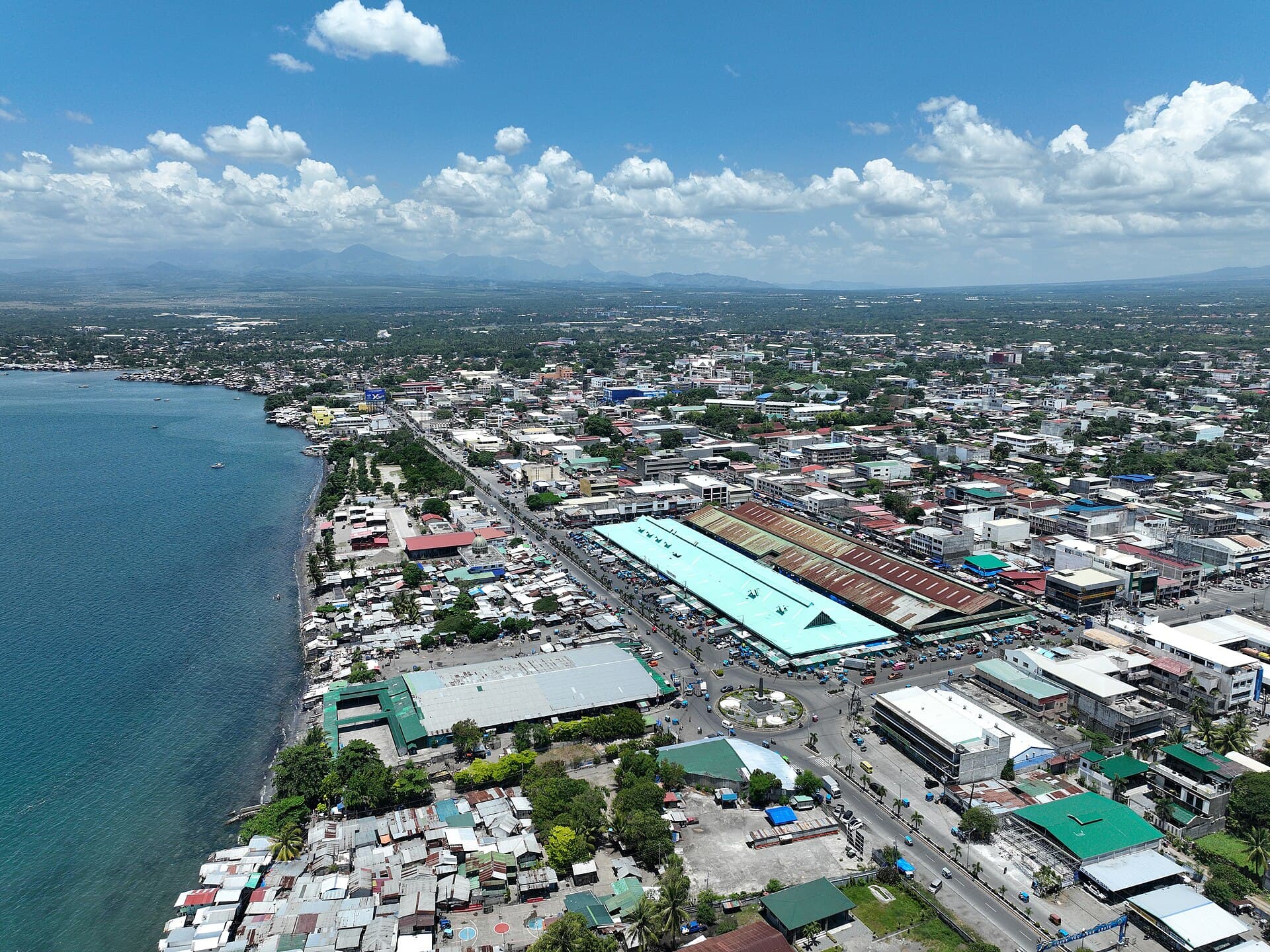
While General Santos earns its reputation as the 'Tuna Capital,' the sheer volume of daily catches at its fish port presents a sight to behold.
Patrickroque01 / CC BY-SA 4.0, via Wikimedia CommonsGeneral Santos
“General Santos: Where the ocean's generous yield meets a city's determined rhythm.”
General Santos, as no one tells it.
Not the postcards. The stories even locals don't know — whispered in your ear, right where they happened.
This central city plaza offers more than just green space; it holds a subtle hint to the city's original name.
Beyond its renown for tuna, General Santos is also the origin of a global sports icon, whose connection to the city runs deeper than his birthplace.
Discover every secret of General Santos
Every address, every reveal in full — in your ear, right where it happened.
You pick your stops. You walk. The voice reveals what the others miss.
How long do you have in General Santos?
No tours available yet. Check back soon — we're preparing them.
The story of General Santos
General Santos City, affectionately known as GenSan, stands as a highly urbanized heart on the southern coast of Mindanao, Philippines. It is a city that breathes the ocean, proudly carrying the title "Tuna Capital of the Philippines" due to its flourishing fishing industry. Beyond its economic strength, GenSan offers a compelling blend of urban energy and coastal character, making it an engaging destination for travelers seeking an authentic Filipino experience.
While not typically a city of postcard-perfect historical sites, GenSan's allure lies in its dynamic atmosphere, lively markets, and the genuine warmth of its residents. It acts as a gateway to the broader Soccsksargen region, providing a strategic base for exploring the natural wonders and cultural diversity of Southern Mindanao. Anticipate a city that is more functional than overtly picturesque, yet one that provides a rich fabric of local life, fresh seafood, and a distinct perspective on the Philippines.
From Dadiangas to General Santos
The area now known as General Santos City was first settled by the nomadic Blaan people, who named it Dadiangas, after a thorny tree once common in the region. Echoes of their early settlements remain in the city's place names, derived from their language.
The modern narrative of GenSan began on February 27, 1939, when General Paulino Santos, leading 62 Christian settlers from Luzon, arrived on the shores of Sarangani Bay. These pioneers, primarily agricultural and trade graduates, were part of the National Land Settlement Administration (NLSA) program under President Manuel L. Quezon, tasked with cultivating the fertile grounds of what was then the Municipal District of Buayan.
Over the subsequent decades, the settlement experienced swift expansion. In January 1948, the district of Buayan officially became a municipality. Six years later, in June 1954, the municipality was renamed General Santos in honor of its pioneering leader. The 1960s brought significant economic momentum with the expansion of large agri-based and multinational firms like Dole Philippines and General Milling Corporation into the area. On July 8, 1968, the Municipality of General Santos transformed into a city through Republic Act No. 5412, authored by Congressman James L. Chiongbian. Antonio C. Acharon became its first city mayor, overseeing a period where agricultural and fishing industries thrived. By September 5, 1988, General Santos was declared a highly urbanized city, cementing its role as a major economic and educational center in the region.
A visit to General Santos City is incomplete without experiencing the General Santos City Fish Port Complex. Arrive in the early morning to observe the impressive sight of freshly caught tuna, some weighing hundreds of kilograms, being unloaded and prepared for market. The energy here is palpable, offering a direct insight into the city's primary industry.
For expansive views of the city and Sarangani Bay, ascend to Sarangani Highlands Garden. It provides a tranquil escape with verdant foliage and a scenic backdrop. Another elevated perspective is found at Sanchez Peak, offering sweeping panoramas of the surrounding towns and a favored spot for camping.
In the city center, Plaza Heneral Santos serves as a green refuge and a social core, anchored by a monument to General Paulino Santos. Nearby, the General Paulino Santos Museum at Notre Dame of Dadiangas University houses memorabilia of the city's namesake and cultural artifacts of South Cotabato, including a dedicated section for Manny Pacquiao.
For a taste of local life and fresh produce beyond tuna, explore the General Santos City Public Market, where you can find an abundance of tropical fruits like pineapples, pomelos, and durian. If you are seeking a distinct dining experience, Tiongson Arcade offers a variety of seafood eateries where you can select fresh catch and have it cooked to your preference.
General Santos City enjoys a tropical climate with consistent warmth throughout the year, with average temperatures around 25°C to 27°C. The dry season, from January to April, is generally considered the best time to visit, offering more stable weather, clearer skies, and lower humidity, ideal for outdoor activities and exploring local attractions. While the city experiences a wet season from May to November, rainfall often comes in short, heavy bursts, and GenSan lies outside the main typhoon belt, making it a relatively stable year-round destination. Travelers interested in cultural events might consider September, when the city celebrates its lively Tuna Festival.
The local currency in General Santos, and throughout the Philippines, is the Philippine Peso (PHP). ATMs are available, and major credit cards are accepted in larger establishments, but it is wise to carry some cash for smaller vendors and tricycle fares. For currency exchange, several money changers are available, and using a travel money card like Wise can offer favorable exchange rates.
Navigating General Santos is primarily done by tricycles for shorter distances and jeepneys for fixed routes covering most of the city. Taxis and ride-hailing applications like Grab are also becoming more common. General Santos International Airport (GES) serves as the main entry point, with daily flights to major Philippine cities like Manila, Iloilo, and Cebu.
While generally secure, it is prudent to practice standard precautions such as being aware of your belongings in crowded areas and avoiding dimly lit streets at night. English is widely spoken, especially in business and service sectors, alongside Cebuano (Bisaya) and Hiligaynon.
- What is General Santos City known for?
- General Santos City is widely recognized as the "Tuna Capital of the Philippines" due to its flourishing tuna fishing industry and the significant volume of tuna brought ashore at its fish port.
- What language is spoken in General Santos City?
- The primary local language spoken in General Santos City is Cebuano (Bisaya), followed by Hiligaynon. English is also broadly understood and spoken, especially in business and service sectors, and Tagalog is also spoken.
- Is General Santos City safe for tourists?
- General Santos City is generally considered secure for tourists. However, as with any urban area, it is advisable to practice standard precautions such as being mindful of your belongings in crowded places and avoiding dimly lit streets at night.
- What is the best way to get around General Santos City?
- The most common modes of transportation within General Santos City are tricycles for short distances and jeepneys for longer, fixed routes. Taxis and ride-hailing services are also available.
- What is the currency used in General Santos City?
- The currency used in General Santos City and throughout the Philippines is the Philippine Peso (PHP), also known as "piso."
- What festivals are celebrated in General Santos City?
- General Santos City celebrates the Kalilangan Festival every February and the Tuna Festival every September. The Tuna Festival highlights the city's main industry with street dancing, parades, and tuna dishes.