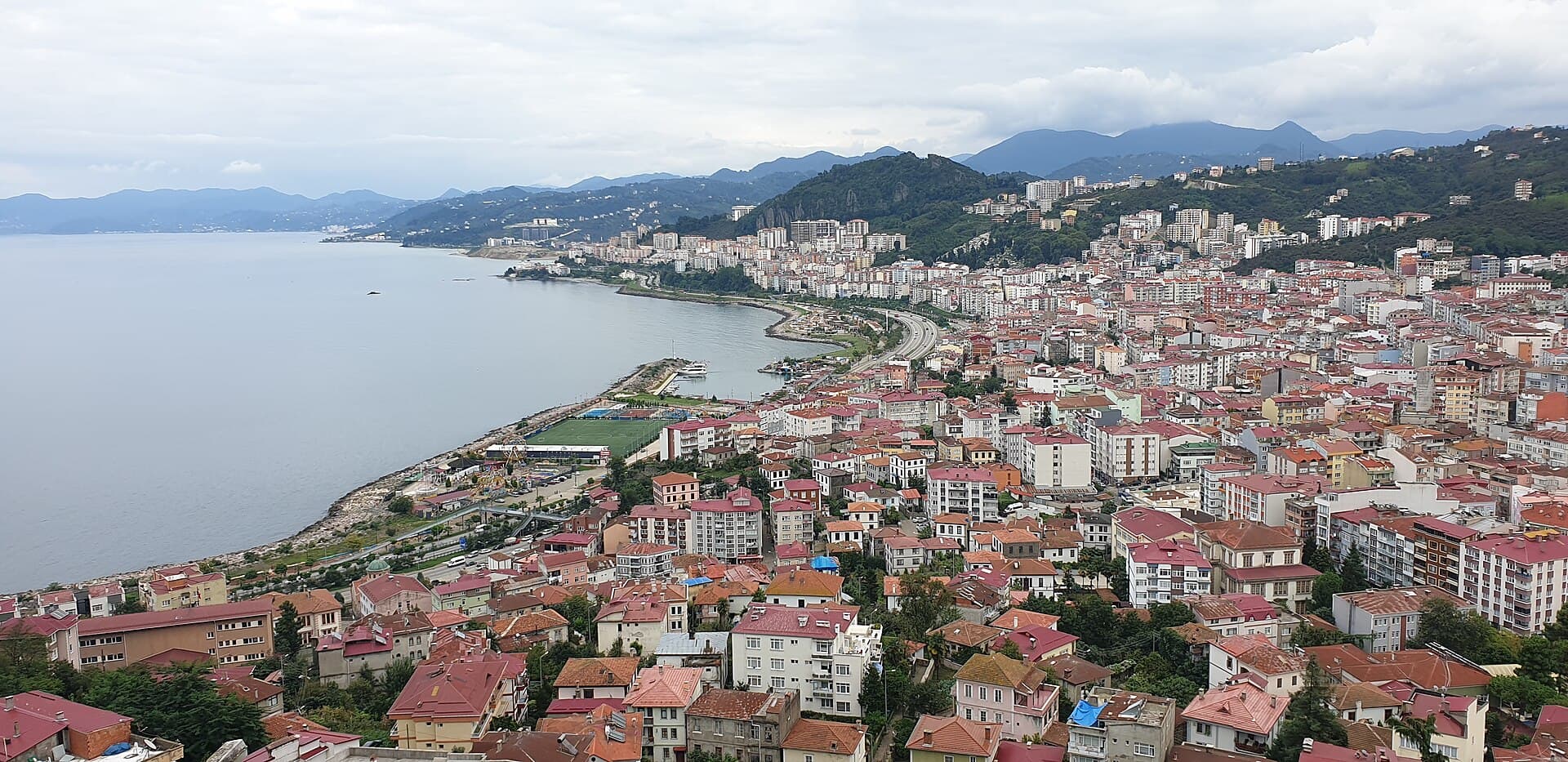
Giresun, TurkeyMkadioglu2020 / CC BY-SA 4.0, via Wikimedia Commons
TR

Giresun

Where the Black Sea meets emerald hills and ancient legends linger.

The secrets of Giresun

Giresun, as no one tells it.

Not the postcards. The stories even locals don't know — whispered in your ear, right where they happened.

3 secrets below. Many more wait inside the tour.
Giresun Island

This small island, the only significant Black Sea island in Turkish territory, holds a surprising connection to ancient mythology.

Full story unlocks in the tour
Giresun Castle

The city's prominent castle has a curious secret about its construction materials.

Full story unlocks in the tour
The Cherry's Origin

The very name of Giresun is said to be linked to a fruit that traveled across continents.

Full story unlocks in the tour
The full tour

Discover every secret of Giresun

Every address, every reveal in full — in your ear, right where it happened.

Get the key to Giresun

You pick your stops. You walk. The voice reveals what the others miss.

Choose your time

How long do you have in Giresun?

No tours available yet. Check back soon — we're preparing them.

About Giresun

The story of Giresun

Giresun, a captivating city on Turkey's Black Sea coast, offers a unique blend of lush green landscapes, historical intrigue, and a welcoming atmosphere. Positioned on a peninsula, the city is framed by the deep blue of the Black Sea and the emerald hues of the Pontic Mountains. Known as the world's hazelnut capital, Giresun's economy is deeply intertwined with this prized crop, with vast hazelnut groves blanketing the surrounding hills.

Beyond its agricultural significance, Giresun invites exploration with its enduring past, evident in its ancient castle and the nearby Giresun Island. The city's temperate oceanic climate, characterized by mild temperatures and frequent rainfall, contributes to its luxuriant flora and provides a refreshing escape. Whether you are drawn to historical sites, natural beauty, or simply a taste of authentic Black Sea life, Giresun offers a distinctive and memorable experience.

History

From Ancient Kerasous to Ottoman Port

The history of Giresun stretches back to antiquity, with evidence of settlement potentially dating to the Hittite period. The city was initially founded around the 6th–5th centuries BC as a trading outpost named Kerasous by Greek colonists from Miletus and Sinope. The name 'Kerasous' is thought to be the origin of the word for 'cherry,' a fruit believed to have been introduced to Europe from this region by the Roman general Lucullus.

Around 180 BC, Pharnaces I of Pontus colonized the area, and the city was briefly renamed Pharnacia after him. Over centuries, Giresun was influenced by various empires, including the Miletians, Persians, Romans, and Byzantines. During the Byzantine era, known as Kerasous, it served as a coastal settlement and a Christian bishopric.

Following the Fourth Crusade in 1204, Giresun became the second most important city of the Empire of Trebizond, a Byzantine successor state. Emperor Alexios II Komnenos fortified the city, expanding the fortress around the early 14th century to defend against Turkmen incursions. In 1461, Sultan Mehmed II incorporated Giresun into the Ottoman Empire during his campaign against Trebizond. Under Ottoman rule, Giresun flourished as a significant port and trade center, particularly known for its hazelnut and lumber trade. The city gained provincial status with the founding of the Republic of Turkey in 1923.

Giresun Castle and Island

The ruined Byzantine fortress, now known as Giresun Castle, sits atop a peninsula overlooking the natural harbor, a testament to the city's long defensive history. Believed to have been constructed in the 2nd century BC by Pontus King Pharnaces I, the castle features remnants of defensive walls and rock-cut tombs from the Kingdom of Pontus. Within the castle grounds, visitors can find the memorial tomb of Topal Osman Ağa, a significant figure in the Turkish War of Independence.

Just off the coast lies Giresun Island, ancient Aretias, the only significant Black Sea island in Turkish territory. According to legend, the island was sacred to the Amazons and housed a temple dedicated to Ares, the god of war. Archaeological finds on the island date back to the Archaic period, and it features ruins from the Byzantine period, including remnants of the Ayios Fokas Monastery.

What to see

Begin your exploration at Giresun Castle, a historic fortress offering wide views of the city and the Black Sea. Wander through its ancient walls and discover rock-cut tombs and the mausoleum of Topal Osman Ağa. Below the castle, the Zeytinlik neighborhood offers a glimpse into Ottoman-era architecture with its preserved stone houses.

A short boat trip will take you to Giresun Island, a unique natural and historical site. Explore its ancient ruins, including Byzantine-era structures, and enjoy the botanical garden. For nature enthusiasts, the surrounding region offers Kuzalan Waterfalls and the Blue Lake (Mavi Göl), a series of four lakes in the Goksu Valley, ideal for photography and picnics. The Giresun Museum, housed in a renovated 19th-century church, showcases artifacts from the region's diverse history.

When to visit

Giresun experiences a humid subtropical climate with warm, humid summers and cool, damp winters. The city receives frequent precipitation throughout the year, with a slight increase in rainfall during spring and autumn. For the most pleasant weather, consider visiting during late spring (March to May) or summer (June to August). These months offer comfortable temperatures, with August being the warmest, averaging around 21-26°C (70-79°F). Rainfall is typically lower in July. Autumn (September to November) brings golden landscapes and harvest festivals, while winter (December to February) offers a cozy atmosphere for cultural experiences.

Practical

Ordu-Giresun Airport (OGU) is approximately 32 kilometers from Giresun city center, with direct buses, taxis, and rental cars available for transfer. The bus journey takes about 60 minutes. Intercity buses connect Giresun to many major Turkish cities, and driving is another option for scenic coastal travel. Public transportation within Giresun primarily relies on small buses (dolmuş) and taxis, as the public bus network is not extensive. Dolmuşes cover many routes and operate on demand.

Turkish Lira (₺) is the local currency. While Giresun is generally safe, it's always wise to be aware of your belongings and avoid poorly lit areas at night. Accommodation options range from guesthouses to mid-range hotels, with the city center and areas near attractions like Giresun Castle being convenient choices. English may not be widely spoken, so having a translation app or basic Turkish phrases can be helpful. Bringing a light waterproof jacket or umbrella is recommended due to frequent rainfall.

Good to know
What is Giresun known for?
Giresun is widely known as the world capital of hazelnuts, producing a significant portion of Turkey's hazelnuts, which are renowned for their quality. The city is also recognized for Giresun Island, the only significant island in the Turkish Black Sea.
What is the local currency and language in Giresun?
The local currency in Giresun, as in the rest of Turkey, is the Turkish Lira (₺). The official language is Turkish.
How do I get to Giresun Island?
Giresun Island is accessible by boat trips from the mainland. These excursions allow visitors to explore the island's historical ruins and natural beauty.
What kind of climate does Giresun have?
Giresun has a humid subtropical climate (Köppen: Cfa or Cfb), characterized by warm, humid summers and cool, damp winters. Rainfall is frequent throughout the year.
Are there any local festivals in Giresun?
Yes, Giresun hosts several festivals, including the Aksu International Black Sea Festival in May and various hazelnut harvest festivals, particularly in autumn.
What are some traditional crafts or souvenirs from Giresun?
Due to its dense forestry, woodworking is a common craft, with items like churns and decorative spoons. Traditional weaving is also practiced, producing local clothes and bags. Of course, hazelnuts and hazelnut products are a primary souvenir.
Giresun
From€9.00
No booking · activate anytime · 12h to walk it
Get the key to Giresun