Glasgow City Chambers
A opulenta Glasgow City Chambers guarda uma conexão surpreendente com um estado independente muito menor, mas globalmente reconhecido.
História completa desbloqueada no tour
 瑞丽江的河水 / CC BY-SA 4.0, via Wikimedia Commons
Tour de áudio autoguiado por Glasgow — rota GPS a pé, reprodução offline, narração envolvente em 32 idiomas.
“Onde a grandiosidade vitoriana encontra a energia crua e criativa.”
Não os postais. As histórias que nem os locais conhecem — sussurradas ao seu ouvido, exatamente onde aconteceram.
A opulenta Glasgow City Chambers guarda uma conexão surpreendente com um estado independente muito menor, mas globalmente reconhecido.
Sob um parque tranquilo de Glasgow encontra-se uma floresta pré-histórica, muito mais antiga que os dinossauros.
Glasgow, frequentemente considerada uma cidade de indústria e arte, também guarda uma relíquia romântica geralmente associada a outra capital europeia.
Descubra cada segredo de Glasgow
Cada endereço, cada revelação na íntegra — no seu ouvido, exatamente onde aconteceu.
Você escolhe as suas paragens. Você caminha. A voz revela o que os outros perdem.


A Lume inclui um guia de realidade aumentada. Levante o telemóvel: a câmara mostra a rua à sua frente, com uma seta luminosa sobreposta à imagem real que aponta sempre para a sua próxima paragem — sem mapa para decifrar, sem voltas erradas. Como tudo na Lume, funciona totalmente offline.
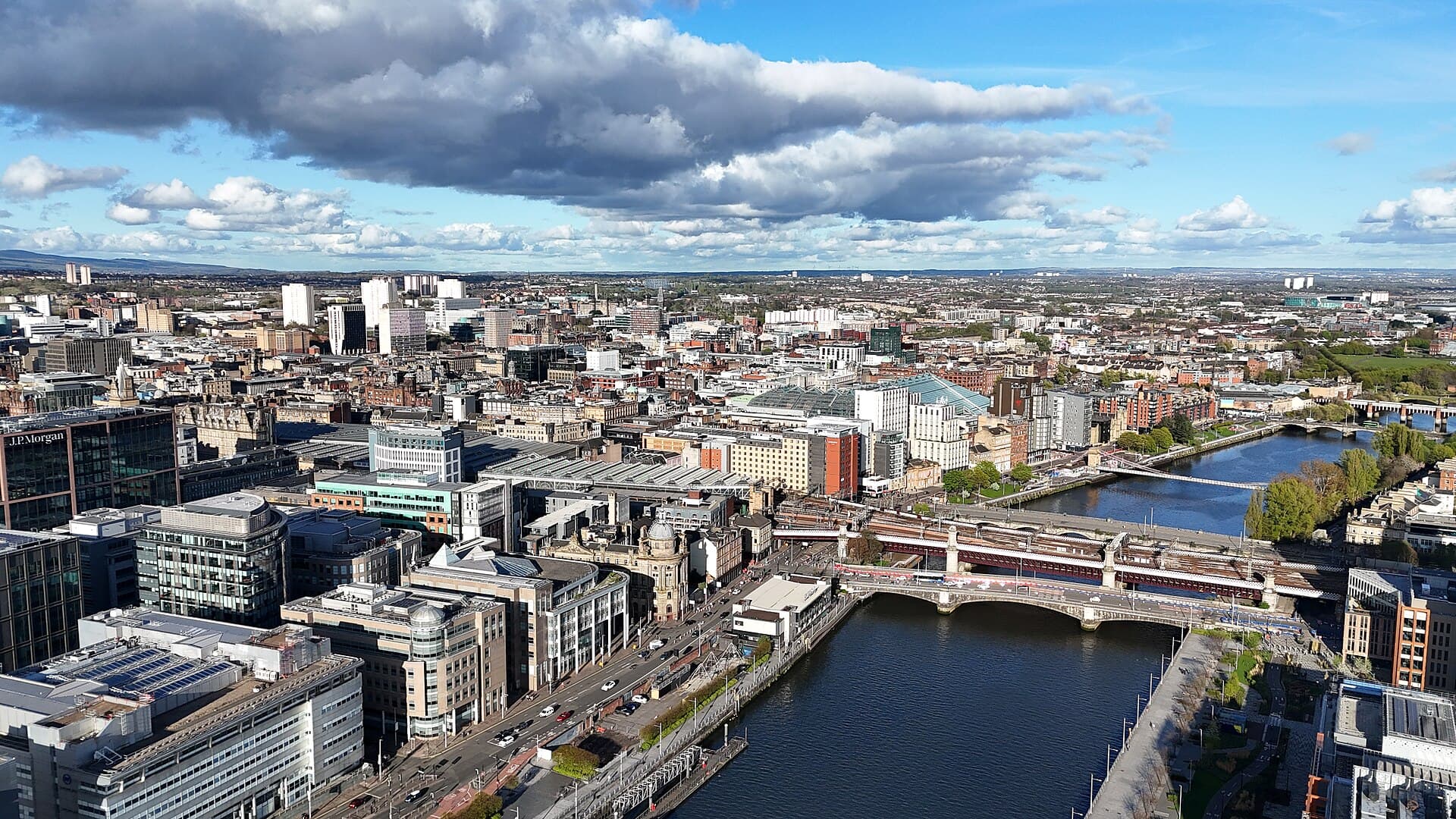
Glasgow, a cidade mais populosa da Escócia, estende-se ao longo do Rio Clyde, um lugar onde a garra histórica encontra uma próspera cena contemporânea de artes e cultura. Conhecida em gaélico como 'Glaschu', que significa 'Vale Verde', a cidade faz jus ao seu nome com mais de 90 parques e jardins, oferecendo amplos espaços verdes em meio à sua paisagem urbana. Já chamada de 'Segunda Cidade do Império Britânico' devido à sua força industrial na construção naval e engenharia, Glasgow passou por uma regeneração significativa, transformando-se em um destino vibrante para cultura, compras e música.
Os visitantes de Glasgow encontrarão uma cidade que abraça seu passado enquanto inova constantemente. Sua impressionante arquitetura vitoriana, um testemunho de sua próspera era industrial, fornece um pano de fundo dramático para uma cidade pulsante de criatividade. De museus e galerias de classe mundial, muitos com entrada gratuita, a uma cena musical ao vivo dinâmica e arte de rua impressionante, Glasgow convida à exploração. É uma cidade que recompensa a curiosidade, revelando cantos inesperados e um caráter único que a diferencia.
A história de Glasgow remonta a tempos pré-históricos, com evidências de comunidades ao longo do Rio Clyde por milênios. Os romanos estabeleceram postos avançados na área, construindo a Muralha Antonina para delimitar a Britânia Romana da Caldônia Celta, com artefatos desse período ainda visíveis hoje.
As origens formais da cidade remontam ao século VI, quando São Mungo, também conhecido como São Kentigern, estabeleceu uma comunidade religiosa no Burn Molendinar, local onde hoje se encontra a Catedral de Glasgow. Essa fundação religiosa foi fundamental, transformando Glasgow em um importante local de peregrinação e centro religioso.
Em 1175, o Rei Guilherme, o Leão, concedeu a Glasgow uma carta real, tornando-a oficialmente um burgo e permitindo-lhe realizar mercados, um passo crucial em seu crescimento inicial. A Universidade de Glasgow foi fundada em 1451 por bula papal, solidificando ainda mais o papel da cidade como um centro acadêmico.
Os séculos XVII e XVIII trouxeram uma transformação radical. A localização estratégica de Glasgow no Rio Clyde, juntamente com a melhoria da navegação, abriu a cidade ao comércio transatlântico. Tornou-se um centro proeminente de comércio internacional, negociando açúcar, tabaco, algodão e bens manufaturados com as Américas, e mais tarde com a Índia e a Ásia.
O século XIX marcou o zênite do poder industrial de Glasgow. A Revolução Industrial impulsionou o crescimento na mineração de carvão, fundição de ferro, fabricação de produtos químicos e construção naval. O Clyde tornou-se um centro global de construção naval, com suas margens repletas de estaleiros e fábricas. A população da cidade disparou, crescendo de cerca de 77.000 em 1801 para mais de 750.000 no final do século. Essa era rendeu a Glasgow o apelido de 'Segunda Cidade do Império'.
No século XX, Glasgow enfrentou a desindustrialização, levando a um período de declínio. No entanto, a cidade desde então passou por uma regeneração significativa, reinventando-se como um centro de cultura, comércio e turismo, ao mesmo tempo em que honra sua herança industrial.
Comece sua exploração na George Square, um impressionante espaço cívico cercado por arquitetura significativa, incluindo a Glasgow City Chambers, um grandioso edifício vitoriano que oferece visitas guiadas gratuitas. Perto dali, descubra a Catedral de Glasgow, uma magnífica estrutura medieval e o edifício mais antigo da cidade, adjacente à atmosférica Glasgow Necropolis, um cemitério vitoriano com túmulos ornamentados e vistas da cidade.
Para entusiastas de arte e história, a Kelvingrove Art Gallery and Museum é uma visita recompensadora, abrigando uma extensa coleção de 8.000 exposições, desde 'Cristo de São João da Cruz' de Salvador Dalí até um avião Spitfire, tudo com entrada gratuita. O Riverside Museum, projetado por Zaha Hadid, oferece uma jornada cativante pela história dos transportes da cidade, com mais de 3.000 exposições e o Tall Ship Glenlee atracado do lado de fora. Não perca o City Centre Mural Trail, uma galeria a céu aberto em evolução que exibe arte de rua impressionante.
Escape da agitação urbana nos Glasgow Botanic Gardens, lar do Kibble Palace, uma estufa vitoriana repleta de plantas exóticas. Para uma experiência cultural única, visite o Sharmanka Kinetic Theatre, onde esculturas mecânicas ganham vida. Se o tempo permitir, considere uma viagem de um dia ao Parque Nacional Loch Lomond e The Trossachs, nas proximidades, para paisagens escocesas.
Glasgow é um destino para o ano todo, mas o clima mais agradável para atividades ao ar livre chega do final de junho ao final de agosto. Durante esses meses de verão, as temperaturas são amenas, variando de 10°C a 20°C, com mais horas de luz do dia. Maio e setembro também oferecem um bom equilíbrio de clima agradável e menos multidões. Embora os invernos sejam frios e muitas vezes úmidos, com temperaturas médias em janeiro em torno de 3-4°C, a cidade sedia vários eventos culturais e atrações internas que podem ser apreciados independentemente do clima.
Glasgow é bem conectada, servida pelo Aeroporto de Glasgow (GLA), que fica a 15 minutos de ônibus do centro da cidade através do serviço Glasgow Airport Express. O Aeroporto de Edimburgo também é uma opção, com um serviço direto de ônibus para a Buchanan Bus Station de Glasgow, levando menos de uma hora. A moeda oficial é a Libra Esterlina (GBP). Cartões de crédito são amplamente aceitos e caixas eletrônicos estão prontamente disponíveis.
O transporte público em Glasgow inclui uma extensa rede de ônibus e o Metrô de Glasgow, carinhosamente conhecido como 'Clockwork Orange' devido à sua rota circular e cor distinta. Embora o centro da cidade seja caminhável, o transporte público ou táxis são recomendados para chegar a atrações mais distantes. Gorjetas de 10-15% são habituais em restaurantes e cafés com serviço de mesa, se você estiver satisfeito com o serviço, mas não são esperadas em bares.
Glasgow é geralmente uma cidade segura, com áreas turísticas bem policiadas. No entanto, como em qualquer cidade grande, é aconselhável estar ciente do seu entorno. O sotaque local pode ser forte, mas os glaswegianos são conhecidos por sua simpatia e geralmente ficam felizes em ajudar se você precisar que eles falem mais devagar ou repitam algo.
Glasgow — coreano, chinês, hebraico e mais 29 idiomas, cada parada narrada por uma voz nativa. A maior variedade de idiomas entre os passeios de áudio autoguiados.
Disponível em: