Buraco da Gia restaurant
There's a restaurant in Goiana where the staff isn't entirely human.
Full story unlocks in the tour
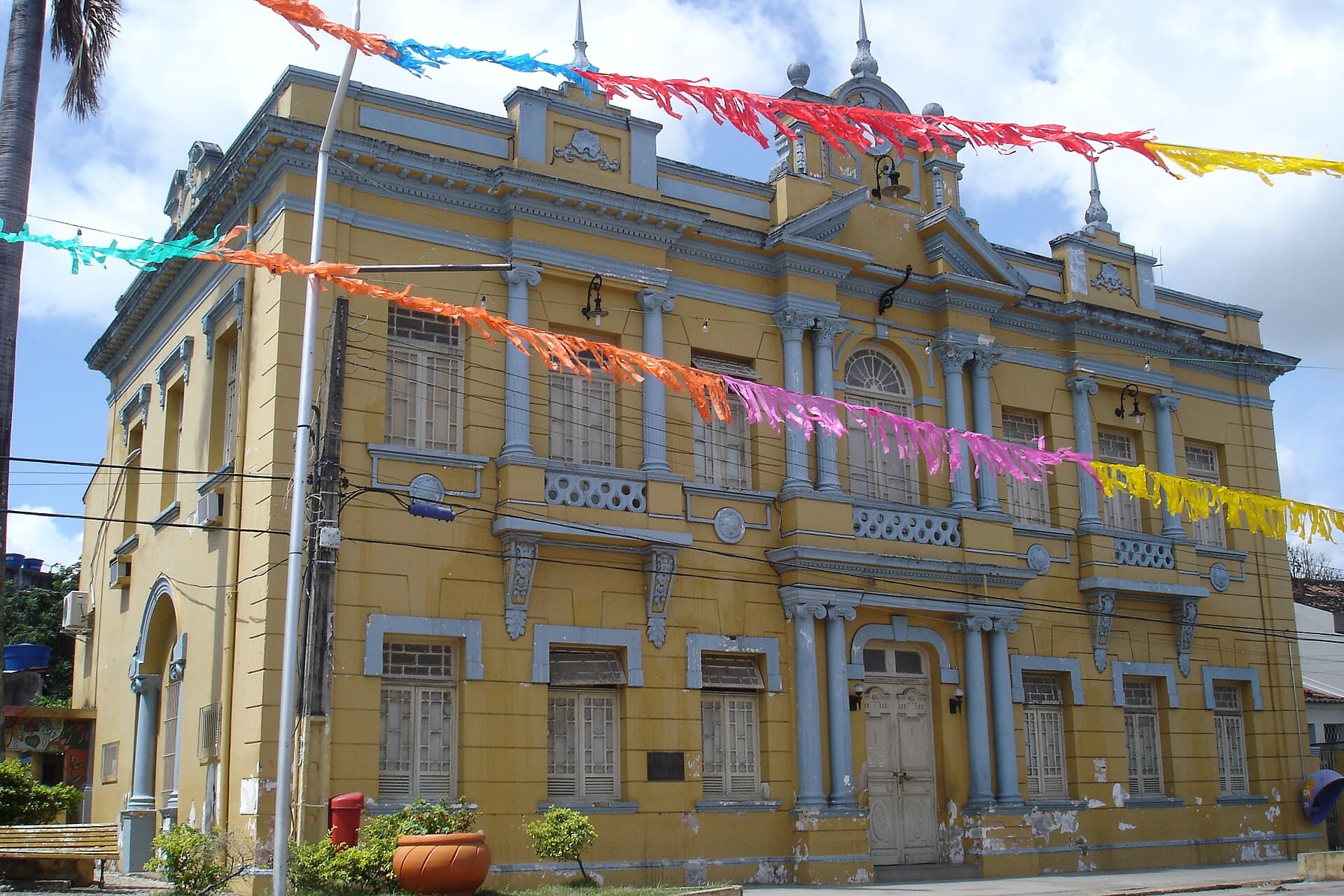 Delma Paz / CC BY 2.0, via Wikimedia Commons
Self-guided audio walking tour of Goiana — GPS route, offline playback, story-driven narration in 32 languages.
“Where colonial echoes meet the rhythm of the Atlantic.”
Not the postcards. The stories even locals don't know — whispered in your ear, right where they happened.
There's a restaurant in Goiana where the staff isn't entirely human.
A small settlement near Goiana holds the memory of an extraordinary battle fought by women.
Beneath the waves off one of Goiana's popular beaches lies a submerged piece of history.
Discover every secret of Goiana
Every address, every reveal in full — in your ear, right where it happened.
You pick your stops. You walk. The voice reveals what the others miss.


Your self-guided audio tour of Goiana is ready — pick your landmarks, choose your language, and start the moment you arrive.
BuyLume has a built-in augmented-reality guide. Hold your phone up and its camera shows the street ahead of you, with a glowing arrow laid over the real view that always points to your next stop — no map to puzzle over, no wrong turns. Like everything in Lume, it works fully offline.
Goiana, a city in the state of Pernambuco, Brazil, offers a blend of historical character, natural beauty, and a lively local culture. Located roughly 65 km north of Recife, it serves as a gateway to authentic Brazilian experiences away from more frequented tourist paths.
The city's coastal location provides access to 18 km of Atlantic coastline, featuring several beaches. Goiana is also recognized for its historical buildings and unique cultural manifestations.
With an estimated population of over 85,000, Goiana maintains a welcoming atmosphere, inviting visitors to explore its heritage and enjoy its serene landscapes.
## The Sugar Cycle and Colonial Roots Goiana's history is deeply intertwined with the Brazilian sugar cycle, a period from the mid-16th to mid-18th centuries when sugar was the backbone of Brazil's colonial economy. Sugarcane was introduced to the island of Itamaracá, off the coast of Pernambuco, in 1530. Pernambuco quickly became a prominent sugar-producing region, known for its prosperous farms and numerous sugar mills.
Goiana itself was a significant producer of sugarcane during this era. The Goiana River, which flows through the city, hosted an important port that facilitated the transport of local production. This economic importance led Goiana to serve as the seat of the Captaincy of Itamaracá on several occasions and it remained the second most important city in the state until the end of this period.
## Dutch Invasions and Local Resistance The prosperity of Pernambuco attracted the attention of the Dutch, who seized the captaincy in 1630. This period of Dutch occupation saw significant conflicts, including the notable Battle of Tejucupapo in 1646, where local women successfully defended their settlement against Dutch troops. This act of courage is still remembered, and archaeological digs in the late 20th century revealed remnants of a fort built by the Portuguese to protect provisions in Tejucupapo.
## Architectural and Cultural Heritage Goiana's colonial past is still visible in its architecture. The Church of Our Lady of Blackmen Rosary (Igreja de Nossa Senhora do Rosário dos Pretos), built in 1596, houses a Museum of Sacred Art. Other significant historical churches include Our Lady of Carmel Church and Convent of Saint Albert of the Carmelites (built in 1666) and Our Lady of Whitemen Rosary Church (built in 1705). These structures reflect the city's long history and the various influences that shaped its development.
Goiana offers a variety of attractions that highlight its history, culture, and natural beauty. For those interested in colonial architecture and religious art, the Church of Our Lady of Blackmen Rosary (Igreja de Nossa Senhora do Rosário dos Pretos), dating back to 1596, is a significant stop, housing a Museum of Sacred Art. Other historic churches include the Our Lady of Carmel Church and Convent of Saint Albert of the Carmelites (1666) and the Our Lady of Whitemen Rosary Church (1705).
The municipality encompasses 18 km of coastline with six distinct beaches. Ponta de Pedras is the most frequented, featuring calm waves and fine sand, and is home to the Ponta do Funil, the easternmost point of Pernambuco. Here, you can also find the Ponta de Pedras Lighthouse, built in 1918. Carne de Vaca is another notable beach, characterized by small waves and a fishing village atmosphere, and was a filming location for the Brazilian TV series Riacho Doce in 1990.
For a unique culinary experience, visit Buraco da Gia restaurant, where trained crabs are known to offer drinks to guests. Adventure seekers can explore scuba diving opportunities to discover the wrecks of the Nicolau Copérnico (1883) and the Vapor Bahia (1887) off Ponta de Pedras beach. Catamaran boat rides along the Goiana river, Celeiro Island, and Itamaracá Island also offer scenic excursions.
The best time to visit Goiana is during the dry season, which spans from September to March. This period offers pleasant weather, ideal for enjoying outdoor activities and the city's beaches without the interruption of heavy rains. While the rainy season occurs from April to August, there is still plenty of sunshine to enjoy.
Goiana is located in the state of Pernambuco, Brazil, approximately 65 km north of Recife. The local currency is the Brazilian Real (BRL), and while credit cards are widely accepted in hotels, restaurants, and shops, carrying some cash for smaller establishments and markets is advisable. Portuguese is the official language, and while some English may be spoken in the tourism industry, learning a few basic Portuguese phrases can enhance your experience. The most convenient ways to get around Goiana are by renting a car or using local taxis, as public transportation may be less convenient for tourists. Goiana is generally considered safe for tourists, though it's always wise to be aware of your surroundings, especially at night, and avoid openly displaying valuable items.
Goiana in Korean, in Chinese or in Hebrew — and 29 more languages, every stop narrated by a native voice. The widest language range of any self-guided audio tour.
Available in: