In 1987, two men stumbled upon a discarded medical device, its contents glowing with an eerie blue light. What they found, and what happened next, would leave an indelible mark on the city.
Boaventuravinicius / CC BY-SA 4.0, via Wikimedia CommonsGoiânia
“Where urban planning meets verdant tranquility and a surprising past.”
Goiânia, as no one tells it.
Not the postcards. The stories even locals don't know — whispered in your ear, right where they happened.
This central plaza was designed as the heart of a new, modern capital, but its name wasn't always a certainty. The city almost bore a different, more personal, name.
As you walk through Goiânia's tree-lined avenues and numerous green spaces, you might notice something unexpected growing freely.
Discover every secret of Goiânia
Every address, every reveal in full — in your ear, right where it happened.
You pick your stops. You walk. The voice reveals what the others miss.
How long do you have in Goiânia?
No tours available yet. Check back soon — we're preparing them.
The story of Goiânia
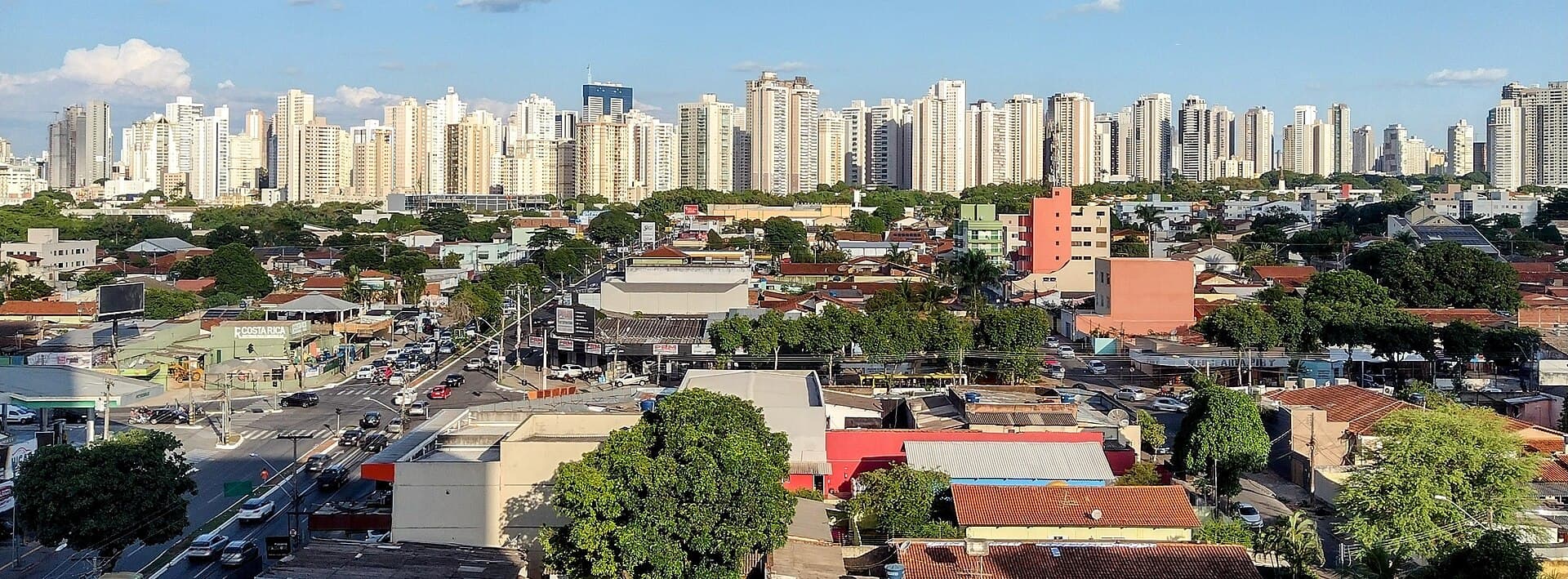
Goiânia, the capital of the Brazilian state of Goiás, is a city born from ambition and careful planning. Founded on October 24, 1933, it was conceived as a modern administrative center to replace the older, less accessible state capital. Today, with a population exceeding 1.5 million, it stands as the second most populous city in Brazil's Central-West Region, surpassed only by Brasília.
The city's design, initially inspired by the 'garden city' movement, features a radial-concentric layout with wide avenues and an abundance of green spaces. In fact, Goiânia is recognized for having one of the highest percentages of green space per inhabitant in Brazil, offering a refreshing urban environment. This blend of urban development and environmental consciousness contributes to its reputation for a good quality of life.
A Planned City Emerges
The idea for a new state capital in Goiás had been discussed for years, gaining momentum in the 1930s. The previous capital, Cidade de Goiás (also known as Goiás Velho), was deemed too remote and unsuited for the state's evolving economy, which was shifting from gold mining to agriculture and livestock. In 1932, a commission was formed to select a new location, eventually settling on the municipality of Campinas.
Governor Pedro Ludovico Teixeira, appointed after the 1930 military revolt, championed the project. On October 24, 1933, the cornerstone of Goiânia was laid. The city's innovative urban plan was developed by architect Attilio Corrêa Lima, who envisioned a city for 50,000 residents with a radial-concentric layout centered around Praça Cívica, where the state and municipal government buildings would be located. The early buildings were heavily influenced by the Art Deco style, and Goiânia now holds one of the largest collections of Art Deco architecture globally, with 22 buildings listed as National Heritage sites.
Growth and Challenges
In 1937, a decree officially transferred the state capital to Goiânia, and the city's official inauguration took place in 1942. Initially, growth was moderate, but the construction of Brasília in the 1950s and other national initiatives to develop Brazil's interior brought new impetus, leading to rapid expansion from 1955 onwards. Goiânia quickly established itself as an economic hub for the surrounding agricultural region, becoming a key center for trade and services.
However, this rapid growth also presented challenges. The initial planned urban development eventually gave way to more organic, less regulated expansion, leading to issues like traffic congestion. One of the most challenging moments in the city's history was the 1987 Goiânia accident, a radioactive contamination incident that occurred when a stolen medical radiation source containing cesium-137 was mishandled. This tragedy, which resulted in four deaths and widespread contamination, served as a global lesson in radiation safety. Despite this, Goiânia has continued to evolve, maintaining its identity as a welcoming city with a strong connection to its rural roots, reflected in its cultural life and traditional sertanejo music, known locally as 'Modão'.
Goiânia offers a blend of urban green spaces and architectural interest. Start at Praça Cívica, the city's central square, envisioned in the original urban plan. Here you'll find the Palace of Emeralds and the Palace of Campinas, seats of state and municipal government.
Explore the Art Deco architectural collection in the original center and the pioneering nucleus of Campinas. Twenty-two of these buildings are recognized as National Heritage sites, showcasing geometric shapes and bold lines from the 1920s and 30s.
For a dose of nature, visit Areião Park, a large urban park with a 1.5-kilometer running and walking track, sports areas, and opportunities to observe local fauna. Another significant green space is the Jardim Botânico de Goiânia, a vast botanical garden that spans one million square meters and functions as a sanctuary for wildlife, featuring ecological trails and diverse flora and fauna of the cerrado ecosystem. The Lago das Rosas Park is one of Goiânia's most traditional landmarks, offering lush nature, leisure areas, and a central lake, also housing the Goiânia Zoo. The Memorial do Cerrado is a scientific complex that includes ancient villages, indigenous villages, and a Natural History Museum, along with ecological hiking trails.
For cultural experiences, visit the Oscar Niemeyer Cultural Center, which houses the Museum of Contemporary Art of Goiás.
Goiânia has a tropical wet and dry climate with warm temperatures year-round. The dry season, from May to September, is generally considered the best time to visit, with minimal rainfall and clearer skies. July is often the coolest month, while September can be the warmest. The wet season runs from October to April, with December being the rainiest month.
Goiânia is accessible by air via Santa Genoveva Airport (GYN), located just 8 kilometers from the city center. The city is also well-connected by bus, with regular services from Brasília (approximately a 4-hour journey) and other major cities. While there's no direct passenger railway service, buses or cars can connect you from nearby rail hubs.
Within Goiânia, the public transportation system relies on an extensive bus network. While some areas are pleasant for walking, the city's design prioritizes vehicle traffic, and the warm climate can make extended walks less comfortable. Taxis and ride-sharing services are also readily available. Safety is a common concern for travelers in Brazil, and Goiânia is generally considered safe in popular neighborhoods like Setor Bueno, Setor Marista, and the downtown area, which have a higher police presence. It is always advisable to be aware of your surroundings, avoid walking alone late at night in unfamiliar areas, and secure your belongings.
- What is Goiânia known for?
- Goiânia is widely recognized for its planned urban design, extensive green spaces (with one of the highest percentages of green areas per inhabitant in Brazil), and a significant collection of Art Deco architecture. It is also an important economic hub in the Central-West Region of Brazil.
- What is the local cuisine like in Goiânia?
- Goiânia's cuisine is known for hearty, flavorful dishes that reflect the best of Goiás. Specialties include *empadão goiano*, a savory pie often filled with chicken, sausage, cheese, and the regional fruit *pequi*. Other popular dishes include *pamonha* (a sweet or savory corn-based treat) and *galinhada* (rice with chicken).
- Is Goiânia a safe city for tourists?
- Goiânia is generally considered safe for tourists, especially in well-known neighborhoods like Setor Bueno, Setor Marista, and the downtown area, where there is a noticeable police presence. As with any large city, it's recommended to be aware of your surroundings, avoid walking alone in unfamiliar areas at night, and keep personal belongings secure.
- What kind of climate does Goiânia have?
- Goiânia has a tropical wet and dry climate, characterized by warm temperatures throughout the year. There are two distinct seasons: a wet season from October to April and a dry season from May to September.
- How can I get around Goiânia?
- The primary mode of public transportation in Goiânia is an extensive bus network. Taxis and ride-sharing services are also available. While walking is pleasant in parks, the city's design and warm climate can make it less practical for longer distances.
- What is the most famous historical event in Goiânia?
- The most famous historical event in Goiânia is the 1987 radioactive contamination accident. This incident occurred when a stolen radiotherapy source containing cesium-137 was mishandled, leading to widespread contamination, several deaths, and significant health issues.