Currumbin Wildlife Sanctuary
Prima di diventare un rinomato santuario della fauna selvatica, il suo fondatore affrontò un problema piuttosto spinoso.
La storia completa si sblocca nel tour
 Jordan Gellie jordan_gellie / CC0, via Wikimedia Commons
Tour audio autoguidato di Gold Coast — percorso GPS a piedi, riproduzione offline, narrazione coinvolgente in 32 lingue.
“Dove coste baciate dal sole incontrano antiche foreste pluviali e vitalità urbana.”
Non le cartoline. Le storie che nemmeno i locali conoscono — sussurrate nel tuo orecchio, proprio dove sono accadute.
Prima di diventare un rinomato santuario della fauna selvatica, il suo fondatore affrontò un problema piuttosto spinoso.
Negli anni '60, queste figure distintive erano più di una semplice attrazione; offrivano una sorprendente gentilezza agli automobilisti.
Il nome familiare della città non è sempre stato uno di affetto; iniziò come una critica.
Scopri ogni segreto di Gold Coast
Ogni indirizzo, ogni rivelazione completa — nel tuo orecchio, proprio dove è accaduta.
Scegli le tue tappe. Cammini. La voce rivela ciò che gli altri perdono.


Il tuo tour audio autoguidato di Gold Coast è pronto — scegli i tuoi punti di interesse, seleziona la tua lingua e inizia nel momento in cui arrivi.
AcquistaLume include una guida in realtà aumentata. Alza il telefono: la fotocamera mostra la strada davanti a te, con una freccia luminosa sovrapposta all'immagine reale che punta sempre verso la tua prossima tappa — nessuna mappa da decifrare, nessuna svolta sbagliata. Come tutto in Lume, funziona completamente offline.
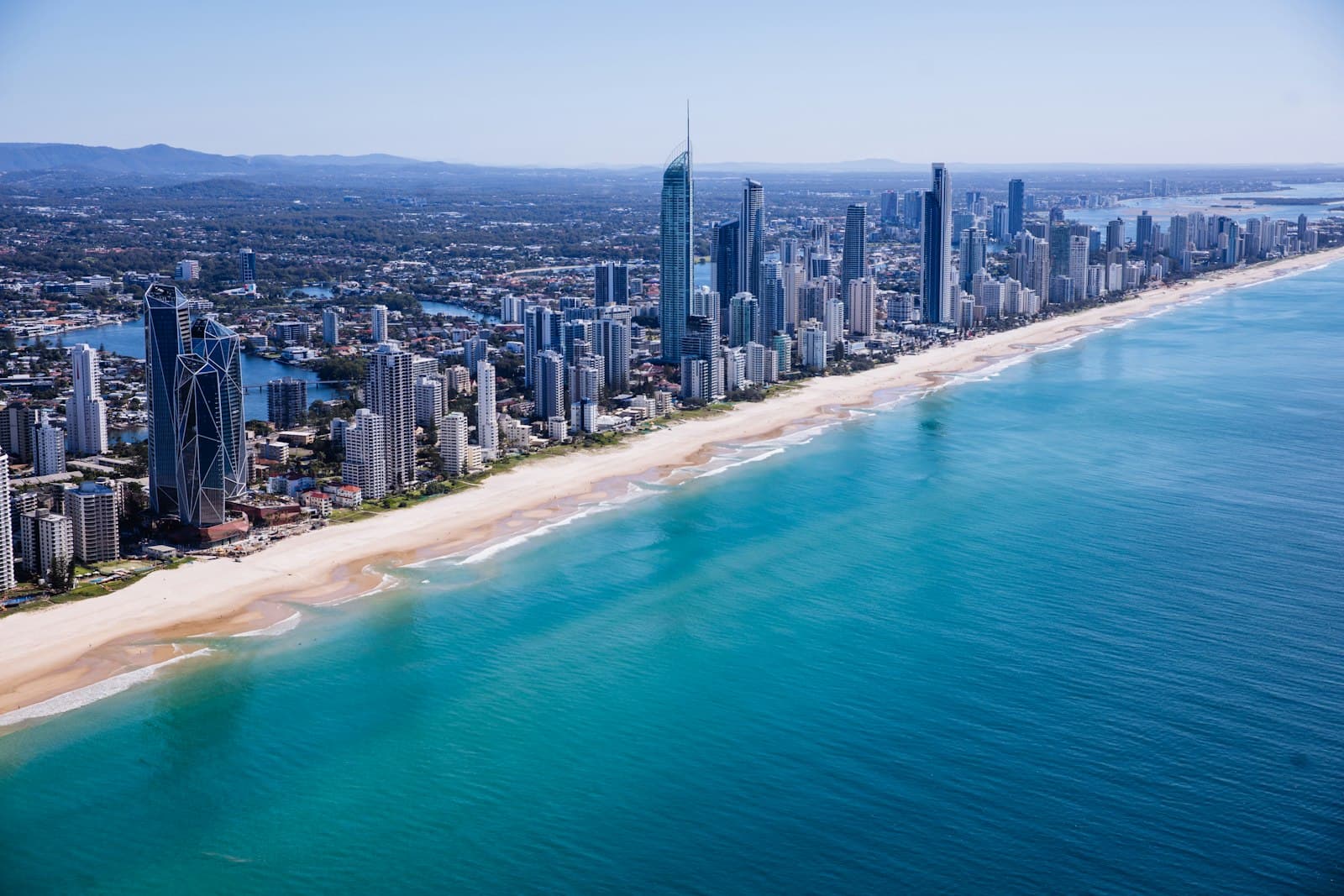
La Gold Coast, nel Queensland, Australia, è una città definita dalla sua radiosa costa e dal suo ritmo energico. Con una media di 300 giorni di sole all'anno, la vita qui si svolge naturalmente all'aperto, dalle sue rinomate spiagge all'entroterra verdeggiante. È un luogo dove l'eccitazione dei parchi a tema di livello mondiale coesiste con la serenità delle foreste pluviali primordiali, e una vivace scena urbana si fonde perfettamente con un rilassato ritmo da spiaggia.
Estendendosi lungo l'Oceano Pacifico, la Gold Coast è la sesta città più grande dell'Australia e la città non capitale più popolosa. Offre una vasta gamma di esperienze, dall'imparare a fare surf sulle sue famose onde all'esplorazione di parchi nazionali con cascate appartate. Che tu cerchi avventura, riposo o un assaggio della cultura australiana, la Gold Coast offre una fusione avvincente di splendore naturale e attrazioni contemporanee.
La narrazione della Gold Coast inizia molto prima dell'arrivo degli europei, con prove archeologiche che indicano che gli aborigeni australiani abitavano la regione da almeno 23.000 anni. Patria ancestrale di diversi clan Yugambeh, tra cui i Kombumerri, i Mununjali e i Wangerriburra, l'area aveva un profondo significato culturale. Il popolo Yugambeh si riuniva per feste tribali e utilizzava i legni duri locali per creare strumenti come i boomerang.
Il contatto europeo iniziò nel 1770 quando il Capitano James Cook passò navigando, tracciando punti di riferimento come Point Danger. Tuttavia, fu solo nel 1823 che l'esploratore John Oxley sbarcò a Mermaid Beach. La metà del XIX secolo vide l'arrivo di taglialegna, attratti dal prezioso cedro rosso dell'entroterra. Ciò portò alla creazione dei primi insediamenti, con Nerang che si formò nel 1865 come centro per l'industria del legname.
L'evoluzione della regione in una destinazione turistica iniziò alla fine del XIX secolo. Nel 1885, il Governatore del Queensland Musgrave costruì una casa vacanze vicino a Southport, stabilendo la reputazione dell'area come rifugio per i ricchi di Brisbane. La costruzione di una linea ferroviaria da Brisbane negli anni '80 migliorò ulteriormente l'accessibilità e il turismo. Gli anni '20 segnarono un periodo significativo di espansione, con l'apertura del Surfers Paradise Hotel nel 1925, un evento cruciale che stimolò lo sviluppo delle infrastrutture turistiche. L'area conosciuta come Elston fu ufficialmente rinominata Surfers Paradise nel 1933.
Dopo la Seconda Guerra Mondiale, la Gold Coast conobbe un importante boom immobiliare. Il soprannome 'Gold Coast' emerse nel 1950 a causa dell'aumento dei prezzi delle proprietà e del crescente fascino dell'area come zona di vacanza. Questo nome informale divenne ufficiale nel 1958 quando il South Coast Town Council fu rinominato Gold Coast Town Council, e meno di un anno dopo, il 16 maggio 1959, fu proclamata città. Gli anni '60 videro la costruzione del primo grattacielo della città, Kinkabool, e l'introduzione delle famose Meter Maids. La Gold Coast continuò la sua rapida espansione negli anni '80 con un'ampia costruzione di grattacieli e un ampliamento delle sue offerte turistiche, inclusi i parchi a tema. All'inizio del XXI secolo, era diventata anche una destinazione internazionale per la produzione cinematografica.
La Gold Coast offre una variegata collezione di attrazioni, che piacciono a tutti gli interessi. Per gli amanti della spiaggia, Surfers Paradise Beach è un vivace centro per nuoto, surf e sport acquatici, con mercati e intrattenimento serale nelle vicinanze. Altre spiagge popolari includono Coolangatta Beach, nota per Rainbow Bay, Greenmount e Kirra, e il pittoresco Tallebudgera Creek, ideale per acque più calme e picnic.
Oltre alla costa, la Gold Coast Hinterland offre una rinfrescante fuga in foreste pluviali antiche, cascate e punti panoramici. Springbrook National Park è un punto culminante, che offre sentieri come il Twin Falls Circuit e il Natural Bridge, dove è possibile osservare i vermi luminosi dopo il tramonto. Tamborine Mountain presenta anche foreste lussureggianti, gole e grotte di vermi luminosi.
Per coloro che cercano avventura, la Gold Coast ospita numerosi parchi a tema, tra cui Warner Bros. Movie World, Dreamworld e Sea World, che offrono una varietà di giostre e intrattenimento. Per ampie viste sulla città, lo SkyPoint Observation Deck a Surfers Paradise, l'unico ponte di osservazione sulla spiaggia dell'Australia, offre un imponente punto di osservazione, con l'opzione di uno SkyPoint Climb per i più audaci.
Le esperienze culturali includono il Jellurgal Cultural Centre a Burleigh Heads, che offre spunti sui proprietari tradizionali, il popolo Yugambeh, attraverso tour e arte. Per un diverso tipo di esplorazione, considera un tour in kayak all'isola di Wave Break per fare snorkeling in acque limpide e osservare la vita marina. La città offre anche una vivace scena di mercati, con i Surfers Paradise Beachfront Markets e The Village Markets a Burleigh Heads che espongono arte locale, artigianato e moda.
La Gold Coast gode di un clima subtropicale con circa 300 giorni di sole all'anno, che la rendono una destinazione visitabile tutto l'anno.
Per il clima più gradevole con temperature miti e bassa umidità, le stagioni intermedie di autunno (marzo-maggio) e primavera (settembre-novembre) sono ideali. Questi periodi sono eccellenti per attività all'aperto come escursioni ed esplorazione dell'entroterra, e offrono condizioni balneari confortevoli senza la folla di punta.
L'estate (dicembre-febbraio) porta temperature calde o molto calde e maggiore umidità, perfetta per godersi le spiagge e le attività acquatiche, anche se è anche la stagione di punta con più folla e prezzi più alti.
L'inverno (giugno-agosto) è generalmente soleggiato e secco con temperature confortevoli e più fresche, rendendolo un periodo popolare per gli australiani che cercano una fuga dagli stati meridionali più freddi. Anche l'osservazione delle balene è popolare durante questo periodo.
L'aeroporto di Gold Coast (OOL) a Coolangatta è il principale punto di ingresso, situato a circa 30 minuti di auto da Surfers Paradise. In alternativa, puoi volare all'aeroporto di Brisbane e viaggiare verso sud in auto o in treno. La Gold Coast è una grande città e, sebbene le attrazioni siano accessibili in auto, esistono opzioni di trasporto pubblico. I parchimetri sono comuni nelle aree trafficate come Surfers Paradise, Southport e Burleigh Heads, con anche parcheggi a pagamento disponibili.
L'abbigliamento casual è la norma, ma alcuni ristoranti raffinati o campi da golf potrebbero avere codici di abbigliamento. Per esplorare l'entroterra e i parchi nazionali, si consigliano scarpe comode da passeggio, e una giacca potrebbe essere utile nelle aree più fresche e umide, specialmente durante le serate invernali. Il costume da bagno è adatto tutto l'anno grazie alle temperature diurne costantemente calde. La Gold Coast ha più canali di Venezia, offrendo opportunità uniche di esplorazione in barca, jet ski o paddleboard.
Gold Coast — coreano, cinese, ebraico e altre 29 lingue, ogni tappa narrata da una voce madrelingua. La più ampia scelta di lingue tra i tour audio autoguidati.
Disponibile in: