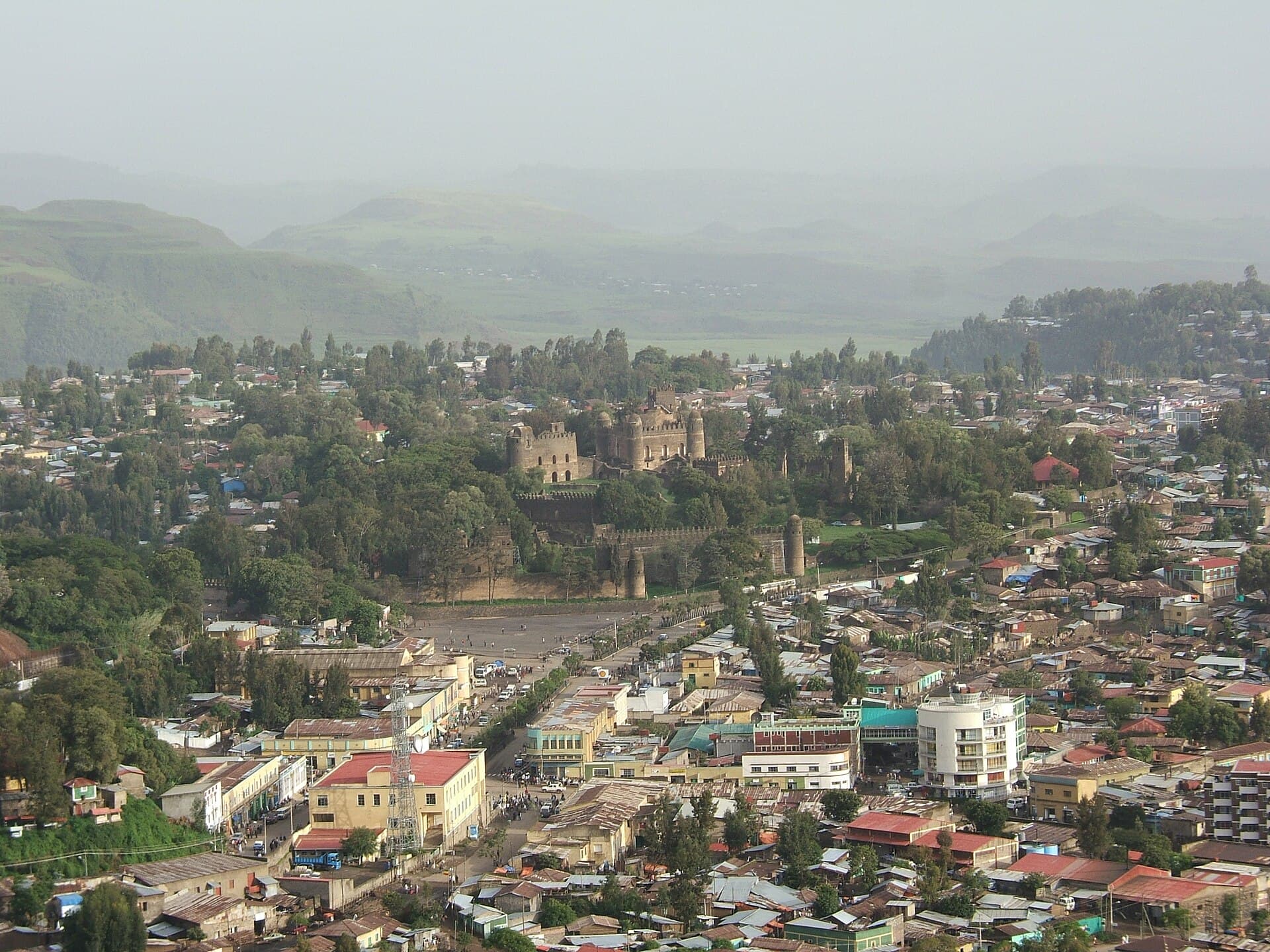
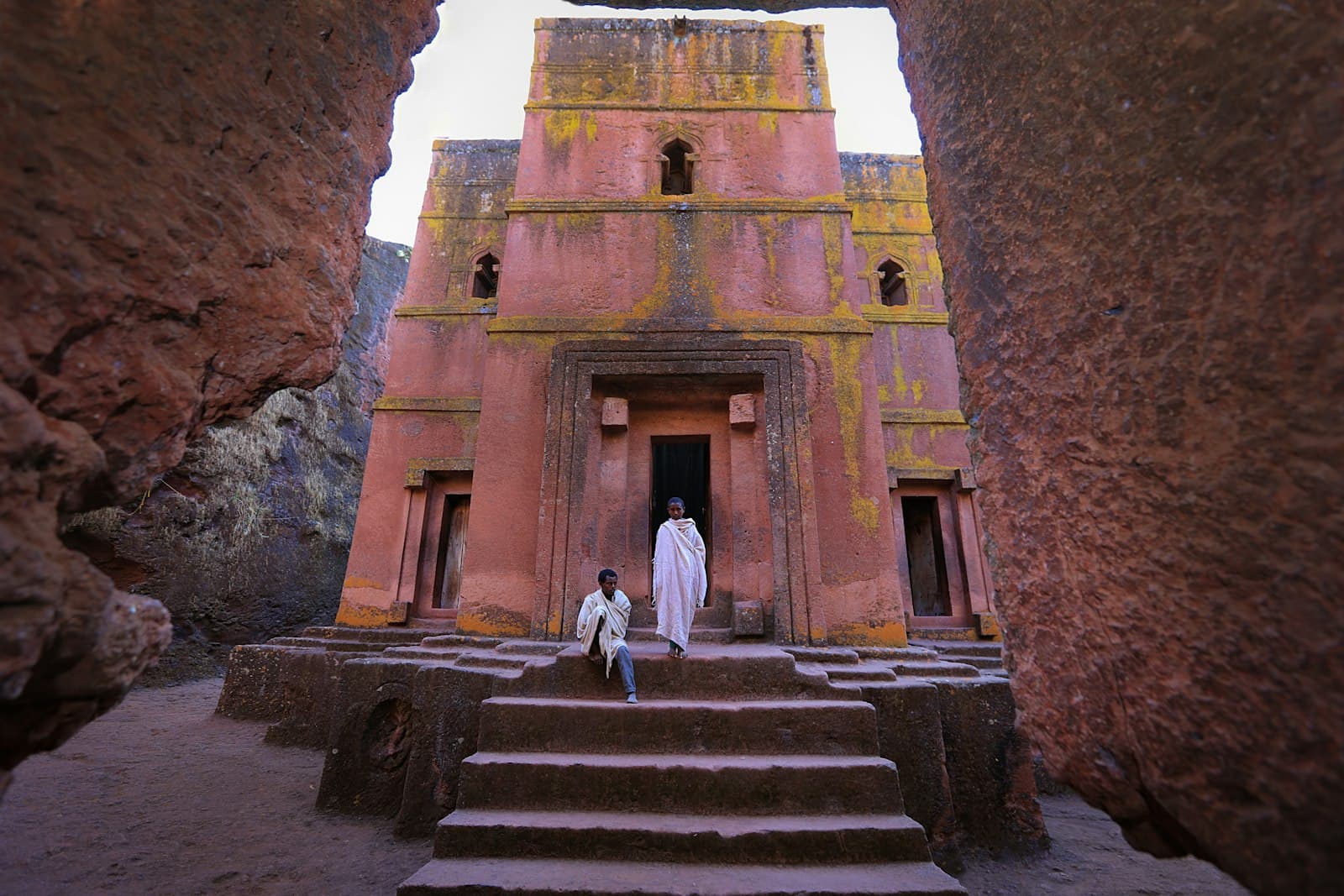
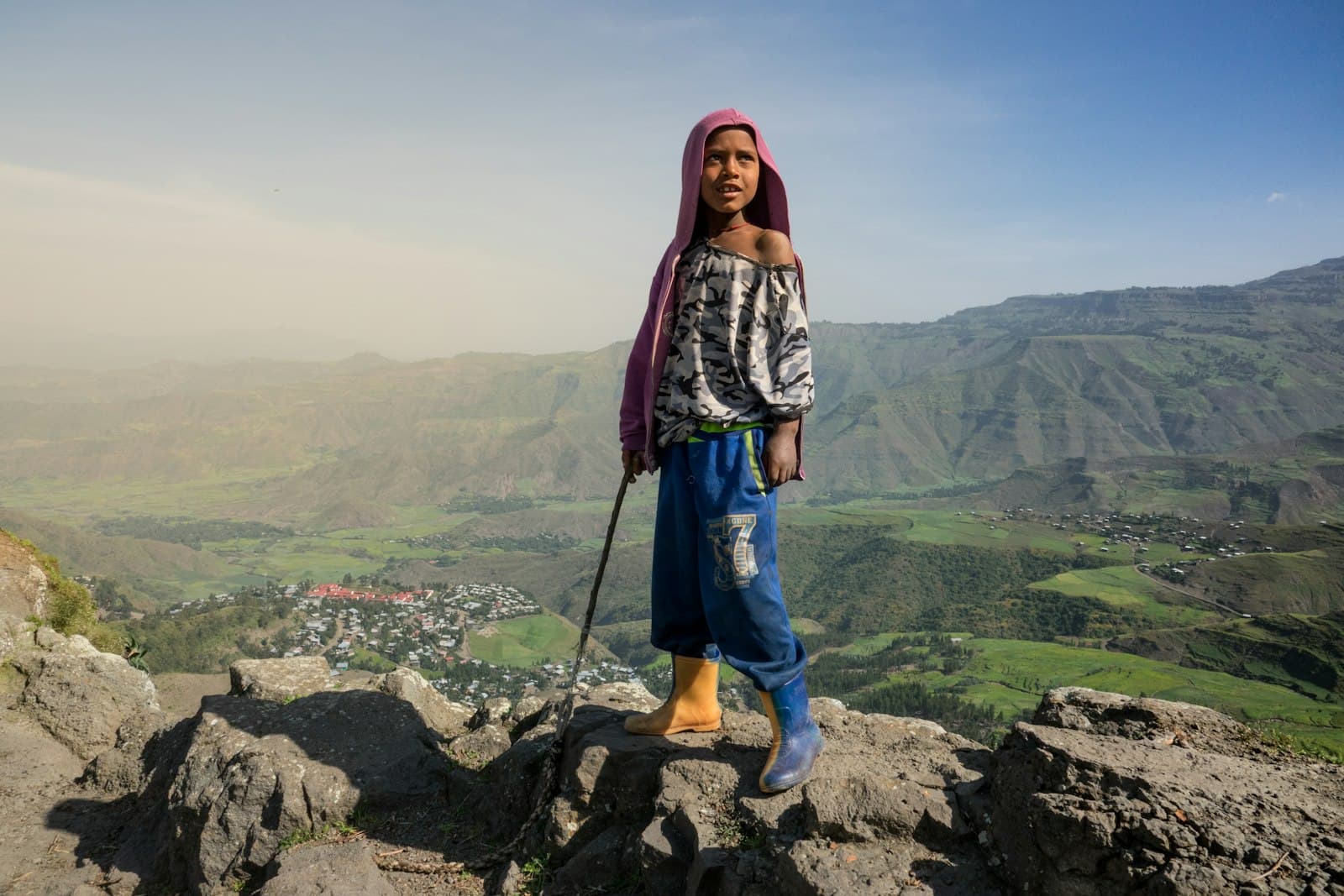
Beyond the grand halls and royal chambers of Fasil Ghebbi, a less-traveled vantage point offers a sweeping perspective.
Giustino / CC BY 2.0, via Wikimedia CommonsGondar
“Where emperors crafted stone legacies and divine guardians watch over hallowed ground.”
Gondar, as no one tells it.
Not the postcards. The stories even locals don't know — whispered in your ear, right where they happened.
This church, unlike almost all others in Gondar, endured a devastating attack in 1888. The reason, according to local legend, is quite extraordinary.
The precise location of Gondar's imperial capital was not chosen by strategy alone.
Discover every secret of Gondar
Every address, every reveal in full — in your ear, right where it happened.
You pick your stops. You walk. The voice reveals what the others miss.
How long do you have in Gondar?
No tours available yet. Check back soon — we're preparing them.
The story of Gondar
Gondar, sometimes referred to as the “Camelot of Africa,” is a city in Ethiopia's northern Amhara region, celebrated for its 17th and 18th-century castles and churches. It served as the capital of the Ethiopian Empire for over two centuries, from 1636 to the mid-19th century. This historic city offers a unique blend of medieval grandeur and a lively contemporary pulse, with its UNESCO World Heritage site, Fasil Ghebbi, standing as a testament to its imperial past.
Beyond the ancient stone walls, Gondar is a city where history breathes alongside daily life. Horse-drawn carriages navigate narrow lanes, and the central piazza, with its shops and public buildings, still bears the architectural influence of the Italian occupation in the 1930s. Gondar also serves as a gateway to the dramatic landscapes of the Simien Mountains, making it a pivotal stop on any northern Ethiopia itinerary.
The Rise of an Imperial Capital
Before the 17th century, Ethiopian emperors were nomadic, moving their courts across the territory. This tradition shifted in 1636 when Emperor Fasilides established Gondar as a permanent capital. The location was strategically chosen along trade routes and offered access to wood, water, and foodstuffs from the agricultural regions near Lake Tana. Fasilides began constructing a walled imperial enclosure, Fasil Ghebbi, which would become the heart of the city.
The Gondarine Period: A Golden Age
Under Fasilides and his successors, Gondar flourished, becoming a center for arts, education, and religion. Each emperor added to the royal compound, constructing palaces, churches, and other structures that displayed a unique architectural style, blending Ethiopian, Portuguese, Indian, and Arabian influences. Notable additions included the palace of Iyasu the Great and the Qusquam complex built by Empress Mentewab. The city's growth also led to the formation of distinct neighborhoods, with specific areas for Muslim inhabitants (Addis Alem), the Beta Israel community (Kayla Meda), and Ethiopian Orthodox clerics (Abun Bet).
Decline and Resilience
Gondar experienced significant decline during periods of civil war from 1750 to 1890. The city was sacked and its palaces fell into decay, with Emperor Tewodros II moving his capital elsewhere after attacking Gondar in 1864 and 1866. In 1888, Sudanese invaders burned almost all of Gondar's 44 churches, with the Debre Berhan Selassie Church being a notable exception. Despite these challenges, Gondar resumed trade with the Blue Nile region after the British conquest of Sudan in 1899.
Modern Gondar
During the Italian occupation from 1936 to 1943, the Royal Enclosure was used as headquarters, and parts of the city were developed with Italian architectural designs. Today, Gondar remains a significant commercial and transport hub for northwest Ethiopia, with a rapidly growing population. It continues to be an important center for the Ethiopian Orthodox Church and a major tourist destination, drawing visitors to its historical buildings and as a gateway to natural wonders like the Simien Mountains.
The central attraction of Gondar is Fasil Ghebbi, a UNESCO World Heritage site often referred to as the “Camelot of Africa.” This walled imperial enclosure, spanning 70,000 square meters, contains a collection of 17th and 18th-century castles, palaces, and churches built by a succession of emperors. Key structures within include Fasilides' Castle, a three-story fortress showcasing a blend of Portuguese, Indian, and Aksumite architectural styles, and Iyasu's Palace.
Just outside the Royal Enclosure, visit Fasilides' Bath, a large sunken pool overlooked by a two-story building. This site becomes particularly lively during the annual Timkat (Ethiopian Epiphany) celebrations on January 19th, when it is blessed and opened for ceremonial bathing.
Another essential stop is the Debre Berhan Selassie Church, found on the eastern outskirts of the city. While its exterior is unassuming, the interior is celebrated for its exquisite 17th-century murals and a ceiling adorned with 135 intricately painted cherubic faces, representing the omnipresence of God. The church is considered one of Ethiopia's most beautiful and historically significant.
Further afield, explore the ruins of Empress Mentewab's Kuskuam Complex, an 18th-century palace built on the slopes of Debre Tsehay (Mountain of Sun). This complex offers a glimpse into the life of the charismatic empress. For those interested in local crafts, the Ploughshare Women Crafts Training Centre provides an opportunity to see artisans at work and support a social impact project.
The most agreeable time to visit Gondar for pleasant weather and outdoor activities is during the dry season, from mid-October to late April. Temperatures during this period range from 22-26°C with cool evenings. November offers particularly clear skies, with minimal cloud cover. The rainy season extends from June to September, bringing heavy rainfall, especially in July and August, which can make exploring outdoor sites challenging. Consider timing your visit with major Ethiopian Orthodox festivals like Timkat (January 19th) or Genna (Ethiopian Christmas, January 7th) for a distinctive cultural experience, though hotels may book up in advance.
Gondar is accessible by air, with Gondar Atse Tewodros Airport (GDQ) located about 18 km south of the city. Ethiopian Airlines offers daily domestic flights from Addis Ababa, a journey of approximately one hour. It's advisable to arrange transport from the airport in advance, as regular minibus services are not available. For those traveling by land, bus services connect Gondar with cities like Bahir Dar and Axum, though road conditions can make journeys long.
While Gondar is generally considered moderately safe for tourists, it's important to remain vigilant, particularly at night. Recent travel advisories from government authorities recommend reconsidering travel to Ethiopia due to internal conflicts and ethnic violence in several regions, including Amhara. It's prudent to check current travel advisories from your home country before planning your trip. The local currency is the Ethiopian Birr, and Amharic is the dominant language. Many hotels and guesthouses are clustered around the Royal Enclosure and city center, offering convenient access to major sites. A guided tour of Fasil Ghebbi is highly recommended for a deeper understanding of its history.
- What is Gondar known for?
- Gondar is primarily known for its 17th and 18th-century castles and churches, particularly the Fasil Ghebbi (Royal Enclosure), a UNESCO World Heritage site, and the Debre Berhan Selassie Church.
- How do I get to Gondar?
- You can fly to Gondar Atse Tewodros Airport (GDQ) via Ethiopian Airlines from Addis Ababa. Alternatively, long-distance buses connect Gondar with other major Ethiopian cities.
- What is the best time to visit Gondar?
- The best time to visit Gondar is during the dry season, from mid-October to late April, when the weather is pleasant for exploring.
- Is Gondar safe for tourists?
- Gondar is generally moderately safe for tourists, but it's advisable to be vigilant, especially at night. It's important to check current travel advisories due to ongoing regional tensions.
- What currency is used in Gondar?
- The local currency used in Gondar, and throughout Ethiopia, is the Ethiopian Birr.
- What language is spoken in Gondar?
- The dominant language spoken in Gondar is Amharic.