De Donkere Kerk (Karanlık Kilise)
Binnen het Göreme Openluchtmuseum onderscheidt één kerk zich, met een naam die hint naar een geheim dat zijn innerlijke schoonheid eeuwenlang heeft bewaard.
Volledig verhaal ontgrendeld in de tour
 MusikAnimal / CC BY-SA 4.0, via Wikimedia Commons
Zelfgeleide audiowandeling door Göreme — GPS-route, offline afspelen, meeslepende vertelling in 32 talen.
“Waar oude aarde menselijke vindingrijkheid ontmoet, en de hemel zich vult met dromen.”
Niet de ansichtkaarten. De verhalen die zelfs locals niet kennen — gefluisterd in je oor, precies waar ze gebeurden.
Binnen het Göreme Openluchtmuseum onderscheidt één kerk zich, met een naam die hint naar een geheim dat zijn innerlijke schoonheid eeuwenlang heeft bewaard.
De talloze kleine gaten die in de rotswanden van Duivenvallei zijn uitgehouwen, zijn niet alleen decoratief; ze onthullen een verrassende historische landbouwpraktijk.
Veel van Göreme's iconische grotwoningen, nu charmante hotels en huizen, dienden tot ver in de 20e eeuw een nederiger, maar essentieel, doel.
Ontdek elk geheim van Göreme
Elk adres, elke onthulling volledig — in je oor, precies waar het gebeurde.
Jij kiest je stops. Jij wandelt. De stem onthult wat de anderen missen.


Lume heeft een ingebouwde augmented-reality-gids. Houd je telefoon omhoog: de camera toont de straat voor je, met een oplichtende pijl over het echte beeld die altijd naar je volgende stop wijst — geen kaart om uit te puzzelen, geen verkeerde afslagen. Zoals alles in Lume werkt het volledig offline.
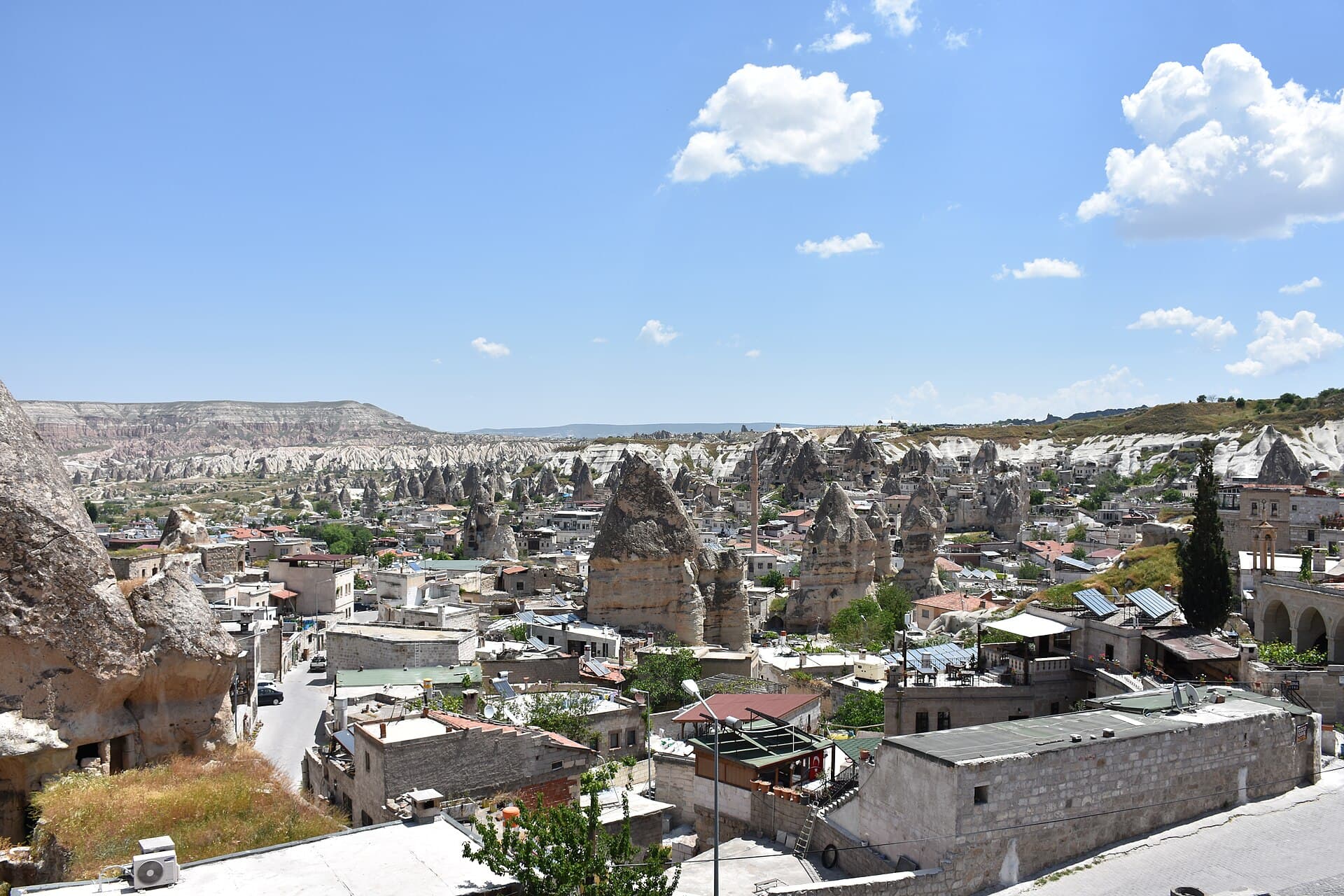
Göreme, een boeiende stad in het hart van Cappadocië, Turkije, is een landschap gevormd door zowel millennia aan natuurlijke krachten als eeuwen van menselijke inspanning. Het staat bekend om zijn surrealistische "feeënschoorstenen"—lange, slanke spitsen van vulkanisch tufsteen, bekroond met harder gesteente, wat een buitenaards panorama creëert. Dit unieke geologische canvas, een UNESCO Werelderfgoed, trekt al duizenden jaren bewoners aan, die op hun beurt huizen, kerken en kloosters direct in de zachte steen uithakten, waardoor een verstedelijkt ondergronds cultureel landschap ontstond.
Vandaag de dag dient Göreme als het energieke centrum voor het verkennen van Cappadocië, met directe toegang tot spectaculaire valleien, panoramische uitzichtpunten en een onderscheidende "grot-hotel" cultuur waar bezoekers kunnen slapen in kamers die uit oude rotswoningen zijn gehouwen. De stad combineert naadloos zijn oude verleden met een bruisend heden, waardoor het een essentiële bestemming is voor wie op zoek is naar een mix van natuurlijke wonderen, historische diepgang en unieke ervaringen, met name de iconische heteluchtballonvaarten die de ochtendhemel kleuren.
Het verhaal van Göreme begint miljoenen jaren geleden met krachtige vulkaanuitbarstingen van de nabijgelegen bergen Erciyes, Hasan en Göllü Dağ. Deze uitbarstingen bedekten de regio met dikke lagen as, puimsteen en lava, die stolde tot een zachte, poreuze steen die bekend staat als tufsteen. Over millennia hebben wind en water deze tufsteen meedogenloos geërodeerd, waardoor de kenmerkende "feeënschoorstenen" zijn gevormd—kegelvormige pilaren, vaak bekroond met een harder, resistenter gesteente zoals basalt.
Menselijke bewoning in Göreme dateert al van 1800 tot 1200 v.Chr., tijdens het Hettitische tijdperk. Gelegen tussen rivaliserende rijken, begonnen vroege bewoners kamers en tunnelcomplexen in de zachte steen uit te hakken voor bescherming tegen aanvallen. Tegen de 4e eeuw na Christus was Göreme een belangrijk monastiek centrum geworden voor vroege christenen die vervolging ontvluchtten. Ze groeven uitgebreide woningen, kloosters en kapellen uit, waardoor een spirituele wereld binnen de rots ontstond. Deze in steen uitgehouwen structuren bevatten vaak Byzantijnse architecturale elementen, met ronde bogen en eenvoudige interieurs, waarvan vele versierd waren met fresco's die Bijbelse scènes voorstelden.
Het "gouden tijdperk" van het Göreme Openluchtmuseum, sinds 1985 een UNESCO Werelderfgoed, bloeide tijdens de Byzantijnse periode, met name van de 10e tot de 12e eeuw. In deze tijd creëerden monniken uitgebreide kerken met zuilen, koepels en gewelfde plafonds, volledig uit steen gehouwen, hun muren bedekt met levendige fresco's. Hoewel het Ottomaanse bewind later enkele grotten gebruikte als duivenhokken, werden veel van deze oude structuren schoongemaakt en gerestaureerd door historici. Göreme, in de oudheid bekend als Kórama en tijdens de Byzantijnse periode als Matianí of Matianá, werd in 1928 officieel hernoemd tot Göreme. De stad transformeerde in de jaren zeventig van een agrarisch dorp naar een toeristische hoofdstad, waarbij de lokale bevolking grotten ombouwde tot hotels en hun unieke erfgoed omarmde voor bezoekers wereldwijd.
Göreme biedt een schat aan bezienswaardigheden, waarvan vele binnen handbereik liggen. Het Göreme Openluchtmuseum is een primaire attractie, een monastiek complex van in steen uitgehouwen kerken, kapellen en woningen die dateren uit de 10e tot 12e eeuw, met goed bewaarde Byzantijnse fresco's. Opmerkelijke kerken binnen het museum zijn Tokalı Kilise (Gespenkerk), Elmalı Kilise (Appelkerk), Karanlık Kilise (Donkere Kerk) en Yılanlı Kilise (Slangkerk), elk met een onderscheidende artistieke en historische betekenis.
Naast het museum zijn de omliggende valleien rijp voor verkenning. Love Valley en Pigeon Valley zijn populair om te wandelen, met unieke rotsformaties en historische inzichten in lokale landbouwpraktijken. Rose Valley en Red Valley zijn bijzonder opvallend bij zonsopgang en zonsondergang, met hun rotsformaties die dramatische tinten aannemen. Voor panoramische uitzichten op de feeënschoorstenen en de stad is Sunset Point (Asiklar Tepesi) een geliefde plek. Bovendien is de nabijgelegen Devrent Valley, ook bekend als Imagination Valley, beroemd om zijn dierlijke rotsformaties.
Veel bezoekers wagen zich ook naar de ondergrondse steden van de grotere regio, zoals Derinkuyu en Kaymaklı, die dienden als toevluchtsoorden voor vroege bewoners. Deze ingewikkelde ondergrondse complexen bieden een kijkje in de vindingrijkheid van oude gemeenschappen.
De beste tijden om Göreme te bezoeken zijn tijdens de lente (april tot juni) en de herfst (september tot oktober/november). Tijdens deze schouderseizoenen zijn de dagtemperaturen mild en aangenaam, ideaal voor buitenactiviteiten zoals wandelen en heteluchtballonvaren. Het landschap is bijzonder levendig met seizoensgebonden bloemen in de lente of rijke herfstkleuren. Hoewel de zomer (juli-augustus) heet en druk is, en de winter (december-maart) koud en besneeuwd kan zijn, is Göreme een jaarrond bestemming, waarbij elk seizoen een unieke aantrekkingskracht biedt, inclusief magische, met sneeuw bedekte feeënschoorstenen in de winter.
Göreme is een goed beloopbare stad, met veel attracties zoals het Openluchtmuseum op korte loopafstand. Voor verdere verkenningen verbinden lokale minibussen (dolmuş) Göreme met naburige steden zoals Uçhisar, Avanos en Nevşehir. Taxi's zijn ook beschikbaar, en vooraf geregelde transfers met uw hotel worden aanbevolen voor langere afstanden. Het huren van een auto biedt flexibiliteit voor onafhankelijke verkenning, met agentschappen beschikbaar op de luchthavens en in de stad.
De dichtstbijzijnde luchthavens zijn Nevşehir Kapadokya Airport (NAV) en Kayseri Erkilet Airport (ASR). Beide bieden shuttlediensten naar Göreme. Langeafstandsbussen verbinden Göreme ook met grote Turkse steden zoals Istanbul en Ankara. Veel bezoekers kiezen voor begeleide tours, die vaak transport naar verschillende bezienswaardigheden omvatten. Het vooraf boeken van heteluchtballonvaarten wordt sterk aanbevolen, vooral tijdens het hoogseizoen.
Göreme — Koreaans, Chinees, Hebreeuws en nog 29 talen, elke stop verteld door een moedertaalspreker. Het grootste taalaanbod van alle zelfgeleide audiotours.
Beschikbaar in: