Villa Vignamaggio
Zou de beroemdste glimlach in de kunstgeschiedenis wortels kunnen hebben in Greve in Chianti?
Volledig verhaal ontgrendeld in de tour
 Velvet / CC BY-SA 3.0, via Wikimedia Commons
Zelfgeleide audiowandeling door Greve in Chianti — GPS-route, offline afspelen, meeslepende vertelling in 32 talen.
“Waar de Zwarte Haan kraait en de geschiedenis stroomt als Chianti Classico.”
Niet de ansichtkaarten. De verhalen die zelfs locals niet kennen — gefluisterd in je oor, precies waar ze gebeurden.
Zou de beroemdste glimlach in de kunstgeschiedenis wortels kunnen hebben in Greve in Chianti?
Een klein, ommuurd dorp heeft een verrassende link met de naamgeving van twee continenten.
De kenmerkende vorm van het hoofdplein van Greve is meer dan alleen een architectonische eigenaardigheid.
Ontdek elk geheim van Greve in Chianti
Elk adres, elke onthulling volledig — in je oor, precies waar het gebeurde.
Jij kiest je stops. Jij wandelt. De stem onthult wat de anderen missen.


Je zelfgeleide audiotour van Greve in Chianti is klaar — kies je bezienswaardigheden, kies je taal en start zodra je aankomt.
KopenLume heeft een ingebouwde augmented-reality-gids. Houd je telefoon omhoog: de camera toont de straat voor je, met een oplichtende pijl over het echte beeld die altijd naar je volgende stop wijst — geen kaart om uit te puzzelen, geen verkeerde afslagen. Zoals alles in Lume werkt het volledig offline.
Greve in Chianti, een stad in de Metropool Florence, opent zich naar de Chianti Classico-regio. Het ligt in het hart van Toscane, ongeveer 30 kilometer ten zuiden van Florence, en belichaamt het quintessentiële Toscaanse landschap van glooiende heuvels, zorgvuldig onderhouden wijngaarden en eerbiedwaardige olijfbomen. De stad dient als een centraal knooppunt voor het Chianti-wijngebied, dat zich naar het zuiden uitstrekt richting Siena.
De identiteit van de stad is diep verweven met de wijnbouw, met name de Sangiovese-druif, de hoeksteen van Chianti Classico-wijn. Greve is een bestemming waar het ritme van het leven draait om de aarde, haar royale producten en de diepe waardering voor goed eten en wijn. Het is een plek die bezoekers uitnodigt om hun tempo te vertragen, de historische kern te verkennen en te genieten van de diepe smaken van de regio.
Het gebied dat nu bekend staat als Greve in Chianti heeft een lange geschiedenis van bewoning, met bewijs van Etruskische en Romeinse aanwezigheid. De Romeinen vestigden zich met name permanent vanwege de nabijheid van de Via Cassia, en lieten hun sporen na in plaatsnamen. Greve begon echter pas echt vorm te krijgen in de Middeleeuwen, en ontwikkelde zich tot een belangrijke marktstad.
De strategische ligging op het kruispunt van belangrijke handelsroutes – de Via Chiantigiana (die Florence en Siena verbindt), de weg naar Valdarno en de weg naar Val di Pesa – was cruciaal voor de groei. Dit maakte Greve tot een vitaal handelscentrum, met name voor wijn en olijfolie, een rol die het tot op de dag van vandaag behoudt. Historische documenten uit de 11e eeuw vermelden een oude monastieke nederzetting op de nabijgelegen San Francesco-heuvel, waar later in de 15e eeuw een Franciscaans klooster werd gevestigd.
In de Middeleeuwen stond Greve onder invloed van Florence, een relatie die de politieke en economische ontwikkeling vormgaf. Het kenmerkende driehoekige Piazza Matteotti, dat nog steeds het middelpunt van de stad vormt, ontwikkelde zich in deze periode en bood een beschutte ruimte voor de bruisende wekelijkse markt. Hoewel Greve verwoesting kende, waarbij het in de 14e eeuw door Castruccio Castracani, de hertog van Lucca, tot de grond toe werd afgebrand, werd het herbouwd en bleef het floreren. Tegen het einde van de 14e eeuw was de wijnproductie van de regio populair geworden bij adellijke Sienese en Florentijnse families, die investeerden in en directe invloed hadden op de lokale agrarische economie. Na de eenwording van Italië verstevigde Greve zijn reputatie als een van de belangrijkste centra in Chianti, en verwierf uiteindelijk de bijnaam 'Città del Vino' (Wijnstad) en in de 20e eeuw de aanduiding 'Città Slow'.
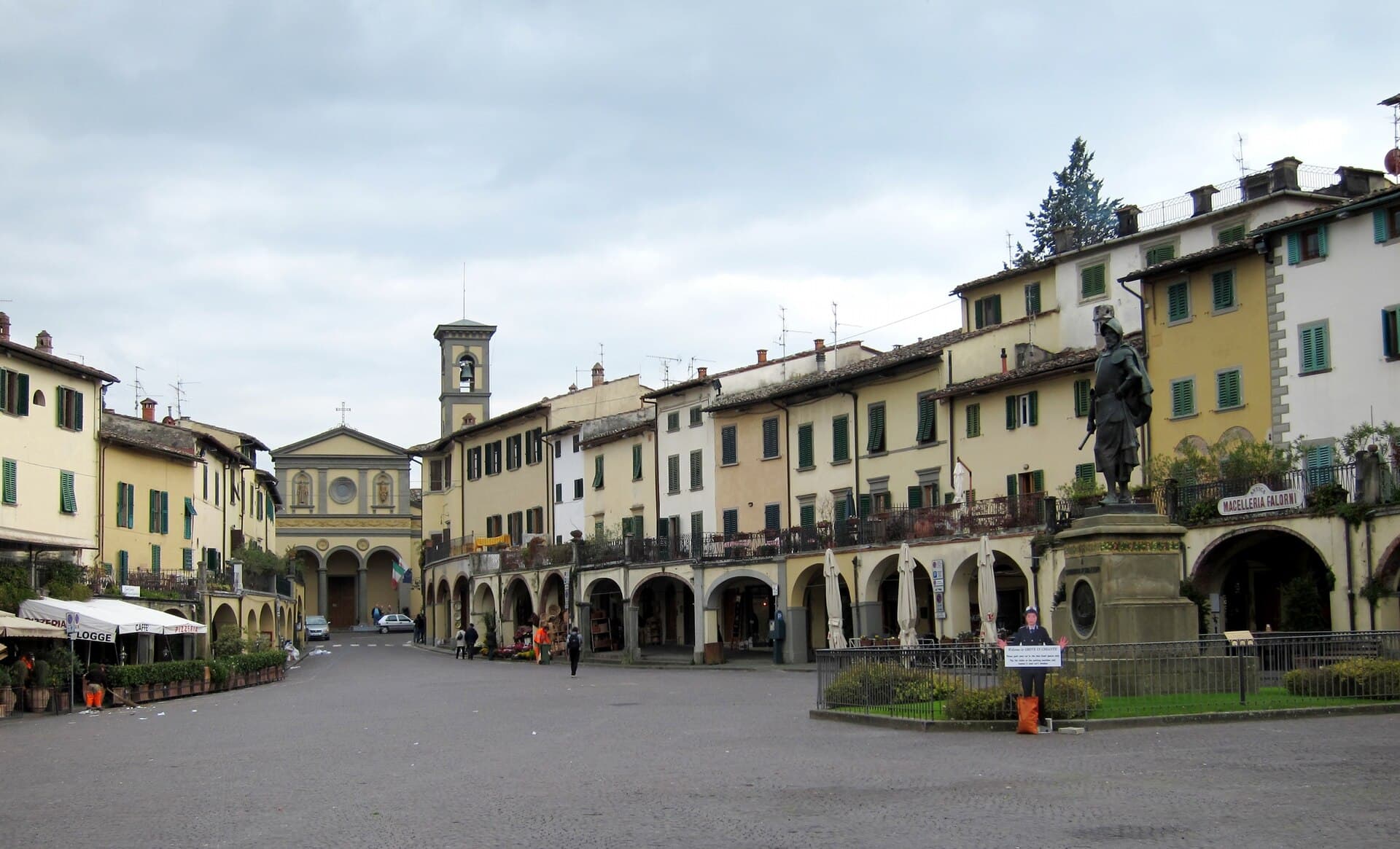
Het hart van Greve in Chianti is Piazza Matteotti, een uniek driehoekig plein omlijst door arcades. Deze arcades, die ooit kooplieden beschutten, herbergen nu winkels, cafés en wijnbarren. In het midden van het plein staat een standbeeld van Giovanni da Verrazzano, de ontdekkingsreiziger die nabij Greve werd geboren en de oostkust van Noord-Amerika in kaart bracht. De Kerk van Santa Croce, die uitkijkt over het plein, bevat kunstwerken die worden toegeschreven aan de school van Beato Angelico.
Een korte wandeling vanaf het plein leidt naar het Museo del Vino, gevestigd in een oude wijnkelder, dat inzicht biedt in de geschiedenis van de wijnbouw in de regio. Op slechts enkele minuten van het centrum van Greve is het goed bewaarde middeleeuwse dorp Montefioralle de moeite waard om te verkennen met zijn smalle steegjes en historische gebouwen. Het Castello di Verrazzano, een korte rit ten noorden van Greve, is een andere historische plek met oorsprong die teruggaat tot de Romeinse tijd, en het biedt rondleidingen en wijnproeverijen. Voor wie geïnteresseerd is in religieuze kunst, is het San Francesco Museum voor Heilige Kunst op vijf minuten loopafstand van Piazza Matteotti.
Greve in Chianti biedt het hele jaar door een aangename ervaring, met de lente en de herfst die bijzonder worden aanbevolen. De warmere maanden, van begin juli tot eind augustus, zijn ideaal voor zonovergoten activiteiten. September brengt het gerenommeerde Chianti Classico Wine Festival, een levendig evenement met wijnproeverijen en andere festiviteiten. Het jaarlijkse Bloemenfestival (Festa dei Fiori) vindt doorgaans plaats in het eerste weekend na 1 mei en transformeert het hoofdplein met planten en bloemen.
Greve in Chianti is gemakkelijk bereikbaar, gelegen op ongeveer 30 kilometer ten zuiden van Florence aan de SR222, ook wel bekend als de Via Chiantigiana. Hoewel autorijden flexibiliteit biedt om het schilderachtige platteland te verkennen, is Greve ook een van de makkelijkere Chianti-stadjes om met het openbaar vervoer vanuit Florence te bereiken, met busverbindingen vanaf de buurt van het treinstation Santa Maria Novella. De stad zelf is compact en beloopbaar. Parkeren is mogelijk nabij Piazza Matteotti. Voor wie op twee wielen wil verkennen, zijn motor- en fietsverhuur beschikbaar. Greve biedt een goed gesorteerde supermarkt en tal van wijnwinkels om lokale proviand in te slaan.
Greve in Chianti — Koreaans, Chinees, Hebreeuws en nog 29 talen, elke stop verteld door een moedertaalspreker. Het grootste taalaanbod van alle zelfgeleide audiotours.
Beschikbaar in: